
Review · TENERIFE
Tenerife: Mount Teide Observatory Guided Tour
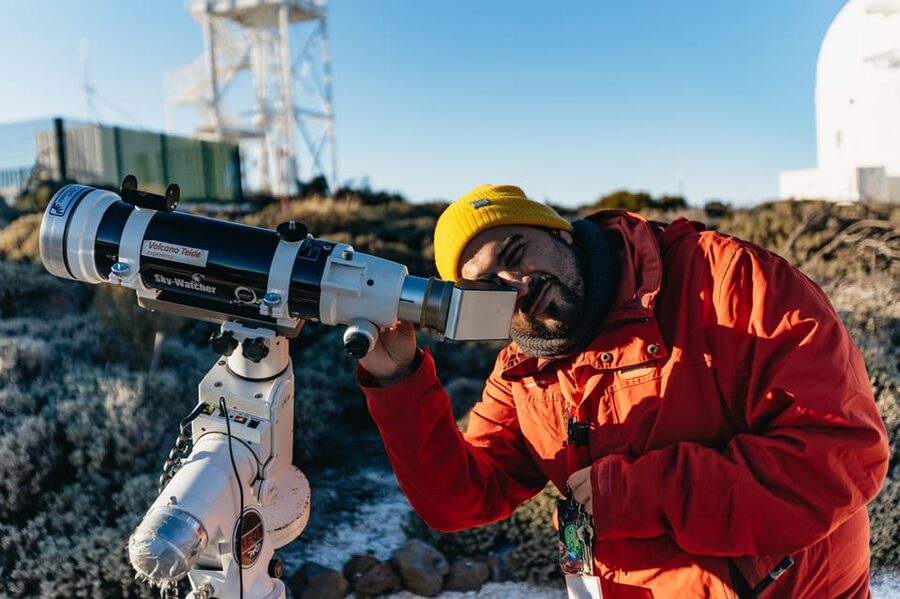
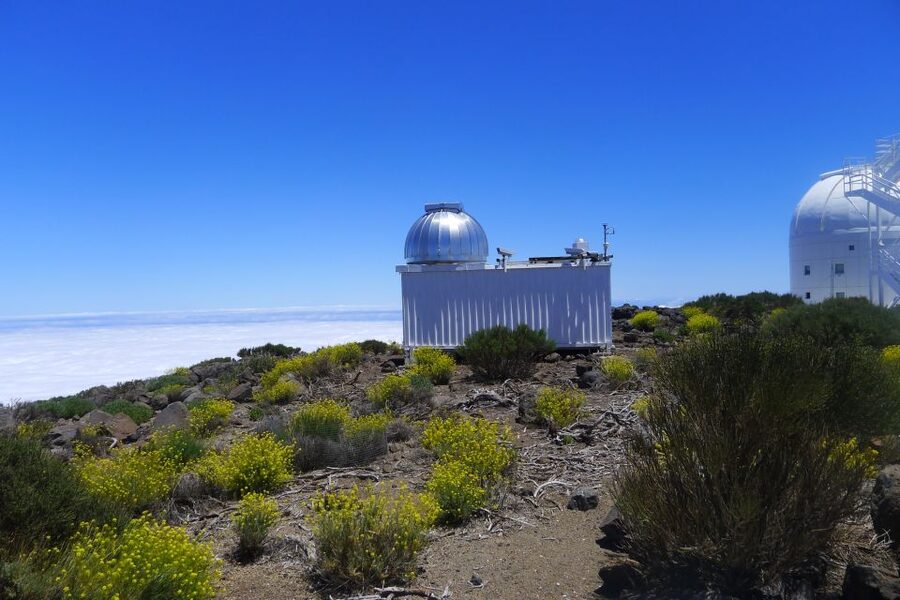
The most surprising part of this Mount Teide Observatory tour is that you study the Sun in daylight, not only distant stars after dark. At about 2,400 meters above sea level, you will use two special solar telescopes, one for sunspots and another for solar flares, then visit a large night telescope used to observe the sky.
I especially like the chance to see real solar activity rather than simply hear a lecture about it. I also like the guides’ enthusiasm. Past guides including Jesus, Raquel, Rachel, and Steffi have been praised for making astrophysics easy to follow, funny, and open to questions. The main drawback is practical: the tour spends much of its time outdoors on gravel paths, and the high site can be cold, windy, sunny, and tiring.
Key points
- See the Sun safely through two different solar telescopes, with one focused on sunspots and another on solar flares.
- Visit a professional night telescope and learn how huge instruments study the night sky.
- Expect strong guides, with astronomy explained in clear language rather than dry technical terms.
- Allow 90 minutes, much of it outside on gravel paths at high altitude.
- Bring layers and sun protection, since the mountain can feel cold in the shade while the sun is intense.
- Pay $25 for a focused science experience, a fair price if you have a real interest in astronomy or are already visiting Teide.
Why Mount Teide is such a good place for astronomy
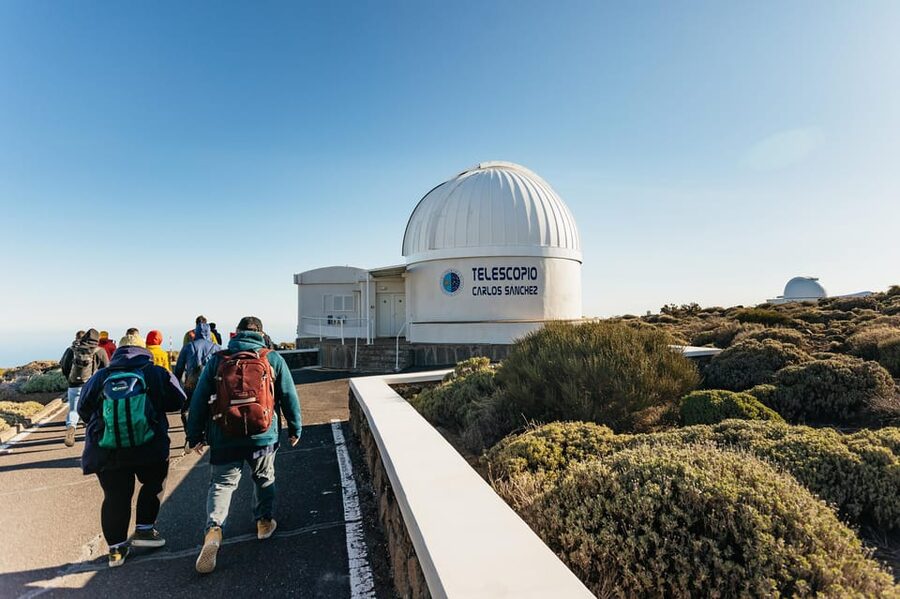
Mount Teide Observatory sits high above Tenerife, in a setting that feels far removed from the island’s beach resorts and busy towns. The altitude and clear skies make the site useful for observing the Sun and stars, while the surrounding volcanic scenery gives the visit a memorable sense of place.
You do not need a technical background to enjoy the tour. The opening explanation introduces the observatory, its different areas, and the work carried out by astronomers and astrophysicists. A short film about the Canary Islands’ sky helps explain why the location matters and how telescopes operate at night.
I like this context because it gives purpose to the equipment. You are not simply walking past large white buildings and pointing at machines. You learn what the instruments are designed to measure and why astronomers place observatories high above the coast.
The site can also feel physically demanding. Oxygen decreases at this altitude, and the route includes gravel paths. If you have anemia, heart problems, respiratory trouble, or general health concerns, this activity is not recommended. People with mobility impairments should also choose another Teide experience.
More Observatory Visits in Tenerife:
- Tenerife: Mount Teide Observatory Astronomical Tour
★ 4.4 · 126 reviews - Royal Observatory Greenwich & Prime Meridian Entrance Ticket
★ 4.5 · 1,095 reviews - Griffith Observatory Hike: Guided Tour through Griffith Park
★ 5.0 · 1,020 reviews
The 90-minute route through the observatory
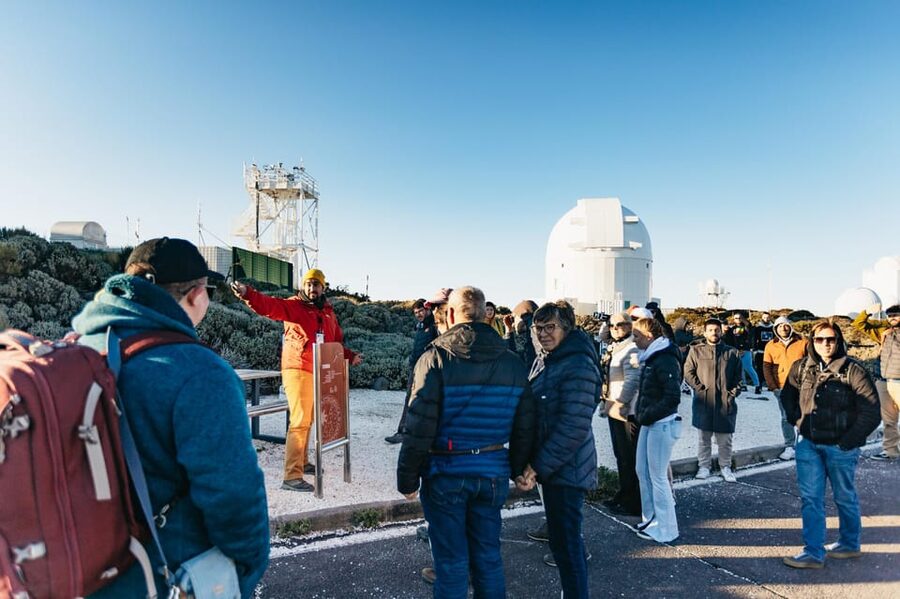
The exact meeting point can vary with the option booked, so check your confirmation carefully before setting out. Transportation is not included, and you need to arrange your own way to the observatory.
Once the tour begins, the group receives an introduction to the observatory and its main areas. The guide explains the history of the facility and the surrounding area, then uses a short presentation or video to put the science into plain language.
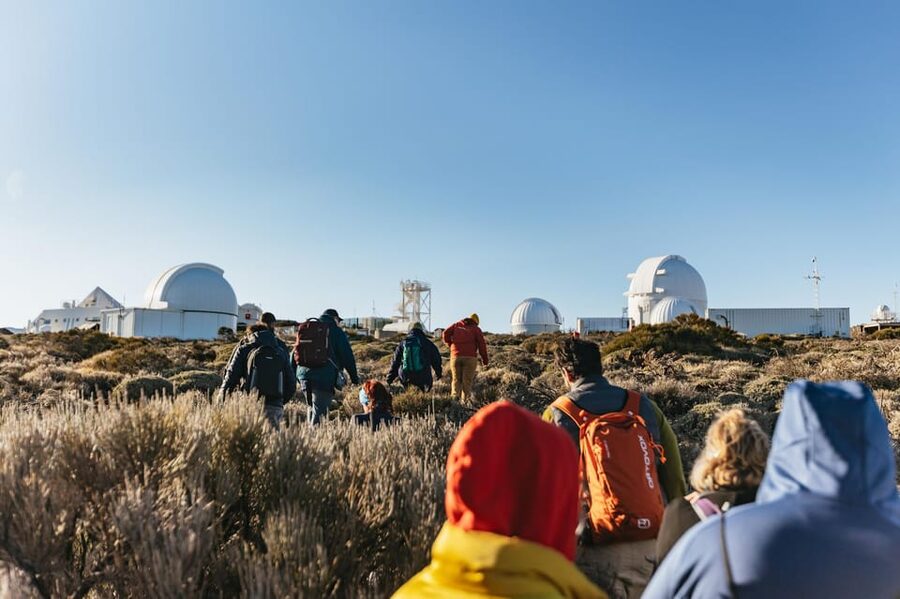
The tour is not a quick photo stop. You move between indoor and outdoor areas, listen to explanations, and use the telescopes under supervision. Much of the route takes place outside, so comfortable clothing and shoes matter more here than they would on a standard museum visit.
The 90-minute length is about right for the subject. It gives you time to understand the basics, look through the solar instruments, and see a professional night telescope without turning the visit into a full day of technical lectures. Still, the schedule leaves little room for a slow stroll or long breaks.
One useful detail is that umbrellas have sometimes been provided to protect the group from the strong sun. Do not count on that as your main protection. Pack sunglasses, sunscreen, a hat if you use one, and warm layers for the cooler air.
Seeing sunspots and solar flares
The solar telescope portion is the heart of the visit. You use two different instruments, each showing a separate feature of the Sun. One lets you look for sunspots. The other is set up to show solar flares and related activity.
This is a safe, supervised observation. Never attempt to look at the Sun through an ordinary telescope or binoculars. The equipment used here has the proper solar filters, and the guide explains how the viewing works.
The experience can vary with solar conditions and the quality of the day. You may see distinct dark sunspots or the red and orange appearance of solar activity through the filtered instrument. You should not expect a dramatic moving film of explosions or a giant close-up like the images used in space documentaries.
That distinction matters. The telescope viewing is genuinely interesting, but it is an educational observation, not a theme-park spectacle. At times, the image may look modest, especially if you expect the Sun to fill the entire field of view. A good guide helps by explaining what you are seeing and why it matters.
Some explanations may refer to the scale of sunspots and the size of our planet. That comparison can make the view more meaningful. You begin with a small patch of light and leave with a clearer sense of how much energy and activity is taking place on our nearest star.
The guides are a major part of this section. Jesus has been praised for clear explanations, while Raquel and Rachel have been singled out for warmth, humor, and passion. Guide assignments can change, but the tour is offered in English, Spanish, German, and French.
Inside one of the professional night telescopes
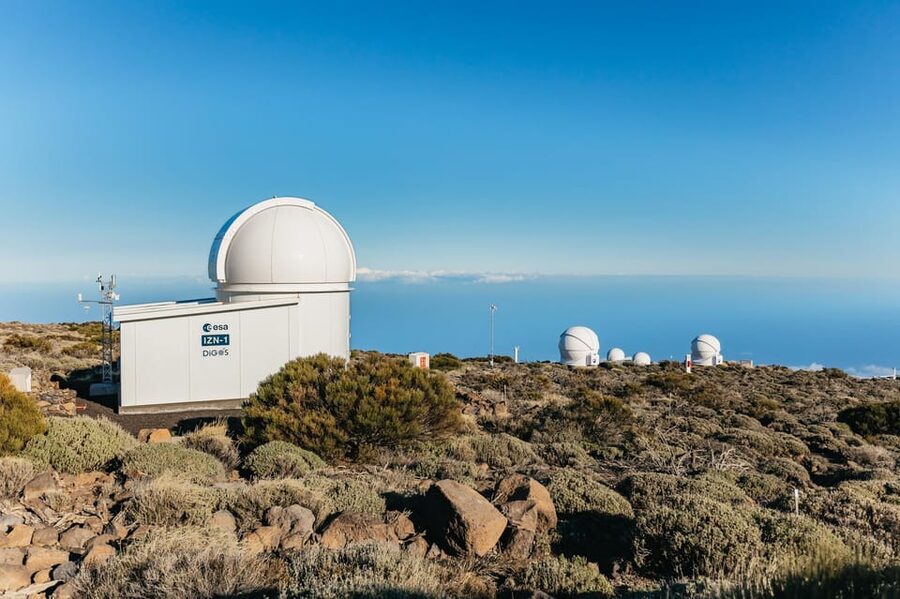
After the Sun, the group visits one of the observatory’s night telescopes. This part shows how the huge structures are used to study the night sky, even though your tour takes place during daylight.
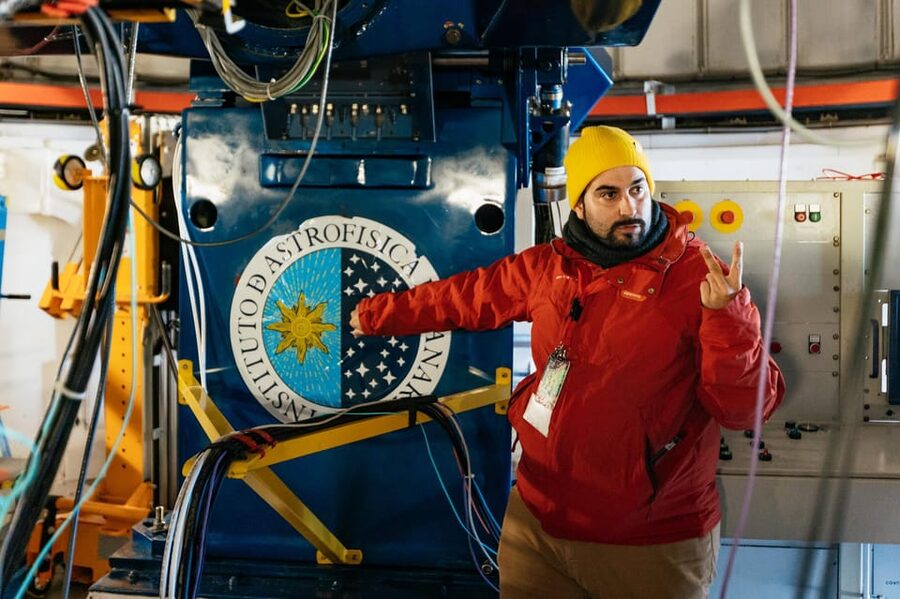
You may be able to enter the telescope building or view the instrument at close range, depending on the route and access on the day. That physical scale is one of the most memorable parts of the visit. A professional telescope is not just a larger version of the tripod instrument you may have used at home. The building, dome, and machinery all work together to point at and follow objects in the sky.
The tour does not promise access to every telescope or every interior space. Some people expect to walk through several large instruments and are disappointed when the route includes only selected areas. The main benefit is understanding how an observatory works, not seeing every piece of equipment up close.
I would treat this as a behind-the-scenes introduction rather than a full observatory tour. You get a useful look at professional astronomy and a sense of the size of the work, but the 90-minute format naturally limits how much equipment you can inspect.
If night-sky observation is your main goal, this daytime tour may not be the perfect choice. It teaches you about night telescopes, but it does not function as a nighttime stargazing session. Its special feature is solar viewing.
More Guided Nights Out in Tenerife:
- Teide: Guided Sunset & Stargazing Tour by Night with Dinner
★ 4.7 · 1,339 reviews - Teide National Park: Guided Large Telescope Stargazing Tour
★ 4.9 · 319 reviews - Prague: Klementinum Library & Astronomical Tower Guided Tour
★ 4.5 · 5,050 reviews - Prague: Astronomical Clock Tower Entry Ticket & Audio Guide
★ 4.4 · 641 reviews
The guides make the science accessible
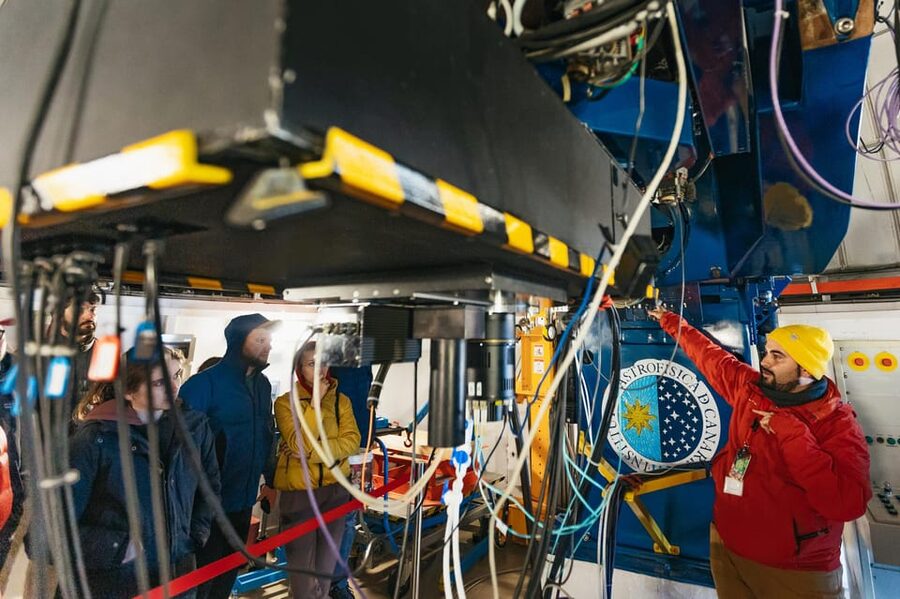
Astronomy can become hard work when the explanations are packed with formulas and specialist terms. This tour works best when the guide connects the machines to simple questions: What is the telescope measuring? Why use a particular filter? How does the instrument work after dark?
The strongest guiding combines a short lecture with direct observation. You hear about astrophysics, then look through the solar telescope. You learn how night observation works, then see the equipment that makes it possible.
That balance suits mixed groups. Adults with a serious interest in astronomy can ask detailed questions, while newcomers can follow the basic story without feeling lost. Several guides have been praised for answering questions patiently and explaining technical material with humor.
The tour can also work for older children, but children must be at least eight years old. Anyone under 18 needs to confirm their age with a passport or identity card, so bring the required identification for children.
Mountain weather, clothing, and physical comfort
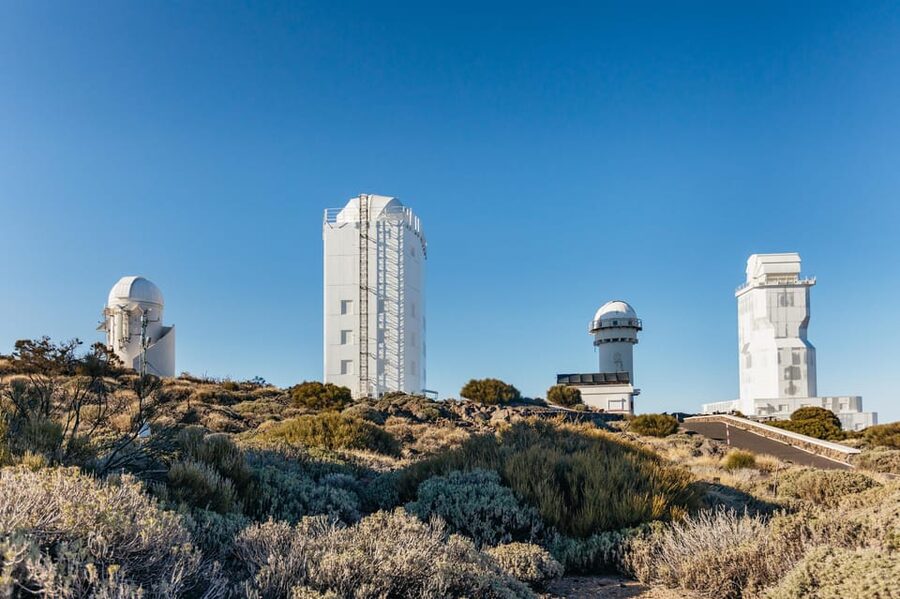
The mountain climate is the main practical challenge. The air can be cold and windy, especially when you stop in exposed areas or shade. At the same time, the high-altitude sun can feel fierce, and the combination of cold air and bright light can fool you into forgetting sunscreen.
Pack:
- A warm jacket or several layers
- Comfortable closed shoes
- Sunglasses
- Sunscreen
- A hat if useful for sun protection
- Water for before or after the tour
Food and drink are not included. One useful convenience at the meeting area is that you may find somewhere to sit and buy water while waiting, but do not assume the tour itself provides refreshments or regular rest stops.
Bathroom access can also feel limited during the route. Plan ahead before the tour starts. The path is gravel, so this is not a good choice for high heels, slippery shoes, or anyone who finds uneven ground difficult.
The altitude deserves respect even if you feel fit at sea level. Walk at a steady pace and tell the guide if you feel unwell. The activity information specifically warns people with respiratory problems, heart conditions, anemia, and other general health issues to avoid the tour.
Is $25 good value?
At $25 per person, this is a reasonably priced add-on for a day at Mount Teide. The cost includes entry to the observatory, a live guided tour, use of two solar telescopes, and access to a professional night telescope. Transportation, food, and drinks are extra.
The value depends on what you want from the mountain. If you are mainly visiting for the volcanic scenery, the observatory adds a useful scientific angle without demanding a large extra budget. If you have little interest in astronomy, the explanations and telescope stops may feel more specialized than expected.
For an astronomy fan, the price is easier to justify. You get direct solar viewing, access to a working observatory site, and an explanation of how professional instruments are used. You are paying for access and interpretation, not just a view from a mountain.
I would not book it solely because the phrase largest solar observatory in the world sounds impressive. The real value comes from the guide and the chance to observe the Sun safely. If the guide gives clear explanations and the sky cooperates, the tour can be one of the more distinctive things you do in Tenerife.
Who should book this experience?
This tour suits you if you enjoy science, ask questions, or want more substance than a scenic mountain drive. It is also a good choice for families with children eight and older who can manage the walking and altitude.
You do not need to know astronomy in advance. The presentations and visual aids are designed to help beginners understand the basic ideas. You should, however, be comfortable spending time outdoors and walking on gravel.
You may want to skip it if you expect a long tour inside giant telescope domes, a nighttime stargazing session, or spectacular close-up images of solar explosions. The standard visit uses two smaller solar telescopes for visitors, not every major instrument at the site.
If you are choosing between this and a cable-car visit, remember that they offer different experiences. The observatory tour is structured, educational, and guide-led. It gives you a closer look at astronomy rather than simply taking you higher for views.
Booking and language details
The tour lasts about 1.5 hours, with starting times depending on availability. Live guiding is offered in English, Spanish, German, and French. The meeting point may vary according to the option you book, and transportation is not included.
You can cancel up to 24 hours before the activity for a full refund, and the reserve-now-pay-later option allows you to hold a place without paying immediately. Those terms are helpful when mountain weather or your Tenerife plans may change.
Try to arrive prepared rather than treating this as a casual stop. Wear layers even on a warm coastal day, protect your eyes and skin, and bring identification for children. The mountain can be sunny, cold, and windy within the same short visit.
Should you book the Mount Teide Observatory tour?
Book it if you want to understand what happens at Teide, see sunspots and solar flares through proper filters, and hear astronomy explained by an enthusiastic guide. The combination of a volcanic setting, high-altitude air, professional equipment, and direct solar viewing makes the $25 price sensible for most people with even a modest interest in space.
Think twice if you dislike gravel paths, cold wind, strong sun, or technical explanations. Also keep your expectations realistic: the visitor telescopes are not designed to deliver cinema-sized images, and you will not see every major instrument inside the observatory.
For me, the best reason to go is the simple change in viewpoint. You arrive looking at a mountain and leave thinking about the Sun, the night sky, and the machines built to study them. That is a worthwhile addition to a Teide visit.
FAQ
How long is the Mount Teide Observatory guided tour?
The tour lasts approximately 1.5 hours.
What can I see through the solar telescopes?
You use two solar telescopes. One is intended for viewing sunspots, and the other is used to observe solar flares.
Can I visit a night telescope during the daytime tour?
Yes. The experience includes access to a professional night telescope, where you learn how large instruments observe the night sky.
Is transportation to the observatory included?
No. Transportation is not included, and you must check the meeting point for the option you book.
What languages are available?
Live guiding is available in English, Spanish, German, and French.
How high is the observatory?
The observatory is located at approximately 2,400 meters above sea level.
What should I bring?
Bring warm clothing, sunglasses, sunscreen, and comfortable clothes and shoes. Children must have a passport or identity card available to confirm their age.
Are children allowed on the tour?
Children under eight are not permitted. Children must confirm their age with a passport or identity card.
Is the tour suitable for people with mobility or respiratory problems?
No. The route includes gravel paths at high altitude, and the activity is not suitable for people with mobility impairments or respiratory issues. It is also not recommended for people with anemia, heart conditions, or other general health concerns.
Just in after dark around Tenerife
- Magic Stargazing & Sunset in Teide with Dinner + Telescopes★ 3.5 · 20 reviews
- Private astronomy tour with sunset toast, picnic, and astrophotography★ 4.8 · 83 reviews
- Tenerife: Stargazing at Mt. Teide★ 4.2 · 72 reviews
- Tenerife: Teide Stargazing with an Astrophysicist★ 4.9 · 74 reviews
- Mount Teide Night Tour: Stargazing, Dinner and Hotel Pick up★ 3.5 · 86 reviews
- Tenerife: Teide National Park Sunset Picnic and Stargazing★ 4.6 · 117 reviews
- Teide National Park: Stargazing Experience★ 5.0 · 118 reviews
- Self Drive Sunset & Stargazing in Teide National Park – No Dinner★ 5.0 · 151 reviews
Observatory Visits, night against night.
Royal Observatory Greenwich & Prime Meridian Entrance Ticket
Read our review →
Griffith Observatory Hike: Guided Tour through Griffith Park
Read our review →
Royal Observatory Greenwich & Prime Meridian Entry Ticket London
Read our review →
Private Getty Center to Griffith Observatory Guided Tour
Read our review →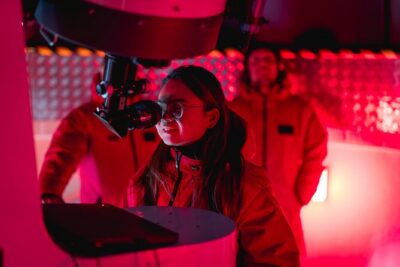
Mount John Observatory Stargazing Experience, Tekapo
Read our review →Lists this night appears in