
Review · LAKE TEKAPO
Mount John Observatory Stargazing Experience, Tekapo
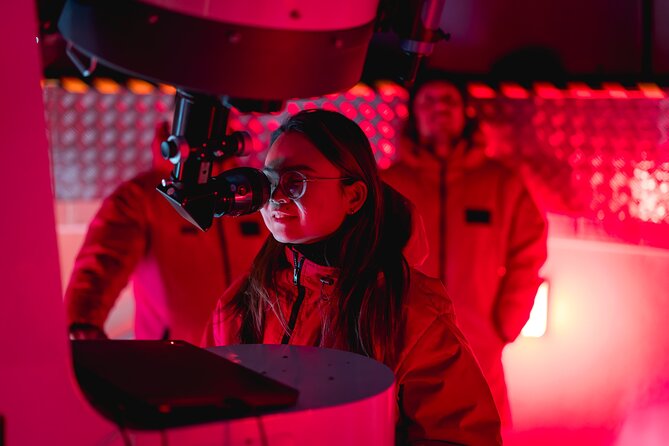
Mount John Observatory puts you inside the Aoraki McKenzie International Dark Sky Reserve, far above Lake Tekapo and its surrounding peaks. The real treat is the mix of naked-eye stargazing and powerful observatory telescopes, which can bring planets, star clusters, and distant galaxies into view.
I like the small departure size and the guides’ clear, lively teaching style. I also like that this is not just a quick look through one telescope. You have time to move between several instruments and learn how to find Southern Hemisphere stars, including the Southern Cross and the true southern star.
The main drawback is simple: astronomy needs clear skies. Cloud or wind can reduce what you see, and a cloudy night may lead to cancellation or an indoor alternative that does not match the summit experience.
Key points at a glance
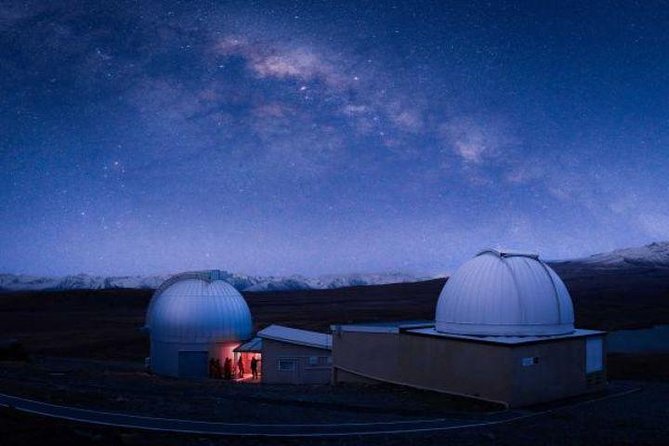
- Mount John summit access: You rise to 1,029 metres above Tekapo, with access to the University of Canterbury observatory site.
- Three ways to see the sky: The experience combines unaided stargazing, laser-pointer explanations, and advanced telescopes.
- Southern Hemisphere highlights: Guides can help you find the Southern Cross, the true southern star, planets, star clusters, and other sky features.
- Cold-weather planning matters: Extreme-weather jackets are supplied, but you still need warm layers, even in spring.
- Weather controls the evening: Clouds can cancel the summit trip or limit telescope viewing.
- A good first astronomy tour: You do not need much prior knowledge, but you must speak the tour language for safety reasons.
Why Mount John is special for stargazing
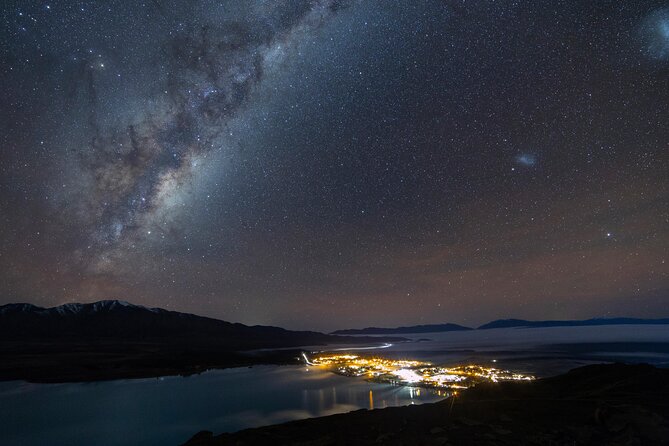
Tekapo is one of New Zealand’s best-known places for looking at the night sky because artificial light is tightly controlled across the Aoraki McKenzie International Dark Sky Reserve. Mount John takes you higher still, to the summit of a 1,029-metre peak where the University of Canterbury operates a major astronomical research centre.
That setting gives this outing more substance than a basic star talk in a field. You are right beside a working observatory, surrounded by sophisticated equipment and people who can explain how astronomers study objects far beyond our solar system.
The scale of the reserve matters most on a clear night. The Milky Way can become a bright band overhead rather than a faint smear, and the sky reveals far more stars than you may be used to seeing from a city or suburban home. You might see planets, star clusters, constellations, or a distant galaxy, depending on the conditions and the guide’s program for the evening.
I especially like the way the experience begins with your own eyes. Before you look through a telescope, you learn how to read the sky above you. That gives the equipment context, and it helps you spot familiar patterns later on.
More Observatory Visits in New Zealand:
- Stargazing Experience at Cowan’s Private Observatory
★ 4.0 · 85 reviews - Royal Observatory Greenwich & Prime Meridian Entrance Ticket
★ 4.5 · 1,095 reviews - Griffith Observatory Hike: Guided Tour through Griffith Park
★ 5.0 · 1,020 reviews
From Lake Tekapo to the summit
You check in with the Dark Sky Project team in Lake Tekapo township. From there, return transport takes you up to Mount John. The transfer is included, which makes the evening easy to manage if you are staying in town.
The ride itself takes about 15 minutes according to the scheduled itinerary. The key point is that you are not expected to make your own way to the summit at night. Hotel pickup is not included, so plan to reach the Lake Tekapo meeting point yourself.
Once you arrive, the summit location gives the experience a strong sense of place. You are not simply looking at a projection or a digital screen. You are outside in the dark, with the observatory buildings and the high country around you.
The summit can be cold at any time of year. A visitor who went in November found spring conditions surprisingly icy, and September brought similar warnings. The provided extreme-weather jacket is useful, but wear warm clothing underneath. Layers are better than one bulky coat because you can adjust as the night progresses.
What happens during the 90-minute summit session
The main stargazing session lasts about 1 hour and 30 minutes. Your astronomy guide combines explanations with actual viewing, so the pace is usually more active than a simple lecture.
You can expect to learn about major stars and constellations visible from the Southern Hemisphere. The Southern Cross is one obvious highlight, but the guides may also show you the difference between the true southern star and a nearby false marker. That small lesson is surprisingly useful because many people assume the Southern Cross points directly to the South Celestial Pole without checking the surrounding stars.
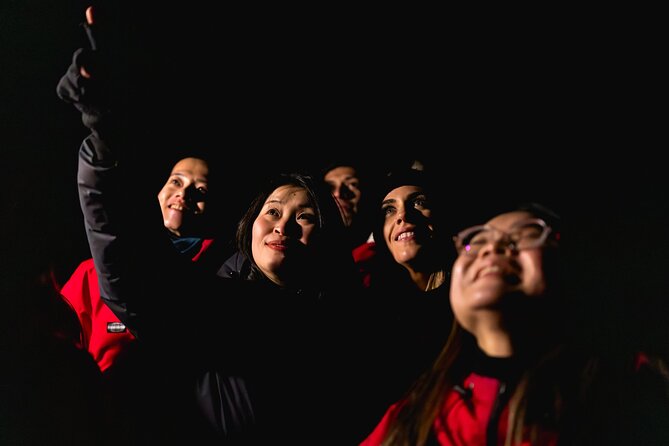
Laser pointers help connect the explanation to the real sky. In total darkness, this is much easier to follow than a guide pointing vaguely overhead. You should stay close to the group and watch your footing, since white lights and personal torches are not permitted during the outdoor viewing.
The telescope portion adds the wow factor. Depending on the night, you may see the moons of Jupiter, older star clusters, newly forming stars, planets, or other distant objects. The exact menu cannot be promised because the sky changes with the season, weather, and position of the planets.
The site uses several telescopes, and the experience allows time with three instruments. That is a meaningful advantage over a short public viewing session where you stand in one line and get a few seconds at the eyepiece.
Clear skies are important, but partial cloud is not always a disaster
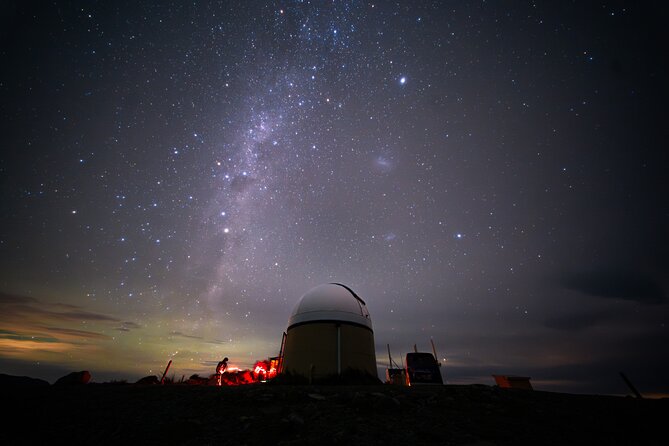
A perfectly clear night gives you the best chance of seeing the Milky Way in full strength. It also allows the guide to move between naked-eye constellations and telescope targets without interruption.
Still, some cloud does not always ruin the evening. Clouds can shift, leaving openings for stars and planets. One guide worked around moving cloud and still showed the Southern Cross, the true southern star, and several telescope targets.
Wind can be more troublesome. It makes the summit colder and may affect outdoor viewing or photography. Do not count on taking your own pictures through the telescopes. A visitor noted that the team would not take photographs with a personal camera when there was any wind.
If the weather becomes too poor to operate the summit experience, you may be offered another date or a full refund. An indoor alternative may also be offered, but you should treat it as a backup rather than an equal substitute. Some people have found the indoor version less informative and less impressive than the mountain session.
For that reason, build flexibility into your Tekapo schedule. If the forecast is poor, avoid placing this activity on the final night of a short visit. The operator may offer another date, but you need to be in town to use it.
More Stargazing Tours around New Zealand:
- Lake Tekapo: Alpine Stargazing Experience with a Guide
★ 4.5 · 626 reviews - Lake Tekapo: Stargazing Experience
★ 4.9 · 607 reviews - Chameleon Stargazing Shared Tour
★ 5.0 · 181 reviews - Lake Tekapo: Mountaintop Stargazing at Mount John Summit
★ 4.5 · 176 reviews
The guides make the difference
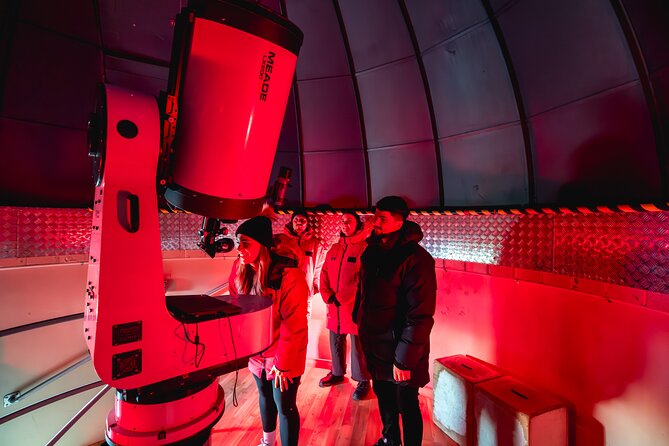
This is designed for people who are curious about astronomy, not only for serious amateur astronomers. You do not need to know the names of stars before arriving. The guide explains the basics in plain language, then adds more detail for anyone who wants to understand what the telescopes are showing.
The strongest part of the experience is the teaching. Guides are expected to be both scientifically informed and comfortable speaking to a mixed group. Names associated with the guide team include Kieran, Alice, and Olive, and the teaching style has been described as lively, friendly, and easy to follow.
That matters because a dark sky can be overwhelming at first. There may be so many stars that you cannot tell where one pattern ends and another begins. A good guide gives you a few reference points, then helps you build from there.
English and Mandarin guide options are available. You must speak the language of the tour for health and safety reasons. If you cannot communicate in the selected language, you will not be permitted to join.
Is the $139.39 price good value?
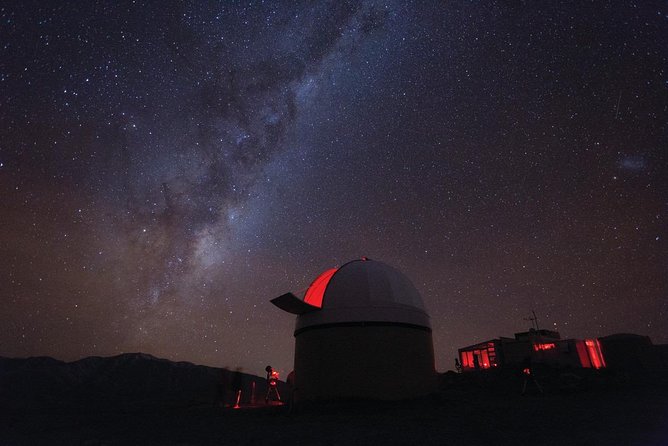
At $139.39 per person, this is not a casual add-on for a budget evening. I think the price makes sense if you value access to the summit, return transport, a trained guide, supplied cold-weather jackets, and viewing through several observatory telescopes.
The University of Canterbury setting adds real value. You are visiting a working research site rather than a general sightseeing platform, and the experience connects what you see through the eyepiece with modern astronomy.
The value drops if your main goal is simply to see a few stars. A cloudy night can limit the session, and the indoor backup may feel modest compared with the price. You are paying for access and expertise, but no operator can guarantee a certain planet, galaxy, or level of visibility.
I would book it for a clear forecast during a stay of two or more nights in Tekapo. I would think twice if the weather looks unsettled and I had no spare evening.
Practical details for your evening
The activity lasts approximately 1 hour and 45 minutes in total, including the check-in and transport to the summit. The summit session itself takes about 90 minutes.
A maximum of 22 people is listed for each departure time, while the activity information gives a maximum group size of 30. Either way, this is a group experience, not a private astronomy lesson. If crowd size matters to you, confirm the expected departure capacity when booking.
Children must be accompanied by an adult. Most people can take part, but the summit is not recommended for people with mobility issues. The tour includes walking in darkness, and you need to remain with the guide rather than use a white torch.
Bring:
- Warm layers, even during spring and summer
- Shoes suitable for uneven or dark outdoor areas
- Patience if clouds interrupt the program
- A plan for reaching the Lake Tekapo meeting point
Meals and snacks are not included. Since the activity takes place in the evening and the schedule can be tight, eat beforehand rather than expecting food at Mount John.
If you book a start time after midnight, check the date carefully. Late-night departures can be easy to enter incorrectly on a booking calendar.
Who will enjoy this most?
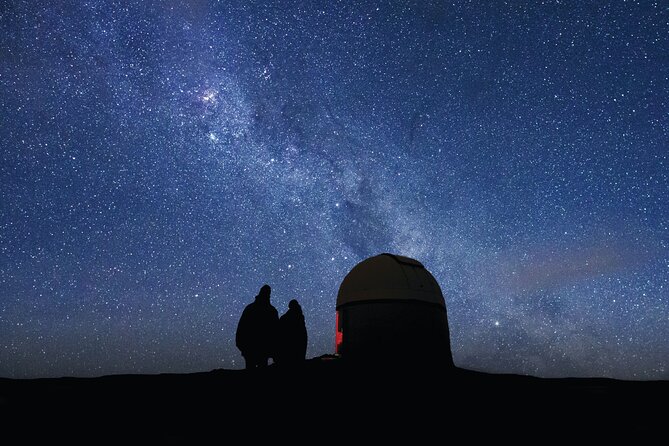
I recommend this for first-time stargazers, families with older children, couples, and anyone with a passing interest in space. The guides explain enough for beginners without making the session feel like a school lesson.
It also suits people who want a distinctively New Zealand experience. The Southern Hemisphere sky is the star of the show, and learning to find the Southern Cross or true southern star gives you something you cannot replicate in the Northern Hemisphere.
You may enjoy it less if you dislike cold, darkness, group activities, or uncertainty. The summit is not a warm indoor attraction, and the payoff depends heavily on the weather.
Serious amateur astronomers may also want to set expectations. The experience offers excellent access and skilled instruction, but it is still a public evening program. You are not conducting your own observing session or choosing targets at your own pace.
Cancellation and booking advice
You can cancel free of charge up to 24 hours before the start time for a full refund. Cancellations or changes made inside that 24-hour window are not accepted for a refund.
Weather cancellations are handled differently. If poor conditions stop the tour, you should be offered another date or a full refund. Because conditions can change quickly, keep your phone and booking details available on the day.
I would reserve early during busy periods. The experience has been booked more than 10 times in a recent week, and each departure has limited capacity.
Should you book the Mount John Observatory experience?
Book it if you want more than a pretty view of the stars. The combination of a high summit, a protected dark-sky reserve, clear Southern Hemisphere guidance, and several telescopes makes this one of Tekapo’s strongest evening activities.
Just accept the weather risk. Check the forecast, pack warm layers, and leave yourself a spare night if possible. On a clear evening, you can learn to read the southern sky and see objects through observatory equipment that are impossible to pick out from home. On a cloudy evening, the result may be a cancellation or a less satisfying indoor substitute.
For most people with even a modest interest in astronomy, I would book it. The summit setting and the quality of the instruction give the experience real value, but only if you plan around the cold and the clouds.
FAQ
How long does the Mount John Observatory experience last?
The total experience lasts about 1 hour and 45 minutes. This includes approximately 15 minutes for check-in and transport, followed by about 1 hour and 30 minutes at the summit.
Where does the tour begin?
You check in with the Dark Sky Project team in Lake Tekapo township. Return transport to Mount John is included, but hotel pickup and drop-off are not.
Are jackets provided?
Yes. Extreme Cold Weather jackets are provided for the summit session. You should still wear warm layers, since the mountain can be very cold even in spring.
What can I see through the telescopes?
Depending on the season and weather, you might see planets, the moons of Jupiter, star clusters, newly forming stars, or a distant galaxy. The guide also leads naked-eye viewing of constellations and stars.
Can children join the experience?
Yes, children can participate, but they must be accompanied by an adult. The activity is not recommended for people with mobility issues.
What happens if the weather is poor?
If the weather prevents the summit experience from operating, you may be offered another date or a full refund. An indoor alternative may also be offered.
Just in after dark around New Zealand
- Christchurch: Lake Tekapo Stargazing & Mount Cook 2-Day Tour★ 5.0 · 6 reviews
- Akaroa: Stargazing Tour with 2 Telescopes & Souvenir Photos★ 5.0 · 17 reviews
- AuthenticAs Star Gazing -Nightscape Portrait Photography Tour★ 5.0 · 59 reviews
- Auckland (Tawharanui): Wild Kiwi Bird Spotting Encounter★ 4.9 · 78 reviews
- Stargazing Experience at Cowan’s Private Observatory★ 4.0 · 85 reviews
- Dark Sky Indoor Maori Cultural Astronomy Experience★ 4.5 · 70 reviews
- Silver River Stargazing Experience in Lake Tekapo★ 4.5 · 106 reviews
- Tekapo Star Gazing Tour – Soak in the Stars★ 4.5 · 109 reviews
Observatory Visits, night against night.
Royal Observatory Greenwich & Prime Meridian Entrance Ticket
Read our review →
Griffith Observatory Hike: Guided Tour through Griffith Park
Read our review →
Royal Observatory Greenwich & Prime Meridian Entry Ticket London
Read our review →

Private Getty Center to Griffith Observatory Guided Tour
Read our review →Lists this night appears in