Review · TENERIFE
Teide National Park: Stargazing Experience
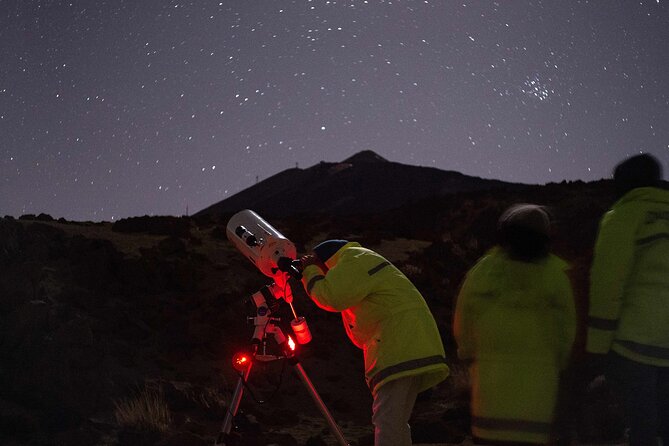
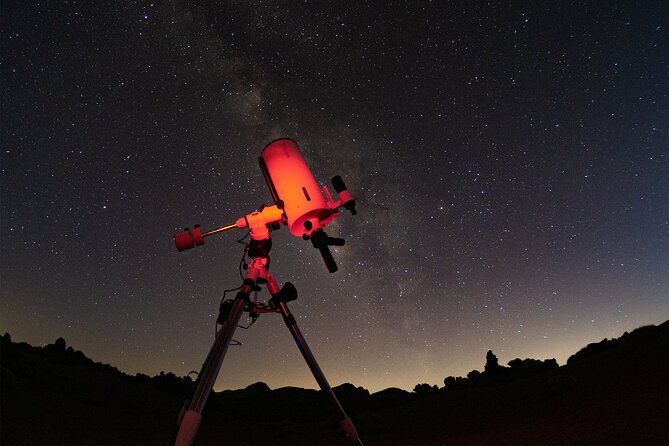
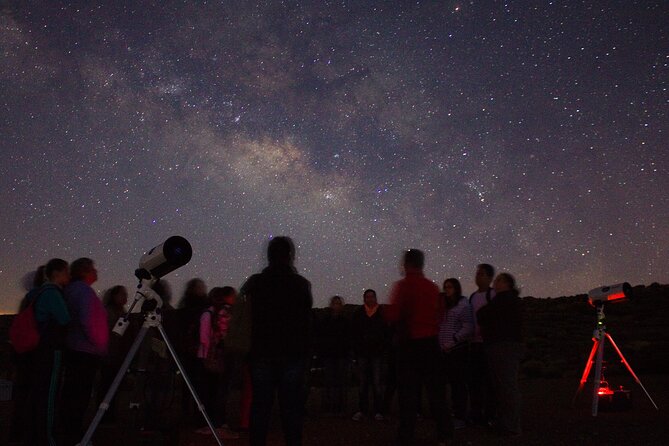
Teide National Park gives this short evening tour a remarkable setting: a high mountain sky filled with stars, far from the glow of Tenerife’s resort towns. Your guide begins with the naked eye, using explanations and a laser to point out constellations, planets, the Milky Way, and other features overhead. Telescopes then bring brighter objects closer, from the Moon and Saturn to nebulae and distant galaxies.
I like two things here. First, the session suits beginners, families, and curious adults without turning into a technical lecture. Second, the astrophotographic telescope can turn what you see into images, giving the experience a lasting visual record. The main drawback is simple: Teide gets cold after dark, and the short 80-minute format may feel basic if you already know the night sky well.
Key points before you book
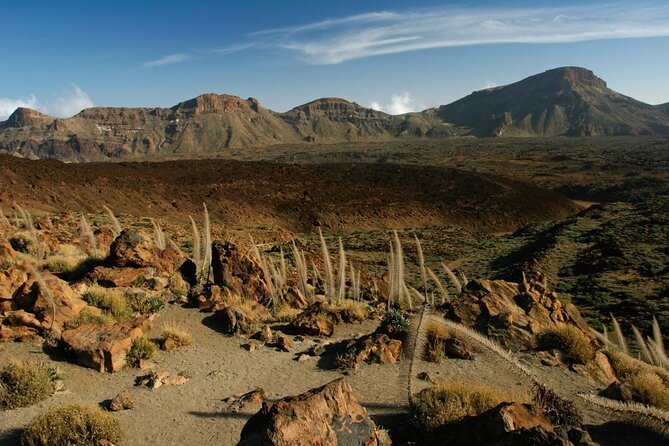
- The meeting point is high in Teide National Park: You meet at Mines of San Jose at 7:30 pm, surrounded by dramatic volcanic scenery.
- The experience starts without equipment: Your guide explains the sky using only your eyes before introducing the telescopes.
- The telescope targets change: You might see planets, star clusters, nebulae, or galaxies, depending on the date and conditions.
- The guides make the difference: Miguel, Adrián, and Óscar are praised for clear answers, friendly welcomes, and lively explanations.
- Dress for real mountain cold: A warm jacket is essential, and several people wished they had brought more layers.
- The group stays small: Numbers are capped at 20, which helps you get a turn at the telescope.
Why Teide works so well after sunset
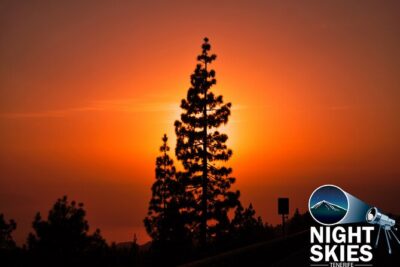
Teide is not just a convenient dark place. The national park gives you a striking volcanic setting before the sky takes over. One of the nicest details is that the meeting area can offer beautiful sunset views, so the evening may begin with fading light on the mountains before the stars appear.
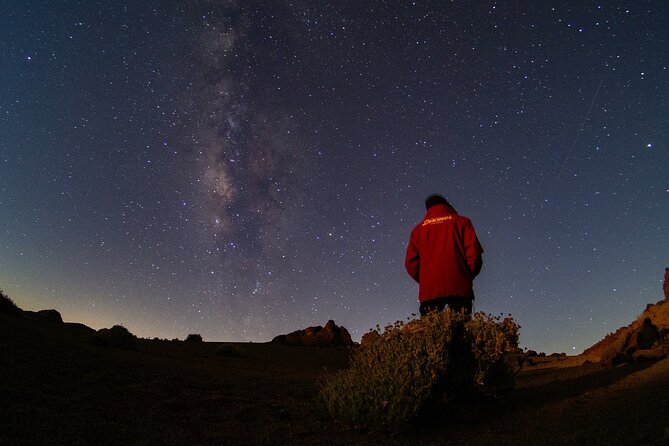
The high position also matters. The clearer air and reduced artificial light make it possible to see the Milky Way with your unaided eyes when conditions are right. That is the part I find most valuable for first-time stargazers. Before you look through a telescope, you get a sense of the sky as people saw it for thousands of years, without screens or instruments.
The setting does come with a price. After sunset, the temperature can drop sharply. Several people specifically wished they had brought a proper warm coat rather than a sweatshirt, and one person described the cold as the only real problem. Take that advice seriously. Bring layers, a warm outer jacket, and clothing that covers your arms and legs.
More National Park Stargazing in Spain
- Tenerife: Teide National Park Sunset & Stargazing Tour
★ 4.2 · 3,812 reviews - Tenerife: Sunset and Stargazing at Teide National Park
★ 4.7 · 2,826 reviews - Teide National Park Sunset & Stargazing with Dinner (Star Safari)
★ 5.0 · 2,601 reviews
A simple beginning with the naked eye
The tour lasts about 1 hour and 20 minutes, so the opening explanation needs to be focused. Your astronomer guide introduces the night sky without immediately sending you to a telescope. You learn to pick out constellations, stars, planets, and other features first.
This approach works well because the naked-eye section gives meaning to the equipment that follows. You are not simply waiting for your turn at a lens. You learn what you are looking at and where it sits in the wider sky.
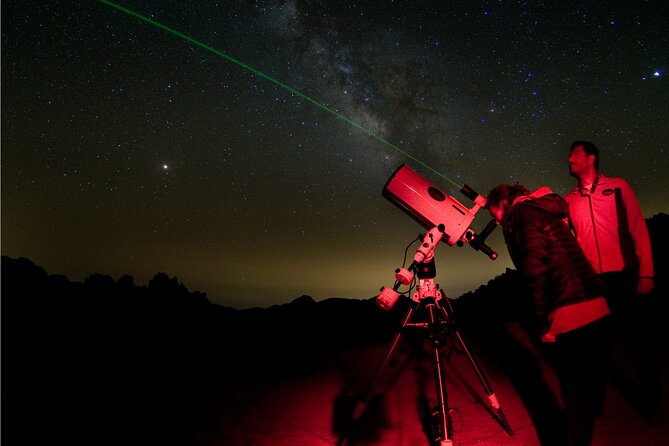
The guide may use a laser to identify stars, the Milky Way, zodiac constellations, and other objects. The exact subjects depend on the season and the night. Planet visibility changes too. One person hoped to see a planet but visited when the timing was not right, while others saw Saturn, Jupiter, and the Moon clearly.
That variation is worth understanding before you book. This is not a fixed planet show with the same objects guaranteed every night. The Moon phase, time of year, cloud cover, and position of the planets all affect the program. A good guide can explain what is visible, but cannot put Saturn in the sky on demand.
What you see through the telescopes
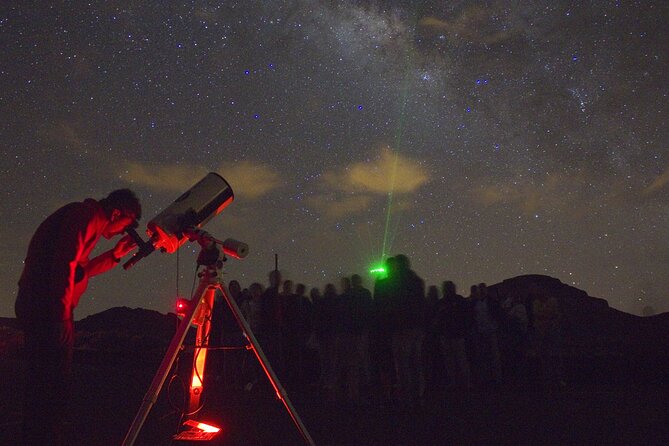
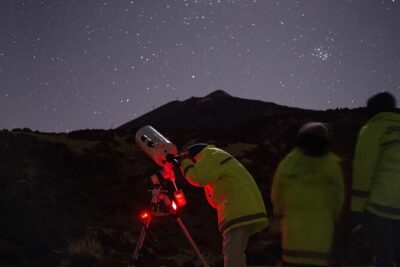
After the introductory talk, the group moves to astronomical observation through telescopes. Possible targets include planets, star clusters, nebulae, and galaxies. The exact list changes, but the equipment gives you a chance to see much more detail than you can with the naked eye.
Saturn is a frequent highlight when it is visible. Several people singled it out, and one person described not wanting to step away from the telescope while viewing Saturn and the Moon. Jupiter also appears in the feedback as a memorable target. For children, these familiar objects can make the night sky feel real rather than abstract.
You might also see a nebula, a star cluster, or the Andromeda Galaxy. These objects are less instantly familiar, so the guide’s explanation matters. The point is not only to see a faint patch of light. It is to understand what kind of object you are viewing and why it appears as it does.
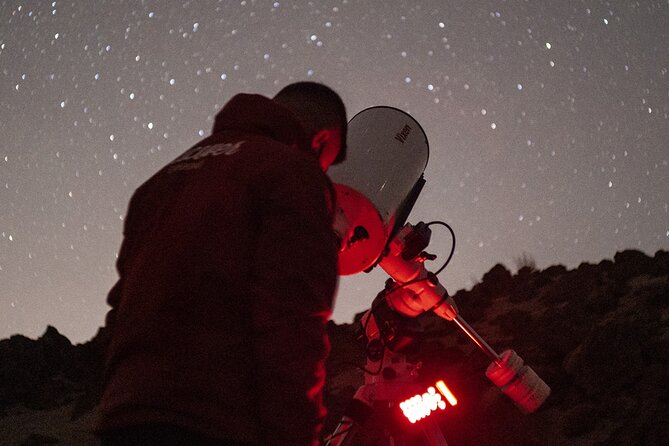
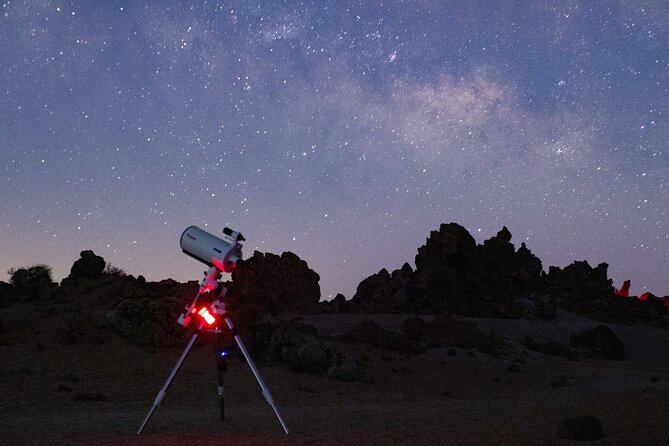
The astrophotographic telescope adds another useful element. The operator can turn what you see into images, so the session is not limited to a fleeting view through the eyepiece. The information does not specify exactly how images are delivered or whether every target is photographed, so treat this as a feature of the observation rather than a promised personal photo package.
The guides make a short tour feel personal
A strong guide is especially important in an astronomy experience. The equipment may be impressive, but a telescope alone does not explain the sky. Here, the guide is also the teacher, interpreter, and person answering questions in the dark.
Miguel and Adrián are praised for making a first stargazing experience easy to follow. Óscar is singled out for clear explanations and a friendly manner, especially when showing Saturn and the Moon. Other comments describe the guides as punctual, serious, approachable, and willing to answer questions.
The tone appears to suit mixed groups. You do not need prior astronomy knowledge, and children can follow along with adult supervision. Families with young children found the session manageable, while teenagers became interested enough to want to learn more afterward.
If you already know constellations and basic astronomy, set your expectations carefully. The presentation may feel introductory. One experienced amateur found the talk somewhat basic but still considered the location worth the trip. I agree with that assessment: the value for an experienced observer is mainly the Teide setting and access to the equipment, not advanced instruction.
The official language is English. A comment also indicates that Spanish may be possible, but English is the stated offering, so contact the provider if language is important for your group.
More National Park Stargazing in Tenerife
- Teide National Park: Sunset & Stargazing Safari with Dinner
★ 4.6 · 2,115 reviews - Tenerife. Stargazing in Teide National Park
★ 4.9 · 319 reviews - Teide National Park: Guided Large Telescope Stargazing Tour
★ 4.9 · 319 reviews - Teide National Park: Stargazing Experience
★ 4.7 · 220 reviews
Meeting at Mines of San Jose at 7:30 pm
The tour begins at Mines of San Jose, in Teide National Park, at 7:30 pm. It returns to the same meeting point after the observation. Admission to the activity is included, but transport and dinner are not.
That transport detail matters. You need to arrange your own way to the meeting point, and the information does not include hotel pickup. If you are staying in a coastal resort, allow plenty of time for the mountain drive and check the route before setting out. The road up is part of the evening for many people, with impressive volcanic scenery along the way, but the tour itself begins only once you arrive.
The start time can also shift in practical importance during the year. A 7:30 pm meeting may occur around sunset in one season and well after darkness in another. Since the listing gives one start time rather than a seasonal schedule, confirm the current time when booking.
The group maximum is 20 people. That is not a private tour, but it is small enough to make the telescope portion workable. You should still expect to share viewing time, especially if the sky offers several popular objects.
Is $42.33 good value?
At $42.33 per person, this is a fairly accessible way to add astronomy to a Tenerife stay. The price covers the guide, naked-eye explanation, telescope observation, the astrophotographic telescope feature, and insurance. It does not cover your drive to Teide or a meal.
I see the strongest value in the combination of expert interpretation and location. You are not paying only for a telescope setup. You are paying for an organized introduction to the sky in one of the island’s most dramatic natural areas, with someone explaining what you see.
The value is better for a beginner than for a serious amateur who already owns good equipment and knows the constellations. A first-timer can arrive with no background and still understand the session. A family can share the same activity without needing to prepare. An experienced observer may prefer a longer, more technical astronomy program, but can still appreciate the high mountain setting.
The 80-minute duration keeps the cost and time commitment reasonable. It also means the experience is focused rather than an all-evening expedition. If you want dinner, extended photography, or a detailed astronomy workshop, you will need to arrange those separately.
Cold, clouds, and the limits of outdoor astronomy
This is an outdoor activity, so conditions shape the result. The experience requires good weather. If poor weather forces cancellation, you are offered another date or a full refund.
Clear skies are essential, but even a clear night may not show every hoped-for object. Planet positions change, and the Moon can dominate or wash out some fainter objects. The guide can adjust the targets, but no astronomy tour can guarantee Saturn, Jupiter, a particular galaxy, or a specific nebula on every date.
The cold is the most consistent practical warning. Bring a genuinely warm coat, not just a light sweatshirt. Add layers if you feel the cold easily, and dress children carefully. The provider has reportedly had warm clothing available when someone forgot, but I would treat that as a backup, not a plan.
There is no dinner included, so eat beforehand or make plans for afterward. The information does not promise drinks, snacks, or shelter. Assume you will spend the session outdoors and prepare accordingly.
Who will enjoy this most
I would recommend this experience to:
- First-time stargazers who want friendly explanations rather than a technical course
- Families with children who can manage an evening outside and stay with an accompanying adult
- Couples looking for a quiet nighttime activity away from the beach resorts
- Photography-minded visitors interested in seeing what an astrophotographic telescope can produce
- Casual astronomy fans who want to see Saturn, Jupiter, the Moon, or distant objects when the timing is right
It may be less satisfying for an advanced amateur seeking detailed instruction, long exposure photography, or a private telescope session. It is also a poor fit if you dislike cold nights, cannot arrange your own transport, or want a guaranteed list of planets.
Children must be accompanied by an adult, and most people can participate. The activity is not described as accessible for every mobility need, so contact the provider if you have specific access requirements.
Booking and cancellation details
Confirmation is provided at booking, and the experience is often reserved about 22 days ahead. That suggests you should not leave it until the final day of your Tenerife trip, especially if your dates are fixed.
Free cancellation is available up to 24 hours before the 7:30 pm start time for a full refund. Cancellations or changes made inside 24 hours are not refunded or accepted. The local time at Teide controls the cutoff.
Because weather can cancel the activity, I would avoid placing it on the last possible night of your holiday. Booking earlier in your stay gives you a chance to use the alternative date option if conditions spoil the first attempt.
Should you book the Teide stargazing experience?
Book it if you want a short, friendly introduction to astronomy in a memorable mountain setting. The combination of naked-eye teaching, telescope viewing, and guides such as Miguel, Adrián, and Óscar gives beginners plenty to enjoy. The chance to see Saturn, Jupiter, the Moon, nebulae, or the Andromeda Galaxy makes the session feel special when the timing and sky cooperate.
Think twice if you expect a long observatory visit, advanced astronomy, or transport from your hotel. The tour is only 80 minutes, it is conducted in English, and the cold can be intense.
For most curious visitors, the price is fair, the format is easy to fit into a Tenerife itinerary, and the setting does much of the work. Pack a proper coat, arrive ready to share the telescopes, and let the guide show you where to look.
FAQ
Where does the stargazing tour begin?
The meeting point is Mines of San Jose in Teide National Park, at 38300, Santa Cruz de Tenerife, Spain. The activity ends back at the same meeting point.
What time does the experience start?
The stated start time is 7:30 pm. Confirm the current details when booking, as the information provided gives one scheduled start time.
How long does the tour last?
The stargazing session lasts approximately 1 hour and 20 minutes.
Is transport included?
No. Transport to and from Mines of San Jose is not included. Dinner is also not included.
What can I see through the telescope?
Depending on the date and sky conditions, you might observe planets, star clusters, nebulae, galaxies, the Moon, Saturn, or Jupiter. Specific objects are not guaranteed because their visibility changes.
Can children join the activity?
Yes. The experience is suitable for people of all ages, but children must be accompanied by an adult. The maximum group size is 20 people.
Just in after dark around Tenerife
- Magic Stargazing & Sunset in Teide with Dinner + Telescopes★ 3.5 · 20 reviews
- Private astronomy tour with sunset toast, picnic, and astrophotography★ 4.8 · 83 reviews
- Tenerife: Teide Stargazing with an Astrophysicist★ 4.9 · 74 reviews
- Tenerife: Stargazing at Mt. Teide★ 4.2 · 72 reviews
- Mount Teide Night Tour: Stargazing, Dinner and Hotel Pick up★ 3.5 · 86 reviews
- Tenerife: Teide National Park Sunset Picnic and Stargazing★ 4.6 · 117 reviews
- Tenerife: Mount Teide Observatory Astronomical Tour★ 4.4 · 126 reviews
- Self Drive Sunset & Stargazing in Teide National Park – No Dinner★ 5.0 · 151 reviews
National Park Stargazing, night against night.
Teide National Park Sunset & Stargazing with Dinner (Star Safari)
Read our review →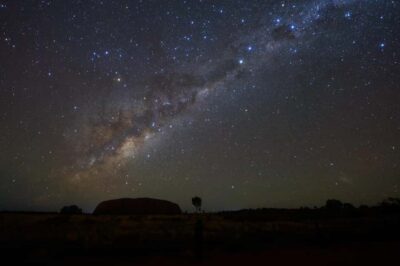
National Park Astronomy Tour with Telescope and Photo
Read our review →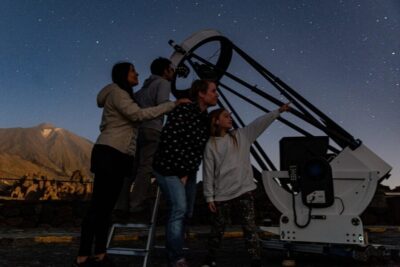
Teide National Park: Guided Large Telescope Stargazing Tour
Read our review →
Self Drive Sunset & Stargazing in Teide National Park – No Dinner
Read our review →