
Review · TENERIFE
Tenerife: Mount Teide Observatory Astronomical Tour
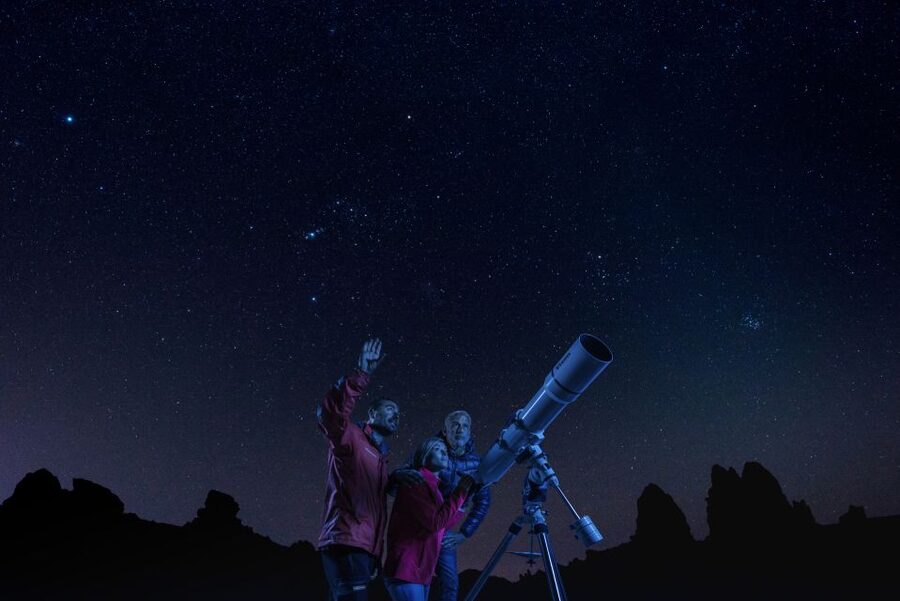
Mount Teide becomes a working science site on this eight-hour astronomy tour, not just a dramatic volcanic viewpoint. You visit the world’s largest solar observatory in the afternoon, watch the sun set from high on the mountain, then study the night sky with powerful telescopes.
I like two things in particular: the tour gives you access to the observatory’s scientific side, and the guides explain difficult ideas in a friendly way. Lucas has been praised for covering everything from star life cycles to how telescopes work, while Micaela is noted for her clear, professional approach. The main catch is the cold. Tenerife may be warm at sea level, but Mount Teide can be around 7°C with strong wind.
Key points to know before booking
- See solar science in the afternoon: Visit the world’s largest solar observatory and learn how scientists study the sun.
- Stay for a proper night-sky session: Use long-range telescopes to view the moon, stars, constellations, and other prominent objects.
- Expect an expert-led tour: Astronomers and astronomy-focused guides explain the equipment and answer questions.
- Travel in a small group: Transport is by small-group vehicle, with pickup from selected hotels in north Tenerife.
- Pack for mountain weather: Long trousers, warm layers, closed shoes, and a long-sleeved shirt are required.
- Have a weather backup: Poor conditions may mean nocturnal telescopes or an audiovisual presentation instead of clear stargazing.
Why this is more than a sunset trip
Many Mount Teide excursions focus on scenery and a cable-car viewpoint. This one adds a proper scientific visit, then keeps you on the mountain after sunset. That makes it a better match for you if astronomy is the main reason you want to go, rather than simply seeing Tenerife from above.
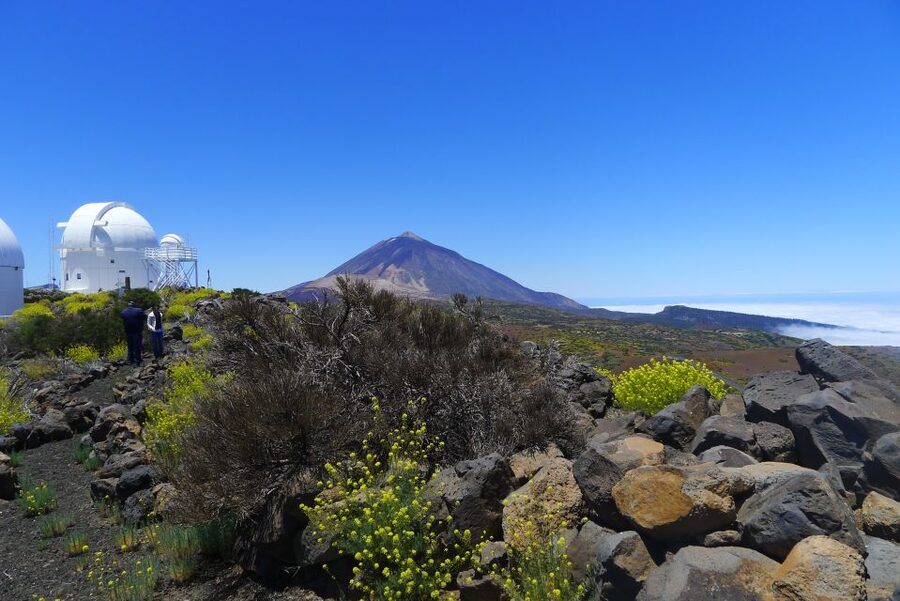
The setting matters. Mount Teide is one of the world’s top three places for stargazing, according to the tour information, and the high volcanic terrain gives you a memorable backdrop before darkness arrives. You get the contrast of bright solar research in the afternoon and a dark sky at night.
The experience is also nicely paced in theory: drive into the national park, visit the observatory, stop for sunset, then use telescopes after dark. It is a full day, not a quick evening outing. That length is useful because it allows time for explanation, but it also means you should not book it on a day when you need an early dinner or a relaxed evening back at your hotel.
More Observatory Visits in Tenerife:
- Tenerife: Mount Teide Observatory Guided Tour
★ 4.6 · 818 reviews - Royal Observatory Greenwich & Prime Meridian Entrance Ticket
★ 4.5 · 1,095 reviews - Griffith Observatory Hike: Guided Tour through Griffith Park
★ 5.0 · 1,020 reviews
The drive into Teide National Park
Pickup is available from selected hotels in north Tenerife, including Parque San Antonio, GF Noelia, Hotel Magec, Hotel Concordia, Tucán, Coral Teide Mar, Riu Garoé, CC La Cúpula, and Kiosko Paragüitas. The exact pickup time changes with the season because the tour is arranged around sunset.
Transport is provided in a small-group vehicle. That is more comfortable than joining a large coach, and it gives the guide a better chance to answer questions. The smaller format also suits an activity where people may want to discuss telescopes, planets, and the night sky instead of simply being carried from stop to stop.
The drive itself can be part of the experience. One route described by a participant included views toward the Los Gigantes cliffs before heading higher into the island. Another praised the scenery and the guide’s explanations of Tenerife’s natural features along the way.
There is one practical downside: multiple hotel pickups can add time. A past participant felt that collecting people at several locations made the day longer than necessary. If you are sensitive to time in a vehicle, a central meeting point might be preferable, but this tour uses hotel pickup for the listed north Tenerife locations.
Entering the world’s largest solar observatory
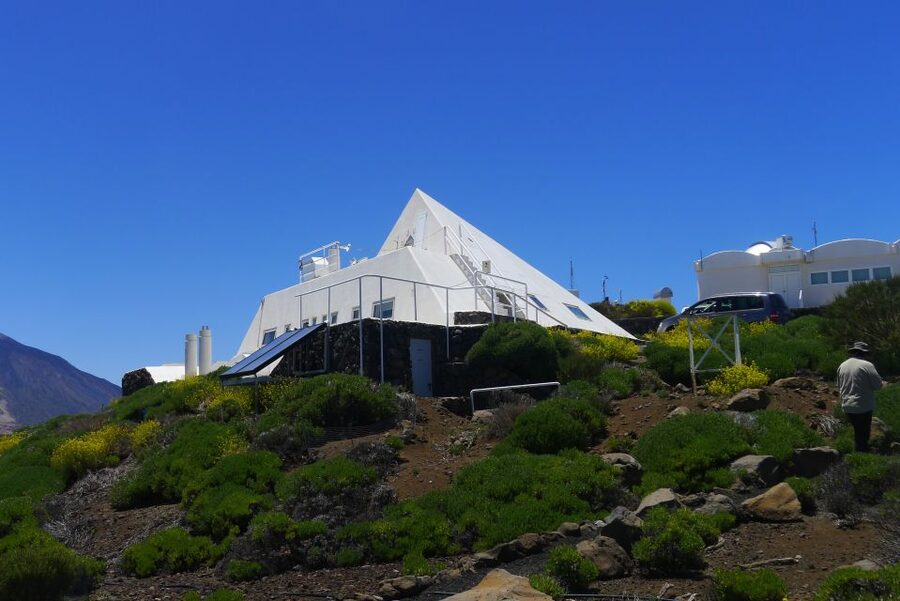
The observatory visit is the tour’s most unusual feature. You are not simply looking at Mount Teide from outside. A guide takes you into a working astronomical facility and explains how its instruments study the sun and other objects.
The solar focus gives the afternoon a clear purpose. You may learn how researchers observe solar activity, and one participant described seeing solar flares in real time as a highlight. That sort of demonstration helps turn astronomy from an abstract subject into something you can see happening.
The exact equipment used can vary. One older account noted that the solar telescope used during that visit was smaller than the one shown in promotional imagery. I would keep expectations sensible: this is a guided educational visit, not a private research session with access to every instrument.
Still, the chance to look inside a telescope and hear about the design and operation of the instruments adds real value. You are seeing how observations are made, not just being handed a telescope at the end of the day. Guides with an astronomy background can also answer questions in more depth than a general sightseeing guide.
Lucas has been singled out for explaining telescope design, star navigation, constellations, the life cycle of stars, and how scientists identify elements in distant stars and planets. Micaela has been praised for clear, professional explanations. The guide you receive may be different, but the tour is built around this expert-led approach.
Sunset above the volcanic mountain
After the observatory, the tour pauses at a viewpoint for sunset. This is a visual break from the technical material and a good bridge between daylight and the night session.
The high volcanic setting gives the sunset a different feel from one seen at the coast. You can watch the light change across the mountain while knowing that the next part of the tour depends on darkness. The experience is not just about taking a photograph. It marks the point when the tour shifts from solar astronomy to stargazing.
Bring a jacket even if you leave your hotel in summer clothes. The mountain can be much colder than the resort areas, and strong wind makes the temperature feel lower. The clothing rules are strict: you need warm clothing, long trousers, a long-sleeved shirt, and closed-toe shoes. Sandals, flip-flops, shorts, short skirts, and sleeveless shirts are not allowed.
This is one of the most important booking details. You can be refused entry to the excursion if you do not have the required clothing. Do not treat warm layers as an optional extra simply because the forecast at your hotel looks tropical.
More Stargazing Tours around Tenerife:
- Tenerife: Teide National Park Sunset & Stargazing Tour
★ 4.2 · 3,812 reviews - Tenerife: Sunset and Stargazing at Teide National Park
★ 4.7 · 2,826 reviews - Teide National Park Sunset & Stargazing with Dinner (Star Safari)
★ 5.0 · 2,601 reviews - Teide National Park: Sunset & Stargazing Safari with Dinner
★ 4.6 · 2,115 reviews
Waiting for darkness at the cable-car base
The night portion takes place near the cable-car base. There may be time for a meal, but food and drinks are not included, and you should not assume that a full meal will be available. One participant found the café busy and not especially well stocked, so carrying food is sensible if you need something substantial during this long outing.
An earlier version of the experience included a planetarium presentation before telescope viewing. The current information specifically promises astronomical observation with a long-range telescope, so you should not book solely on the expectation of a planetarium show. The format and order of the evening can change.
The break between sunset and full darkness is useful. Your eyes need time to adjust, and the guide can prepare you for what you may see. It also prevents the entire experience from becoming a rushed sequence of telescope queues and quick explanations.
What you see through the telescopes
Once the sky is dark, the guide helps you identify constellations with the unaided eye before moving to the telescopes. That order is important. You first learn how to look at the sky as a whole, then use magnification to examine selected objects.
The equipment is described as high quality, with long-range telescopes used for the observation. Past participants have viewed several different night-sky targets through multiple large telescopes, including the moon and other prominent objects. The exact list depends on the season, visibility, and atmospheric conditions.
A strong guide makes a big difference here. Lucas has been praised for explaining how to navigate by the stars and how elements are identified in other stars and planets. Other guides have been described as eager to answer questions and passionate about astronomy. That makes this tour more useful for a curious beginner than a silent telescope session where you simply take a turn and move on.
You might see an especially memorable object if conditions cooperate. One outing included a comet and shooting stars. That is a bonus, not a guarantee, so I would judge the tour by the quality of the instruction and access to the equipment rather than by hopes of seeing a rare event.
What happens if clouds block the stars
Weather is the tour’s biggest uncertainty. If conditions prevent proper viewing through the solar telescopes or create a safety problem, the plan can change. The group may visit two nocturnal telescopes instead of one.
If the stars are not visible, guides use audiovisual equipment for a virtual tour of the night sky, constellations, and notable objects that might otherwise have been seen. That cannot replace a clear sky, but it means the evening does not simply collapse into a wasted drive.
You should still accept that astronomy depends on weather. A cloudy or windy night can reduce the visual reward, even when the guide does everything correctly. If seeing stars is your only goal, this is a risk you need to accept. If you also care about the observatory visit, sunset, and instruction, the tour remains worthwhile on a less perfect night.
The value of $121
At $121 per person, this is not the cheapest way to see Mount Teide. You are paying for a long excursion, small-group transport, a guided observatory visit, a sunset stop, and an organized telescope session. Food and drinks are extra, so include that in your budget.
I think the price makes more sense if you would otherwise book separate transport and try to arrange an astronomy experience on your own. The observatory access is the key value. A standard mountain sightseeing trip may give you scenery, but it does not necessarily give you a guided visit inside the solar observatory followed by an astronomy session.
The tour also saves you from planning around sunset and night driving. You receive pickup, a guide in Spanish or English, and a structured route lasting about eight hours. For someone with a serious interest in astronomy, that combination is stronger value than a simple stargazing outing.
The value is weaker if you mainly want a quick view of the stars. You will spend much of the day and evening on the mountain, and weather may affect the final result. Families with young children may also find the timing and cold uncomfortable, since the tour is not recommended for children under eight.
Who should book this experience
I would choose this tour for an adult or older child who wants to understand what they are seeing. It suits beginners because the guides explain basic ideas clearly, but it also gives astronomy enthusiasts enough material to ask detailed questions.
It is a good choice if you like combining scenery with science. The drive, volcanic views, sunset, observatory, and night sky all belong to the same day, so you get more than a single telescope stop.
You should think twice if you dislike long outings, cold weather, or uncertain schedules. People with health conditions should ask their doctor before taking part, and the tour is not suitable for people with mobility impairments. The mountain setting and extended time outside require a reasonable level of comfort with those conditions.
For language, live guiding is available in Spanish and English. Confirm that one of those languages works for you before booking, especially if the science explanations are central to your decision.
Booking tips that can save trouble
Bring more warmth than you think you need. A long-sleeved shirt, warm outer layer, long trousers, and closed shoes are the minimum sensible approach. The advice about clothing is not minor housekeeping. It can determine whether you are allowed to join and whether you enjoy the telescope session.
Take food and water with you. Food and drinks are not included, and the café may be crowded or limited. A packed snack is especially useful because this is an eight-hour activity with changing pickup times.
Children must confirm their age with a passport or ID card. Bring the required identification for children rather than assuming verbal confirmation will be enough.
The tour allows free cancellation up to 24 hours before departure for a full refund, and you can reserve now and pay later. That flexibility is helpful when mountain weather is part of the decision, though it does not guarantee clear skies on the chosen date.
Should you book the Mount Teide Observatory tour?
Book it if you want the science behind the scenery. The observatory visit, solar viewing, expert explanations, sunset, and night telescopes create a fuller Mount Teide experience than a standard sightseeing trip.
I would be especially happy to recommend it to astronomy fans and curious first-time stargazers who can handle a long, cold evening. I would skip it if you want a short excursion, need guaranteed clear skies, or are unwilling to pack proper mountain clothing.
At $121, the tour earns its price through access and guidance rather than luxury. Come prepared with warm clothes, closed shoes, food, and realistic weather expectations, and you get a well-planned way to experience Tenerife’s volcanic mountain by day and its stars by night.
FAQ
How long does the Mount Teide Observatory tour last?
The tour lasts eight hours. The pickup time changes with the season and the time of sunset.
What is included in the price?
The price includes small-group transportation, a guide, a guided visit to Teide Observatory, and astronomical observation using a long-range telescope.
Is food included?
No. Food and drinks are not included. Bringing food is sensible because the café may be busy or have limited supplies.
Where can pickup take place?
Pickup is available from selected hotels in north Tenerife, including Parque San Antonio, GF Noelia, Hotel Magec, Hotel Concordia, Tucán, Coral Teide Mar, Riu Garoé, CC La Cúpula, and Kiosko Paragüitas.
What languages are available?
Live guiding is available in Spanish and English.
What clothing is required?
You need warm clothing, comfortable clothes, a long-sleeved shirt, long trousers, and closed-toe shoes. Sandals, flip-flops, shorts, short skirts, and sleeveless shirts are not allowed.
Can children join the tour?
The tour is not recommended for children under eight years old. Children must confirm their age with a passport or ID card.
What happens if the weather blocks the stargazing?
If stars cannot be seen, guides use audiovisual equipment for a virtual tour of the night sky, constellations, and prominent objects. In some conditions, the group may visit two nocturnal telescopes instead of one.
Is the tour suitable for people with mobility impairments?
No. The experience is listed as unsuitable for people with mobility impairments.
Can I cancel the booking?
You can cancel up to 24 hours in advance for a full refund. The reserve-now, pay-later option is also available.
Just in after dark around Tenerife
- Magic Stargazing & Sunset in Teide with Dinner + Telescopes★ 3.5 · 20 reviews
- Private astronomy tour with sunset toast, picnic, and astrophotography★ 4.8 · 83 reviews
- Tenerife: Stargazing at Mt. Teide★ 4.2 · 72 reviews
- Tenerife: Teide Stargazing with an Astrophysicist★ 4.9 · 74 reviews
- Mount Teide Night Tour: Stargazing, Dinner and Hotel Pick up★ 3.5 · 86 reviews
- Tenerife: Teide National Park Sunset Picnic and Stargazing★ 4.6 · 117 reviews
- Teide National Park: Stargazing Experience★ 5.0 · 118 reviews
- Self Drive Sunset & Stargazing in Teide National Park – No Dinner★ 5.0 · 151 reviews
Observatory Visits, night against night.
Royal Observatory Greenwich & Prime Meridian Entrance Ticket
Read our review →
Griffith Observatory Hike: Guided Tour through Griffith Park
Read our review →
Royal Observatory Greenwich & Prime Meridian Entry Ticket London
Read our review →
Private Getty Center to Griffith Observatory Guided Tour
Read our review →Lists this night appears in