
Review · UK
Royal Observatory Greenwich & Prime Meridian Entry Ticket London
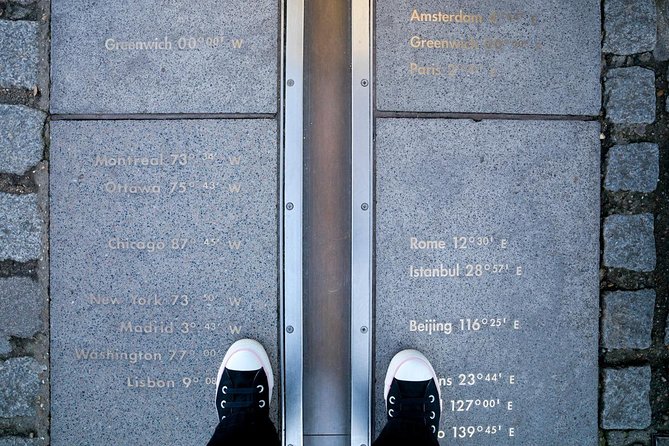
The most memorable moment here is simple: you stand astride the Prime Meridian, with east on one side and west on the other. Then you step into the observatory’s old rooms to see how astronomers solved the practical problem of measuring time and finding a ship’s position at sea.
I like the excellent views over the Thames and London, and I like the clocks, especially John Harrison’s ingenious marine timekeepers. The main catch is the steep uphill walk, followed by stairs and some areas with limited access. This is a self-guided visit, not a traditional tour with a guide leading you from room to room.
Key points to know before you go
- Stand on the Prime Meridian: Take your classic east-and-west photo in the Meridian Courtyard.
- See clocks that changed navigation: Harrison’s timekeepers explain how accurate clocks helped sailors calculate longitude.
- Look inside Wren’s Octagon Room: This beautifully preserved room is one of the finest surviving Christopher Wren interiors in London.
- Expect a hill and stairs: The observatory sits high in Greenwich Park, so allow extra effort if walking is difficult.
- Use the audio guide: The downloadable guide adds useful context to the rooms, clocks, astronomers, and time signals.
- Build a full Greenwich day: The National Maritime Museum and Queen’s House are free nearby, while Cutty Sark is a short walk away.
The Prime Meridian is the star of the visit
The Royal Observatory Greenwich is one of those places where an ordinary painted line carries enormous meaning. In the Meridian Courtyard, you can place one foot east of the Prime Meridian and the other west of it. It is a quick photo, but it also gives you a physical way to understand a system used across maps, navigation, time zones, and global travel.
The line itself does not take long to see. That matters because some people arrive expecting a large attraction built around one dramatic exhibit. The Prime Meridian is memorable, but it is only the opening scene. The rest of the visit explains how Greenwich became linked with standard time and why astronomers worked here for centuries.
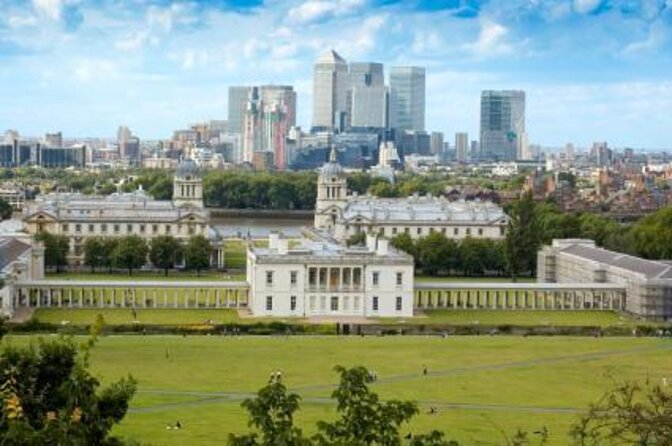
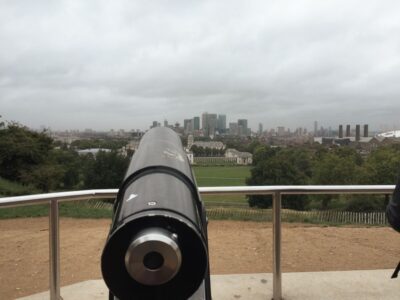
I find the setting just as important as the line. The observatory sits on a hill in Greenwich Royal Park, with views across the park, the River Thames, and the City of London. On a clear day, the view gives you an excellent sense of London’s scale. On a wet day, the outdoor parts are less pleasant, since the approach and much of the hilltop experience are outside.
More Observatory Visits in the world:
- Royal Observatory Greenwich & Prime Meridian Entrance Ticket
★ 4.5 · 1,095 reviews - Griffith Observatory Hike: Guided Tour through Griffith Park
★ 5.0 · 1,020 reviews - Tenerife: Mount Teide Observatory Guided Tour
★ 4.6 · 818 reviews
Allow more than two hours if you want the full story
The ticket is advertised as an approximately two-hour visit. That is enough time to enter the observatory, take the Meridian photo, walk through the principal rooms, and listen to the main audio material without rushing.
I would allow longer if you plan to stop for every explanation or combine the observatory with Greenwich’s other sights. One useful plan is to spend two hours at the observatory, then continue to the National Maritime Museum and Queen’s House, both free and within a short walk. Cutty Sark, the surviving tea clipper that now operates as a museum, gives the day a strong maritime finish.
The audio guide is downloadable and available in 10 languages according to the booking information. On-site information also refers to audio options in several languages, so check the current arrangements when you arrive. This is not a live, fixed-route tour. You move at your own pace, which works well if your group has different interests or if you want to linger over the clocks.
Some visitors have also enjoyed volunteer explanations and talks. You may encounter a staff member or volunteer willing to answer questions, but you should book this experience expecting a self-guided visit rather than a scheduled personal tour. A guide named Ross has been singled out for making the subject especially interesting, but guide availability is not guaranteed.
Walking up Greenwich Hill is part of the cost
The practical issue is the approach. The Royal Observatory sits at the top of a steep hill in Greenwich Park. Several people find the climb longer or harder than expected, and the route can be tiring for anyone with limited mobility.
You can reach Greenwich using public transportation, and the attraction is near public transport connections. One review specifically found the Thames ferry a good way to reach the area. Once you arrive in Greenwich, you still need to make your way through the park and up to the observatory, so do not judge the difficulty only by the distance shown on a map.
Wear comfortable shoes and leave extra time. The hill is also exposed to the weather. Rain can spoil the outdoor portions, including the walk, the courtyard, and the views. A dry or partly cloudy day gives you a much better chance to enjoy the setting.
Accessibility needs careful planning. Certain areas are not fully accessible, and the historic buildings include stairs. One small lift serves a short outside section, but the internal buildings do not have lifts throughout. Service animals are allowed. If you need assistance, contact the attraction before your visit rather than discovering the limitations at the gate.
Flamsteed House takes you into the observatory’s working past
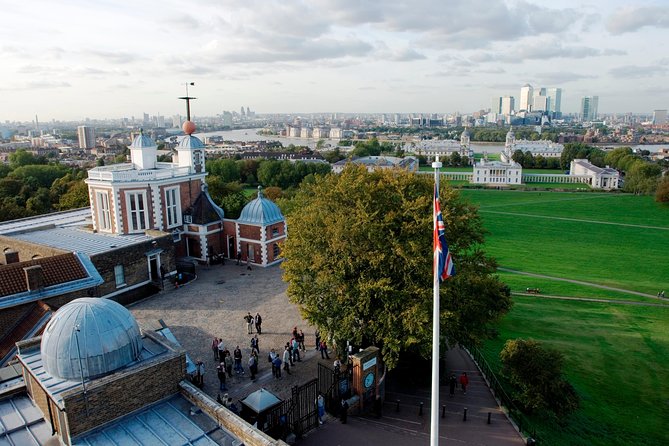
Your visit leads into Flamsteed House, where the Astronomers Royal worked and lived. The building makes the observatory feel more personal. You are not just looking at instruments in glass cases. You are following the rooms and tools used by people trying to improve navigation and timekeeping.
The displays connect the observatory with scientists and inventors including Newton, Halley, Bradley, Maunder, Airy, Einstein, and John Harrison. You do not need a strong background in astronomy to follow the main idea. The central question is practical: how could people measure the heavens accurately enough to guide ships, set clocks, and create a reliable reference for time?
The Octagon Room, designed by Sir Christopher Wren, is one of the finest preserved Wren interiors in London. Its value is not only architectural. This is a place where the observatory’s scientific work becomes easier to picture, with the room providing a direct link to the institution’s early years.
Take time with the audio guide here. The commentary helps explain why the building, instruments, and observations mattered. Without that context, some displays can seem like old scientific objects. With it, the rooms tell a clearer story about navigation, astronomy, and the gradual standardization of time.
More Entry Tickets in the world:
- Miami: Frost Museum of Science and Planetarium Entry Ticket
★ 4.5 · 429 reviews - Houston Museum of Natural Sciences: Planetarium Ticket
★ 4.5 · 139 reviews - Jasper: Jasper Planetarium and Telescope Combo Tour Tickets
★ 3.8 · 118 reviews - London: Royal Observatory Planetarium Show Entry Ticket
★ 3.9 · 89 reviews
Harrison’s clocks explain why longitude mattered
For many people, the clocks are the best part of the observatory. John Harrison’s timekeepers helped solve one of the hardest problems in navigation: determining longitude at sea.
Latitude can be estimated by looking at the sun or stars. Longitude is harder because you need to compare local time with a known reference time. A clock that keeps accurate time during a sea voyage gives sailors the information they need to work out their position east or west.
You can see Harrison’s clocks up close and follow the story of the inventions that changed navigation. This section rewards patience. It is easy to glance at a clock and move on, but the mechanism represents years of work and a major shift in how ships crossed the world.
I especially like that the displays make time feel like a human invention rather than an invisible fact. Standard time, time zones, and accurate marine clocks are fairly recent parts of daily life. The visit shows how much effort went into creating systems we now treat as automatic.
The Shepherd Gate Clock made Greenwich time public

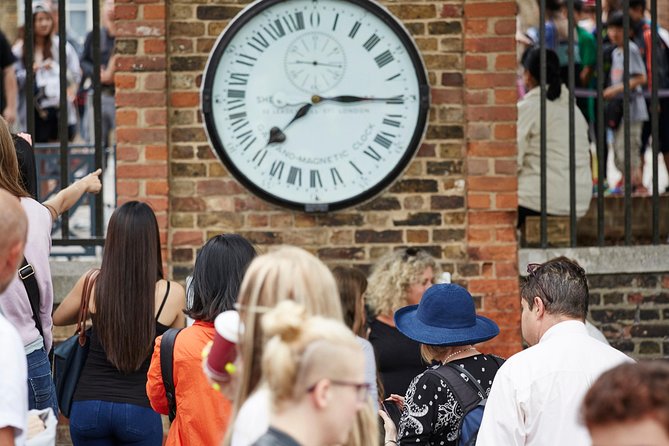
Outside Flamsteed House, look for the Shepherd Gate Clock. It was the first clock to show Greenwich Mean Time to the public. This small detail helps connect the observatory’s work with everyday life in London.
The clock is easy to understand: a public time signal needs to be visible, dependable, and shared. Greenwich Mean Time became a reference point far beyond the observatory, and the clock gives that broad idea a physical form.
Also look up at the bright red Time Ball on top of Flamsteed House. It was first used in 1833 and still operates today. It is one of the world’s earliest public time signals. The ball may seem modest beside London’s larger sights, but it demonstrates how people once received an accurate time signal before personal clocks, phones, and digital displays.
These are the details I would not skip. The Prime Meridian makes the strongest photograph, but the Shepherd Gate Clock and Time Ball explain how Greenwich time reached people outside the observatory.
The Great Equatorial Telescope gives the visit a wider view
The huge onion-shaped dome is one of Greenwich’s most recognizable features. Inside it, the Great Equatorial Telescope offered astronomers new views of the universe more than a century ago.
This part changes the focus from time on Earth to observation of the sky. You see how the observatory was connected to serious astronomical work, not just the Prime Meridian and GMT. The scale of the dome also gives you a sense of the equipment needed before modern space telescopes and digital imaging.
Do not expect a planetarium show to be included with this entry. One review expressed disappointment after assuming the word observatory meant a planetarium. The ticket covers the observatory buildings and exhibits described here, not a separate planetarium experience. If a planetarium program matters to you, check its separate admission and schedule before booking.
Is the $33.90 ticket good value?

At about $33.90 per person, this is not the cheapest short attraction in London. The visit lasts roughly two hours, and the Prime Meridian photo itself takes only a few minutes. If you want a large interactive museum or a full-day guided program, this ticket may feel limited.
The value improves if you care about astronomy, clocks, navigation, architecture, or London viewpoints. The admission includes the observatory, the audio guide, and all fees and taxes. You also get access to a place with real scientific and navigational importance rather than a display created only for tourists.
The nearby free attractions help. The National Maritime Museum and Queen’s House are within a short walk and do not charge admission. Add Greenwich Park and Cutty Sark, and the observatory becomes one part of a much fuller day.
Buying ahead can also make sense because the attraction is popular and is often booked about 35 days in advance. Advance purchase gives you a confirmed ticket, but check the voucher carefully before leaving for the hill. Some people have had trouble with barcode scanning or downloading a mobile ticket, including issues with the Viator app on an iPhone 12 Pro running iOS 17.0.6. Save the ticket before you arrive, and keep your booking confirmation available.
The attraction staff could not always scan third-party vouchers smoothly. If the barcode fails, you may face the unpleasant choice of buying another ticket at the entrance. That problem does not affect the observatory itself, but it matters when you compare advance booking with buying directly at the door.
A practical Greenwich plan
For a smooth day, I would start with the observatory while you have the most energy. The climb is easier before a full day of walking, and arriving early gives you a better chance of taking a clear Prime Meridian photo before the courtyard gets crowded.
After the observatory, walk downhill toward the National Maritime Museum and Queen’s House. Both are free, so you can decide on the day how much time you want to spend inside. Their short distance from the observatory makes Greenwich easy to explore without another transport connection.
Continue toward Cutty Sark if you want a paid attraction with a strong connection to Britain’s seafaring past. A pub lunch in Greenwich also fits naturally into this plan. The observatory alone takes about two hours, but the wider area can fill most of a day.
The view is another reason not to rush back to central London. From the hilltop, you get a broad look toward the Thames and the City. Even if the exhibits are not your main interest, the setting gives the visit a clear sense of place.
Who will enjoy this most?
I would recommend the observatory to families with school-age children, couples, solo visitors interested in science, and anyone curious about the origin of GMT. Children under four enter free, but children must be accompanied by an adult.
It suits you best if you enjoy learning through displays, old instruments, and audio commentary. You do not need to be an astronomy expert, but the experience is more satisfying when you are willing to spend time with the explanations.
It is less suitable if you want a live guide throughout, a planetarium show, or a fully accessible indoor attraction. The walk uphill, outside stairs, and historic layout are real limitations. Rain can also make the visit much less comfortable.
Should you book the Royal Observatory Greenwich ticket?
Book it if standing on the Prime Meridian matters to you, or if clocks, navigation, astronomy, and London views sound appealing. I would also book it as part of a full Greenwich day, using the nearby free museums to make the $33.90 admission go further.
Before paying, make sure you understand what is included: this is a self-guided observatory visit with an audio guide, not a private tour or planetarium ticket. Check your mobile voucher in advance, plan for the steep hill, and allow at least two hours.
If mobility is limited, contact the attraction first. If you only want a quick photo on the line and have no interest in the displays, buying this ticket may not be the best value. For everyone else, the combination of the Meridian, Harrison’s clocks, Wren’s Octagon Room, and the London view makes this a worthwhile stop when you are already exploring Greenwich.
FAQ
How long does the Royal Observatory visit take?
The visit lasts approximately two hours. You may want more time if you listen to all the audio material or combine the observatory with Greenwich’s nearby attractions.
What does the ticket include?
The ticket includes admission to the Royal Observatory, an audio guide available to download, and all fees and taxes.
Is the Prime Meridian included?
Yes. You can stand on the Prime Meridian in the Meridian Courtyard, with one foot in the eastern hemisphere and one in the western hemisphere.
Is this a guided tour?
It is mainly a self-guided visit using an audio guide. Volunteer talks or staff assistance may be available, but a personal guide is not guaranteed.
How many languages are available for the audio guide?
The booking information says the downloadable audio guide is available in 10 languages. On-site information also refers to several language options, so check the current arrangements when you arrive.
Is transportation included?
No. You must arrange your own transportation to and from Greenwich. The attraction is near public transportation.
Is the observatory accessible to wheelchair users?
Certain parts of the attraction are not fully accessible. There are outside stairs and internal areas without lifts, so contact the attraction before visiting if you need accessibility assistance.
Are children admitted free?
Children under four years old are free to enter. Children must be accompanied by an adult.
Can I visit other attractions nearby?
Yes. The National Maritime Museum and Queen’s House are within a short walking distance and are free to visit. Cutty Sark is also nearby and has its own admission.
Just in after dark around the world
- Doha: Night Desert Safari, Stargazing, and Camel Ride★ 5.0 · 2 reviews
- Doha : Night Desert Safari with Dune Bashing & Stargazing★ 5.0 · 4 reviews
- Doha: Night Desert Safari + Camel ride + Stargazing & Relax★ 5.0 · 4 reviews
- Day Trip to Tatacoa Desert (Horseback, Boat, Stargazing, ..)★ 4.4 · 3 reviews
- Christchurch: Lake Tekapo Stargazing & Mount Cook 2-Day Tour★ 5.0 · 6 reviews
- Cabo de Gata: Stargazing Experience★ 4.5 · 7 reviews
- Chile: Astronomical Tour in the Atacama Desert★ 4.8 · 4 reviews
- Cabo de Gata: Guided Night Walk with Stargazing★ 4.7 · 36 reviews
Observatory Visits, night against night.
Royal Observatory Greenwich & Prime Meridian Entrance Ticket
Read our review →
Griffith Observatory Hike: Guided Tour through Griffith Park
Read our review →




Private Getty Center to Griffith Observatory Guided Tour
Read our review →
Mount John Observatory Stargazing Experience, Tekapo
Read our review →Lists this night appears in