
Review · USA
Miami: Frost Museum of Science and Planetarium Entry Ticket
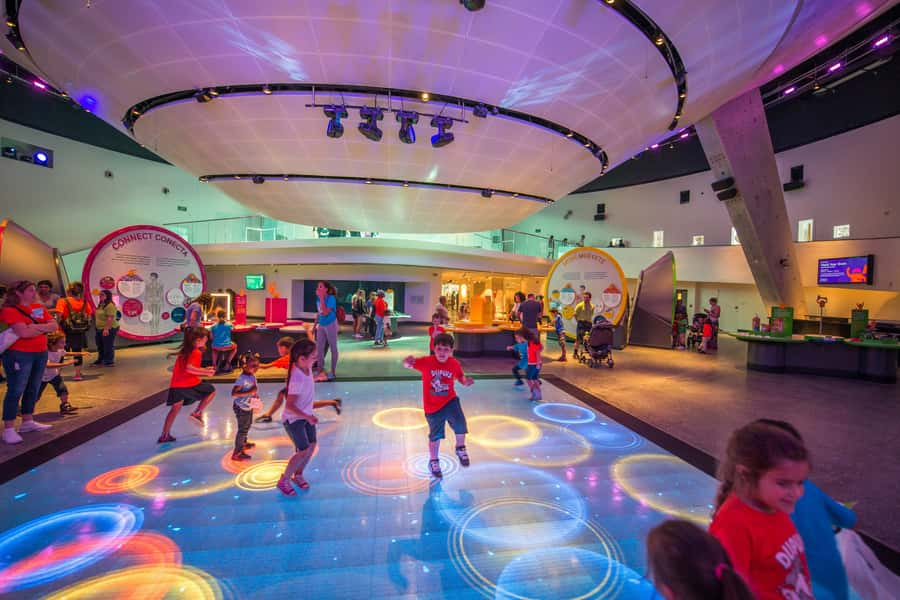
Miami’s Frost Museum of Science packs an aquarium, science museum, and planetarium into one waterfront stop. The best part is the range: you can watch hammerhead sharks glide overhead, handle interactive science gadgets, then sit beneath a nearly 360-degree screen for a film about Earth or black holes.
I especially like the hands-on aquarium, where you may touch a stingray, and the strong family mix of bugs, dinosaurs, space, and experiments. The main drawback is that the $30 ticket only includes one planetarium show, and those screenings are first come, first served.
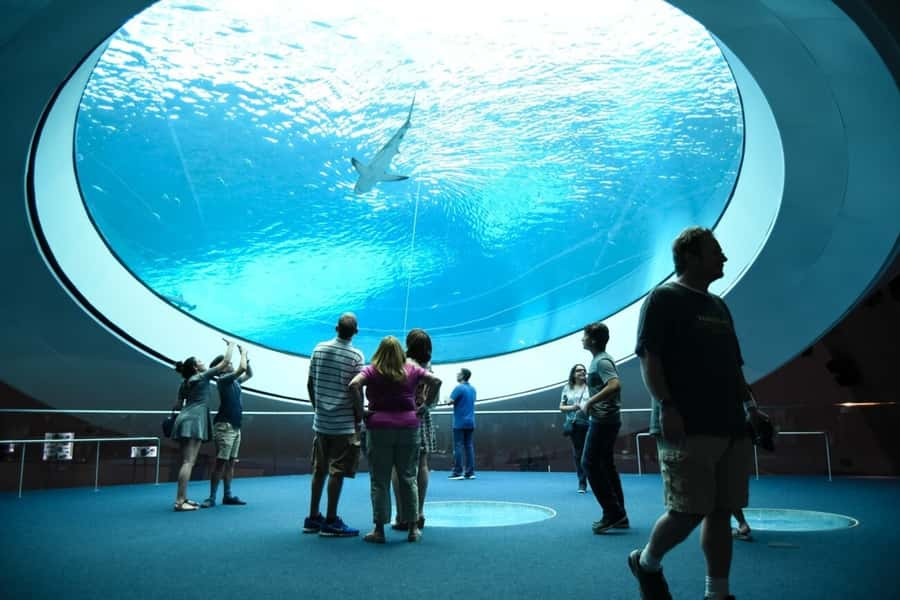
- Three-level aquarium: See jellyfish, fish, stingrays, and hammerhead sharks in a dramatic vertical setup.
- One planetarium show: Choose between Dynamic Earth and Black Holes, subject to available seating.
- 30-foot Yutyrannus Huali: Meet a towering feathered dinosaur in the Feathers to the Stars exhibit.
- Hands-on science: Test interactive displays, explore Power of Science, and try landing a spacecraft on Mars.
- Three to four hours required: You can move quickly, but the museum rewards a longer visit.
- Easy booking terms: The ticket is wheelchair accessible, valid for one day, and cancellable up to 24 hours before the visit.
A Three-Part Science Visit on Miami’s Waterfront
The Frost Museum works because it gives you three very different experiences under one roof. You can watch living animals, operate hands-on displays, and then settle into a large-format planetarium show.
The museum covers more than 250,000 square feet, so this is not a quick aquarium stop with a small science room attached. If you want to see the major exhibits and attend a planetarium screening, set aside at least three hours. Four hours is more comfortable, especially with children who want time at each interactive display.
The location in Downtown Miami makes it useful on a day when you want a break from the beach. You go directly to the Phillip and Patricia Frost Museum of Science, and the activity ends there. Hotel pickup and drop-off are not included, so you need to arrange your own way to the museum.
Start With the Three-Level Aquarium
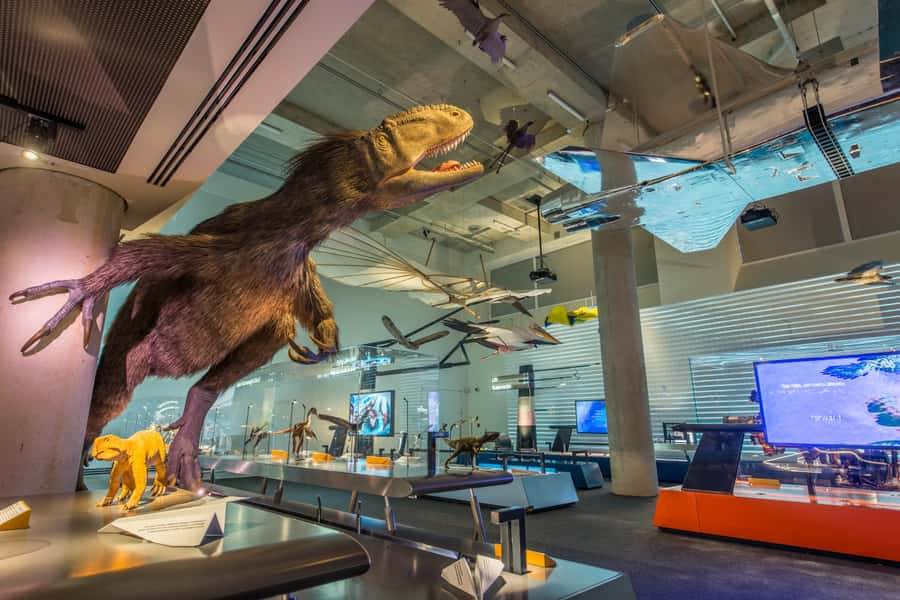
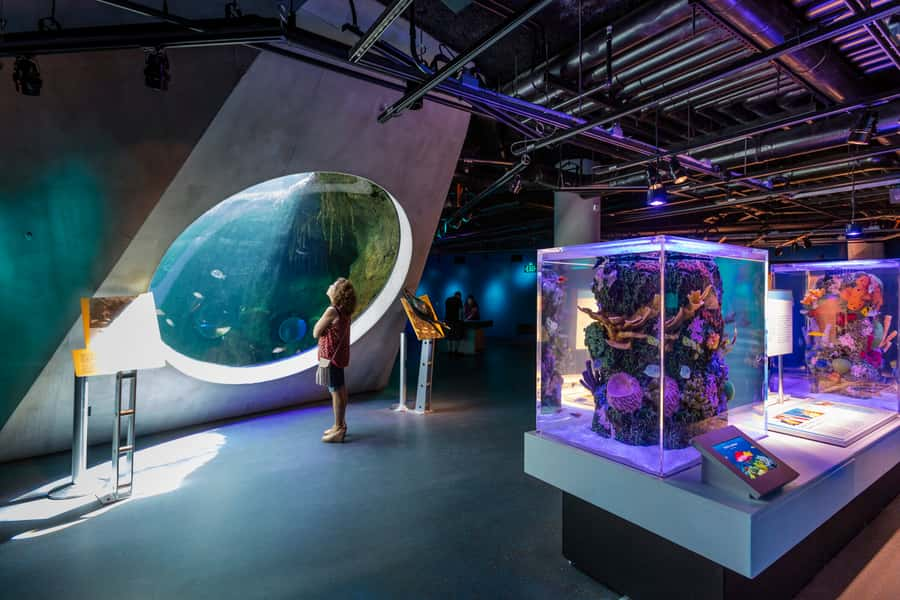
The aquarium is the museum’s most dramatic area. Its design takes you through several levels, giving the experience a sense of moving downward through the water rather than simply walking past a row of tanks.
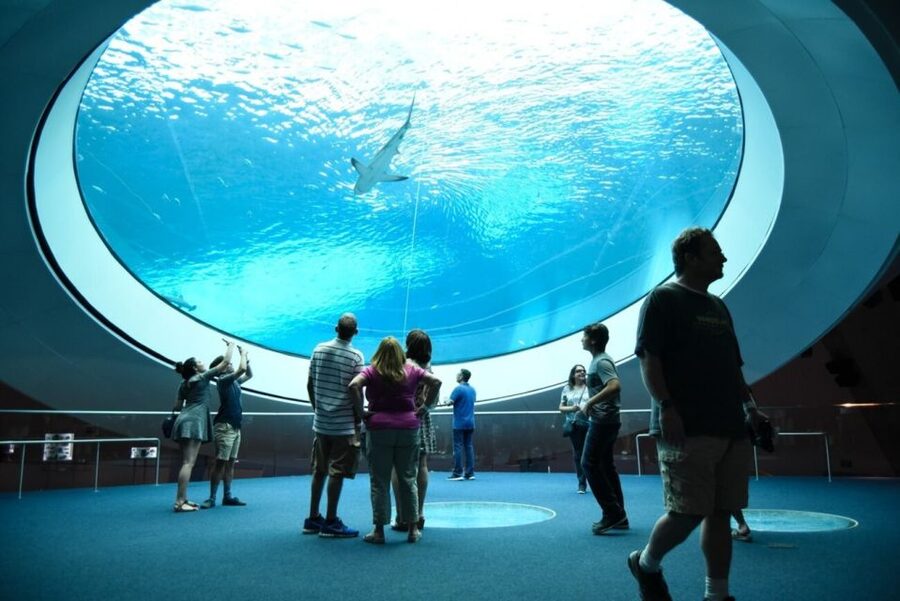
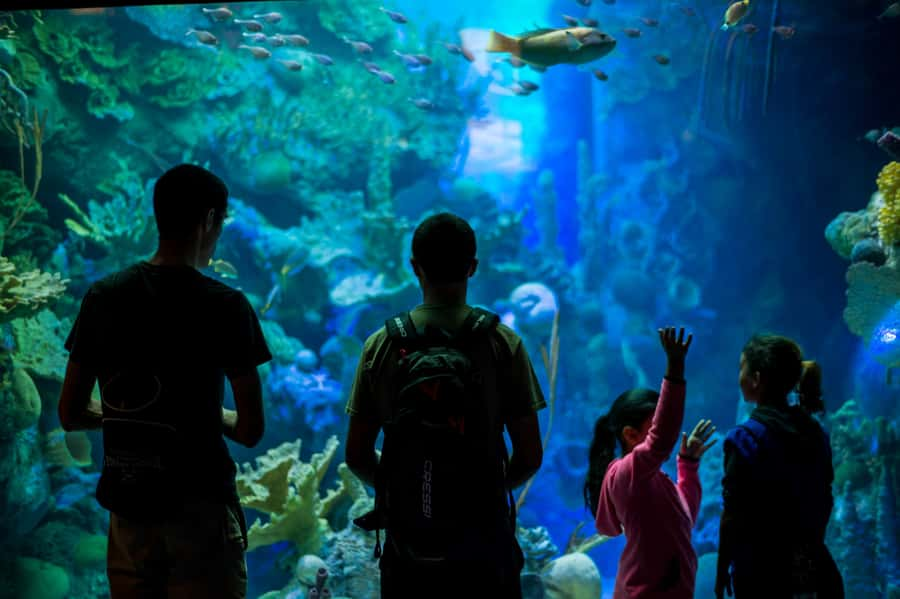
You can see jellyfish, fish, stingrays, and hammerhead sharks. The larger animals give the aquarium real visual punch, while the smaller tanks reward a slower look. Young children may spend a long time watching the movement of the fish even before they are old enough to use every interactive exhibit.
The stingray touch experience is a special reason to visit. It gives children and adults a direct way to connect with marine life, though participation depends on the museum’s operating arrangements at the time of your visit. You should also expect the aquarium to be one of the busiest parts of the museum.
I would make the aquarium one of your first major stops, especially if you are visiting with children. It provides an immediate sense of occasion, then leaves you free to explore the science floors without feeling that you missed the main attraction.
More Planetarium Visits in the USA:
- Houston Museum of Natural Sciences: Planetarium Ticket
★ 4.5 · 139 reviews - Planetarium and Telescope Combo Tour
★ 4.0 · 144 reviews - Jasper: Jasper Planetarium and Telescope Combo Tour Tickets
★ 3.8 · 118 reviews
Bugs, Textures, and Hands-On Science
The museum’s appeal is not limited to large animals. The bug displays are a strong part of the visit, with close-up views that make insects look almost unreal in size and color.
That detail matters. A child who is not yet ready for complex science explanations can still respond to the shapes, colors, and movement. Older children can use the displays as a starting point for questions about how animals live and adapt.
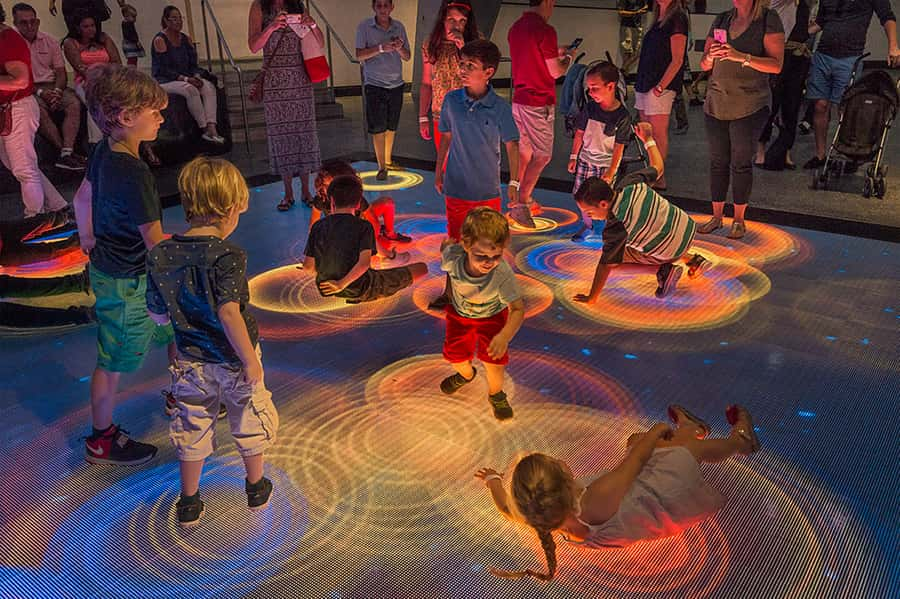
The hands-on galleries let you learn by trying things rather than reading wall panels from start to finish. You may find science gadgets, physical demonstrations, and interactive technology spread across the museum. The exact amount of time you spend depends on how much you want to test each station.
Power of Science focuses on discoveries and the people who pushed science forward. It works best when you give yourself time to stop and experiment. This is not a place where you need to understand every display to have a good visit. You can choose the activities that suit your interests and move on when the subject loses your attention.
Feathers to the Stars and a 30-Foot Dinosaur
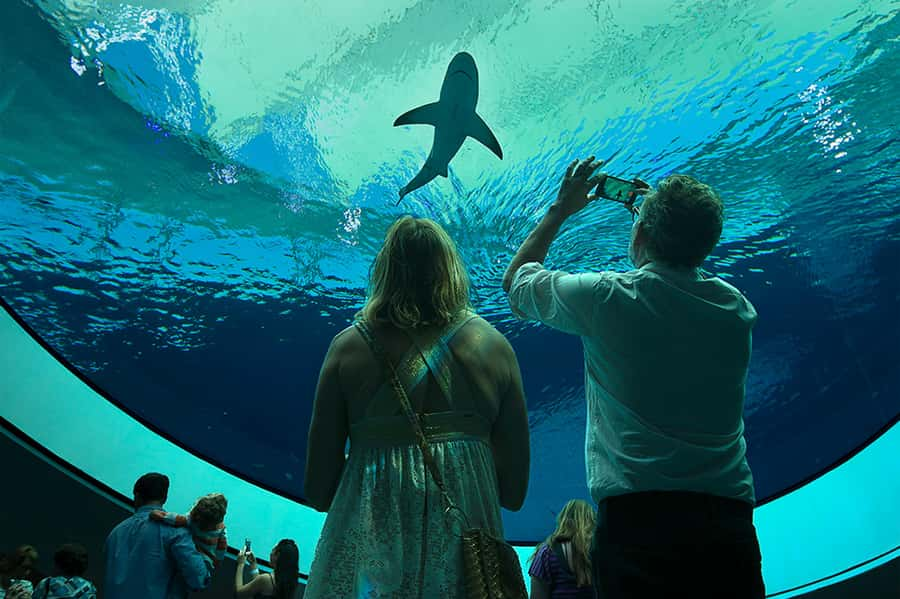
Feathers to the Stars connects prehistoric life with human space travel. Its central idea is easy to follow: the story moves from feathered dinosaurs to the technology that carries people and machines beyond Earth.
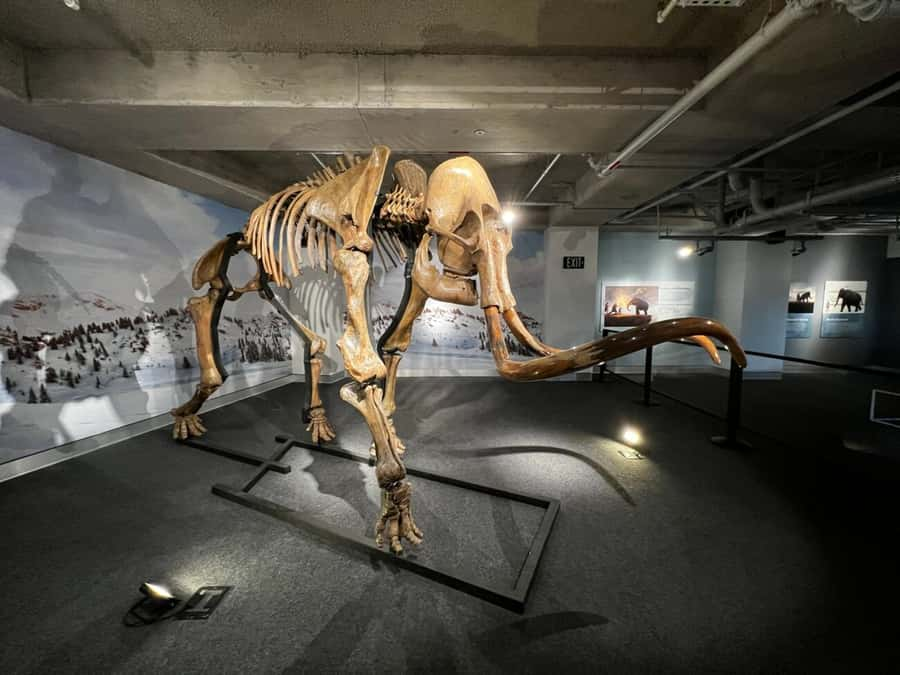
The 30-foot Yutyrannus Huali is hard to miss. The dinosaur gives the exhibit a strong visual anchor, especially for children who may not yet be drawn to the science panels. It also helps explain that dinosaurs were not all scaly movie monsters. The connection between feathers, flight, and later aviation makes this section more thoughtful than a simple fossil display.
You can also learn about inventors who helped pioneer aviation. That gives the exhibit a human side, showing how observation, trial, and failure can lead to new machines. The experience does not stop with aircraft. You also get the chance to try landing a spacecraft on Mars, which turns a distant space mission into a practical challenge.
I like this part of the museum for mixed-age groups. A younger child can focus on the dinosaur, an older child can try the Mars activity, and an adult can follow the link between evolution, flight, and space travel.
Pick One Planetarium Show Carefully
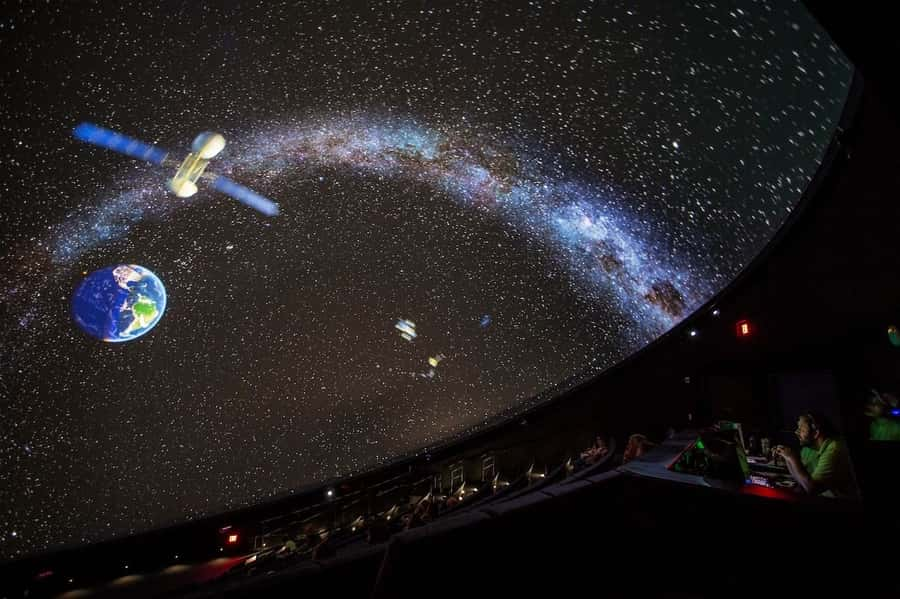
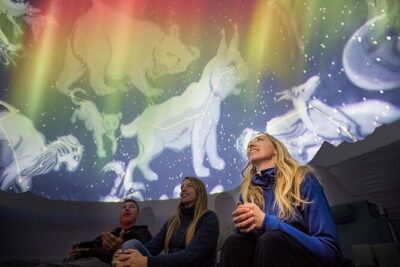
The Frost Planetarium uses a nearly 360-degree screen, creating a much fuller field of view than a standard flat-screen film. You sit back and let the image fill your vision as the program moves from Earth science to outer space.
Your ticket includes access to one planetarium show. The available choices described here are Dynamic Earth and Black Holes. Dynamic Earth looks at the workings of Earth’s climate system and is narrated by Liam Neeson. It is the more grounded choice, with a focus on the planet beneath your feet and the forces that shape its climate.
Black Holes takes you farther out. The program covers wormholes, the creation of the Milky Way Galaxy, the death of a star, and the birth of a black hole. If you prefer grand space subjects and dramatic visuals, this will likely be your pick.
Planetarium seating is first come, first served. This is the main planning issue of the day. You do not simply reserve a guaranteed seat as part of the museum ticket. Check the show schedule when you arrive and plan your museum route around the screening you want.
The film is also the part of the visit most likely to feel intense for very young children. The colors and full-dome images can be exciting, but the scale may be a lot for a child who is sensitive to dark rooms or large moving images.
More Science Museums in the USA:
- World Trade Center Tour with 911 Museum & Observatory All Access
★ 5.0 · 159 reviews
How Long Should You Spend Inside?
You can walk through the building in less time, but three to four hours is the sensible target if you want to use the ticket well. That gives you time for the aquarium, the major science galleries, and one planetarium show.
A practical order looks like this:
- Begin with the planetarium schedule, since seating is first come, first served.
- Visit the aquarium while you still have plenty of time and energy.
- Give the bug displays and interactive science stations the time they deserve.
- See Feathers to the Stars and the Yutyrannus Huali.
- Finish with any exhibits you skipped before or after the planetarium program.
Do not treat the museum like a place you must view in a fixed order. Families may want to start with the aquarium. Adults interested in technology may prefer Power of Science and the space galleries. The key is to protect time for the planetarium because you cannot assume the next screening will have room.
The facility is described as clean and suitable for all ages. It is also wheelchair accessible, which makes it easier to plan for a mixed group with different mobility needs.
Is the $30 Ticket Good Value?
At $30 per person, the ticket is not a low-cost add-on. The value depends on how much of the museum you use.
For a short aquarium visit, the price may feel high. You are paying for more than the tanks, though. The ticket includes the science museum, aquarium access, and one planetarium show. If you stay for three or four hours and make time for interactive exhibits, the price becomes easier to justify.
Families often get the strongest value because the museum offers several kinds of activity in one place. One child can focus on sharks and stingrays while another spends time with bugs, dinosaurs, or the Mars landing challenge. Adults do not have to rely only on children’s displays either. The climate film, space content, aviation material, and science exhibits offer enough substance for older visitors.
The ticket cannot be applied toward an annual membership. If you are considering a membership, factor that in before buying. This admission is best for a one-day visit, not as a credit toward a longer-term plan.
Food and drinks are not included. Plan for that separately, especially if you are visiting with children and expect to stay for several hours. The museum shop offers science-themed items and gives you another place to pause, though purchases are extra.
Who Will Enjoy Frost Science Most?
This is a particularly good choice for families with children at different ages. Toddlers may enjoy the colors, fish, textures, and large animals. School-age children can spend more time with the interactive exhibits. Older children and adults may prefer the aviation, climate, dinosaur, and space material.
It also suits you if the weather is poor or you want a break from Miami’s outdoor heat. The museum gives you a structured indoor activity without reducing the day to passive viewing.
The experience may be less satisfying if you want a quiet, highly focused museum visit. Interactive areas can take time, and children may set the pace. The planetarium schedule also adds some uncertainty, since you need to claim seats on arrival rather than simply walking into any show.
If your main goal is a large aquarium, compare your expectations carefully. Frost Science combines aquarium exhibits with a broad science museum, so the aquarium is only one part of the day. That mix is its strength, but it may not suit someone who wants an aquarium-only visit.
Booking, Timing, and Small Practical Details
Your ticket is valid for one day, with availability and starting times shown during booking. The admission includes skip-the-ticket-line access, which can save time at entry, though it does not guarantee a seat at a planetarium show.
You can reserve now and pay later, a useful option if your Miami plans are still shifting. Cancellation is allowed up to 24 hours in advance for a full refund.
The experience begins and ends at the museum. There is no hotel transportation included, and food and drinks are extra. Since the building is large, wear something comfortable and avoid planning a tightly timed activity immediately afterward.
For the smoothest visit, arrive with a rough plan rather than a strict checklist. First secure a planetarium time, then let your group spend longer at the aquarium, bug displays, or science gadgets if those are holding everyone’s attention.
Should You Book the Frost Museum Ticket?
Book it if you want one Miami attraction that works across several interests. The aquarium, interactive galleries, dinosaur exhibit, and planetarium give you plenty to do, and the three to four-hour visit makes the $30 price reasonable when you use the full ticket.
I would be more cautious if you only want to see fish or if you need a guaranteed planetarium seat at a precise time. In that case, the first come, first served setup may frustrate you.
For families, curious adults, and anyone looking for a substantial indoor activity in Downtown Miami, this is a sound choice. Arrive ready to spend most of an afternoon, choose your planetarium show early, and let the museum’s mix of animals, machines, dinosaurs, and space carry the day.
FAQ
Where does the Frost Museum experience begin?
It begins at the Phillip and Patricia Frost Museum of Science in Miami.
Where does the activity end?
The activity ends back at the museum, at the same meeting point.
How long is the ticket valid?
The ticket is valid for one day.
How long should I plan to spend at the museum?
If you want to see the exhibitions properly, plan on about three to four hours.
Does the ticket include the aquarium?
Yes. Aquarium access is included with the museum entry ticket.
Does the ticket include a planetarium show?
Yes. The ticket includes one planetarium show.
Which planetarium shows are available?
The listed choices are Dynamic Earth and Black Holes. Show availability is subject to the schedule.
Can I reserve a particular planetarium seat?
Planetarium shows are available on a first come, first served basis, so a specific seat is not guaranteed.
Is the museum wheelchair accessible?
Yes. The activity is wheelchair accessible.
Can I cancel for a refund?
Yes. You can cancel up to 24 hours in advance for a full refund.
Just in after dark around the USA
- Seattle: Hop-on Hop-off Bus Tour and Sky View Observatory★ 4.4 · 16 reviews
- Boulder: Guided Astronomy Tour★ 4.7 · 11 reviews
- 1-Day Grand Canyon Tour from Las Vegas: Stargazing & Sunrise★ 3.6 · 3 reviews
- Griffith Observatory: Scott E-Bike Tours LA Private Tour★ 5.0 · 32 reviews
- Private Tour of Griffith Observatory★ 4.5 · 58 reviews
- S’mores and Stargazing on Hidden Beach★ 5.0 · 4 reviews
- Haleakala Sunset and Astronomy Tour★ 5.0 · 33 reviews
- Milky Way Photography Workshop in Acadia National Park★ 5.0 · 8 reviews
Planetarium Visits, night against night.
Houston Museum of Natural Sciences: Planetarium Ticket
Read our review →
Jasper Planetarium and Telescope Combo Tour Tickets
Read our review →

Cusco by Night: Planetarium Cusco, Dinner, and Pisco Sour
Read our review →
Planetarium Cusco OFFICIAL SITE: Andean Astronomy experience
Read our review →

Planetarium and Night Tour with Dinner and Pisco Sour
Read our review →Lists this night appears in