
Review · LAKE TEKAPO
Silver River Stargazing Experience in Lake Tekapo
Lake Tekapo gives you one of the clearest windows onto the southern sky, and this 75-minute stargazing tour takes you away from the town lights to make the most of it. You will learn constellations by eye, then look at selected stars and space objects through a 14-inch Meade telescope.
I like the small-group format, capped at 10 people for the advertised tour, and the easy shuttle from Go Tekapo’s office to a private viewing site. I also like that warm winter jackets and a group photo are included, useful touches on a cold night.
The main catch is the weather. Clouds, wind, rain, and a bright moon can cut into what you see, and one poor review also reports a crowded telescope experience. Confirm the group size when booking, and bring patience as well as warm clothes.
Key points at a glance
- Aoraki Mackenzie Dark Sky Reserve: You view the southern sky in one of the world’s recognized dark-sky areas.
- 14-inch Meade telescope: You get repeated chances to view selected stars and space objects, depending on conditions.
- Small tour design: The experience is advertised with no more than 10 people, though the booking information also lists a maximum of 30.
- Free shuttle and warm jackets: Meet at Go Tekapo, then ride to the private viewing area without arranging your own night drive.
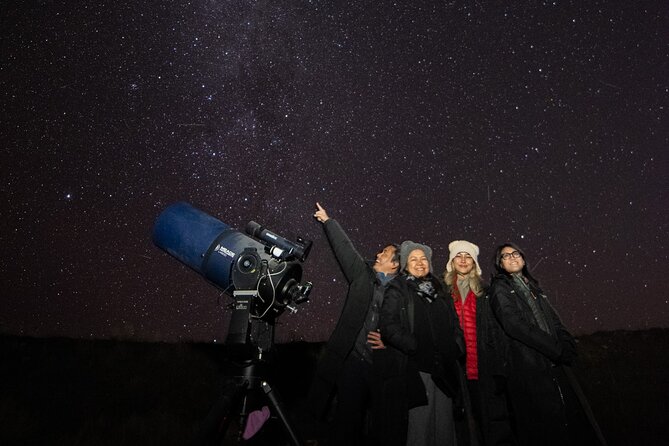
- Personalized group photograph: A complimentary photo is taken under the stars when the weather allows.
- Weather protection: Poor conditions may lead to a rescheduled tour or full refund, while partial refunds have also been offered when clouds reduce the viewing.
Why Lake Tekapo is such a good place for stargazing
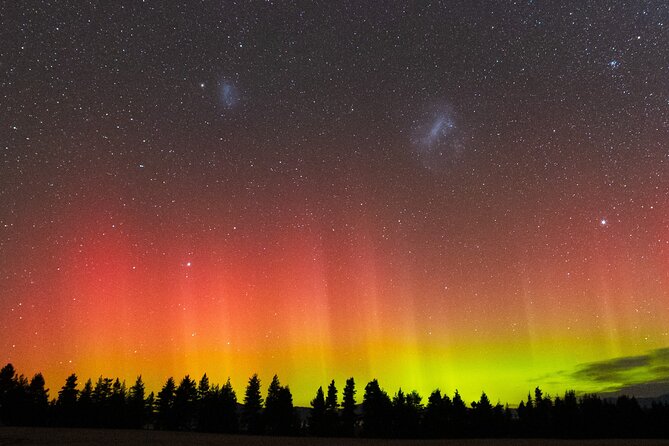
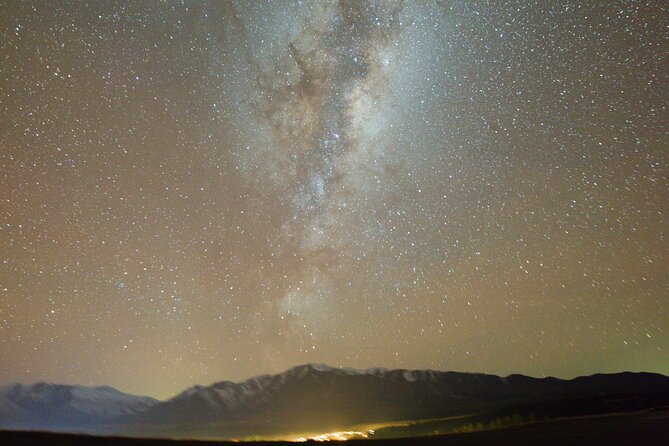
Lake Tekapo sits inside the Aoraki Mackenzie International Dark Sky Reserve. The point is not just a dark field far from town. It is a broad region where artificial light is controlled, so the sky can show far more than the handful of bright stars visible over a city.
That difference is easiest to grasp with your own eyes. On a clear night, the Milky Way can appear as a pale band across the sky, while familiar southern sights such as the Southern Cross and the Magellanic Clouds become much easier to pick out. The tour also helps you place stars and constellations rather than simply stare upward without knowing what you are seeing.
This is especially useful if you are visiting from the Northern Hemisphere. The southern sky has different reference points, and guides have pointed out the Southern Cross, Orion’s Belt, planets, the Milky Way’s galactic core, and the Magellanic Clouds during past outings. You will not need a strong astronomy background. The presentation is aimed at ordinary curious people, not only serious amateur astronomers.
More Stargazing Tours around New Zealand:
- Lake Tekapo: Alpine Stargazing Experience with a Guide
★ 4.5 · 626 reviews - Lake Tekapo: Stargazing Experience
★ 4.9 · 607 reviews - Chameleon Stargazing Shared Tour
★ 5.0 · 181 reviews
From Rapuwai Lane to the private viewing site
You meet at Go Tekapo, 12 Rapuwai Lane, Lake Tekapo 7999. From there, a complimentary shuttle takes you to the private stargazing location, which removes the nuisance of finding a dark roadside pull-off at night.
The transfer is brief in practical terms because it is part of the same activity, but the bigger benefit is comfort and safety. You can focus on the sky instead of driving in an unfamiliar area after dark. The experience returns to the same meeting point at the end.
Warm winter jackets are supplied. Take one even in summer. Several outings have been chilly, and one particularly useful tip from the experience is to accept the extra coat even if the evening begins pleasantly. Lake Tekapo’s night air can feel cold, and standing still beside a telescope makes it more noticeable.
The transport and clothing also make this a simple choice for families. One parent specifically selected the earlier 10:45 pm option because later departures at midnight or beyond were not practical with children. Check the departure time offered for your date, since the information here confirms that an earlier option has operated but does not provide a full schedule.
The first lesson is with your unaided eyes
The strongest part of this experience is not necessarily the telescope. It is learning to see the sky before equipment gets involved.
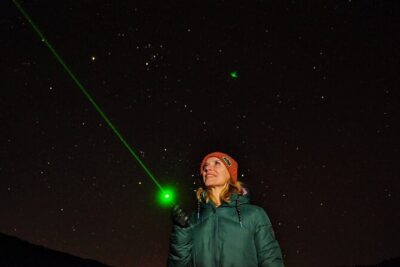
Your guide uses an astro-laser to trace stars and constellations overhead. This helps you connect separate points of light into recognizable patterns, and it makes the talk easier to follow than a list of names delivered in the dark. Guides including Wilson, Tara, Sakura, Jacob, Simon, Daniel, Dan, Kieran, and Sam Blair have been praised for explaining clearly and answering questions.
The exact guide varies, but the format stays conversational. You can ask about distance, time, navigation, galaxies, planets, or how to identify objects in the southern sky. Daniel, for example, has explained how stars relate to navigation and to the passage of time, while other guides have focused on the Milky Way and the location of major constellations.
This is a good reason not to spend the whole tour looking down at a phone app. An app can label the sky, but it cannot respond to your question or adjust the explanation to what you can actually see. One disappointing outing felt too brief and too thin on storytelling, so expectations matter: this is a guided introduction, not a full astronomy lecture.
What the 14-inch Meade telescope adds
After the naked-eye orientation, you take turns at the 14-inch Meade telescope. The large aperture gives the guide a useful tool for showing selected objects in more detail than you can see unaided.
Do not expect the telescope view to look like a polished observatory photograph. One dissatisfied participant found the object small and hard to see. That is a fair warning for anyone expecting bright, colorful images. Telescope viewing is often a small, focused glimpse, and the experience depends on what is above the horizon, how steady the air is, how bright the moon is, and how quickly clouds move in.
The payoff comes from combining the telescope with the guide’s explanation. You look through the eyepiece, then understand what you are looking at and where it sits in the sky. On good nights, people have seen Jupiter and other impressive objects, along with stars and parts of the Milky Way.
A small group matters here. With about eight to a dozen people, one outing allowed repeated telescope views without a long wait. The advertised cap is 10, which is a major reason to consider this experience over a larger astronomy outing. However, the additional booking information gives a maximum of 30, and one poor account describes a group large enough to limit telescope time. If a very small group is important to you, ask Go Tekapo to confirm the expected number for your date.
Same stars, another vantage point:
- Lake Tekapo: Mountaintop Stargazing at Mount John Summit
★ 4.5 · 176 reviews - Mount John Observatory Stargazing Experience, Tekapo
★ 4.5 · 160 reviews - Tekapo Star Gazing Tour – Soak in the Stars
★ 4.5 · 109 reviews - Stargazing Experience at Cowan’s Private Observatory
★ 4.0 · 85 reviews
The free photo is a practical souvenir
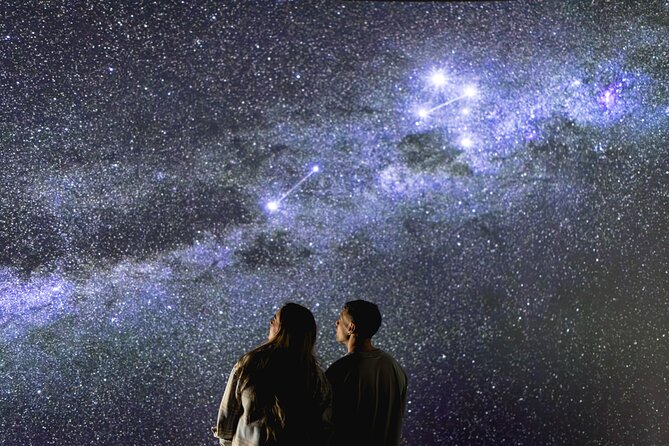
The tour includes one group photograph beneath the stars, weather permitting. This is not a paid add-on or a separate photography session. The operator uploads the personalized image to a public Flickr website within 48 hours and sends a link for downloading the digital copy.
That makes the photo a useful extra rather than the main reason to book. Night-sky photographs are difficult to make well, and a group image gives you something more personal than a generic picture of the Milky Way. Guides have also worked quickly when high winds or approaching storms threatened to end the viewing early.
The photo is not guaranteed. Clouds, rain, and wind can make it impossible, so do not treat it as a promise of a perfect portrait. If the sky is open long enough, it can be a fine reminder of the evening, especially for a family or small group sharing the outing.
Weather can change the whole evening
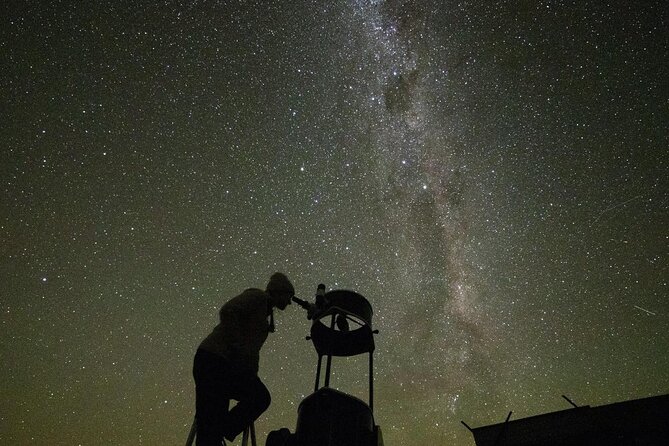
Weather is the deciding factor. A clear night can make this one of the highlights of a New Zealand trip. A cloudy one can reduce the experience to a short explanation and a wait for gaps that never arrive.
The operator has cancelled tours in very poor conditions and offered a full refund or another date. In other cases, the guide has carried on when only part of the sky was visible, then offered a partial refund when clouds blocked much of the session. One outing had stars for only about 15 minutes before clouds took over, yet the guide continued with explanations and the operator offered money back.
That is a sensible approach, but you should still book with flexibility if possible. The standard cancellation terms allow a full refund when you cancel at least 24 hours before the start time. Cancellations within 24 hours are not refundable, except that poor weather cancellations by the operator qualify for a new date or full refund.
There is a small inconsistency in how refunds may feel in practice. One person was unhappy after receiving a cancellation message that did not clearly confirm the refund, while the operator said bank processing could take several business days. Keep your booking reference and contact Go Tekapo if a promised refund does not appear.
Guides make more difference than equipment
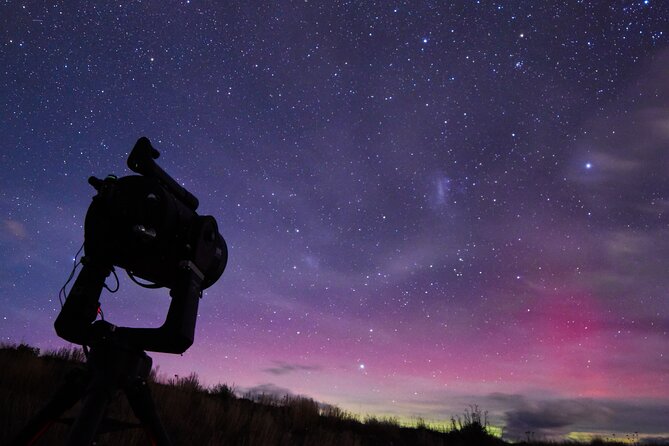
A good telescope helps, but the guide shapes the evening. The best sessions described here had guides who could move between basic explanations and spontaneous questions without making beginners feel out of place.
Wilson has been praised for showing plenty with the naked eye as well as through the telescope. Tara has led an enjoyable introduction to constellations. Sakura has been described as friendly and well informed, while Jacob has been singled out for clear answers and an approachable manner. Dan and Daniel have also been praised for making the astronomy understandable without overloading the session with technical terms.
You may also meet Simon, Kieran, Sam Blair, Adrien, or another member of the team. The names matter because this is not a recorded presentation. The tone and detail can vary slightly with the person leading the night, even though the main elements remain the same.
If you already know a lot about astronomy, ask direct questions early. The 75-minute format is designed to give beginners a useful grounding, not to cover every object in the southern heavens. If you are new to the subject, let the guide set the pace and keep an eye on the sky rather than worrying about remembering every constellation.
What the price includes, and what it does not
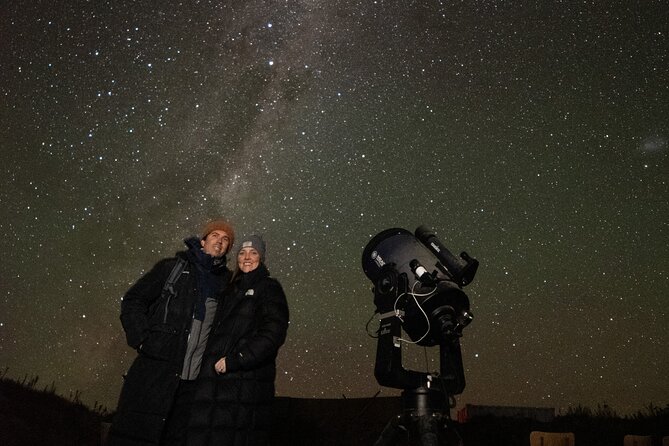
At $61.44 per person, the cost is reasonable if you value the full package: transport from the Go Tekapo office, access to a private viewing site, a guide, warm jackets, telescope time, and a digital group photo.
The value depends heavily on the weather. On a clear night, the combination of the Dark Sky Reserve and a powerful telescope makes the price easier to justify. On a cloudy night, you may receive only a limited viewing session, although the operator has offered partial refunds in some cases and full refunds when weather forces cancellation.
The small-group promise is also part of the value. You are paying for a more personal setting rather than simply standing in a large crowd while one person points at the sky. Still, because the booking details list a maximum of 30 and one account describes a crowded session, do not assume every departure will feel identical.
Compared with walking outside Lake Tekapo on your own, the tour gives you structure, a private location, equipment, and an informed guide. Compared with a more expensive astronomy outing using larger telescopes, it may offer less advanced viewing, but the shorter duration and lower price may suit a first introduction better.
Who will enjoy this most
I would choose this for anyone who wants a guided first look at the southern sky without committing to a long or highly technical night. Families can benefit from the earlier departure option when available, the supplied jackets, and the short 75-minute duration.
It also suits couples and small groups who want a photo beneath the stars. The free digital image adds a personal touch, though you should only count on it if the weather permits.
You may want another kind of outing if your main goal is advanced astrophotography, long exposure work, or detailed research-level astronomy. You may also be disappointed if you need a guaranteed clear sky or expect every telescope view to resemble a large, bright observatory image.
Practical advice before you book
- Check the forecast, but remember that conditions can change quickly.
- Wear warm layers and accept the supplied jacket, even in summer.
- Ask about the expected group size if telescope access is a high priority.
- Keep your schedule flexible in case poor weather leads to a new date.
- Bring questions. The guides are set up to explain, not simply point.
- Avoid judging the night by the telescope alone. The naked-eye lesson can be the most memorable part.
- If you are booking for children, look for the earlier departure option rather than assuming every tour runs early.
- Allow up to 75 minutes, plus the shuttle time from the meeting point to the viewing site and back.
Should you book the Silver River Stargazing Experience?
Yes, if you are in Lake Tekapo and want a friendly, fairly priced introduction to the southern night sky. The Dark Sky Reserve provides the setting, while the guide, astro-laser, 14-inch telescope, shuttle, jackets, and photo make the outing easy to join.
Book it with realistic expectations. A clear night can reveal the Milky Way, planets, southern constellations, and memorable telescope views. Clouds can reduce the evening sharply, but the operator has a record of offering partial or full refunds in many weather-affected cases. If you can accept that risk and confirm the group size, this is a worthwhile addition to a Lake Tekapo visit.
FAQ
Where does the Silver River Stargazing Experience begin?
You meet at Go Tekapo, 12 Rapuwai Lane, Lake Tekapo 7999, New Zealand.
Where does the activity finish?
The tour ends back at the original meeting point.
How long does the stargazing tour last?
The stated duration is about 1 hour and 15 minutes.
What telescope is used?
The tour uses a 14-inch Meade telescope.
How many people are in the group?
The experience is advertised as an intimate tour capped at 10 people. The additional booking information lists a maximum of 30, so confirm the expected group size when booking.
Is transportation included?
Yes. A complimentary shuttle takes you from the Go Tekapo check-in office to the private stargazing location and back.
Are warm clothes provided?
Yes. Warm winter jackets are included, although you should still dress warmly, as the night can be cold.
Is a photograph included?
Yes. A group photo beneath the stars is included when weather permits. The digital image is uploaded to a public Flickr website within 48 hours, with a download link provided.
What happens if the weather is poor?
The experience requires good weather. If Go Tekapo cancels because of poor conditions, you can choose another date or receive a full refund. If you cancel at least 24 hours before the start time, you are also eligible for a full refund.
Just in after dark around New Zealand
- Christchurch: Lake Tekapo Stargazing & Mount Cook 2-Day Tour★ 5.0 · 6 reviews
- Akaroa: Stargazing Tour with 2 Telescopes & Souvenir Photos★ 5.0 · 17 reviews
- AuthenticAs Star Gazing -Nightscape Portrait Photography Tour★ 5.0 · 59 reviews
- Auckland (Tawharanui): Wild Kiwi Bird Spotting Encounter★ 4.9 · 78 reviews
- Stargazing Experience at Cowan’s Private Observatory★ 4.0 · 85 reviews
- Dark Sky Indoor Maori Cultural Astronomy Experience★ 4.5 · 70 reviews
- Tekapo Star Gazing Tour – Soak in the Stars★ 4.5 · 109 reviews
- Mount John Observatory Stargazing Experience, Tekapo★ 4.5 · 160 reviews
Stargazing Tours, night against night.

Dubai Red Dunes ATV, Camels, Stargazing & 5* BBQ Al Khayma Camp
Read our review →
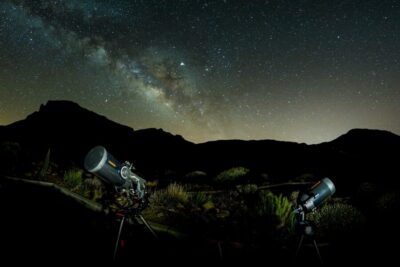
Teide National Park Sunset & Stargazing with Dinner (Star Safari)
Read our review →
Sunset Camel Trek, Al Khayma Camp, Stargazing & BBQ
Read our review →
Overnight Safari, Dinner, Stargazing & Al Khayma Camp
Read our review →
Dubai Overnight Desert Safari, BBQ & Stargazing at Al Khayma Camp
Read our review →
Sunset Quad Bike, Camel w/ Opt Stargazing and BBQ
Read our review →Lists this night appears in