Review · TENERIFE
Teide National Park: Stargazing Experience
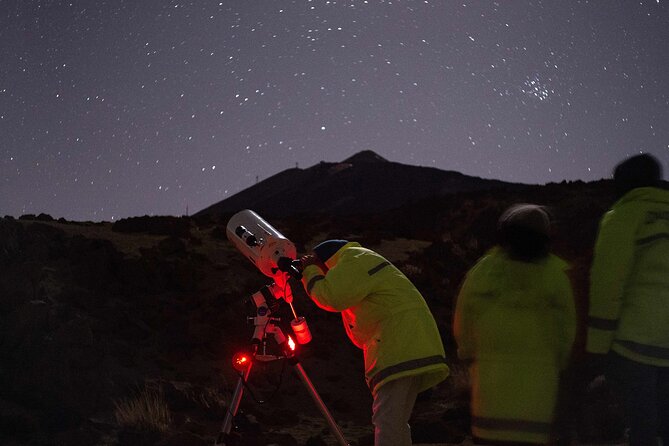
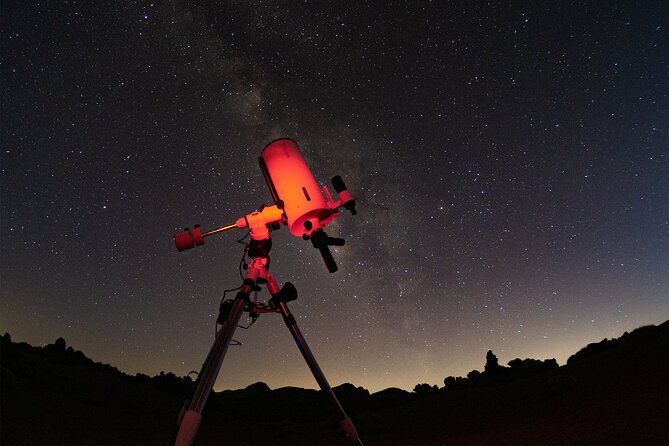
The best part of this Teide National Park experience is the sudden change from ordinary night to a sky packed with detail. At altitude, far from town lights, you begin with your own eyes, learning the main stars and constellations, then use high-grade telescopes to examine planets, clusters, and distant galaxies.
I like the clear progression from basic sky navigation to telescope viewing, and I like the human touch. Guides such as Miguel, Manuel, and Luke have been praised for making astronomy easy to follow, often with humor and Greek myths. The main drawback is the cold. Warm clothing is essential, even in summer, and an 80-minute outdoor session can feel long when the wind picks up.
Key points at a glance
- Start with the naked eye: Learn Polaris, the celestial north pole, major stars, and the zodiac line before using a telescope.
- See more than bright stars: Depending on conditions, you may view planets, moons, star clusters, galaxies, and the Milky Way.
- Guides make the difference: English and Spanish guides explain astronomy in a clear, friendly way, with mythology woven into the lesson.
- Astrophoto images may follow: The special telescope can turn some sights into photographs, with images sometimes sent after the session.
- Meet at Minas de San José: The meeting point is the parking area opposite the natural environment of the mines.
- Dress for mountain night: Comfortable shoes, warm shoes, and several warm layers matter more than they might at the coast.
Why Teide is a powerful place to study the night sky
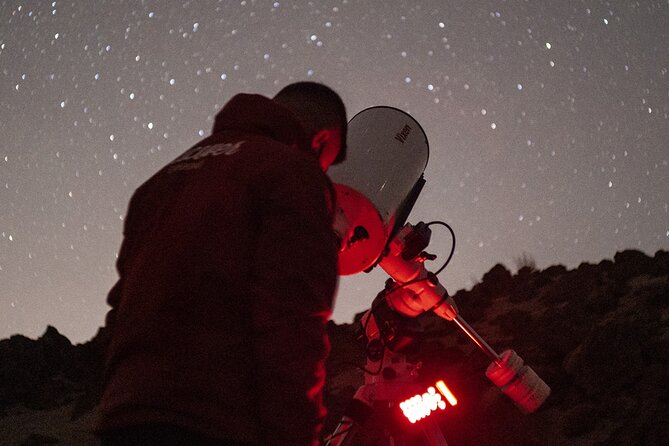
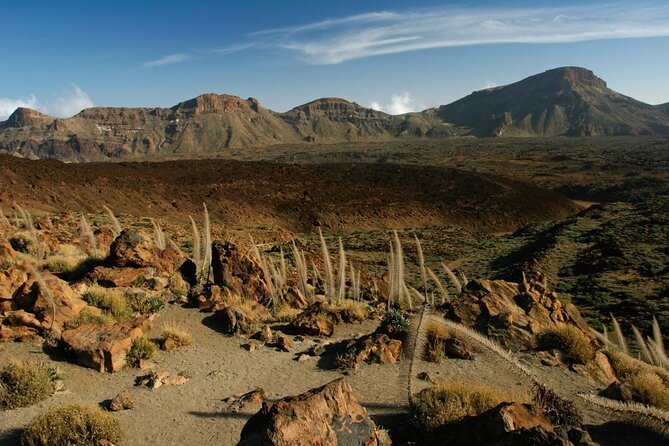
Teide National Park gives this activity its real value. The park is away from the bright town lights of Tenerife, so the sky can reveal far more than you normally see from a resort balcony. Instead of staring at a few bright points, you can begin to notice patterns, clusters, and the pale sweep of the Milky Way.
The setting also gives you a useful lesson in perspective. You are looking at light that began its journey thousands of years ago, while standing high above the island’s busy coastal areas. That sounds grand, but the experience itself is practical rather than overly technical. You learn where to look, what you are seeing, and why it matters.
I would not book this mainly for a dramatic sunset or a scenic park walk. This is a focused night activity. The reward comes after dark, when the guide helps you make sense of a sky that can otherwise seem random.
More National Park Stargazing in Spain
- Tenerife: Teide National Park Sunset & Stargazing Tour
★ 4.2 · 3,812 reviews - Tenerife: Sunset and Stargazing at Teide National Park
★ 4.7 · 2,826 reviews - Teide National Park Sunset & Stargazing with Dinner (Star Safari)
★ 5.0 · 2,601 reviews
Meet at Minas de San José after sunset
The meeting point is the parking area directly in front of the natural environment of Minas de San José. If you approach from the south, use the second car park on the right. From the north, use the first car park on the left.
There is no hotel pickup or drop-off, so you need to arrange your own way to the park. That matters when planning your evening. The activity provider confirms the starting time after booking, especially if you reserve months ahead. Keep an eye on your email or WhatsApp, since the time can change with seasonal conditions and the provider sends schedule details there.
The session begins after sunset. You will not be walking through the park for hours, but you will be standing outdoors in a high, exposed area. Wear shoes that are comfortable for standing and bring warm footwear, not just a light jacket.
First, learn the sky without a telescope
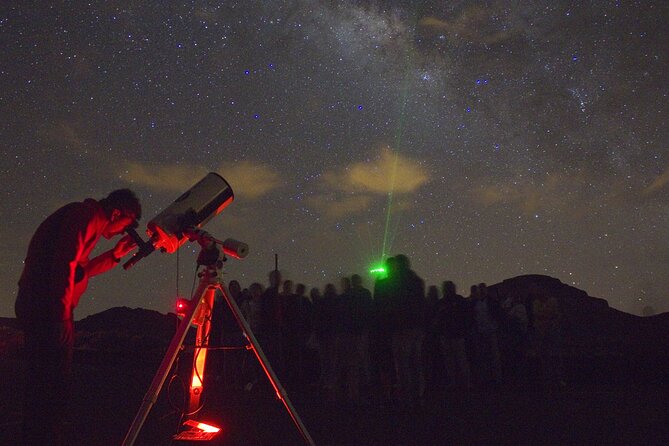
The guide starts with the naked eye. This is one of the strongest parts of the format because it gives you a way to understand the sky before equipment enters the picture.
You learn to identify important stars and constellations, then locate Polaris and the celestial north pole. The guide also explains the ecliptic, the apparent path followed by the Sun, and the zodiac line. These terms can sound like classroom material, but they become useful once you are looking overhead and trying to work out where everything sits.
The constellation lesson often includes Greek mythology. Stories give the shapes a reason to stick in your memory. Instead of memorizing a list of star names, you connect the pattern to a character, creature, or old tale. Guides including Miguel and Manuel have been praised for making this part lively and easy to understand.
This first stage is particularly good for beginners. You do not need prior astronomy knowledge. If you already know the major constellations, you may find the introduction basic, but the guide still provides a useful framework for the telescope viewing that follows.
Then move to planets, clusters, and galaxies
Once you have your bearings, the guide brings out the telescope. The exact objects depend on the season, visibility, and the moon’s cycle, so no responsible operator can promise the same view every night.
Past observations have included Saturn and its moons, Jupiter and its moons, Mars, the Orion Nebula, the Andromeda Galaxy, star clusters, and the Milky Way. You may also examine the moon when it is visible. The attraction here is not simply ticking off objects. A planet that looks like a bright dot to the naked eye can become a small, defined world through the eyepiece.
The telescope section is shared between the people on the tour, so you may need to wait briefly for your turn. That is normal for this kind of activity. The guide’s explanations help keep the group involved while each person looks.
I especially like that the tour links the equipment to the earlier lesson. You first learn the location of a constellation or bright star, then observe an object in that area through the telescope. That makes the session feel like a guided search rather than a series of unrelated telescope views.
More National Park Stargazing in Tenerife
- Teide National Park: Sunset & Stargazing Safari with Dinner
★ 4.6 · 2,115 reviews - Teide National Park: Guided Large Telescope Stargazing Tour
★ 4.9 · 319 reviews - Tenerife. Stargazing in Teide National Park
★ 4.9 · 319 reviews - Self Drive Sunset & Stargazing in Teide National Park – No Dinner
★ 5.0 · 151 reviews
Astrophoto adds a useful souvenir
The experience includes an astrophoto telescope designed to turn what you see into images. In some cases, the provider sends photographs of objects observed during the session afterward. Images of a star cluster and a galaxy have been provided to participants before.
This is a nice extra, but I would treat it as a bonus rather than the main reason to book. The quality and subjects will depend on the night’s conditions and what the guide can observe. You are not buying a private professional photo shoot. You are joining a group astronomy session that may leave you with a picture to remember it by.
The images also help explain why telescope viewing matters. A faint cluster or galaxy can be difficult to describe after the fact, while a simple image gives you something concrete to show family and friends.
The guides keep the science approachable
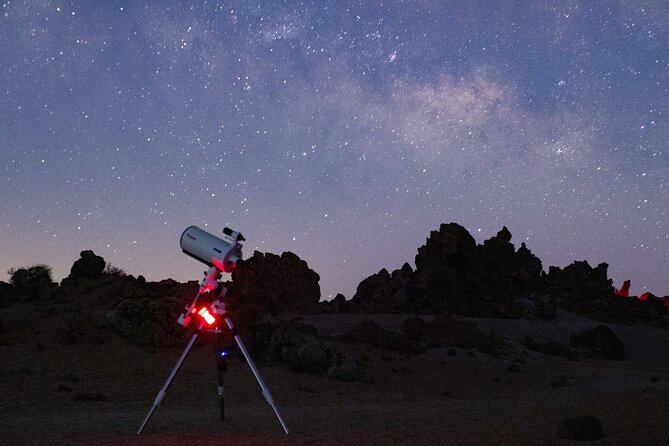
A good astronomy guide has to do two jobs. The guide must understand the sky, but also explain it without burying you in technical terms. This experience seems built around that balance.
Miguel has been singled out for clear, funny, and passionate explanations. Manuel has used the moon, constellations, and mythology to make the lesson engaging. Luke has been praised for helping people look closely at stars, planets, and the moon while showing how to navigate the constellations.
Those names describe guides who have led sessions, but the guide assigned to your date may be different. The advertised languages are Spanish and English. If you want an English session, confirm the language when the schedule is finalized.
The tone should suit families, couples, and curious adults who are not serious amateur astronomers. Children can enjoy it too, provided they are accompanied by an adult. Unaccompanied minors are not allowed.
The cold is the real challenge
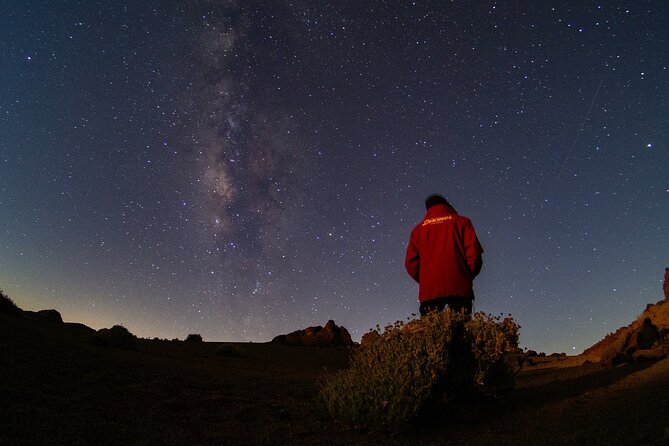
Do not underestimate the temperature at Teide after sunset. The coast may be mild, but the national park can be cold, windy, and much less comfortable than your daytime plans suggest. Several people needed extra time to warm up after the session, and that is a fair warning.
Bring:
- A warm coat and extra layers
- Warm trousers
- Warm shoes
- Comfortable footwear for standing
- Anything you personally need to stay comfortable outdoors
Autumn and winter demand particular care, but summer is not automatically warm at night. One account described a large difference between temperatures lower down and conditions at the viewing point. Take the advice seriously and pack more warmth than you think you need.
The cold can affect your enjoyment more than the astronomy. If you spend the whole session shivering, you will miss the guide’s explanations and rush your time at the telescope. Good clothing is not a minor detail here. It is part of the ticket.
Moon phases and timing affect what you see
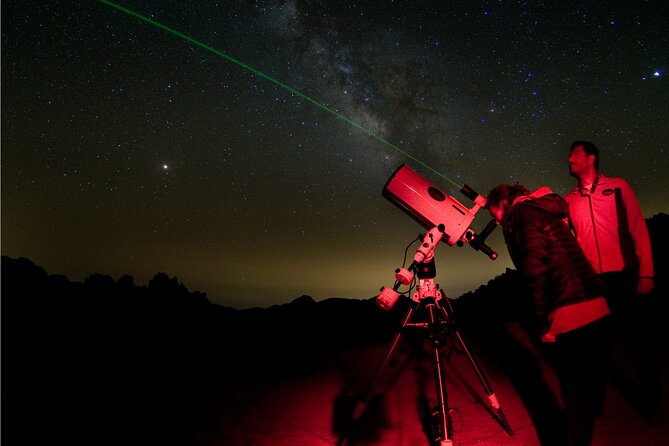
The moon follows a cycle, and its brightness can change the appearance of the rest of the sky. A bright moon can be an impressive object to study, but it can also wash out faint stars and distant objects. A darker sky may show more stars and make the Milky Way easier to notice.
Check the moon phase before booking if you have a strong preference. The provider specifically warns you to consider this. The tour still has value under different moon conditions, but the focus may shift between lunar viewing, planets, constellations, and fainter deep-sky objects.
The start time may also change if you reserve far ahead. After booking, the provider contacts you through WhatsApp or email to confirm the schedule. Keep those messages handy and check them before setting out.
Is $41 a fair price?
At $41 per person, this is reasonably priced for a guided astronomy session with telescope use and insurance included. You are paying for the specialist equipment, the guide’s preparation, the dark-sky location, and the chance to view objects that are difficult to see from an ordinary town.
The value is strongest if you are new to astronomy. A guide can show you where to look and explain what you are seeing, instead of leaving you alone with a telescope and no clear idea what is in view.
The value is less certain if you already own a good telescope or have booked a longer, private astronomy session elsewhere. The advertised duration is 80 minutes, so the price is fair rather than a bargain for a full evening. Still, the setting and the professional explanation make it more than a simple stargazing stop.
Dinner and transportation are not included. Add those costs when working out your evening budget. You also need to reach the meeting point yourself.
Who will enjoy this most
I would recommend this experience to:
- First-time visitors who want to see Teide after dark
- Families with older children who can remain outside in the cold
- Couples looking for a quiet evening activity
- People curious about astronomy but unsure where to begin
- Anyone who wants to understand constellations rather than only photograph them
- Visitors who appreciate a guide-led activity with clear explanations
It may not suit you if you dislike cold outdoor activities, have heart or respiratory problems, or have been scuba diving within the previous 24 hours. People with those concerns should take the stated restrictions seriously.
The activity also requires patience. This is not a fast-moving attraction. You stand, listen, wait for telescope turns, and look carefully. That pace is part of the appeal, but it will not suit someone who wants constant action.
Practical verdict: book it if you want more than a pretty sky
I would book this tour if you want a structured introduction to the heavens and do not already know your way around a telescope. The combination of naked-eye orientation, constellation stories, planets, and possible astrophoto images gives the 80 minutes a clear purpose.
I would skip it if you are poorly prepared for cold or want a long, private astronomy lesson. For everyone else, $41 is a sensible price for a focused night in Teide National Park. Bring serious warm clothing, check the moon phase, confirm the meeting time, and let the guide do the hard work of turning scattered points of light into a map of the universe.
FAQ
Where does the Teide stargazing tour meet?
Meet in the parking area directly in front of the natural environment of Minas de San José. From the south, it is the second car park on the right. From the north, it is the first car park on the left.
How long does the stargazing experience last?
The advertised duration is 80 minutes. The tour starts after sunset.
What languages are available?
The live guide is available in Spanish and English.
Is hotel pickup included?
No. Hotel pickup and drop-off are not included, so you must reach the Minas de San José meeting point yourself.
What should I wear?
Wear comfortable shoes, warm clothing, and warm shoes. Temperatures are low at night, with especially cold conditions possible in autumn and winter.
Will I use a telescope?
Yes. The experience includes astronomical observation with telescopes, including high-grade equipment and an astrophoto telescope.
What can I see through the telescope?
Possible sights include planets, moons, star clusters, galaxies, the Milky Way, and the moon. The exact objects depend on the night, visibility, and moon phase.
Can children join the activity?
Children may attend with an accompanying adult, but unaccompanied minors are not allowed.
Can I cancel the booking?
You can cancel up to 24 hours in advance for a full refund. A reserve-now, pay-later option is also available.
Just in after dark around Tenerife
- Magic Stargazing & Sunset in Teide with Dinner + Telescopes★ 3.5 · 20 reviews
- Private astronomy tour with sunset toast, picnic, and astrophotography★ 4.8 · 83 reviews
- Tenerife: Teide Stargazing with an Astrophysicist★ 4.9 · 74 reviews
- Tenerife: Stargazing at Mt. Teide★ 4.2 · 72 reviews
- Mount Teide Night Tour: Stargazing, Dinner and Hotel Pick up★ 3.5 · 86 reviews
- Teide National Park: Stargazing Experience★ 5.0 · 118 reviews
- Tenerife: Teide National Park Sunset Picnic and Stargazing★ 4.6 · 117 reviews
- Tenerife: Mount Teide Observatory Astronomical Tour★ 4.4 · 126 reviews
National Park Stargazing, night against night.
Teide National Park Sunset & Stargazing with Dinner (Star Safari)
Read our review →
National Park Astronomy Tour with Telescope and Photo
Read our review →
Teide National Park: Guided Large Telescope Stargazing Tour
Read our review →
Self Drive Sunset & Stargazing in Teide National Park – No Dinner
Read our review →