Review · TENERIFE
Teide National Park: Guided Large Telescope Stargazing Tour
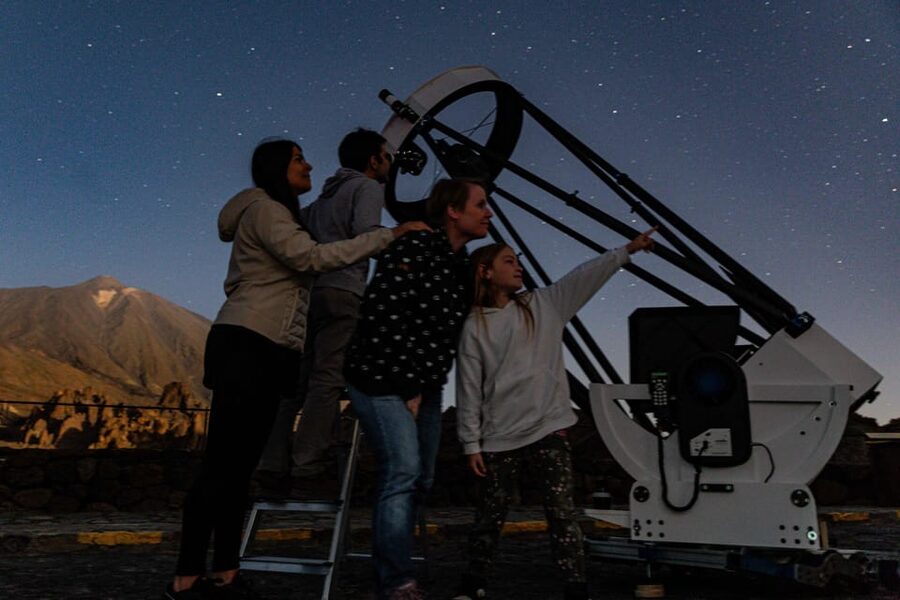
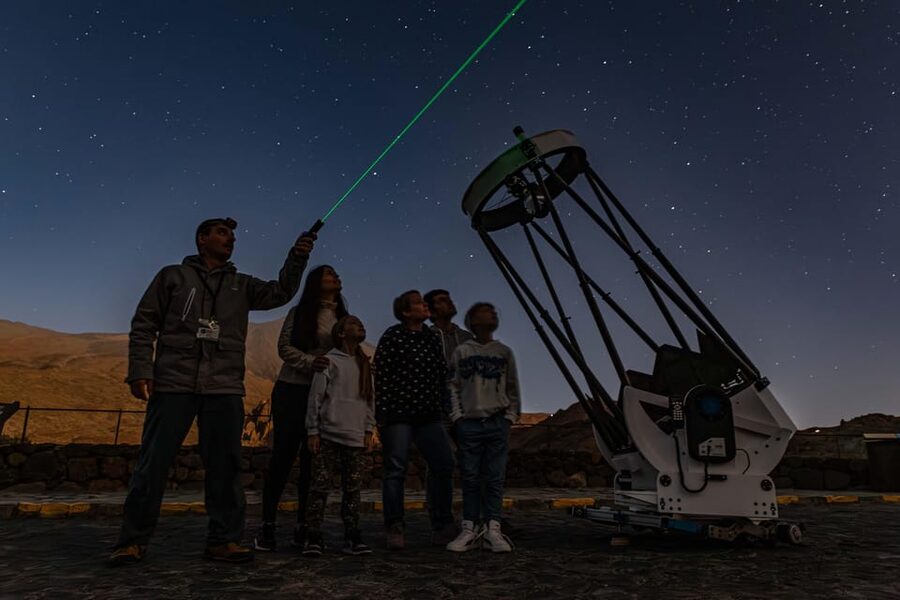
Teide National Park is one of Europe’s best places for looking up, and this three-hour tour gives you something far better than a quick constellation talk. Alessandro’s 32-inch Dobsonian telescope is the star of the show, revealing galaxies, nebulae, planets, and stellar remnants with a brightness smaller scopes cannot match.
I like the small groups of up to 12 and the guide’s ability to adjust the talk for beginners and serious amateur astronomers. I also like that the price includes astrophotography, so you leave with striking images rather than only a fading memory of a dark sky.
The main drawback is the mountain weather. Wind can force the telescope indoors or stop the viewing early, and the exact meeting point is sent on the day. Dress as if the night will be much colder than Tenerife’s beaches, because it may be.
Key points at a glance
- A huge 32-inch telescope: This computerized Dobsonian is described as the largest private telescope in the Canary Islands.
- Small-group viewing: With up to 12 people, you should get real time at the eyepiece and room for questions.
- Guide-led astronomy: Alessandro explains the solar system, galaxies, nebulae, star life, and astrophotography in clear language.
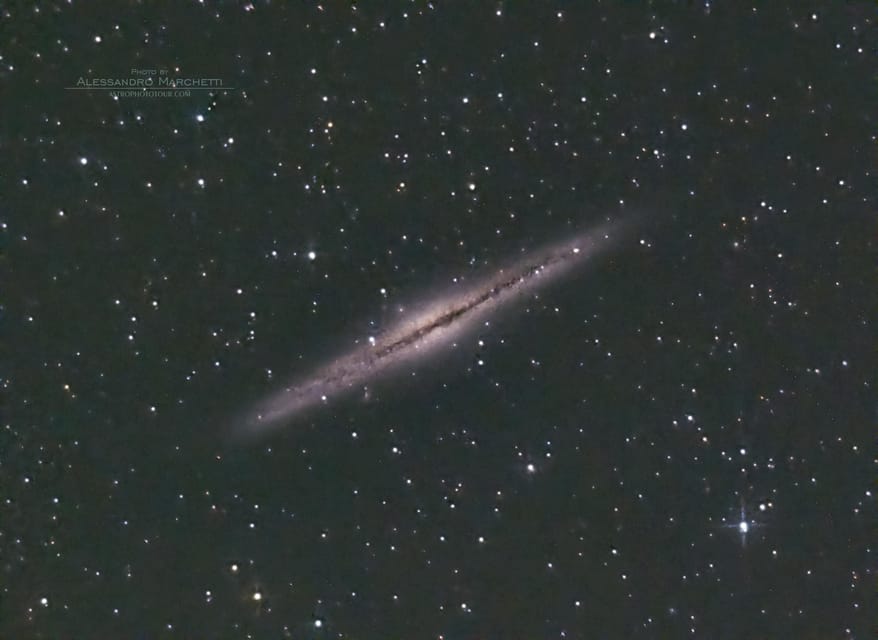
- Photos are included: A cooled astro-camera captures images during the session, with additional images from earlier observations shared as part of the experience.
- Night Vision alternative: The modified 12-inch telescope uses light amplification to show the sky in a different and more immediate way.
- Weather controls the plan: Wind, clouds, and seasonal sunset times affect the meeting time and what you can see.
Why Teide is the right setting for serious stargazing
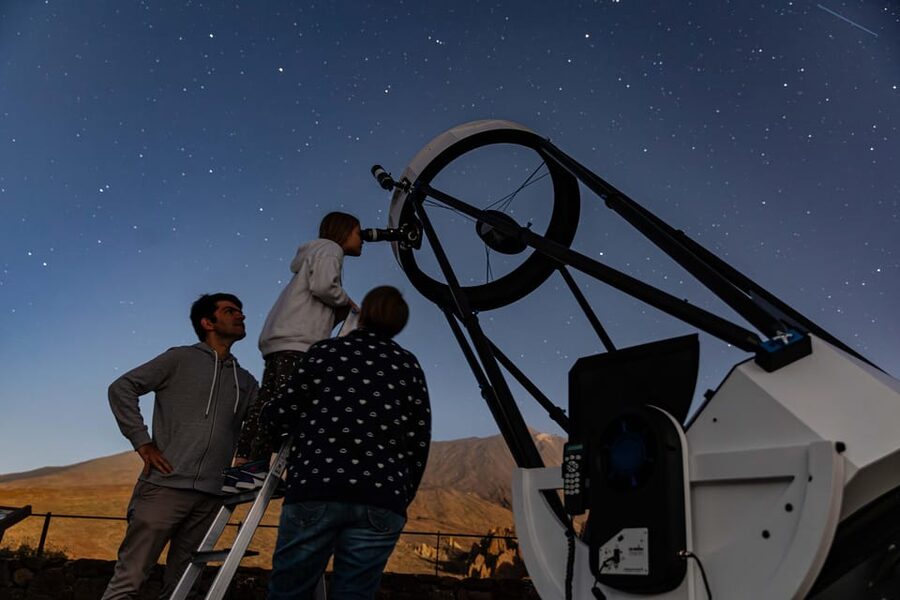
Teide National Park gives this activity its real sense of place. You are not looking at the sky from a hotel terrace with lights nearby. You are heading into a high mountain environment where the dark surroundings make faint celestial objects easier to pick out.
The appeal is not just seeing more stars. A dark location helps the telescope do its work. Galaxies, nebulae, star clusters, and the remains of exploded stars can appear with more contrast, while familiar planets such as Jupiter, Saturn, and Mars may show fine details depending on the season.
The exact site is not fixed. Large telescopes need an area with less wind, so the operator sends GPS coordinates and the meeting time through WhatsApp at about 9:30 in the morning on the day of the tour. That may feel less tidy than having one permanent meeting point, but it is a sensible arrangement for equipment this large.
Starting time also changes with sunset. Expect a different departure time in summer than in winter. Check your phone on the day and keep your evening free rather than booking a second activity too close to this one.
More National Park Stargazing in Spain
- Tenerife: Teide National Park Sunset & Stargazing Tour
★ 4.2 · 3,812 reviews - Tenerife: Sunset and Stargazing at Teide National Park
★ 4.7 · 2,826 reviews - Teide National Park Sunset & Stargazing with Dinner (Star Safari)
★ 5.0 · 2,601 reviews
The 32-inch telescope is the main reason to book
The standard experience uses a computerized 32-inch Dobsonian telescope. That measurement refers to the mirror diameter, a large light-gathering surface that helps the scope show faint objects more clearly.
This is not simply a case of bigger equipment looking impressive in the dark. A large mirror collects more light, which matters when you are viewing a distant galaxy or a dim nebula. It can also reveal structure that a smaller telescope may show only as a faint smudge.
The viewing list changes with the season and conditions. Depending on the date, you might see Saturn and its moons, Jupiter, Mars, star clusters, galaxies, planetary nebulae, or the remains of a supernova. One of the pleasures here is that the guide chooses objects that work well on that particular night rather than following a rigid list.
Alessandro built the telescope himself, according to the information provided for the experience. That personal connection matters. He is not simply pointing a commercial instrument at the sky and reciting names. His explanations cover how stars form, change, and die, along with the scale and age of the universe.
The telescope is computerized, which helps locate objects accurately. You still get the old-fashioned pleasure of looking through an eyepiece, but you are less likely to spend your limited time waiting while someone searches for a faint target.
What the three-hour evening feels like
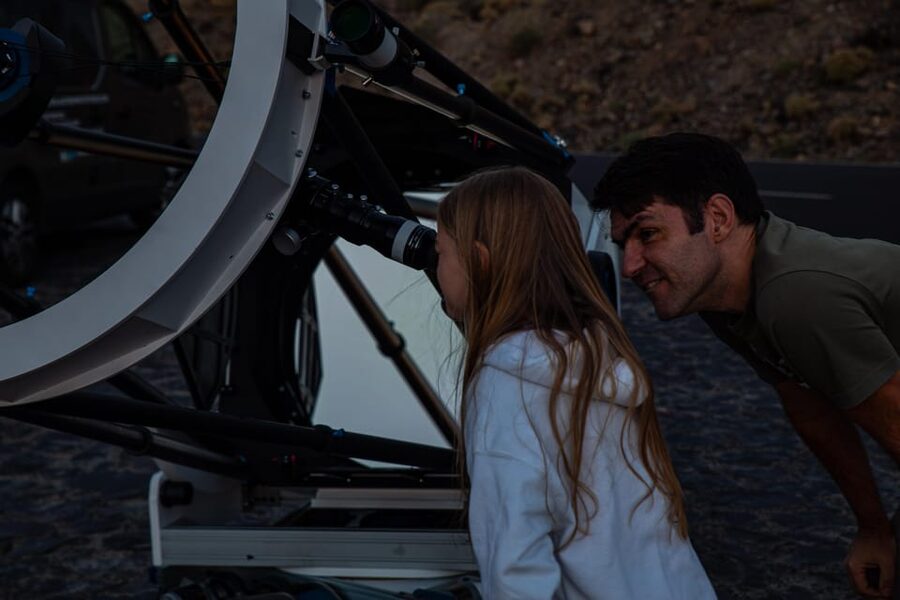
The evening begins with the group gathering at the weather-dependent location in Teide National Park. Since the operator confirms both the time and GPS point on the day, allow time to reach the site and do not rely on an old message from a previous visit.
Alessandro typically begins by setting the stage. His explanations cover the origins of the universe, the solar system, the Milky Way, and the life cycle of stars. He is comfortable explaining difficult ideas in simple terms, but he can also bring in more advanced astrophysics when the group wants it.
That flexibility is useful. A family with children may need short explanations and plenty of chances to look through the eyepiece. Amateur astronomers may want to ask about mirrors, cameras, exposure, or the way deep-sky objects appear. The guide has been praised for handling both levels in the same small group.
The main part of the evening moves between explanation and observation. Alessandro points out a target, explains what you are seeing, and gives each person time at the telescope. This is more personal than the common coach-based stargazing format, where a guide may need to move a large crowd through a line of objects.
You should not expect every object to look like a polished space-agency photograph through the eyepiece. Your eye sees a live view, often with less color than a long-exposure image. The reward is that the light reaching your eye has traveled across enormous distances and is being seen in real time.
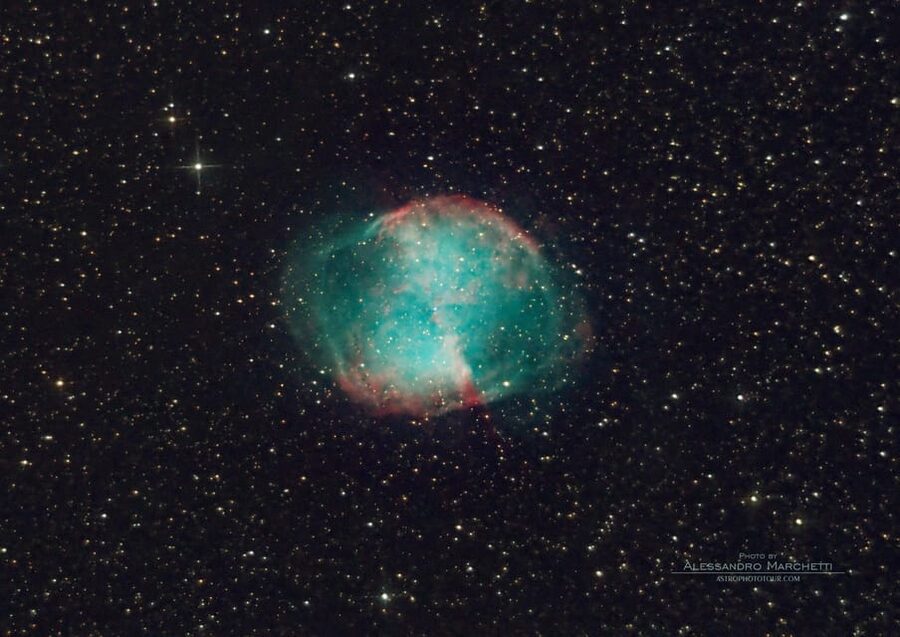
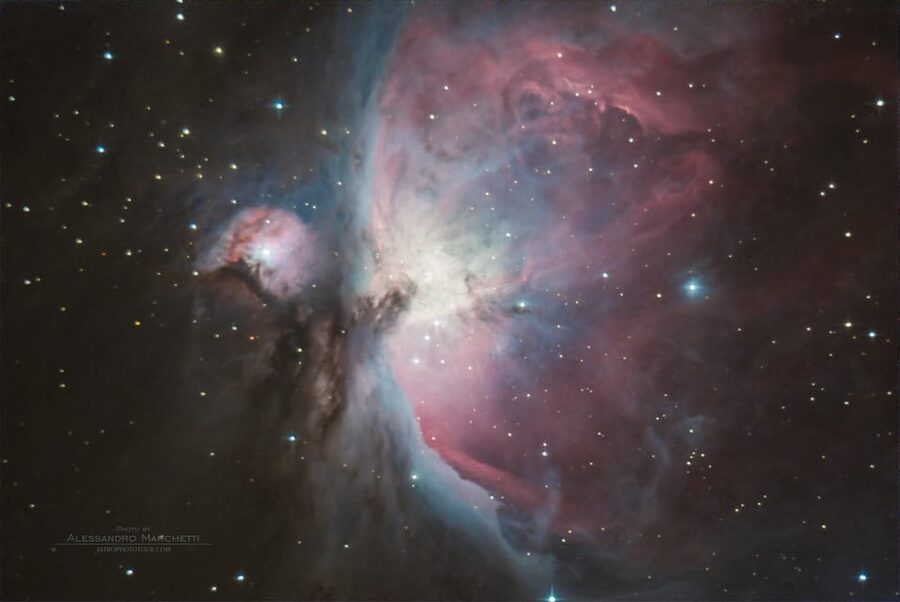
At some point, the guide may show images captured with the cooled astro-camera attached to the telescope. These photographs bring out color and detail that the eye cannot always register. The included photo package gives you a concrete record of the night and helps explain what you were looking at.
The session lasts about three hours, though the exact rhythm depends on the group, the sky, and the wind. The guide may pause for questions, return to a popular object, or change the plan when conditions shift.
Alessandro’s guiding style is a major part of the value
The equipment is unusual, but the guide makes the difference between a technical demonstration and a good evening out. Alessandro has a clear passion for astronomy and astrophotography, and that enthusiasm comes through in the way he explains the sky.
His strongest skill is making large ideas understandable. The age of the universe, the scale of a galaxy, and the death of a star can sound abstract in a classroom. Here, those ideas are tied to an object you can actually see through the telescope.
He also takes time with questions. That matters because stargazing tours can move too quickly for anyone who wants to understand what is happening. The small format gives you a better chance to ask why an object looks a certain way, how the telescope works, or how the photos are made.
Alessandro’s wife, Antonella, has also helped with the experience. Practical touches reported during colder sessions include hot tea, biscuits, and spare coats for people who need another layer. These are simple additions, but they matter when you are standing still under a clear winter sky.
The tour is offered in English, Spanish, and Italian. If your group includes children or people with different language abilities, the guide has been willing to slow down and repeat explanations. That can make the difference between a family activity everyone enjoys and one that only suits the adult astronomy fan.
One caution: the educational part can be detailed. If someone in your party is only mildly interested in space, three hours of astronomy may feel long. The private option gives couples, families, or friend groups more control over the pace, but the standard small-group format still includes a fair amount of explanation.
More National Park Stargazing in Tenerife
- Teide National Park: Sunset & Stargazing Safari with Dinner
★ 4.6 · 2,115 reviews - Tenerife. Stargazing in Teide National Park
★ 4.9 · 319 reviews - Teide National Park: Stargazing Experience
★ 4.7 · 220 reviews - Self Drive Sunset & Stargazing in Teide National Park – No Dinner
★ 5.0 · 151 reviews
The Night Vision Voyage offers a different kind of viewing
The alternative Night Vision Voyage uses a modified 12-inch telescope with a Night Vision system. It is smaller than the 32-inch scope, but the light-amplifying technology creates its own appeal.
This option is aimed at people who want a more immediate, real-time view of the sky. Night Vision can reveal stars and structures that are difficult to see with ordinary equipment, and the effect can feel different from looking through a very large conventional telescope.
You should choose based on the type of experience you want. The 32-inch option is the obvious pick if your priority is maximum light-gathering power and detailed views of faint deep-sky objects. The Night Vision version may suit you if the appeal lies in watching the sky through a distinctive piece of equipment and seeing how technology changes the view.
The provider also offers a private Starlight Experience. This uses the same general access to the impressive telescope but limits the evening to your own couple, family, or group of friends. It costs more than a shared booking, but the extra privacy may be worthwhile if your party has young children, mixed interests, or many questions.
Astrophotography gives you more than a souvenir snapshot
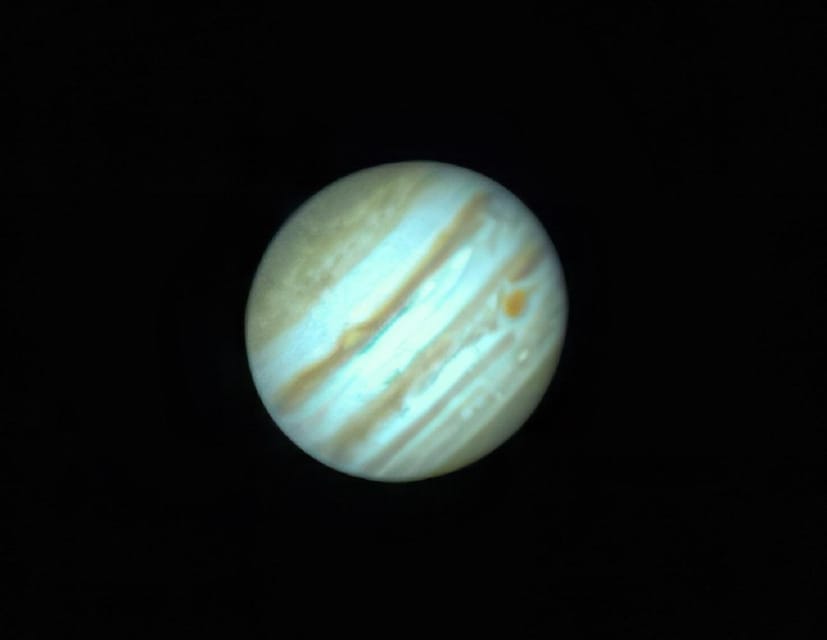
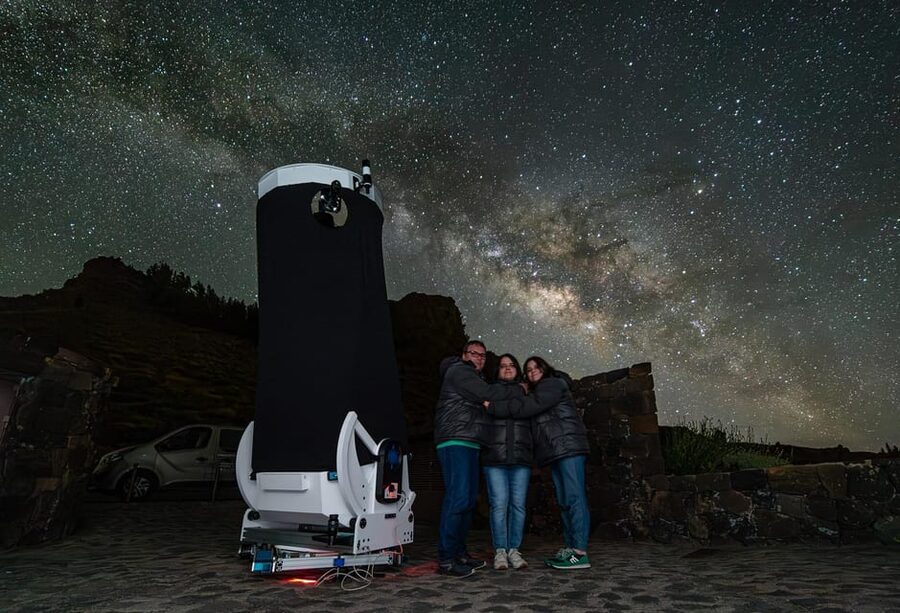
The included photography is one of the best practical features of this tour. The dedicated cooled astro-camera is designed for capturing deep-sky objects, and the guide shares images taken during the evening along with photographs from previous sessions.
This solves a common problem with telescope outings. You may see a galaxy or nebula clearly enough to remember it, but a phone held to an eyepiece rarely captures the same view. Here, the camera is part of the setup rather than an afterthought.
The final people-and-stars photograph is another nice touch. It gives you a picture of your group beneath the night sky, while the telescope images preserve the objects themselves. Expect the people in a long-exposure image to look slightly blurred if they move, but that is part of the process and not a reason to skip it.
The photos also help children understand the difference between what the eye sees and what a camera can record. A faint shape at the eyepiece can become a detailed, colorful image when exposure time and camera equipment are added.
Cold, wind, and timing deserve serious attention
Tenerife is warm in resort areas, but Teide after sunset is another matter. The supplied advice says to bring warm clothing, water, snacks, and comfortable clothes. Take that seriously, even if the afternoon at sea level is sunny.
Wear closed shoes and long trousers. Shorts and open-toed shoes are not allowed. Do not bring a flashlight, since bright light interferes with night vision and the dark setting.
Wind is the most important weather issue because of the telescope’s size. If conditions are poor, the operator may postpone the activity to the next day or offer a refund. During one windy session, the group could no longer use the telescope, but the guide continued with photographs and naked-eye constellation work.
That example explains the tradeoff well. A weather interruption can reduce the amount of live viewing, but the evening may still have value if the guide can show images and identify visible stars. Still, you should book this with a flexible schedule and accept that nature controls the final program.
Is the $58 price good value?
At $58 per person, the tour sits in a reasonable range for a three-hour specialist activity. The price includes the guide, use of either the 32-inch computerized Dobsonian or 12-inch Night Vision telescope, a dedicated cooled astro-camera, and photographs.
You are not paying for transport, food, or drinks. Hotel pickup and drop-off are not included, and the meeting site may change. If you need a transfer from your hotel, factor that into the real cost of the evening.
The value is strongest if you care about the quality of the telescope and want time at the eyepiece. A large shared astronomy show with basic equipment may be cheaper, but it is unlikely to offer the same access to a privately built 32-inch scope or the same amount of direct conversation.
The price is less attractive if you are only looking for a quick look at the stars. The tour includes substantial explanation, and the mountain setting requires planning. You are paying for specialist equipment, skilled guidance, a small group, and photographs, not just a short stop to point out the Big Dipper.
Who will enjoy this most?
I would recommend this for adults and older children who are curious about how the universe works. You do not need any astronomy background. The guide explains the basics clearly, and the telescope gives beginners an immediate reason to care.
It is also a strong choice for amateur astronomers. The combination of a large mirror, deep-sky targets, astrophotography, and detailed questions gives experienced hobbyists more to work with than a standard introductory talk.
Families should consider the children’s age and patience. Children under five cannot join, and a three-hour session may be too long for a child who has little interest in astronomy. Older children can benefit from the guide’s willingness to explain objects carefully and give them time at the eyepiece.
Couples and friend groups may prefer the private version if they want to set the pace. Solo visitors and budget-conscious couples should find the shared group a good compromise, especially with a maximum of 12 people.
Should you book the Teide telescope tour?
Book it if you want a real astronomy experience rather than a short tourist activity. The large telescope, small group, clear explanations, and included photographs create a strong package for $58.
Go in with realistic expectations. The sky may not cooperate, the meeting point is weather-dependent, and deep-sky objects do not always look like colorful photographs through the eyepiece. You also need warm clothes, your own transport to the meeting area, and enough interest to enjoy a detailed three-hour session.
I would make this a priority for anyone fascinated by galaxies, nebulae, planets, or astrophotography. If the forecast is uncertain, keep the next day available when possible. That small bit of flexibility gives the telescope the best chance to show you what it can do.
FAQ
How long does the stargazing tour last?
The activity lasts three hours. The starting time changes with the sunset time and therefore varies by season.
Where is the meeting point?
The exact meeting point depends on the wind direction because the large telescope needs a less windy area. The activity provider sends the GPS coordinates and meeting details by WhatsApp at about 9:30 am on the day of the tour.
Is hotel pickup included?
No. Hotel pickup and drop-off are not included.
What should I bring?
Bring warm clothing, water, snacks, and comfortable clothes. Shorts and open-toed shoes are not allowed, and you should not bring a flashlight.
What happens if the weather is bad?
The activity may be postponed to the next day if conditions are unsuitable for observation. You can also receive a refund if the weather prevents the tour from going ahead.
Which languages are available?
The live guide is available in English, Spanish, and Italian.
More Telescope Stargazing in Tenerife
- Uluru: National Park Astronomy Tour with Telescope and Photo
★ 4.4 · 357 reviews - Levi: Northern Lights Tour and Stargazing by Telescope
★ 4.6 · 183 reviews - Planetarium and Telescope Combo Tour
★ 4.0 · 144 reviews - Jasper: Jasper Planetarium and Telescope Combo Tour Tickets
★ 3.8 · 118 reviews
More Telescope Stargazing in Spain
- Teide by Night: Sunset & Stargazing with Telescopes Experience
★ 4.5 · 1,492 reviews - Magic Stargazing & Sunset in Teide with Dinner + Telescopes
★ 3.5 · 20 reviews - Cavalleria: Guided Stargazing at the Beach with Telescope
★ 4.9 · 87 reviews
Just in after dark around Tenerife
- Magic Stargazing & Sunset in Teide with Dinner + Telescopes★ 3.5 · 20 reviews
- Private astronomy tour with sunset toast, picnic, and astrophotography★ 4.8 · 83 reviews
- Tenerife: Teide Stargazing with an Astrophysicist★ 4.9 · 74 reviews
- Tenerife: Stargazing at Mt. Teide★ 4.2 · 72 reviews
- Mount Teide Night Tour: Stargazing, Dinner and Hotel Pick up★ 3.5 · 86 reviews
- Teide National Park: Stargazing Experience★ 5.0 · 118 reviews
- Tenerife: Teide National Park Sunset Picnic and Stargazing★ 4.6 · 117 reviews
- Tenerife: Mount Teide Observatory Astronomical Tour★ 4.4 · 126 reviews
Telescope Stargazing, night against night.
Teide by Night: Sunset & Stargazing with Telescopes Experience
Read our review →
National Park Astronomy Tour with Telescope and Photo
Read our review →
Northern Lights Tour and Stargazing by Telescope
Read our review →
Jasper Planetarium and Telescope Combo Tour Tickets
Read our review →
Magic Stargazing & Sunset in Teide with Dinner + Telescopes
Read our review →