
Review · GREECE
Kifissia Stargazing & Astrophotography
The best part of this experience is the mix of Greek mythology and real astronomy. Panos guides you through the officially recognized constellations, explains how ancient cultures read the sky, and uses a telescope to bring the Moon and planets closer. It is not just a quick look upward. You get stories, science, and time to ask questions.
I like the private format, which gives you room to set the pace. I also like the practical photography section, since you leave with more than a few facts and may capture a personal image of the night sky. The main consideration is simple: weather controls the show, and the 90-minute session is focused rather than a long night under the stars.
Key points at a glance
- Panos leads the experience in English, combining astronomy, Greek mythology, and patient answers to questions.
- The session takes place at Alsos Ktimatos Siggrou, with the meeting point at Leof. Kifisias 182 in Marousi.
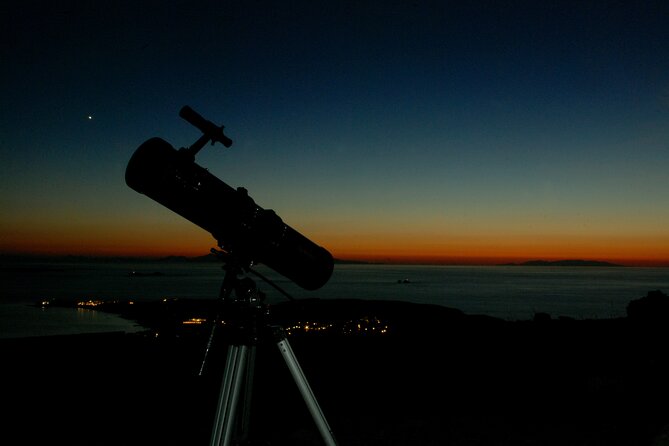
- The telescope is used throughout the experience, with reported views including the Moon and Saturn’s rings when conditions allow.
- The 90-minute program has three parts: observational astronomy, philosophical astronomy, and astrophotography.
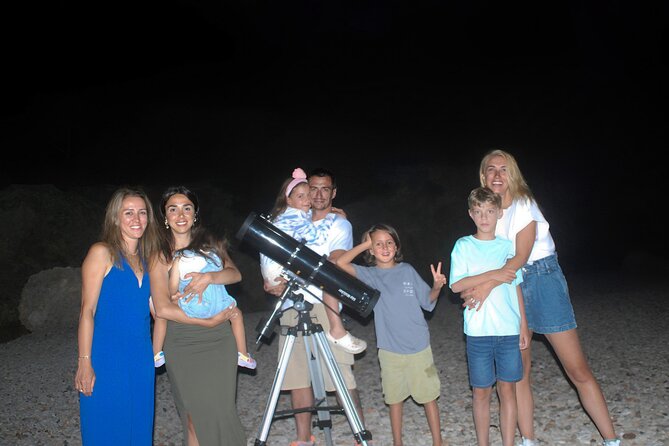
- This is a private activity, so only your group participates.
- Clear skies matter, and poor weather brings the choice of a new date or a full refund.
Why this Kifissia stargazing session feels different
Many city astronomy activities stop after a few telescope views. This one tries to give you a way to understand what you are seeing. Panos begins with the human side of astronomy, then moves toward the science, and ends with photography.
That order makes sense. You first learn how people have used the sky for orientation and storytelling. Then you consider the larger questions behind the stars and planets. Finally, you get practical advice on making an image of what you have been watching.
The setting is Alsos Ktimatos Siggrou, reached from the meeting point at Leof. Kifisias 182 in Marousi. The experience ends at that same meeting point, so you do not need to arrange a second pickup location.
This is not a broad Athens sightseeing tour. You will not move from monument to monument or combine stargazing with a city walk. It is a single, quiet activity built around the night sky. That focus is its strength, especially if you want something different from another museum or archaeological site.
More Astrophotography Tours in the world:
- Private astronomy tour with sunset toast, picnic, and astrophotography
★ 4.8 · 83 reviews - AuthenticAs Star Gazing -Nightscape Portrait Photography Tour
★ 5.0 · 59 reviews - Moab: The Windows Astro-Photography and Stargazing Hike
★ 4.8 · 36 reviews
The first section: finding your place among the stars
The opening section covers observational astronomy. Panos introduces the history of astronomy, ancient civilizations, and the officially recognized constellations.
The Greek mythology connection is especially fitting in Athens. Constellations are not presented only as points of light. They are tied to stories, characters, and old attempts to make sense of the sky. If you enjoy mythology, this gives familiar names a new setting. You begin to see them as part of a map rather than a list from a textbook.
You also learn how to orient yourself according to the stars. That matters because the sky can feel confusing at first. A guide can help you understand how the patterns relate to one another and how to think about the area around Earth.
The session also examines our cosmic neighborhood. That phrase covers the part of the discussion closest to home, including the relationship between Earth, the Moon, planets, and the wider night sky. The exact objects available to view will depend on timing and conditions, so you should treat individual sightings as possible highlights, not fixed promises.
Panos’s storytelling is a major part of this opening. His enthusiasm gives the material energy, while his patient approach helps if you have questions. This suits beginners who want clear explanations rather than a technical lecture.
The second section: astronomy’s biggest questions
The philosophical astronomy section shifts from what you can see to what it means. You discuss some of astronomy’s most mind-bending facts and consider the largest mysteries of the cosmos.
This part adds value because it prevents the telescope from becoming a simple viewing device. You are encouraged to think about scale, distance, time, and the limits of human understanding. The provided details do not promise a fixed list of topics, so the discussion may change with your questions and Panos’s presentation.
That flexible approach is useful in a private tour. If you already know the basics, you can spend more time on the questions that interest you. If you are new to astronomy, you can ask for explanations without worrying about holding up a larger group.
Panos has also been praised for his patience with questions. That is important here. Philosophical astronomy can quickly become abstract, and a calm guide makes it easier to follow the ideas without feeling lost.
I would not book this part expecting a formal university seminar. It is a guided conversation within a short tourism experience. You get stimulating questions and accessible explanations, not a full course in astrophysics.
The telescope: possible views of the Moon and Saturn
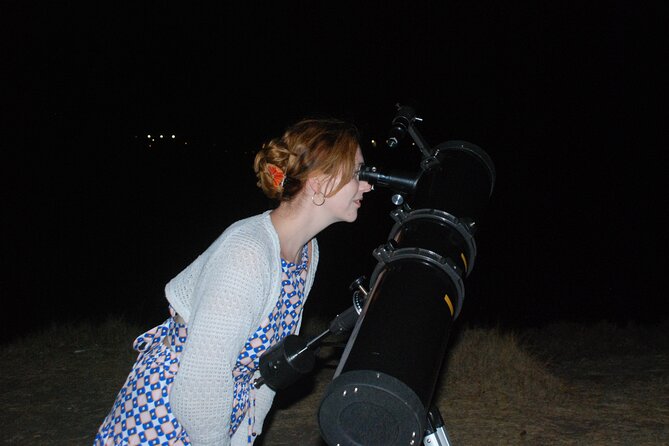
The telescope is used throughout the experience, bringing you closer to space and time. That wording is apt, but keep your expectations realistic. A small telescope does not turn planets into huge, colorful photographs. What it can do is give you a direct view that feels very different from seeing the same object in a book or on a phone.
Specific sightings depend on the night. The strongest reported moments include detailed views of the Moon and Saturn’s rings. Seeing Saturn’s rings through a telescope can be a memorable first encounter with another world, particularly for a child or someone new to astronomy.
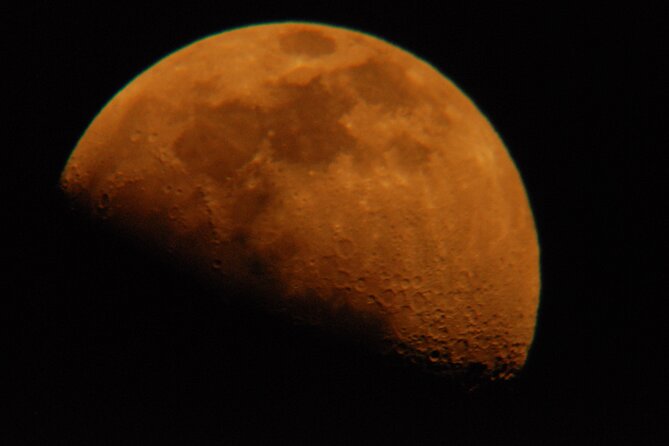
The Moon is another likely highlight when it is visible. Its surface can look striking through a telescope, with light and shadow making the shape of its craters easier to appreciate. Still, the program does not guarantee a particular planet or lunar phase. Ask at booking or before the session if a certain object is your main reason for coming.
The private format helps here. Your group can take its turn, ask what you are seeing, and spend a little more time on an object that catches your attention. A larger group may offer more social energy, but this experience is better suited to people who want a calm, personal introduction.
More Stargazing Tours around the world:
- Dubai Red Dunes ATV, Camels, Stargazing & 5* BBQ Al Khayma Camp
★ 5.0 · 21,620 reviews - Sharm El-Sheikh: Ultimate ATV Quad, Stargazing & BBQ Dinner
★ 4.7 · 4,084 reviews - Tenerife: Teide National Park Sunset & Stargazing Tour
★ 4.2 · 3,812 reviews - Tenerife: Sunset and Stargazing at Teide National Park
★ 4.7 · 2,826 reviews
The final section: learning basic astrophotography
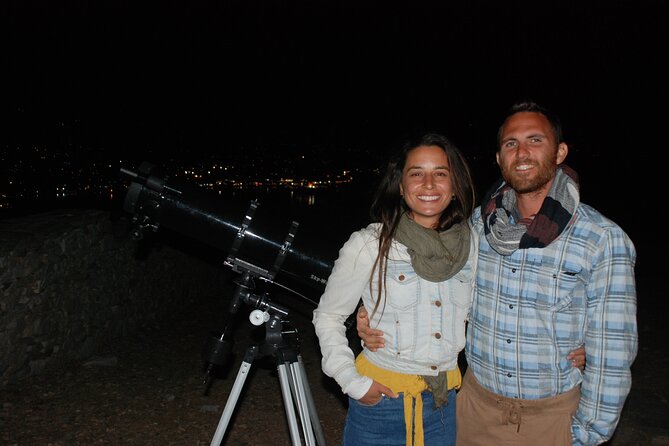
The last part focuses on astrophotography tips and techniques. You then try to capture images and take away a personal souvenir from the night.
The supplied details do not specify the camera or phone equipment provided, so you should confirm what you need to bring. Do not assume that the telescope itself automatically produces a finished photograph for you. The useful point is that Panos shares ways to approach night-sky photography, then helps you try to make an image.
That hands-on finish gives the session a clear purpose. You are not only listening to a talk. You are applying what you have learned and attempting to record the experience.
Astrophotography can be demanding, so the 90-minute schedule limits how far the lesson can go. You are unlikely to leave with a full professional workflow. But if you want a starting point, basic techniques, and a better sense of how to photograph stars, this section adds real value.
For a birthday or a surprise, the photography element also gives the occasion a lasting reminder. One couple used the astronomy session as a birthday gift, and the evening included a view of Saturn’s rings. That kind of personal occasion suits the private setup well.
What the private format means for you
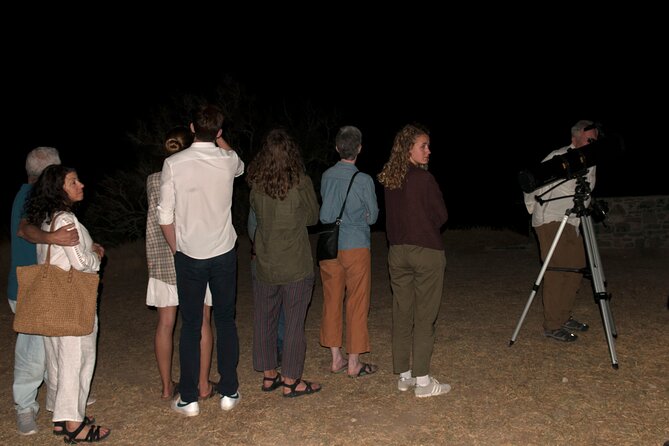
Only your group takes part. That changes the feel of the evening in several useful ways.
You can ask simple questions without feeling self-conscious. You can also spend more time on mythology, telescope viewing, or photography, depending on your interests. If one person in your group is already interested in astronomy while another is a beginner, Panos can adjust the conversation.
The private format is also useful for couples, families, and small groups of friends. A birthday surprise can work particularly well, since the session feels more personal than a public lecture.
There is a trade-off. Private activities often cost more per person than large group events. At $102.13 per person, this is not a casual, low-cost add-on. You are paying for Panos’s time, the private setting, telescope access, and a structured program that covers three different subjects.
I would judge the price by your interests. If you only want a five-minute look through a telescope, it is expensive. If you want a guided astronomy session, mythology stories, thoughtful discussion, and help with night photography, the price is easier to justify.
Timing, location, and practical planning
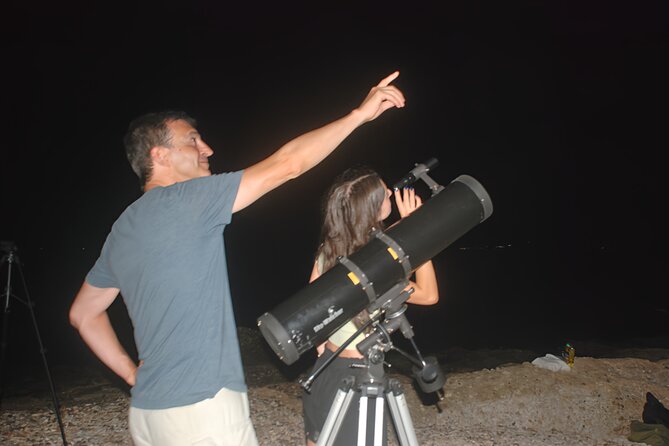
The session lasts about one hour and 30 minutes. That is long enough to cover the three sections without asking you to commit to an entire evening. It also fits neatly into an Athens itinerary, provided you allow time to reach Marousi and return afterward.
The meeting point is Leof. Kifisias 182, Marousi 145 62, Greece. The activity takes place at Alsos Ktimatos Siggrou and ends back at the meeting point. Check your route carefully, especially if you are staying in central Athens, since the address is outside the historic center.
The ticket is mobile, and the experience is offered in English. Confirmation is sent within 48 hours of booking, subject to availability. It is sensible to avoid building an important dinner reservation or airport transfer too tightly around the session until your booking is confirmed.
Most people can take part, and service animals are allowed. The activity is private, but the available information does not give specific details about paths, seating, or wheelchair access. If you have mobility needs, ask for current access information before booking.
The activity is booked, on average, 33 days ahead. That suggests you should reserve early if your Athens dates are fixed, particularly because the session is private and availability is limited.
Weather is part of the experience
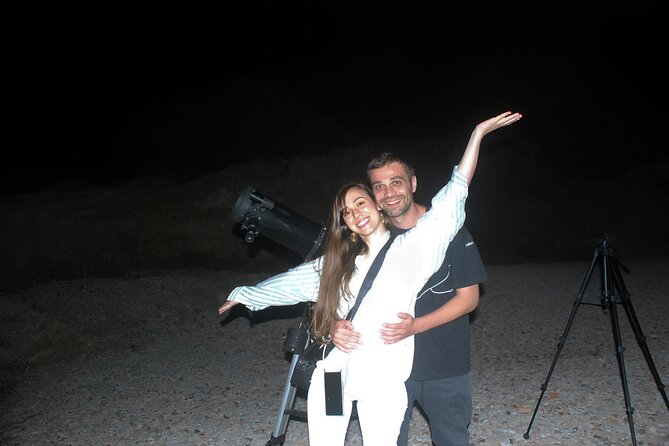
Astronomy needs a clear sky. Clouds can block the Moon, planets, and constellations, and poor weather can cancel the session.
If the experience is canceled because of bad weather, you are offered a different date or a full refund. This is a fair policy, but it still means you should leave some flexibility in your schedule if stargazing is important to you.
You can cancel for a full refund up to 24 hours before the start time. Cancellations or changes made less than 24 hours ahead are not accepted for a refund. Cut-off times use the local time in Athens.
Do not treat the weather policy as a minor footnote. It is central to the decision. A cloudy evening can turn a telescope session into a conversation without the views you expected. The guide may still provide the astronomy and mythology sections, but the main visual part depends on the sky.
Who will enjoy this most
I would recommend this experience to couples looking for a quiet evening, families with children interested in space, and adults who want a thoughtful activity beyond Athens’s usual sights.
It is also a good fit if you enjoy Greek mythology but want to connect the stories with modern astronomy. The constellation section gives those old tales a practical place in the sky.
Beginners should feel comfortable. The program is designed around explanation, stories, questions, and direct viewing rather than advanced technical knowledge. Panos’s patient style is helpful if you want to stop and clarify a point.
Photography enthusiasts may also find it worthwhile, though expectations matter. This is an introduction to astrophotography, not an advanced workshop with a stated equipment list or a long night of technical practice.
I would be more cautious if you have very limited time in Athens, dislike weather-dependent plans, or want a guaranteed view of a particular planet. The session can be excellent under the right conditions, but no astronomy activity can control the sky.
Should you book the Kifissia Stargazing experience?
Book it if you want a personal astronomy evening with Panos’s storytelling, a telescope, Greek mythology, big questions about the universe, and a short introduction to astrophotography. The 90-minute structure keeps it manageable, while the private format gives your group space to ask questions and enjoy the night at its own pace.
Skip it if you are looking only for a quick, inexpensive attraction or if your schedule cannot handle a weather change. At $102.13 per person, the value comes from the complete experience, not from telescope time alone.
For the right audience, this is a memorable way to look beyond Athens’s ancient stones and connect the city’s mythology with the actual night sky.
FAQ
Where does the Kifissia Stargazing experience take place?
The experience takes place at Alsos Ktimatos Siggrou. The meeting point is Leof. Kifisias 182, Marousi 145 62, Greece, and the activity ends back at the meeting point.
How long does the experience last?
The session lasts approximately one hour and 30 minutes.
What language is the activity offered in?
The experience is offered in English.
Is this a private activity?
Yes. Only your group participates in the activity.
What does the astronomy session include?
It includes observational astronomy, Greek mythology connected with constellations, discussion of major questions about the cosmos, telescope use, and tips and techniques for astrophotography.
Can I see the Moon or Saturn?
Views depend on the conditions and what is visible during the session. The experience has included views of the Moon and Saturn’s rings, but particular objects are not guaranteed.
What happens if the weather is poor?
If poor weather causes the activity to be canceled, you are offered a different date or a full refund.
Can I cancel for a full refund?
Yes. You can cancel at least 24 hours before the experience start time for a full refund. Cancellations or changes made less than 24 hours before the start time are not accepted.
Just in after dark around the world
- Doha: Night Desert Safari, Stargazing, and Camel Ride★ 5.0 · 2 reviews
- Doha : Night Desert Safari with Dune Bashing & Stargazing★ 5.0 · 4 reviews
- Doha: Night Desert Safari + Camel ride + Stargazing & Relax★ 5.0 · 4 reviews
- Day Trip to Tatacoa Desert (Horseback, Boat, Stargazing, ..)★ 4.4 · 3 reviews
- Christchurch: Lake Tekapo Stargazing & Mount Cook 2-Day Tour★ 5.0 · 6 reviews
- Cabo de Gata: Stargazing Experience★ 4.5 · 7 reviews
- Chile: Astronomical Tour in the Atacama Desert★ 4.8 · 4 reviews
- Cabo de Gata: Guided Night Walk with Stargazing★ 4.7 · 36 reviews
Astrophotography Tours, night against night.
Private astronomy tour with sunset toast, picnic, and astrophotography
Read our review →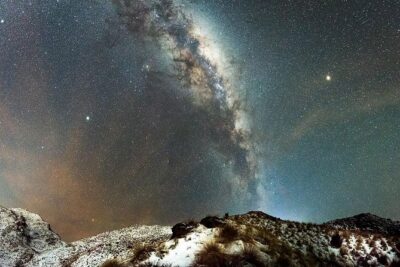
AuthenticAs Star Gazing -Nightscape Portrait Photography Tour
Read our review →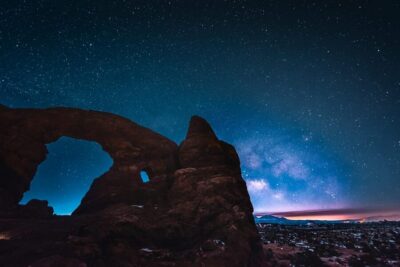
The Windows Astro-Photography and Stargazing Hike
Read our review →
Doha Night Desert Safari, Stargazing, Photography، Relaxation
Read our review →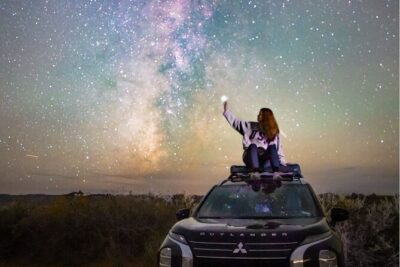
Stargazing and Milky Way Portrait in Capitol Reef National Park
Read our review →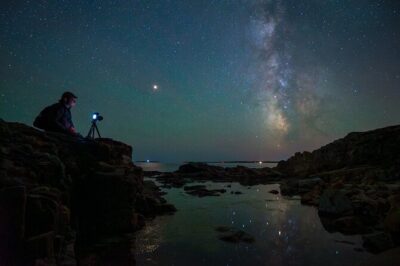
Milky Way Photography Workshop in Acadia National Park
Read our review →
Mount Bromo Milky Way Photography and Sunrise Private Tour (1D1N)
Read our review →
Lists this night appears in