
Review · LA PALMA
La Palma: Stargazing in the best sky in the world
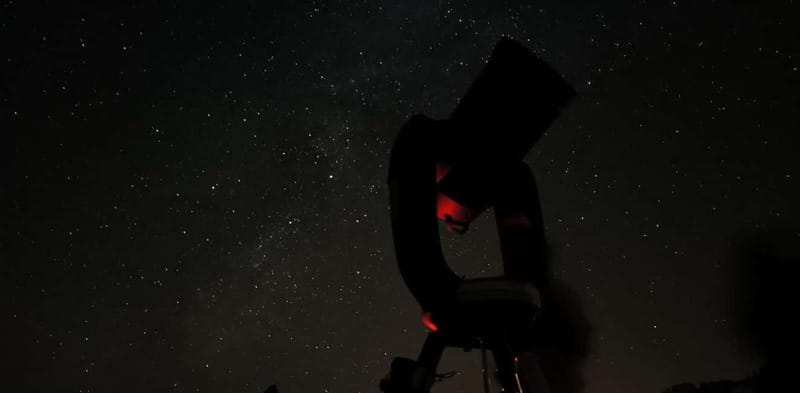
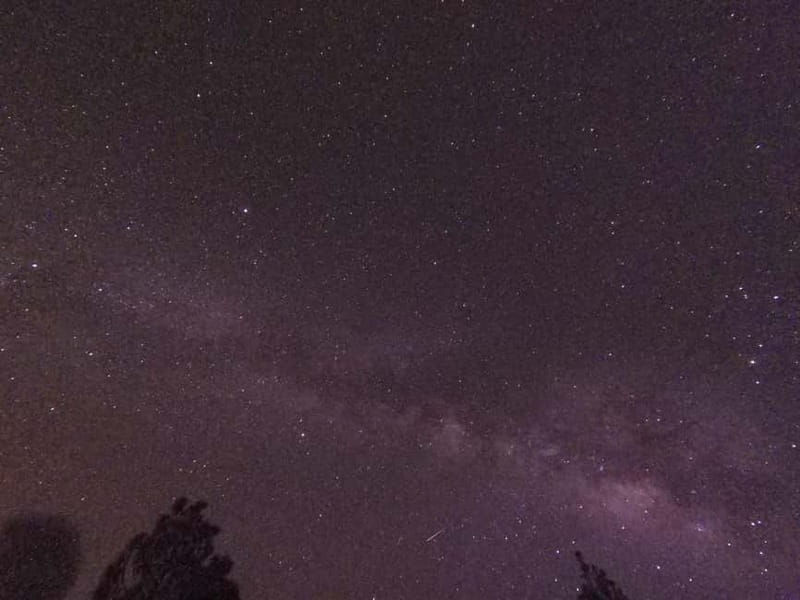
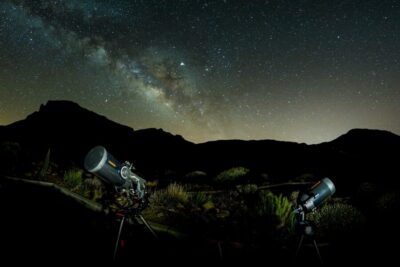
La Palma’s night sky is the real star here. From a mountain viewpoint, you’ll trace constellations with the naked eye, follow a laser through the dark, then take your turn at the telescope. On a clear night, the Moon, Jupiter and its four large moons, Saturn, nebulae, and distant galaxies may all come into play. The setting is quiet, high, and far removed from city glare.
I like the small groups of 10 to 15 people, since you get more time at the equipment instead of waiting behind a crowd. I also like the patient teaching style, especially the mix of science, old sky myths, and practical telescope use. Guide Nicolás has earned praise for clear explanations and strong storytelling.
The main thing to plan for is the weather. The meeting point, start time, and even the observing plan can change on the day. You’ll also need warm clothes, your own transport, and a little patience if clouds or wind force a late adjustment.
Key points
- Look through an adjustable astronomical telescope: You can set the eyepiece for your own eye and observe without being hurried.
- Use three ways to explore the sky: The tour combines naked-eye viewing, binoculars, and a more powerful telescope.
- Meet at a high volcanic viewpoint: Llano del Jable and Llano de Las Ventas sit around 1,320 to 1,341 meters above sea level.
- Expect astronomy with stories: Guides connect stars and planets with physics, chemistry, cultural myths, and legends.
- Prepare for a changing schedule: Weather, humidity, clouds, wind, official alerts, and the position of the planets all affect the plan.
- Pay $45 for a focused night out: The price includes the 1.5-hour guided session, but not transport, food, or bathroom facilities.
Why La Palma works so well for stargazing
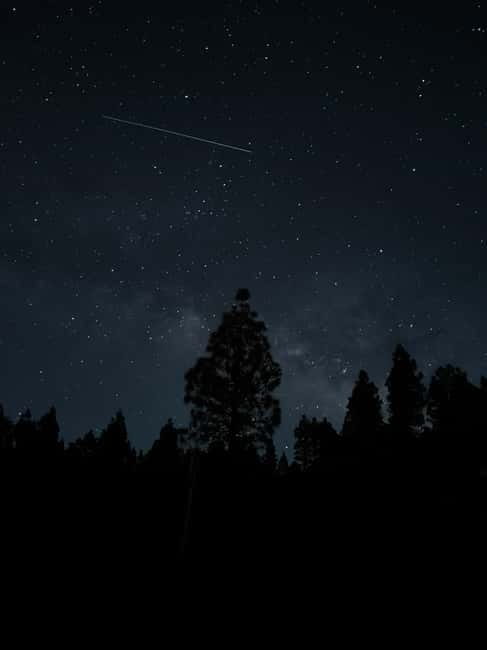
La Palma is one of the Canary Islands, but this activity takes you away from the bright coastal towns and into a darker mountain setting. That matters more than fancy equipment. The fewer artificial lights around you, the more stars you can pick out with your own eyes.
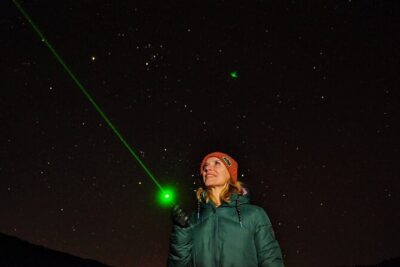
You begin with the sky as it looks to everyone, not as it appears through a machine. An astronomical laser helps the guide point out constellations, satellites, and other moving objects. This is a useful start because you learn how to recognize the sky instead of simply waiting for someone to show you a few objects through an eyepiece.
The altitude also helps create a better viewing setting, though it brings colder air. Llano del Jable is at about 1,341 meters, while Llano de Las Ventas is about 1,320 meters. The two usual viewpoints are only about five minutes apart, but the operator chooses between them based on conditions.
You should not expect a visit to the famous Roque de los Muchachos observatory. That is not part of this activity. Instead, you get a guided public astronomy session at selected viewpoints, with the focus on seeing and understanding the sky directly.
More Stargazing Tours around Spain:
- Tenerife: Teide National Park Sunset & Stargazing Tour
★ 4.2 · 3,812 reviews - Tenerife: Sunset and Stargazing at Teide National Park
★ 4.7 · 2,826 reviews - Teide National Park Sunset & Stargazing with Dinner (Star Safari)
★ 5.0 · 2,601 reviews
A small group and a personal telescope turn
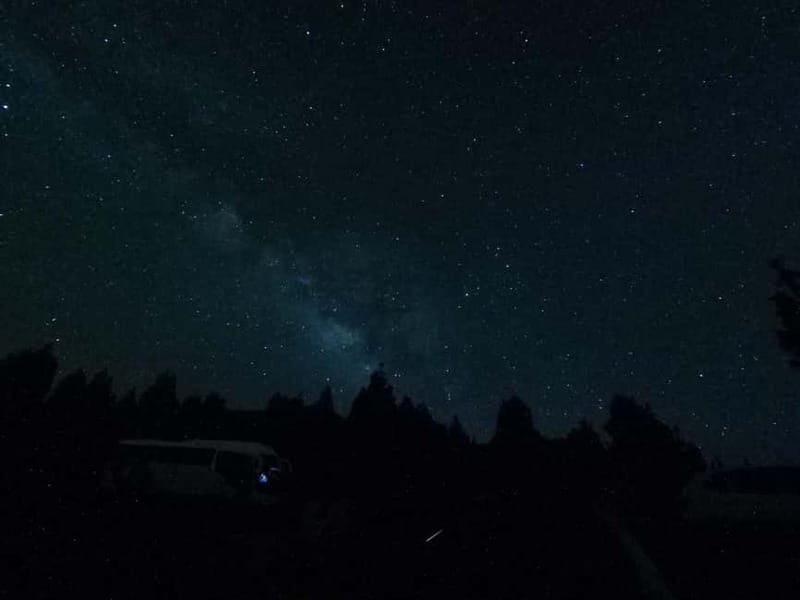
The group size is one of the strongest features. With 10 to 15 people, the guide can keep the session orderly without making it feel like a lecture for a busload of people. You’ll have a better chance to ask a question, get a clear look at the equipment, and hear the explanation without competing with a large crowd.
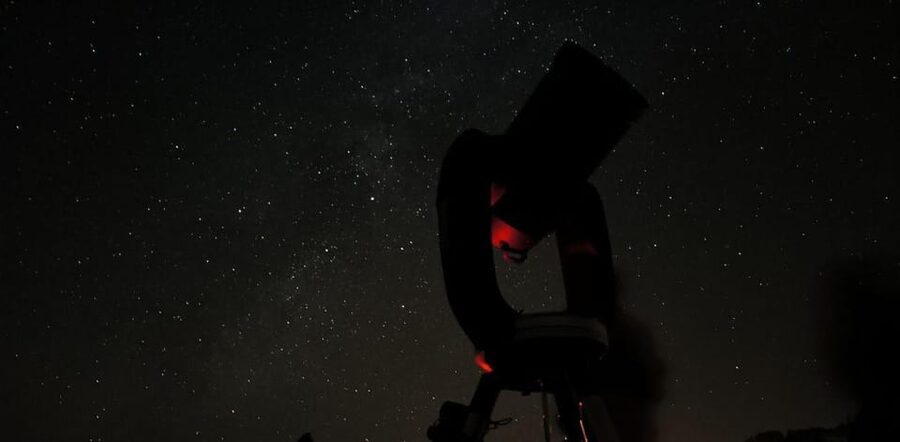
The telescope is not treated as a prop. You can adjust it for your own eye, which is useful if several people in your group wear glasses or have different eyesight. The tour also allows time to observe instead of rushing everyone through a quick glance.
That slower pace matters. Looking through a telescope takes a moment, especially when you are trying to see a faint object or understand which part of the view you are looking at. The guide can help you settle your eye and make sense of what appears in the eyepiece.
An optional VIP telescope access upgrade is available for an extra fee. The base tour already includes telescope viewing, so I would treat the upgrade as a choice for someone who wants faster or more direct access, not as a requirement for getting the main experience.
From the naked eye to galaxies
The session builds in a sensible order. First, you look upward without magnification. The guide uses a red-friendly astronomy laser to identify constellations and explain what you are seeing. You may also watch satellites or other moving objects cross the sky.
This opening section gives the night some structure. Without guidance, a dark sky can seem like a wall of scattered points. With a few reference stars and simple directions, you can begin to tell one group of stars from another.
Next come binoculars. They reveal wider areas of the sky than a telescope and can show regions that are hard to appreciate through a narrow eyepiece. The activity specifically uses them to view nebulae and star clusters, giving you a sense of how large and crowded the sky can be.
The telescope then takes you from the Solar System to deep space. Depending on the date, weather, and visibility, the guide may point it toward the Moon, planets, individual stars, galaxies, or nebulae. The Moon can show surface detail. Jupiter may appear with its four Galilean moons, and Saturn may display its familiar ringed shape.
A key point is that the exact objects are not guaranteed each night. The operator checks which celestial bodies will be visible and adjusts the plan. A full Moon, for example, changes the mood and the astronomy. Rather than promising the darkest possible sky, the session may focus on the Moon’s surface and its place in human stories.
The guide brings science and stories together
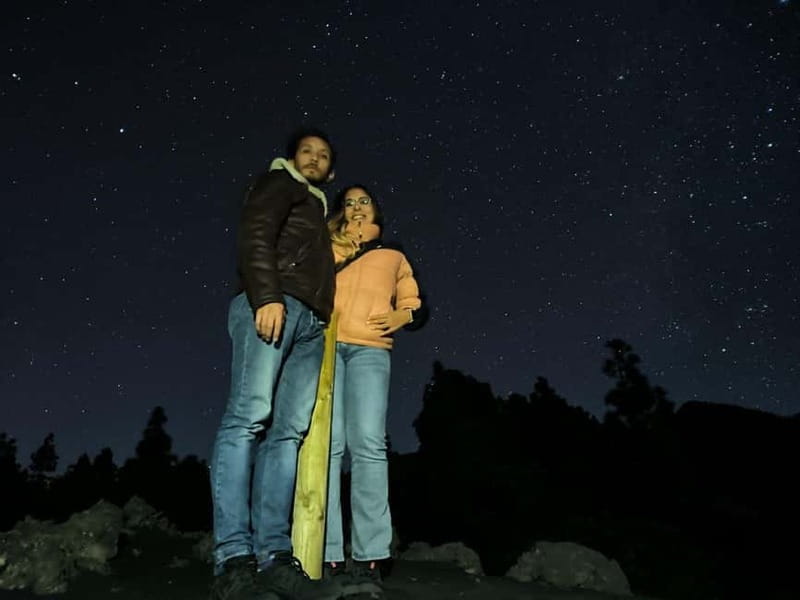
This is more than a telescope queue. The guide explains the physics of the Cosmos and the chemistry that creates stars, while also sharing myths and legends from different cultures. That mix makes the session easier to follow if you are new to astronomy.
I particularly like this approach for families and curious adults who want context, not just a list of object names. You can learn why a star has a certain color, how planets differ from stars, or how people in different cultures made sense of the same patterns overhead.
Nicolás leads some sessions and has been praised for his clear explanations and storytelling. María José is also a named contact for the activity. The guides speak English and Spanish, so you should select the language that suits your group when booking.
The tone appears designed for ordinary people, not trained astronomers. You do not need to know the constellations in advance. You also do not need to bring special equipment. The value comes from having an expert guide the process and give meaning to what you see.
Same stars, another vantage point:
- Teide National Park: Sunset & Stargazing Safari with Dinner
★ 4.6 · 2,115 reviews - Teide by Night: Sunset & Stargazing with Telescopes Experience
★ 4.5 · 1,492 reviews - Teide: Guided Sunset & Stargazing Tour by Night with Dinner
★ 4.7 · 1,339 reviews - Sunset & Stargazing Experience From Teide
★ 4.5 · 1,129 reviews
Where you meet and why the location may change
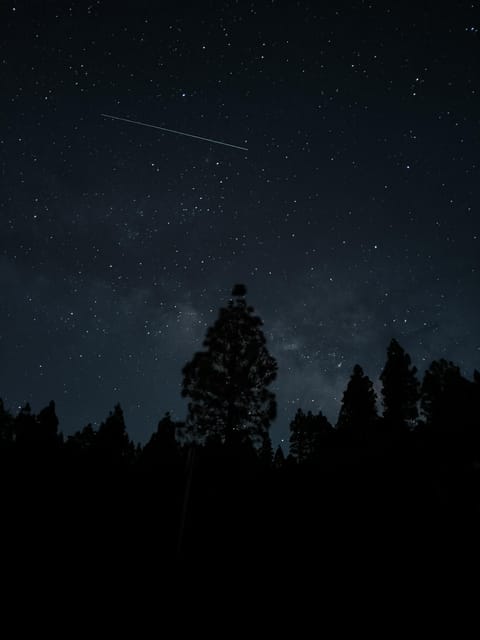
The usual meeting points are Llano del Jable Astronomical Viewpoint and Llano de Las Ventas Astronomical Viewpoint. Both are roughly 39 minutes from Santa Cruz, Los Cancajos, and Los Llanos by car. The listed altitude is high enough to bring colder conditions than you may expect from a Canary Island evening.
A third option is San Antonio Volcano in Fuencaliente, a private location at about 633 meters. This site is around 40 minutes from Santa Cruz, Los Cancajos, and Los Llanos, and about 15 minutes from the Princess Hotel.
You do not pick the final site entirely on your own. The operator checks wind, humidity, clouds, haze, government alerts, site occupancy, and the position of visible objects. If the normal viewpoints are poor, the activity may move to a private indoor or sheltered site when one is available.
You’ll receive the exact meeting point and time on the day of the activity. Check WhatsApp, email, or SMS, and tell the operator in advance if you do not use WhatsApp. The start time is approximate because sunset and darkness change throughout the year.
This flexibility is practical, but it can be inconvenient if you are arranging a tight evening schedule. I would avoid booking a dinner reservation immediately after the tour. Arrive 15 minutes early, then contact the guide or approach quietly and ask for María José or Nicolás using the name on your reservation.
Dark-sky manners are part of the experience
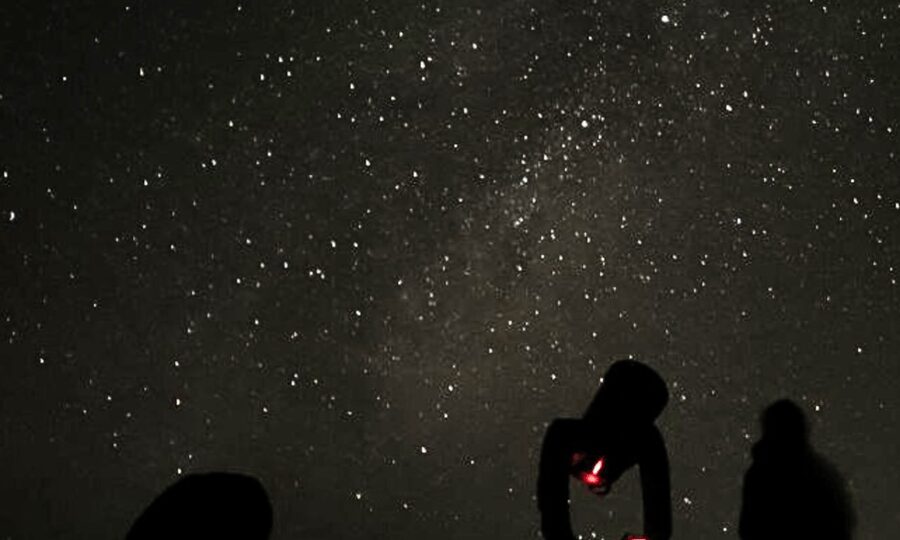
A stargazing group needs darkness, so your arrival habits matter. Turn off your car lights before joining the group. If you have a red light, use it. If you only have a white light, point it toward the ground and keep it brief.
The meeting point is at the center of the astronomical viewpoint, and the group uses a red light to help you find the guide. If you cannot locate the team, contact them rather than walking around with a bright phone or flashlight.
There is no food included, and there is no bathroom listed at the meeting point. Plan those needs before driving up. Comfortable shoes are important, and warm shoes plus several warm layers are even more important. The mountain air can feel cold while you are standing still at the telescope.
The activity is listed as wheelchair accessible. Since this is an outdoor viewing session at changing locations, you should still confirm any specific access needs when booking, especially if the weather requires a different site.
What the $45 price really covers
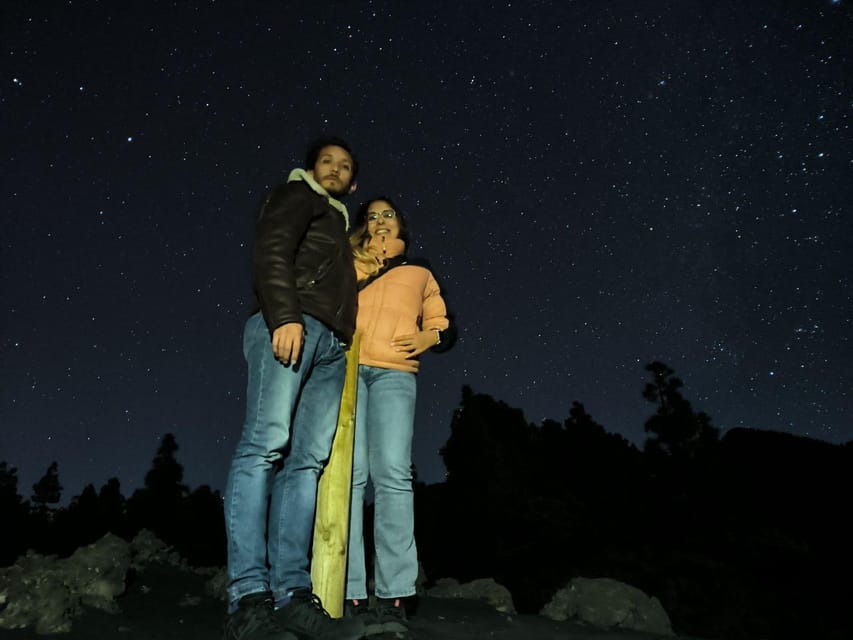
At $45 per person, this is a fair price for a guided 1.5-hour astronomy session, especially if you value personal time with the equipment. You are paying for the guide, the explanation, the binoculars, the telescope, the group organization, and the chance to view several kinds of celestial objects in one evening.
The price is less attractive if you expect transport from your hotel or a full evening outing with food. Neither is included. You must get to the meeting point yourself, and the remote viewpoints can take about 39 to 40 minutes from the main towns.
The session usually lasts between 1.5 hours and 1 hour 45 minutes. Questions and group interest can extend the evening, which is a good sign for an audience that wants to learn. It also means you should not treat the advertised duration as an exact end time.
Free cancellation is available up to 24 hours before the activity for a full refund, and you can reserve now and pay later. Those terms help if the weather forecast is uncertain several days ahead. Last-minute weather decisions remain possible, so keep your phone close on the day.
Who will enjoy this night most
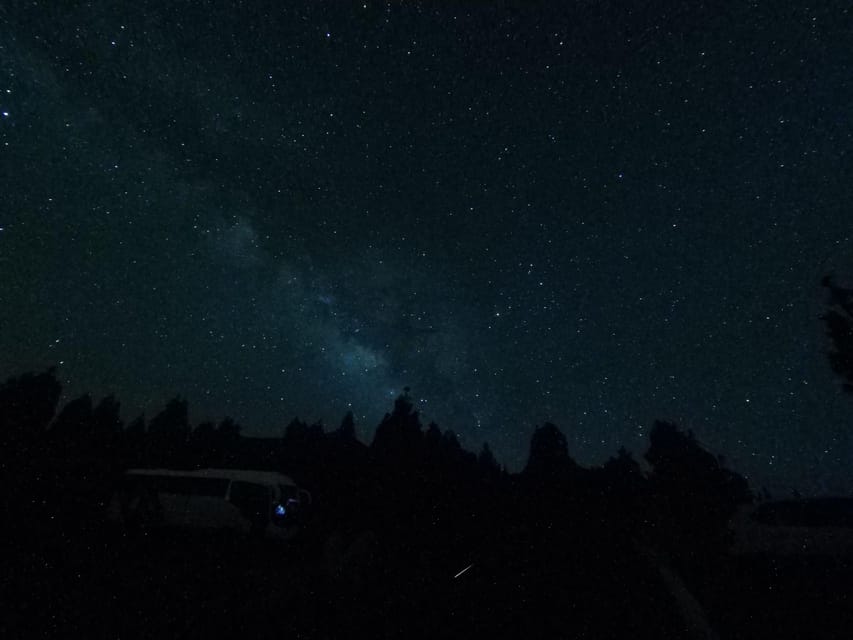
I would recommend this for first-time stargazers, families with older children, couples looking for a quiet evening, and anyone curious about astronomy but not ready for a technical observatory program. The storytelling makes the science approachable, while the telescope adds a clear sense of occasion.
It also suits people who like small-group activities and direct questions. You will get more from it if you are happy to spend much of the session outdoors, standing in the cold, and waiting your turn at the equipment.
You may want to skip it if you need a fixed schedule, dislike changing plans, or want guaranteed views of a particular planet. Even with a strong forecast, the Moon’s phase, clouds, haze, wind, and the position of celestial objects shape the night.
A full Moon is not a failed booking. It simply creates a different kind of session, with more attention on lunar detail and the cultural meaning of the Moon. If your only goal is the faintest galaxies, ask about the moon phase before booking.
Small details that make the night better
Wear warm clothing from the start, not just a light jacket for the drive. Add warm shoes and comfortable footwear, since you may be outside for the full session.
Keep your phone available for same-day messages, but use its light sparingly once you arrive. A bright screen can spoil someone else’s view just as easily as headlights can.
If you want the optional group or star photograph, check that the photo add-on is selected. It is not part of the basic inclusions unless added.
The tour is offered in English and Spanish. If you have a strong preference, confirm the language before the evening rather than assuming every session will use both languages equally.
Should you book the La Palma stargazing tour?
Book it if you want a guided introduction to La Palma’s night sky, a small group, and real time at binoculars and a telescope. The combination of laser-guided constellations, Moon and planet viewing, deep-space objects, and cultural stories gives the $45 fee solid value.
Go in with the right expectations. This is not a visit to Roque de los Muchachos, hotel transport is not included, and the weather can change the plan at short notice. Bring warm clothes, keep your schedule loose, and check your messages on the day.
For a first astronomy experience, this is a thoughtful choice. You are not simply handed a quick look through a telescope. You are shown how to read the sky, then given time to look for yourself.
FAQ
How long does the stargazing activity last?
The session lasts about 1.5 hours. It may extend to 1 hour and 45 minutes if the group has many questions or shows strong interest.
How much does the experience cost?
The listed price is $45 per person.
Where does the activity take place?
The usual meeting points are Llano del Jable Astronomical Viewpoint and Llano de Las Ventas Astronomical Viewpoint. The activity may also take place at San Antonio Volcano in Fuencaliente or another sheltered location if conditions require it.
Can the meeting point change?
Yes. The operator chooses the location based on clouds, wind, humidity, haze, government alerts, site occupancy, and the objects visible in the sky.
When will I receive the final meeting details?
You will be contacted on the same day with the exact meeting point and start time. Check WhatsApp, email, or SMS.
What languages are available?
The live tour guide is available in English and Spanish.
What equipment is included?
The activity includes naked-eye stargazing with an astronomical laser, binocular viewing, and observation through an astronomical telescope.
Can I view the Moon and planets?
The guide may point the telescope toward the Moon and planets depending on visibility and timing. Jupiter and its four Galilean moons, as well as Saturn, are specifically included among the possible observations.
Do I need to bring warm clothing?
Yes. Bring warm clothing, comfortable clothes, warm shoes, and comfortable footwear because the activity takes place outdoors, often at high altitude.
Is transport from my hotel included?
No. You must arrange your own transport to the meeting point. Food and bathroom facilities are also not included.
Is the activity wheelchair accessible?
Yes, the activity is listed as wheelchair accessible.
Can I cancel for a refund?
You can cancel up to 24 hours in advance for a full refund. You can also reserve now and pay later.
Just in after dark around Spain
- Cabo de Gata: Stargazing Experience★ 4.5 · 7 reviews
- Cabo de Gata: Guided Night Walk with Stargazing★ 4.7 · 36 reviews
- Magic Stargazing & Sunset in Teide with Dinner + Telescopes★ 3.5 · 20 reviews
- La Palma: Premium Stargazing Tour for 10★ 4.3 · 51 reviews
- Stargazing Private Tour at Roque De Los Muchachos in La Palma★ 5.0 · 43 reviews
- Private astronomy tour with sunset toast, picnic, and astrophotography★ 4.8 · 83 reviews
- Tenerife: Teide Stargazing with an Astrophysicist★ 4.9 · 74 reviews
- Tenerife: Stargazing at Mt. Teide★ 4.2 · 72 reviews
Stargazing Tours, night against night.
Dubai Red Dunes ATV, Camels, Stargazing & 5* BBQ Al Khayma Camp
Read our review →
Teide National Park Sunset & Stargazing with Dinner (Star Safari)
Read our review →
Sunset Camel Trek, Al Khayma Camp, Stargazing & BBQ
Read our review →
Overnight Safari, Dinner, Stargazing & Al Khayma Camp
Read our review →
Dubai Overnight Desert Safari, BBQ & Stargazing at Al Khayma Camp
Read our review →
Sunset Quad Bike, Camel w/ Opt Stargazing and BBQ
Read our review →Lists this night appears in