
Review · PORTUGAL
Exclusive visit to the Astronomical Observatory of Gaia
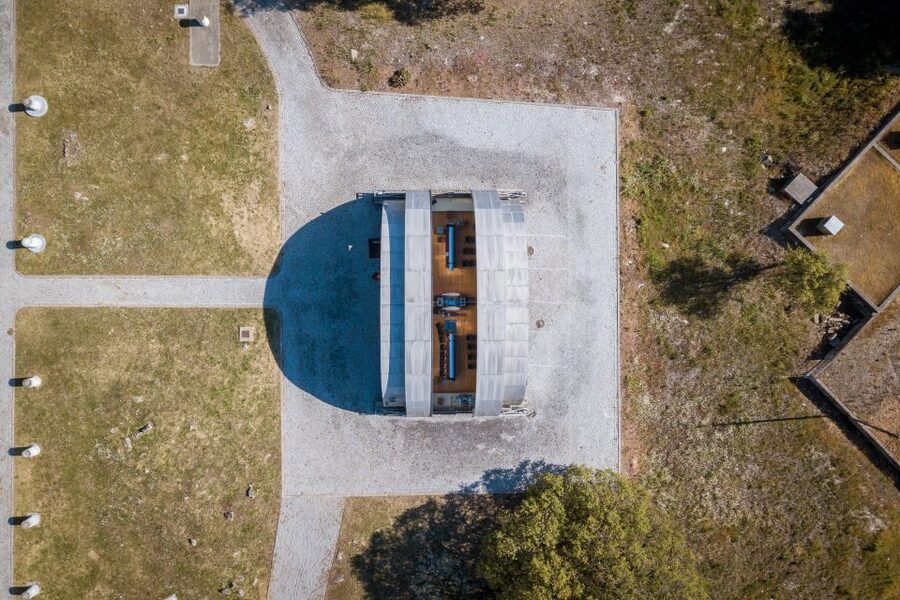
At the top of Monte da Virgem, Gaia hides an observatory with a wonderfully odd feature: the roof slides open so astronomers can watch stars cross the local meridian. The building feels less like a grand museum and more like a working piece of scientific history.
I like the rare Mirror Meridian Circle, one of only three such instruments in the world, and I like the guides, who are physics students from the Faculty of Sciences. The main drawback is clear: this is a daytime visit about observing stars, not a night-time telescope session under the sky.
The tour is short and focused. You walk about five minutes to the observatory, spend roughly 30 minutes inside with your guide, then walk five minutes back. At $17 per person, it offers good value if you enjoy science, old instruments, and the practical story of how people learned to measure time.
Key points to know before booking
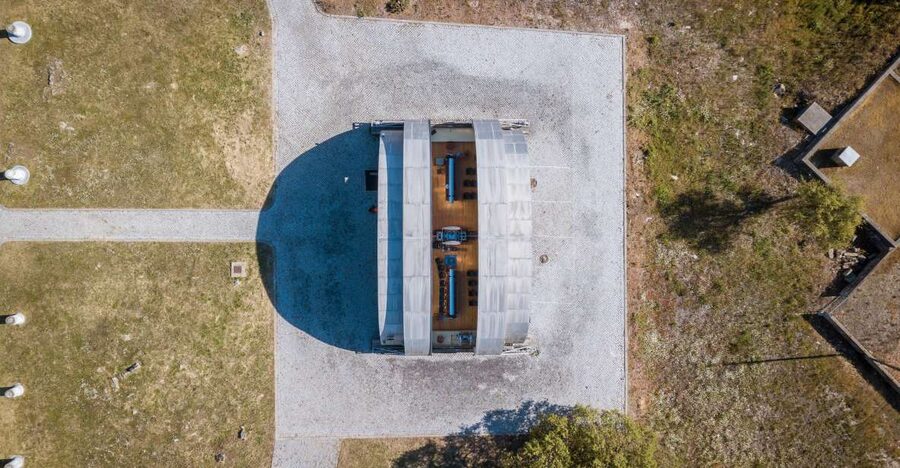
- A roof built to reveal the sky: The observatory’s semi-cylindrical roof slides open for precise star observations.
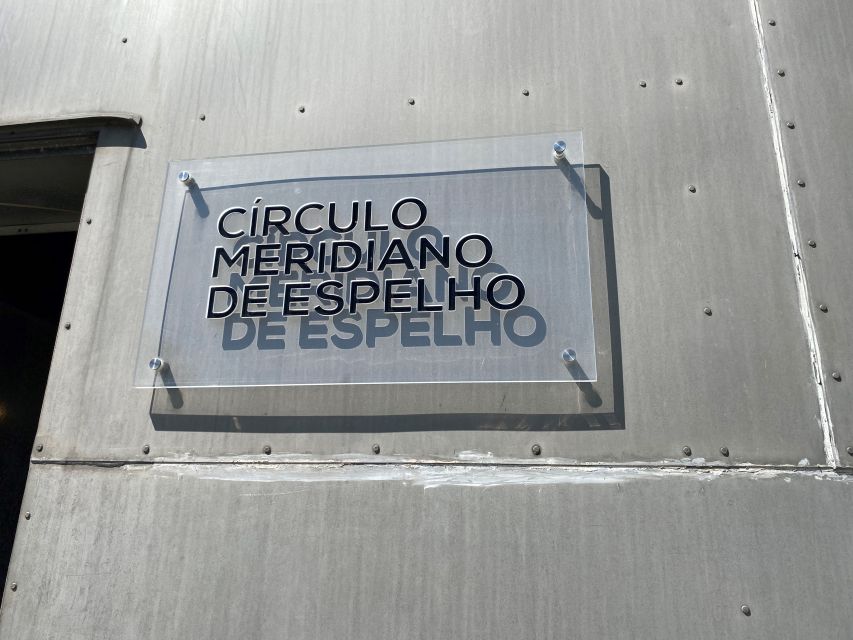
- A very rare instrument: The Mirror Meridian Circle is one of only three of its kind in the world.
- A lesson in measuring time: You learn how the movement of stars helped astronomers establish accurate time.
- Physics students lead the visit: Your English-speaking guide comes from the Faculty of Sciences and brings a student’s enthusiasm to the subject.
- A compact one-hour experience: The visit includes short walks and about 30 minutes of guided explanation.
- No night observing: The telescopes are part of the story, but this experience does not promise an evening session at the eyepiece.
Why Gaia’s observatory is worth your time
Porto and Gaia are full of famous sights, but this observatory offers a different kind of stop. It is quiet, specialized, and built around a question that affects every part of modern life: how do we know what time it is?
The answer was once tied closely to the stars. Before today’s electronic systems, astronomers could track the position of stars as they crossed a fixed line in the sky. That line, the local meridian, gave them a reliable reference for measuring time.
This makes the observatory more than a room with old telescopes. You see the equipment that helped turn the movement of the heavens into a precise clock. I find that connection especially useful because it links astronomy to something familiar. You may not spend your holiday thinking about astronomical measurement, but you look at a clock many times each day.
The building itself adds to the appeal. Its unusual semi-cylindrical shape was made for the instrument inside, and the roof opens to permit observation. That design gives you a simple, memorable image of old astronomy: the machine stays protected indoors, while the sky becomes part of the room when the roof moves aside.
More Observatory Visits in the world:
- Royal Observatory Greenwich & Prime Meridian Entrance Ticket
★ 4.5 · 1,095 reviews - Griffith Observatory Hike: Guided Tour through Griffith Park
★ 5.0 · 1,020 reviews - Tenerife: Mount Teide Observatory Guided Tour
★ 4.6 · 818 reviews
A five-minute walk to a very unusual building
The experience begins at the meeting point in the 4430-146 area of Gaia. From there, allow about five minutes to walk to the Astronomical Observatory.
That short walk matters because the observatory is not presented as a large public attraction with a long entrance route. It is a discreet site on Monte da Virgem. You should expect a small, specialized visit rather than a full museum day.
The location at the top of Monte da Virgem also gives the observatory a fitting setting. The point of the visit is not a grand view or a long list of exhibits. It is the chance to enter a purpose-built astronomical facility and understand why its structure looks the way it does.
You will want to arrive ready to listen. The tour is only about an hour, and the central explanations come quickly. This is not the place to wander at your own pace for half a day.
Inside the semi-cylindrical observatory
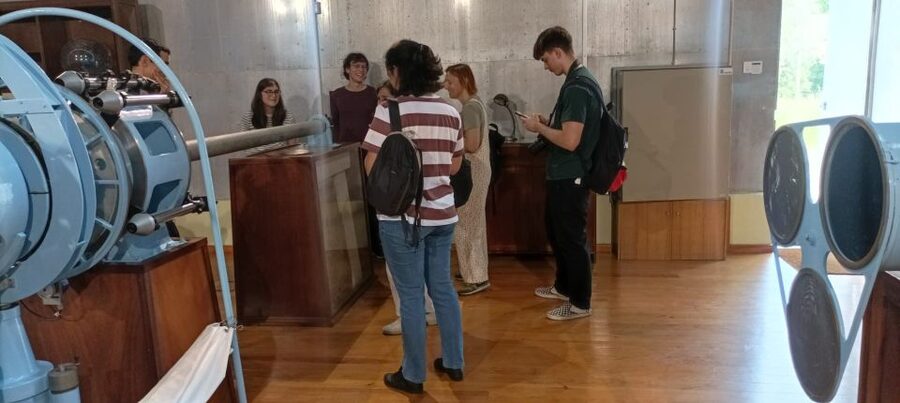
The main guided portion lasts about 30 minutes. Your English-speaking physics student guide explains the observatory’s past and the instruments that made it important.
The observatory was created in 1948 to support astronomy studies at the Faculty of Sciences. Its most notable instrument opened nine years later, in 1957: the Mirror Meridian Circle.
That timeline gives the building some useful context. This was not designed as a tourist attraction first. It was made for teaching and observation, with a direct link to university science. The visit lets you see how academic astronomy worked in a period before modern digital tools became common.
The guide’s role is important here. A technical instrument can look impressive while remaining hard to understand. The physics students help connect the machinery to the basic ideas behind it. Their enthusiasm is part of the experience, especially if you enjoy hearing about science from someone still close to the subject.
You should expect explanation rather than hands-on activity. The available information does not promise that you will operate the telescopes or use the instrument yourself. The value comes from seeing the equipment and learning what it was built to do.
The rare Mirror Meridian Circle
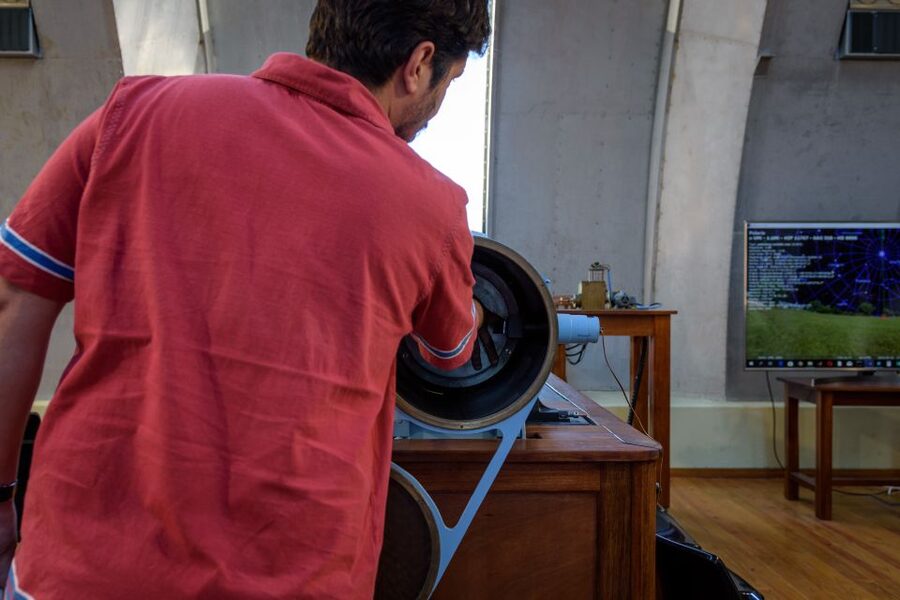
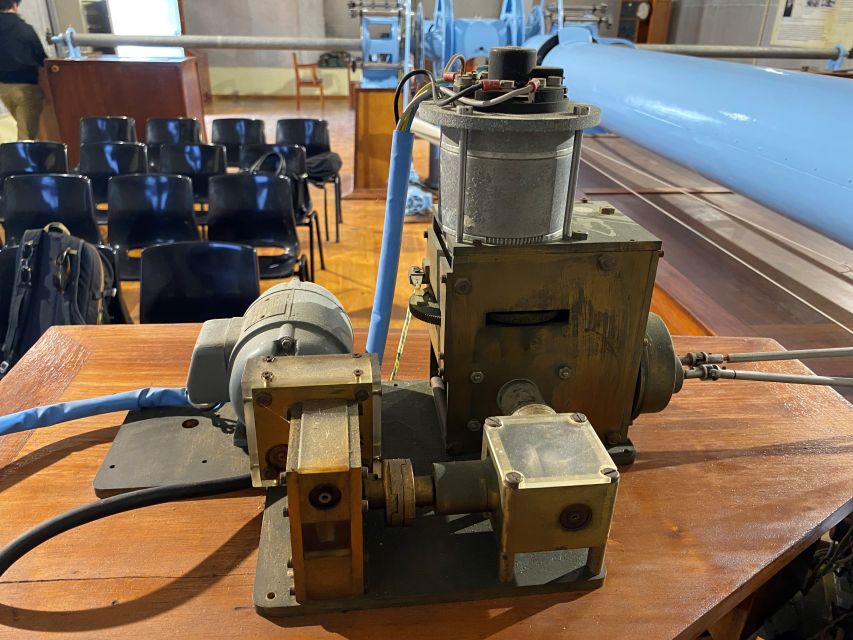
The star of the visit is the Mirror Meridian Circle. It is unusual not only because of its age and design, but because so few examples remain. Only two others are installed anywhere in the world.
That rarity gives the visit real weight. You are not simply looking at a standard telescope in an observatory. You are seeing a specialized instrument built for a precise job: observing the passage of stars across the local meridian.
The name can sound forbidding, so the guide’s explanation matters. In practical terms, the instrument helped astronomers establish the exact position of stars at a given moment. Repeated observations made it possible to refine measurements of time and location.
This is also where the tour is likely to reward curious adults most. You learn how a telescope can be used for something other than looking at distant planets or enjoying a dramatic view of the night sky. Its purpose was measurement. The stars became reference points.
The equipment has a certain mechanical beauty, too. It belongs to a period when scientific work relied on carefully designed physical instruments, stable buildings, patient observation, and repeated readings. If you enjoy old clocks, navigation tools, or historic machines, you may appreciate the Mirror Meridian Circle even if you are not an astronomy expert.
More Stargazing Tours around the world:
- Dubai Red Dunes ATV, Camels, Stargazing & 5* BBQ Al Khayma Camp
★ 5.0 · 21,620 reviews - Sharm El-Sheikh: Ultimate ATV Quad, Stargazing & BBQ Dinner
★ 4.7 · 4,084 reviews - Tenerife: Teide National Park Sunset & Stargazing Tour
★ 4.2 · 3,812 reviews - Tenerife: Sunset and Stargazing at Teide National Park
★ 4.7 · 2,826 reviews
How astronomers measured time with stars
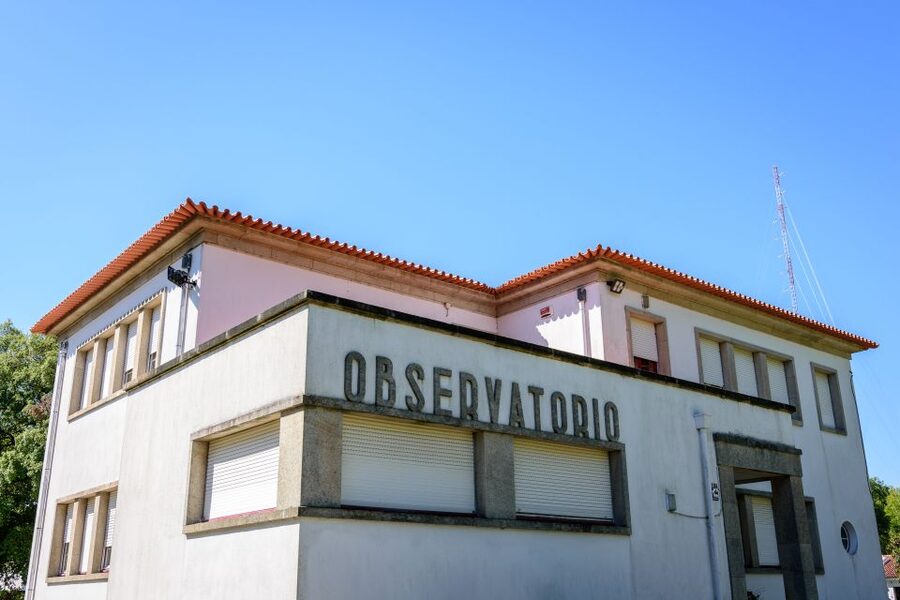
The central theme is the history of time measurement. The guide explains the mechanisms that helped people tell time through the passage of the stars.
That phrase has a practical meaning. As Earth turns, stars appear to move across the sky. By recording when a star crosses the local meridian, astronomers could use that event as a precise reference. It was a careful process, but it offered a dependable link between the sky and the clock.
The experience helps you see time as something measured, not simply displayed. A watch gives you the result. The observatory shows part of the work behind that result.
I like this angle because it gives the visit a clear purpose. You are not asked to memorize technical terms for their own sake. You are shown why the building had an opening roof, why the instrument had to be positioned so precisely, and why stars were useful to astronomers.
The observatory also prompts a second question: what are these telescopes used for now? That comparison between past and present is one of the most interesting parts of the visit. You can expect the guide to address how the instruments fit into modern astronomy and education, though the available details do not promise a current research demonstration.
What the roof tells you about old astronomy
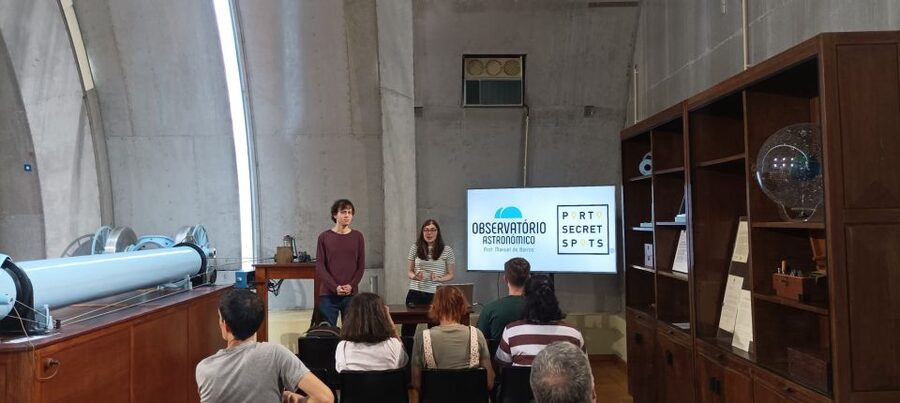
The sliding roof is more than an architectural curiosity. It explains how the observatory worked.
The instrument needed protection from weather and daylight, but it also needed a clear view of the sky. A fixed roof would block the precise section of sky the astronomers needed to watch. The moving design solved that problem without forcing the entire instrument outdoors.
When the roof opens, the building changes from a protected instrument room into an observation point. That simple movement helps you understand the practical demands of astronomy better than a label on a display case would.
Do not book this experience expecting the roof to open for a dramatic night-sky show. The visit is presented as a guided look at the observatory and its history. Two people who enjoyed the experience still wished they could use the telescope at night and see the stars. That is useful information for setting your expectations.
If night observation is your main goal, this may leave you wanting more. If you enjoy learning how an observatory works, the roof and instrument should make the visit worthwhile even without an evening session.
The pace, language, and age limit
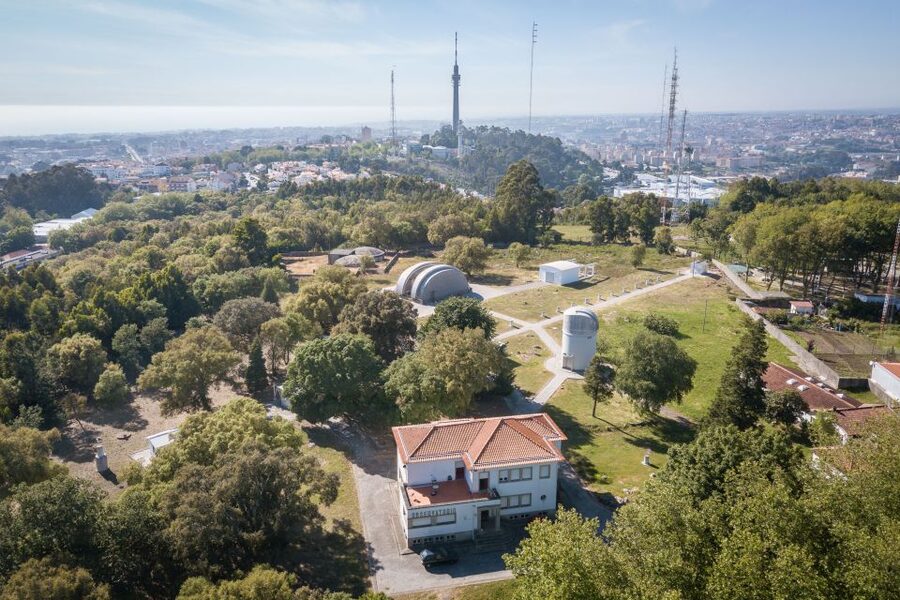
The entire activity takes about 60 minutes. The plan is simple: a five-minute walk from the starting point, around 30 minutes of guided touring, and a five-minute walk back. The remaining time allows for meeting the guide and moving through the site.
The tour is in English, and the live guide is a physics student from the Faculty of Sciences. That makes it a useful choice for English-speaking visitors who want more than a self-guided look at the building.
Children under 12 are not permitted. The subject matter and the short, explanation-led format are better suited to older children, teenagers, and adults who can follow a discussion about instruments and time measurement.
There is no stated group size, so you should check the available starting time when booking. Since the visit is short and takes place in a specialized building, a smaller group would make it easier to hear the guide and see the equipment, but that cannot be guaranteed from the available details.
Flash photography and video recording are not allowed. You can bring your camera for ordinary photographs if permitted by the guide, but plan to keep the flash off and do not expect to record the tour.
Is $17 a fair price?
At $17 per person, this is a reasonable small attraction for anyone with a real interest in astronomy, science, or the history of timekeeping. The price covers a live English-language visit to a rare scientific site, not a broad sightseeing tour.
The value comes from access and interpretation. You are paying to enter a discreet observatory, see an instrument found in only three places worldwide, and understand the reason behind its unusual roof. Without the guide, much of that meaning would be easy to miss.
The price is less convincing if you want a full astronomy evening. There is no promise of night viewing, telescope use, or a long program. You should think of it as a focused educational visit rather than an observatory show.
Free cancellation up to 24 hours before the start and the option to reserve now and pay later make it easier to fit into a changing Porto or Gaia schedule. Still, the main reason to book should be your interest in the subject, not the flexible payment terms.
Who will enjoy this observatory visit
I would choose this for:
- Adults who enjoy science and historic instruments
- Older children and teenagers aged 12 or over
- Visitors curious about how time was measured before modern systems
- People who prefer short, focused activities to large museums
- Anyone interested in unusual architecture with a clear practical purpose
- English-speaking visitors who value a live guide
I would be cautious about booking it for someone who wants only spectacular views or an active telescope session. The visit is quiet and explanation-led. Its pleasure comes from understanding an unusual instrument, not from a dramatic show.
It also works well as a compact addition to a Gaia itinerary. At one hour, it does not take over your day. You can fit it between other plans, provided the available starting time suits you.
Should you book the Astronomical Observatory of Gaia?
Book it if you want a rare, specialized look at astronomy’s practical side. The Mirror Meridian Circle, the sliding roof, and the story of star-based timekeeping give this short tour a clear identity.
Skip it if your main hope is to look through a telescope at night. The experience does not include promised evening observations, and that limitation matters. You may leave wishing for a second visit after dark.
For $17, I think it is a fair choice for curious adults and older children. The visit is brief, the subject is unusual, and the student guides bring energy to a building that might otherwise be easy to overlook. Go for the instrument and the story behind it, not for a night under the stars.
FAQ
Where is the Astronomical Observatory of Gaia?
It is located at the top of Monte da Virgem in Gaia, in Portugal’s Norte Region. The activity begins in the 4430-146 area, followed by a walk of about five minutes to the observatory.
How long does the visit last?
The full experience lasts about 60 minutes. It includes a five-minute walk to the observatory, around 30 minutes of guided touring, and a five-minute walk back.
What language is the tour in?
The visit is conducted in English with a live guide.
Who leads the tour?
The guides are physics students from the Faculty of Sciences.
What is the Mirror Meridian Circle?
It is the observatory’s notable astronomical instrument, opened in 1957. It was used to observe stars crossing the local meridian and to help measure time. Only two other examples are installed elsewhere in the world.
Can I observe the stars at night?
Night-time telescope observations are not included in the stated experience. The visit explains the observatory, its instruments, and the history of measuring time through the stars.
Are children allowed to join?
Children under 12 are not permitted. Flash photography and video recording are also not allowed.
Just in after dark around the world
- Doha: Night Desert Safari, Stargazing, and Camel Ride★ 5.0 · 2 reviews
- Doha : Night Desert Safari with Dune Bashing & Stargazing★ 5.0 · 4 reviews
- Doha: Night Desert Safari + Camel ride + Stargazing & Relax★ 5.0 · 4 reviews
- Day Trip to Tatacoa Desert (Horseback, Boat, Stargazing, ..)★ 4.4 · 3 reviews
- Christchurch: Lake Tekapo Stargazing & Mount Cook 2-Day Tour★ 5.0 · 6 reviews
- Cabo de Gata: Stargazing Experience★ 4.5 · 7 reviews
- Chile: Astronomical Tour in the Atacama Desert★ 4.8 · 4 reviews
- Cabo de Gata: Guided Night Walk with Stargazing★ 4.7 · 36 reviews
Observatory Visits, night against night.
Royal Observatory Greenwich & Prime Meridian Entrance Ticket
Read our review →
Griffith Observatory Hike: Guided Tour through Griffith Park
Read our review →

Royal Observatory Greenwich & Prime Meridian Entry Ticket London
Read our review →

Private Getty Center to Griffith Observatory Guided Tour
Read our review →Lists this night appears in