
Review · USA
Stargazing in Zion National Park’s International Dark Sky
The best part of this Zion stargazing tour is the chance to see a truly dark sky from a comfortable reclining pod, not from a chilly roadside pullout. You’ll use binoculars from your own Yogibo, then take turns at powerful telescopes aimed at planets, galaxies, nebulae, and star clusters.
I like the blend of serious astronomy and easygoing comfort. The guides use laser pointers and plain explanations, while hot chocolate, coffee, tea, blankets, and a small group make the evening feel relaxed. The main drawback is weather: clouds, wind, or cold can limit the show, and the $199 price is a serious splurge for two hours.
Key points to know before booking
- A short 10-minute walk leads to the viewing field near Zion’s International Dark Sky Park.
- Each person gets a Yogibo lounger and Celestron Outland X binoculars, so you are not simply standing around waiting for a telescope.
- Powerful telescopes reveal more than your eyes can see, including galaxies, nebulae, clusters, and planets.
- Groups are capped at 18 people, which gives you a fair chance at the telescope eyepiece.
- Hot drinks and blankets are supplied, but September can still feel cold, and wind may affect comfort.
- The $199 price includes equipment and the guided program, but transportation to and from the meeting point is not provided.
Why Zion’s night sky is worth an evening
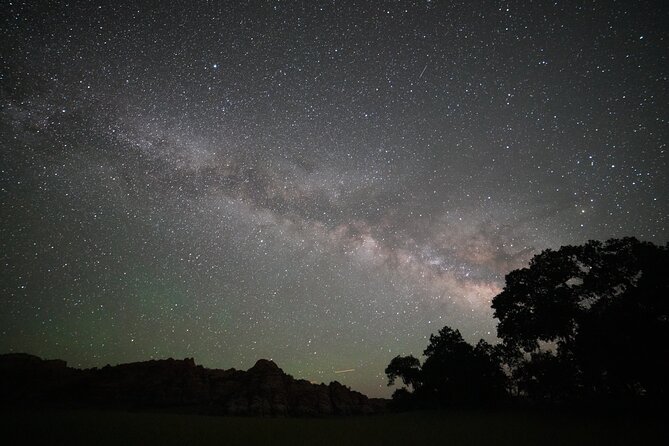
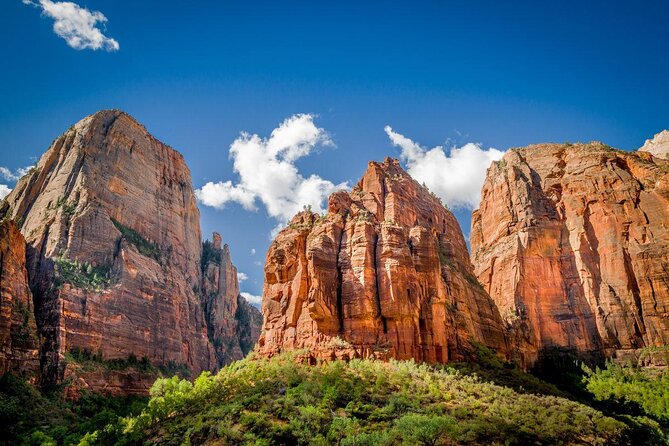
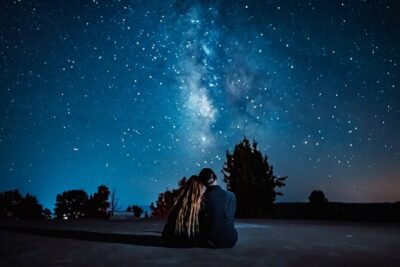
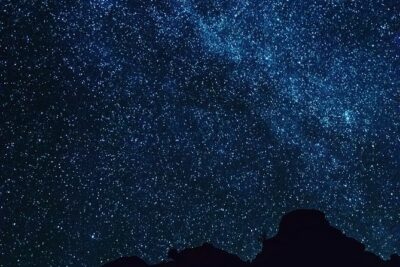
Zion is famous for red cliffs and daytime trails, but the sky after dark can be just as memorable. A dark-sky setting lets you see far more stars than you would from a city. One of the most striking sights can be the Milky Way, a hazy band that many people rarely see at home.
This experience takes place on a field next to the newly dedicated International Dark Sky Park at Zion National Park. That location matters. You are not only hearing a talk about astronomy. You are sitting beneath the actual sky being discussed, with enough darkness to make the lesson feel immediate.
I especially like this for a Zion itinerary packed with steep hikes. The program has a calm rhythm. You walk out, settle into a lounger, listen, look up, and move between naked-eye viewing, binoculars, and telescope time. It is active enough to feel like an outing, but not another demanding adventure.
The guides cover constellations and galaxies with laser pointers, then answer questions about planets and the way astronomers study the universe. The tone is educational without requiring you to know anything in advance. If you can identify only the Big Dipper, you will still have plenty to enjoy.
More National Park Stargazing in the USA
- Astro-Photo, Hiking and Stargazing Tour in Arches National Park
★ 5.0 · 63 reviews - Stargazing and Milky Way Portrait in Capitol Reef National Park
★ 4.5 · 13 reviews - Milky Way Photography Workshop in Acadia National Park
★ 5.0 · 8 reviews
The 10-minute walk to the dark-sky site
You meet at the listed point in La Verkin, at 8V7R+CJ La Verkin2 La Verkin, Utah. The directions to the exact site are provided through the message center after you send an email address, so check those instructions before setting out.
There is no transportation service. You need to reach the meeting point on your own, and the group then makes a brief walk of about 10 minutes to the darker viewing area. The walk is described as mellow, with scenic surroundings, but it is still worth wearing shoes you can comfortably use after sunset.
This short approach is part of the appeal. You leave the meeting area, get away from direct light, and arrive as astronomical twilight begins to fade. That gradual change helps you notice the sky becoming more detailed instead of stepping straight into a fully staged presentation.
Do not expect a paved visitor-center setup. The location is intentionally more remote and dark. That gives the sky its strength, but it also means you should arrive prepared to walk and spend time outdoors.
Yogibo pods, binoculars, and a better way to look up
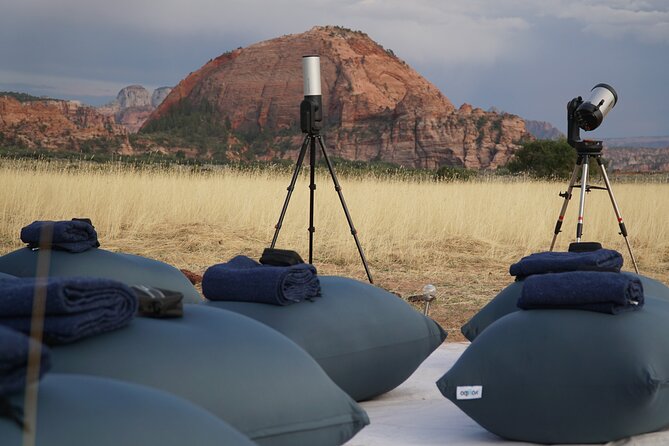
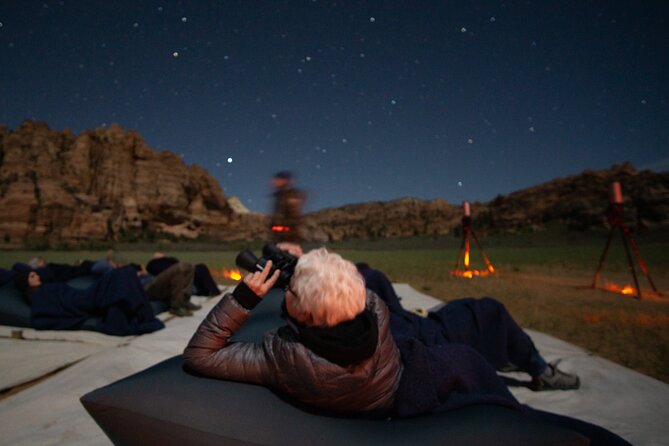
Once you reach the site, each person gets a Yogibo lounger. These soft, zero-gravity-style pods mold around your body and reduce pressure points. That detail sounds playful, but it solves a real problem: looking straight up for a long time can strain your neck when you are standing or sitting in an ordinary chair.
You also receive a pair of Celestron Outland X binoculars. This gives you something useful to do between telescope views. You can scan the sky from your own lounger, follow the guide’s laser pointer, and compare what you see through binoculars with what appears through the telescope.
The setup is especially good for couples and families because everyone has a personal viewing position. You are not forced to stand in one spot while one person handles the equipment. The pods also make the evening feel less formal. You can settle in and let the sky take over.
Blankets are included, but do not assume a warm daytime forecast means a warm night. One September outing was described as cold despite a daytime high of 89 degrees, and wind was a problem on another night. Bring extra layers. You will appreciate them once the sun has been gone for a while.
What the two-hour astronomy program actually covers
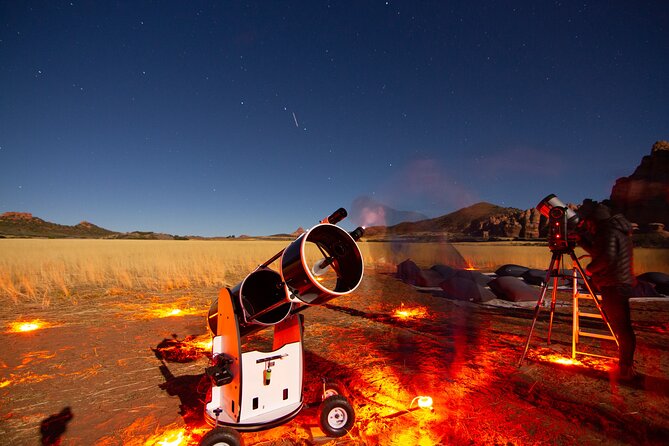
The formal program begins as twilight fades. Guides orient you to the visible sky, pointing out constellations with lasers and explaining how to find them. The presentation is not just a list of star names. It connects those patterns to larger questions about planets, galaxies, and how astronomers make sense of distant objects.
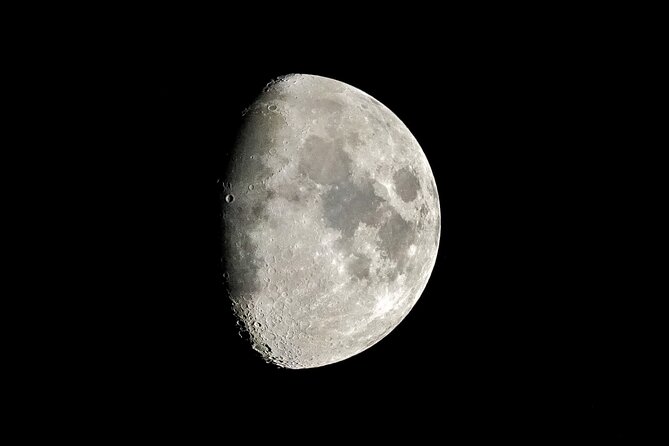
The telescope portion is the main draw. Depending on the night and the objects visible, you may look at planets, galaxies, nebulae, and clusters through powerful telescopes. Saturn and its rings have been a memorable sight on past sessions. The exact menu changes with the season, the moon, and the weather, so nobody can promise one particular object.
That uncertainty is worth understanding before you book. Astronomy is not a theater show with a fixed script. Clouds may block the view, haze may soften it, and a bright moon can change what stands out. The guides have adjusted presentations when clouds arrived, and even a weather-shortened program can still include useful instruction and conversation.
The group limit of 18 is another practical plus. Telescope viewing naturally takes time, and a smaller group gives you more reasonable access to the eyepiece. It also lets you ask questions without shouting across a large crowd.
Guides who have led sessions include Devin, Matt, Justice, Chris, Hannah, Deon, and Macie, though the actual lineup varies. Their approach is described as friendly, funny, and passionate, with particular praise for clear explanations and flexibility when conditions change.
More Dark Sky Tours in the USA:
- East Zion Dark Sky Stargazing Tour
★ 4.5 · 94 reviews - Sedona Dark Sky Sunset & Night Hike With a Private Guide
★ 5.0 · 86 reviews - Small-Group River Murray Dark Sky and Sunset Tour with Dinner
★ 5.0 · 70 reviews - Dark Sky Indoor Maori Cultural Astronomy Experience
★ 4.5 · 70 reviews
Hot drinks, photography, and the small touches
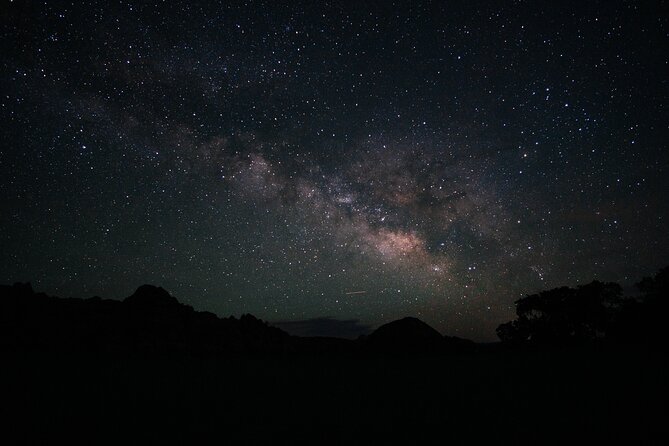
Coffee, tea, and hot chocolate are provided. These are simple comforts, but they matter when you are sitting outside in the dark. A warm drink helps keep the evening pleasant, especially for children or anyone who tends to feel cold quickly.
Blankets are included with the gear. Still, I would treat them as a helpful extra rather than your entire cold-weather plan. The safest approach is to bring a jacket and additional layers of your own.
Some sessions have included a photographer who takes group or individual pictures, including images with the Milky Way behind you. Those photos have been emailed at no extra charge in past outings. That is a nice bonus, but photography is not listed among the standard inclusions, so I would not book solely for a guaranteed portrait.
The strongest feature here is not the souvenir photo. It is the care put into making the astronomy accessible. The equipment is impressive, but the guide’s ability to explain what you are seeing is what turns expensive optics into a meaningful experience.
Is $199 a fair price?
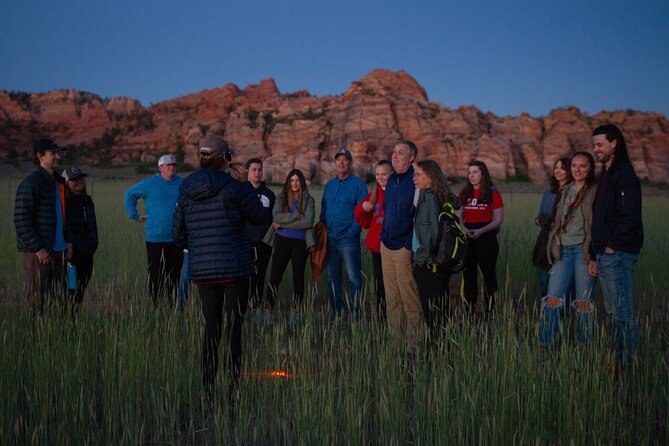
At $199 per person, this is one of the pricier evening activities around Zion. You are paying for a focused two-hour program, specialist equipment, binoculars, a lounger, blankets, drinks, and a group capped at 18 people. You also get a guide who can identify what is in the sky and explain why it matters.
The value depends on what you want. If you are happy to lie on a blanket and look at stars on your own, the price may feel steep. Zion’s dark sky can be enjoyed without a formal tour, assuming you find a safe, suitably dark place and know how to read the conditions.
I think the fee makes more sense if you want access to powerful telescopes and clear instruction. A casual look at the Milky Way is one thing. Seeing a planet, nebula, or distant galaxy through quality equipment is another. The small group also matters because telescope time is limited by nature.
For a family, the price can be justified if everyone is interested and the adults want a guide to keep the evening moving. For a solo visitor or couple, it is a special-occasion expense. The high satisfaction rate and 4.8 rating suggest the program usually delivers, but weather remains a real risk.
Who will enjoy this most
I would recommend the tour to you if you:
- Want to see Zion after dark rather than spend every hour on daytime trails.
- Enjoy science but do not have a strong astronomy background.
- Prefer a guided experience with equipment already supplied.
- Are looking for a quiet evening after strenuous hikes.
- Like asking questions and learning how astronomers interpret the sky.
- Are traveling with family or friends who can share the sense of wonder.
It is also a good choice for anyone from a bright city such as Chicago or Las Vegas. The difference between an urban sky and a dark desert sky can be startling.
I would hesitate if you dislike sitting outdoors at night, have no patience for changing weather, or want a completely guaranteed lineup of stars and planets. You should also think twice if $199 would crowd out other Zion activities. The tour is memorable, but it is not a budget add-on.
Practical details before you go
The experience lasts about two hours, plus the initial walk to the dark-sky site. It is offered in English and uses a mobile ticket. Confirmation arrives when you book.
Most people can participate, and the maximum group size is 18. Transportation is not included, so plan your route to the La Verkin meeting point in advance. Because exact directions are supplied through the message center, provide an email address and read the instructions before the evening begins.
This experience requires good weather. If poor conditions force a cancellation, you can choose another date or receive a full refund. The operator also requires a minimum number of participants, so a cancellation for that reason brings the same choice of another date or a refund.
You can cancel for a full refund up to 24 hours before the start time. Changes or cancellations inside that 24-hour window are not accepted for a refund.
Should you book Stargazing Zion?
Book it if seeing the night sky through serious equipment sounds more exciting than another evening in town. The comfortable pods, personal binoculars, hot drinks, and small group make the two hours easy to enjoy, while the guides add real substance.
I would book as early as practical, since the experience is often reserved well ahead of time, with an average booking lead of about 59 days. Choose a night when you can handle cold air and uncertain conditions. If clouds roll in, the evening may not deliver every telescope view you hoped for.
For most people who value memorable, educational experiences, this is worth considering as a splurge. You may leave with a better grasp of the constellations, a telescope view of Saturn or a distant galaxy, and a renewed sense that Zion’s best scenery is not always below eye level.
FAQ
Where does the stargazing tour meet?
The listed meeting point is 8V7R+CJ La Verkin2, La Verkin, Utah, USA. Exact directions to the site are provided through the message center when you provide an email address.
How long does the experience last?
The program lasts approximately two hours. There is also a brief walk of about 10 minutes to the dark-sky viewing location.
Is transportation included?
No. Transportation services are not provided, so you must reach the meeting point on your own.
What equipment is supplied?
The experience includes telescopes, Celestron Outland X binoculars, Yogibo loungers, blankets, and hot beverages.
What drinks are available?
Hot chocolate, coffee, and tea are provided.
How many people can join the tour?
The activity has a maximum of 18 participants.
What happens if bad weather cancels the tour?
You will be offered a different date or a full refund if the experience is canceled because of poor weather. The same options apply if the minimum number of participants is not met.
Just in after dark around the USA
- Seattle: Hop-on Hop-off Bus Tour and Sky View Observatory★ 4.4 · 16 reviews
- Boulder: Guided Astronomy Tour★ 4.7 · 11 reviews
- 1-Day Grand Canyon Tour from Las Vegas: Stargazing & Sunrise★ 3.6 · 3 reviews
- Griffith Observatory: Scott E-Bike Tours LA Private Tour★ 5.0 · 32 reviews
- Private Tour of Griffith Observatory★ 4.5 · 58 reviews
- Haleakala Sunset and Stargazing Audio Tour★ 4.0 · 10 reviews
- Stargazing and Milky Way Portrait in Capitol Reef National Park★ 4.5 · 13 reviews
- Stargazing Tour in Kapalua★ 5.0 · 31 reviews
Dark Sky Tours, night against night.
Sedona Dark Sky Sunset & Night Hike With a Private Guide
Read our review →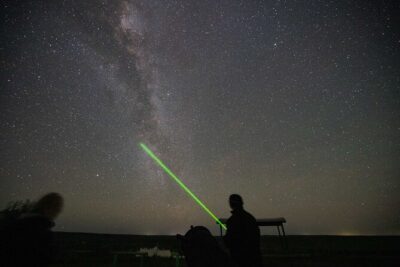
Small-Group River Murray Dark Sky and Sunset Tour with Dinner
Read our review →
Dark Sky Indoor Maori Cultural Astronomy Experience
Read our review →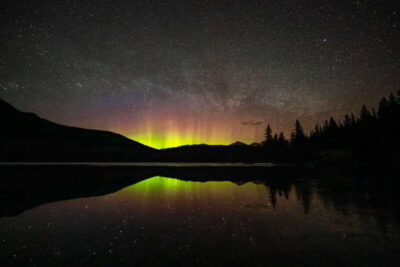
Lists this night appears in