
Review · SPAIN
Cavalleria: Guided Stargazing at the Beach with Telescope
Menorca’s coast gives this astronomy outing its best trick: you look up at the stars with the sound and open air of the beach around you. A certified guide helps you find constellations, explains myths about Hercules, Andromeda, Cassiopeia, and Draco, and points powerful telescopes toward objects far beyond the naked eye.
I like the Starlight Reserve setting, well away from city glare, and the chance to use two professional telescopes for objects such as clusters, nebulae, and binary stars. Guide Gonzo has also earned warm praise for making the science lively for both adults and children. The main point to clarify before booking is how much direct telescope viewing your particular session will include, since that has not been equally clear to every participant.
Key points to know
- The beach is the observatory: Meet at the parking lot at Cala Viola de Ponent Beach and watch the sky from a coastal Starlight Reserve.
- Gonzo leads the Spanish session: His approach mixes astronomy, stories, and simple ways to find your bearings overhead.
- Two hours gives the sky time to change: You may cover constellations, moon features, star leaps, and deep-space objects in one evening.
- The Moon changes the program: On moonlit nights, you can study craters and learn how they formed.
- You lie back to look up: Mattresses are provided, making the session easier on your neck and more relaxed than a standard standing tour.
- Bring your own audio equipment: English and French audioguide files require your own charged phone, with headphones useful if you have them.
A beach at night, far from Menorca’s city glare
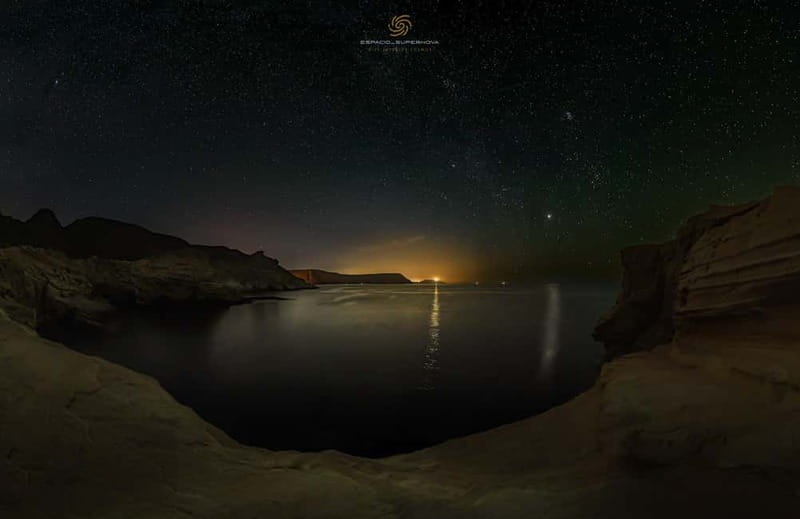
The first pleasure here is not the telescope. It is the darkness.
At Cala Viola de Ponent Beach, you meet at the parking lot and leave the bright streets behind. The setting is part of the lesson. A city sky hides many faint stars, while a protected Starlight Reserve gives the guide a better chance to show you the shapes, clusters, and faint objects that make the night sky more than a handful of bright points.
This is still a beach outing, so prepare for an outdoor evening rather than a polished indoor planetarium. You will be on the coast for about two hours, and the experience depends on good weather. Cloud, rain, or other poor conditions can force a change of date or a refund, so keep some flexibility in your Menorca plans.
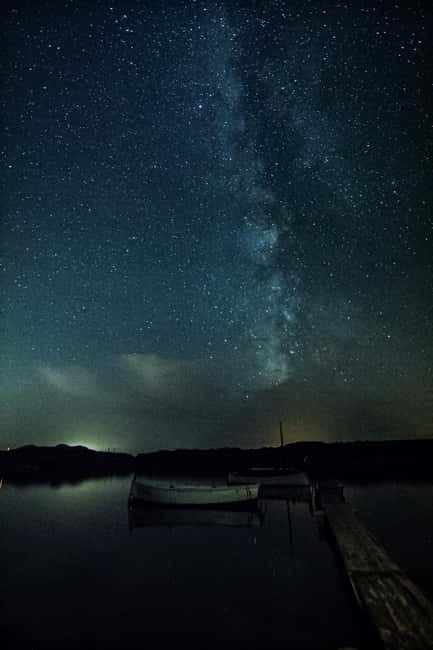
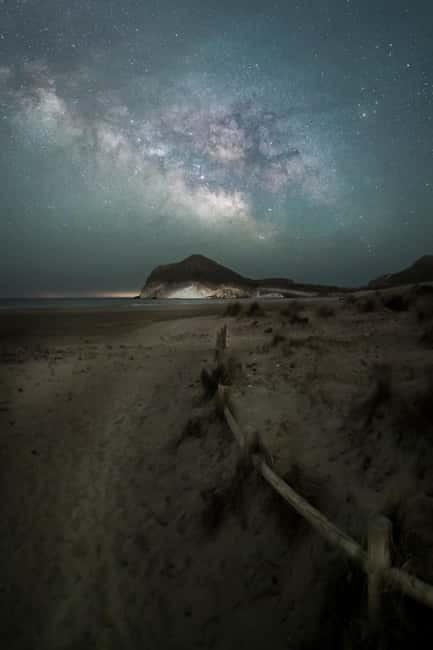
The beach setting also adds a useful sense of scale. You are not simply looking at a screen or listening to a lecture. You are standing beneath the actual sky, with the coastline as your reference point and the Milky Way as your larger frame of reference.
More Telescope Stargazing in Spain
- Teide by Night: Sunset & Stargazing with Telescopes Experience
★ 4.5 · 1,492 reviews - Teide National Park: Guided Large Telescope Stargazing Tour
★ 4.9 · 319 reviews - Magic Stargazing & Sunset in Teide with Dinner + Telescopes
★ 3.5 · 20 reviews
Meeting Gonzo and learning to read the sky
The live tour is in Spanish, and the guide named in the feedback is Gonzo. His strong point appears to be the way he turns astronomy into a story rather than a list of technical terms. That matters because the night sky can be hard to follow when someone simply points upward and names stars.
You begin by identifying the main constellations visible that evening. The exact group changes with the date and conditions, but the session uses familiar figures such as Hercules, Andromeda, Cassiopeia, and Draco to connect the stars with old myths. These stories give you a memory hook. Instead of trying to remember a random arrangement of lights, you can picture a character or creature and use it to find your way back later.
I also like the practical side of the program. The guide introduces positional astronomy and shows you how to make star leaps. In plain terms, you use one known pattern to locate another. That is more useful than simply being told what you are seeing, because it gives you a method for finding constellations on your own after the evening ends.
The session has a thoughtful human angle, too. You are encouraged to think about our place in the Milky Way and why looking at the cosmos is such an old human habit. That reflection does not replace the practical astronomy. It gives the activity a little more meaning without requiring you to know anything about science beforehand.
What the professional telescopes add
The two professional telescopes are the main equipment included in the experience. Their value depends on what is visible that night, but the stated targets include open clusters, globular clusters, binary stars, nebulae, and other deep-space objects.
You should keep your expectations sensible. A telescope does not turn a nebula into a bright, colorful photograph. What you see through the eyepiece can be smaller and subtler than the images used in books or online. The reward is the direct connection: the light has traveled across space and reached the instrument in front of you.
This is also the part worth clarifying when you book. One participant enjoyed the evening but wanted more direct observation through the telescope. The program does promise telescope use, yet the balance between explanation, group viewing, and individual eyepiece time may vary. If the telescope is your main reason for booking, ask the provider how the viewing is organized and how many objects the group normally observes.
The equipment is best understood as one part of the evening, not the entire show. You spend time learning the sky with your eyes, hearing the myths, and understanding how to move from one constellation to another. Then the telescopes give you a closer look at selected targets.
Moonlit nights bring a different program
The Moon can change the mood and content of the session. On moonlight nights, the guide can point the telescope at lunar craters and explain how they formed. This gives you a target that is easier to recognize than a faint cluster and can be a good introduction to looking through an astronomical instrument.
A bright Moon also affects the rest of the sky. Strong moonlight can make some faint stars and deep-space objects harder to see, so a moonlit date is not automatically better or worse. It offers a clearer study of the lunar surface, while a darker night may give faint objects a better chance.
The important point is that the same activity can feel different from one evening to another. Your date, weather, and visible sky all shape the program. That variety is part of genuine stargazing, but it also means you should not expect a fixed list of objects every time.
Same stars, another vantage point:
- Tenerife: Teide National Park Sunset & Stargazing Tour
★ 4.2 · 3,812 reviews - Tenerife: Sunset and Stargazing at Teide National Park
★ 4.7 · 2,826 reviews - Teide National Park Sunset & Stargazing with Dinner (Star Safari)
★ 5.0 · 2,601 reviews - Teide National Park: Sunset & Stargazing Safari with Dinner
★ 4.6 · 2,115 reviews
Mattresses make the two hours easier
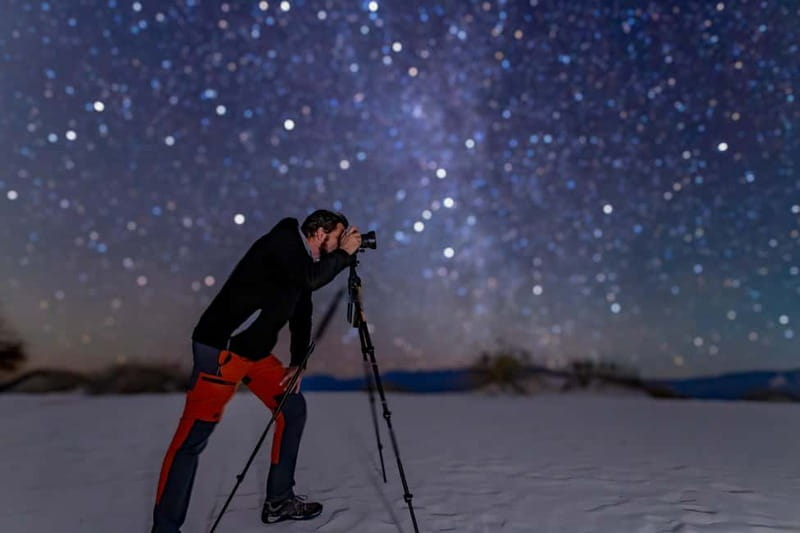
The tour includes mattresses so you can lie down and look upward. This is a small detail, but it changes the comfort of the experience. Standing with your head tipped back gets tiring quickly. Lying down lets you watch the sky for longer and makes the beach setting feel natural.
You should still dress for an outdoor night. The provided information does not list clothing or blankets, so bring layers suitable for sitting outside. You will also want practical shoes for reaching the meeting area and a charged phone if you are using the audioguide.
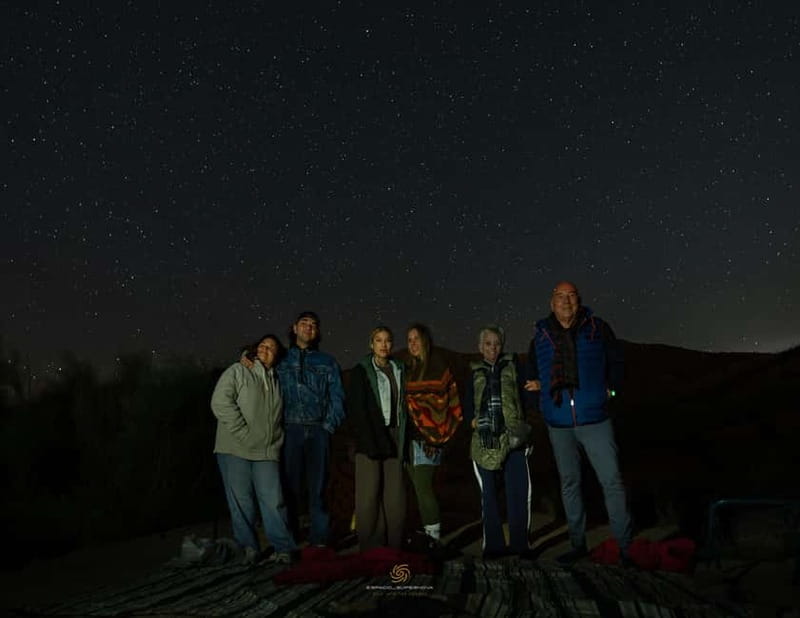
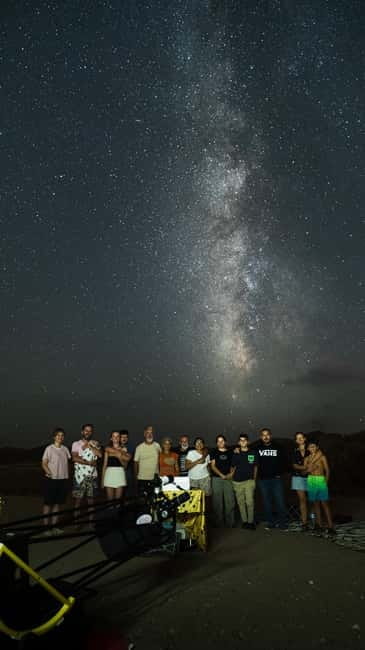
The group photo is included at the end, with the stars behind you. It is a pleasant souvenir of the evening, though night photography can vary with weather and equipment. Think of it as an added memory rather than the main reason to choose the tour.
Language choices and the phone requirement
The live guide speaks Spanish. If you do not speak Spanish, an English or French audioguide option may be available, but the files play on each participant’s own phone. You need to bring a sufficiently charged device, and headphones are useful if you have them.
This is worth taking seriously. The phone is not supplied, and the audioguide setup is not a shared translation system. If you are booking for a family or a small group, each person who needs the audio should have access to a charged phone.
You may also want to confirm how the audioguide works alongside the live Spanish presentation. The activity information confirms the language options and phone requirement, but it does not explain whether the audio covers every part of the live session. If you understand some Spanish, Gonzo’s presentation may add context that the recorded files do not fully match.
Is $35 a fair price for two hours?
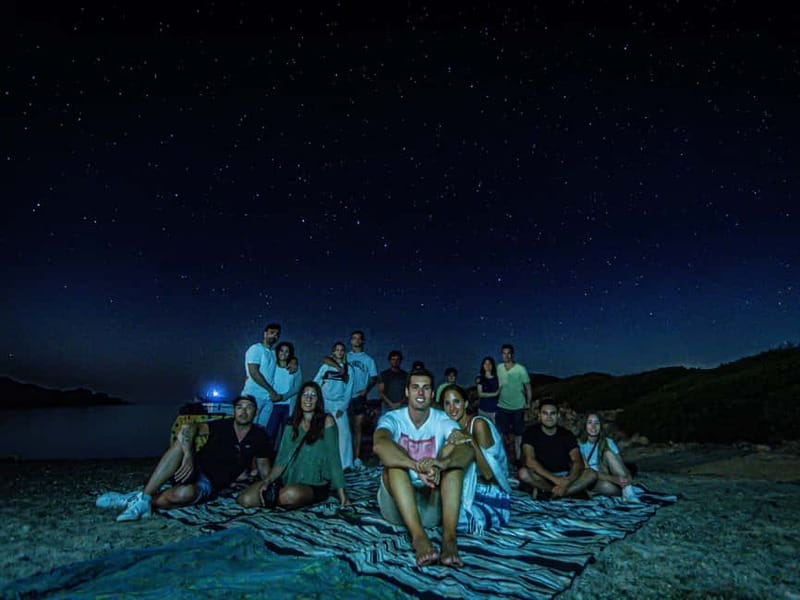
At $35 per person, this is a reasonable price for a guided outdoor astronomy session with professional equipment. You are paying for a certified guide, two telescopes, the organized interpretation of the sky, mattresses, and a group photograph.
The value is strongest if you want help understanding what you see. Buying or borrowing a telescope is not enough for many beginners. Finding objects, choosing useful targets, and explaining what they mean takes time and skill. Here, the guide gives the evening structure and helps you make sense of a sky that can otherwise look like a field of random lights.
The price does not include food, drinks, or hotel pickup and drop-off. You need to reach the parking lot at Cala Viola de Ponent Beach yourself. That keeps the cost down, but it also means you should allow time to arrange your own transport and arrive at the correct meeting point.
For families, the value depends on attention span and language. The activity has been recommended for children as well as adults, and the mix of myths and visual targets can hold interest better than a purely technical talk. Very young children may find a two-hour late outdoor session tiring, but the mattresses help.
Weather, group size, and the practical limits
Good weather is essential. If conditions are not suitable, the provider’s team will contact you to reschedule or refund the activity. A minimum of five participants is also required, so the outing may not operate with fewer bookings.
These conditions are normal for a real stargazing experience, but they matter when planning a short visit. If this is your only evening in Menorca, the weather risk is more important. If you have several nights, booking early in your stay gives you a better chance to move the session if needed.
The activity lasts two hours, with starting times depending on availability. The exact amount of darkness and the visible constellations will depend on the season and the chosen time. The information does not promise hotel transport, meals, or a private group, so you should plan for a shared outdoor session.
The activity is not suitable for wheelchair users, and it is not suitable for people over 95 years old. The beach setting, outdoor ground, and requirement to lie or sit on mattresses are relevant to anyone with mobility concerns.
Who will enjoy this night under the stars?
I would choose this outing if you want a calm evening that adds a different side of Menorca to your trip. It suits first-time stargazers especially well because the guide explains how to recognize patterns instead of assuming you already know the sky.
It is also a good fit for families with children who enjoy stories, science, and looking at objects through instruments. Gonzo’s lively teaching style has been particularly well received, and the session does not require prior astronomy knowledge.
Couples and friends may like the setting and the slower pace. The group photo gives the evening a shared ending, while the mattresses make it less formal than a standard guided lecture.
I would think twice if you want guaranteed long periods of solo eyepiece time, a tour in English, or a fully serviced evening with transport and refreshments. This is a Spanish-led outdoor activity, and the cost does not cover the practical extras. I would also avoid booking it as a tight, nonflexible part of your schedule because weather and the five-person minimum can affect the departure.
Should you book Cavalleria stargazing at Cala Viola de Ponent?
Book it if you want an accessible introduction to the night sky, a coastal setting, and a guide who can connect astronomy with myth and human curiosity. The combination of a Starlight Reserve, two professional telescopes, mattresses, and a two-hour format gives you more than a quick look at the Moon.
Before paying, check the language setup and decide how important direct telescope viewing is to you. Bring a charged phone for any English or French audioguide, arrange your own way to the beach parking lot, and leave room in your schedule for weather changes.
For $35, I think it offers good value for curious adults, families, and anyone who wants to see Menorca after dark in a thoughtful way. It is not a guaranteed clear-sky spectacle or a private observatory visit. It is a guided lesson beneath the real sky, which is exactly why the setting matters.
FAQ
Where does the stargazing activity meet?
Meet at the parking lot at Cala Viola de Ponent Beach.
How long does the activity last?
The guided stargazing session lasts two hours.
What language is the live tour in?
The live tour guide speaks Spanish.
Is an English or French audioguide available?
English and French audioguide options are available when booked, and the files must be played on each participant’s own phone.
What should I bring for the audioguide?
Bring a sufficiently charged phone. Headphones are also useful if you have them.
What happens if the weather is poor?
The activity depends on good weather. If it is cancelled, the provider’s team will contact you to reschedule or issue a refund.
Is hotel pickup included?
No. Hotel pickup and drop-off are not included, and you must make your own way to the meeting point.
Just in after dark around Spain
- Cabo de Gata: Stargazing Experience★ 4.5 · 7 reviews
- Cabo de Gata: Guided Night Walk with Stargazing★ 4.7 · 36 reviews
- Magic Stargazing & Sunset in Teide with Dinner + Telescopes★ 3.5 · 20 reviews
- Stargazing Private Tour at Roque De Los Muchachos in La Palma★ 5.0 · 43 reviews
- La Palma: Premium Stargazing Tour for 10★ 4.3 · 51 reviews
- Private astronomy tour with sunset toast, picnic, and astrophotography★ 4.8 · 83 reviews
- Tenerife: Teide Stargazing with an Astrophysicist★ 4.9 · 74 reviews
- Tenerife: Stargazing at Mt. Teide★ 4.2 · 72 reviews
Telescope Stargazing, night against night.
Teide by Night: Sunset & Stargazing with Telescopes Experience
Read our review →
National Park Astronomy Tour with Telescope and Photo
Read our review →
Teide National Park: Guided Large Telescope Stargazing Tour
Read our review →
Northern Lights Tour and Stargazing by Telescope
Read our review →
Jasper Planetarium and Telescope Combo Tour Tickets
Read our review →
Magic Stargazing & Sunset in Teide with Dinner + Telescopes
Read our review →
Akaroa: Stargazing Tour with 2 Telescopes & Souvenir Photos
Read our review →Lists this night appears in