
Review · INDIA
Niel Island Star Gazing
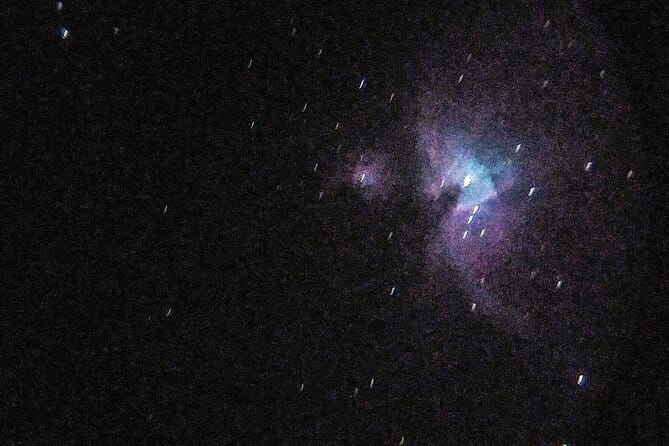
Neil Island is a fine place to look up. Away from city glare, the sky can feel enormous, and this 90-minute session gives you a guided way to make sense of it. You walk to a darker site with red light headlamps, then use a powerful Dobsonian telescope to view planets, lunar craters, star clusters, and, when conditions allow, more distant objects.
I like two things here. First, the guide does not simply point at bright stars and name them. Harshal Patil has made the session especially engaging by mixing astronomy with ancient constellation myths and clear scientific explanations. Second, the group size is limited to 15 people, which should make telescope time and questions more manageable.
The main catch is the weather. Haze or cloud can spoil the view, and one scheduled session was called off because the sky was too hazy. That is sensible for an astronomy activity, but it means you should keep another evening free if the stars do not cooperate.
Key points at a glance
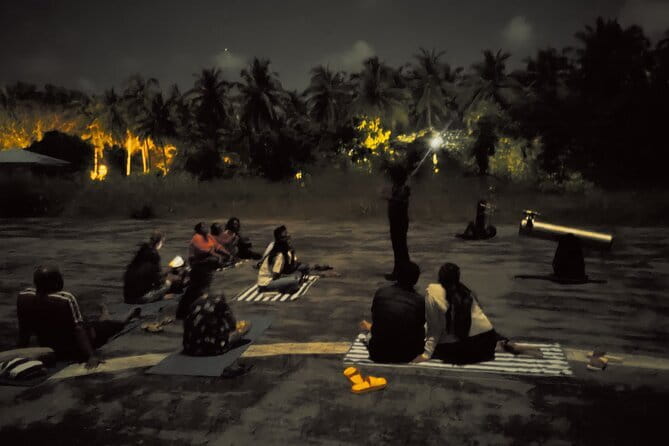
- A short walk to a darker site: You leave the meeting point near Lakshmanpur Beach and move away from nearby lights before setting up.
- A Dobsonian telescope: The large Newtonian-style telescope can show the Moon, Saturn, Jupiter, star clusters, and other selected objects.
- Red light headlamps supplied: These help you move safely without ruining your night vision as much as a bright white torch.
- Harshal Patil’s clear guiding: Expect science, constellation stories, and patient answers rather than a silent telescope viewing.
- Small group limit: No more than 15 people can join, a useful size for a shared telescope session.
- Weather matters: Poor conditions can lead to a new date or a full refund, so avoid treating this as a guaranteed planet-viewing appointment.
Why Neil Island works for stargazing
The best reason to book this activity is the setting. Neil Island has far less artificial light than a major city, and that gives you a better chance of seeing many more stars with the naked eye. The difference is not just cosmetic. A dark sky makes faint star clusters and broad patterns easier to pick out, while a bright urban sky can wash them away.
You will not simply arrive, look through a telescope once, and leave. The session is built around learning how to read the sky. Your guide identifies prominent constellations, explains what you are seeing, and adds the myths attached to them. That combination works well if you are new to astronomy and want a simple route into the subject.
I also like that the activity treats the night as something that changes. The exact objects available depend on the season, the hour, and the sky conditions. One evening may feature the Moon or Saturn, while another may bring Jupiter, a nebula, a supergiant star, or an old star cluster into focus.
That changing program is part of the appeal, but it also means you should not book with one fixed image in mind. If Saturn is your only goal, the planet may not be visible during your session. The strength of this outing is the guided look at the sky as it appears that night.
More Stargazing Tours around the world:
- Dubai Red Dunes ATV, Camels, Stargazing & 5* BBQ Al Khayma Camp
★ 5.0 · 21,620 reviews - Sharm El-Sheikh: Ultimate ATV Quad, Stargazing & BBQ Dinner
★ 4.7 · 4,084 reviews - Tenerife: Teide National Park Sunset & Stargazing Tour
★ 4.2 · 3,812 reviews
Starting at SeaShell Samssara
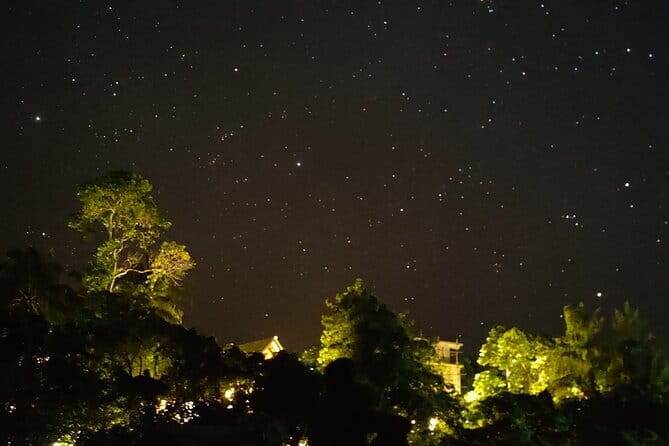
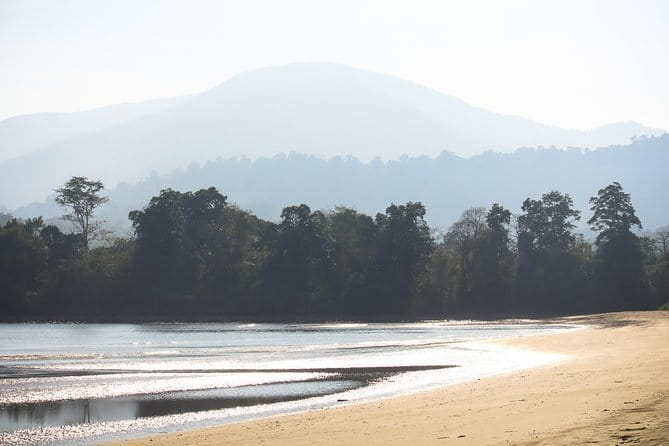
The meeting point is SeaShell Samssara, at Survey No. and Plot No. 26, Lakshmanpur Beach, opposite the helipad, Neil Island, Andaman and Nicobar Islands 744104. The experience ends back at this same point.
Private transport is not included. The plan is to meet there and walk to a secluded viewing site, so you need to arrange your own way to the starting point. The location is near public transportation, and the meeting address is specific enough to use for planning with your accommodation.
The walk is a useful part of the outing rather than wasted time. Leaving brighter areas helps protect the darkness needed for stargazing. Your red light headlamp gives the walk a slightly adventurous feel while letting the group move without flooding the path and sky with white light.
The exact walking distance is not stated, so do not assume that the meeting point is the telescope site itself. Wear practical shoes and bring enough patience for a short movement through a dark area. The activity is not presented as a strenuous hike, and most people can take part, but darkness can make uneven ground feel more demanding than it would in daylight.
The red light headlamp makes a real difference
Each person receives a headlamp with red light. This is a small but important detail. Bright white light can make it harder for your eyes to adjust to darkness, and one careless phone screen can affect people around you.
The red lamps let you see where you are going while keeping the group’s light levels lower. You should still avoid using your phone at full brightness near the telescope. If you want photographs, check with the guide first, since flashes and bright screens can interfere with everyone’s viewing.
The lamps are included in the price, as are the telescope, guide, fees, and taxes. You do not need to bring a flashlight for the activity, though you may prefer to carry a light for getting back to your accommodation if you are walking elsewhere after the session.
Learning the sky before using the telescope
At the viewing site, the guide first helps you get your bearings. This matters because a telescope is more rewarding when you know what it is aimed at. Constellations act like signposts, helping you connect a small point of light in the eyepiece with its place in the wider sky.
Harshal Patil has received particularly strong praise for explaining both the science and the stories behind the constellations. His talks have covered planets, stars, and celestial objects in a way that works for people who may remember little from school astronomy. He is also described as patient with questions, an important quality when several people are sharing one telescope.
The myth element adds a human touch without replacing the science. You can hear how ancient cultures imagined patterns in the sky, then compare those stories with what astronomers now understand about the objects themselves. That makes the session more than a list of names.
Families should find this section useful because children can follow stories more easily than a string of technical terms. Adults who already know some astronomy may still enjoy the chance to ask about specific objects and see them under a darker sky.
Same stars, another vantage point:
- Tenerife: Sunset and Stargazing at Teide National Park
★ 4.7 · 2,826 reviews - Teide National Park Sunset & Stargazing with Dinner (Star Safari)
★ 5.0 · 2,601 reviews - Dubai: Sunset Camel Trek, Al Khayma Camp, Stargazing & BBQ
★ 4.8 · 2,588 reviews - Dubai: Overnight Safari, Dinner, Stargazing & Al Khayma Camp
★ 4.8 · 2,562 reviews
What the Dobsonian telescope can show
The main instrument is a powerful Dobsonian telescope. The supplied information also describes it as a Newtonian telescope, a design known for gathering a lot of light through a relatively simple setup. For you, the practical result is a better chance of seeing detail than with a small basic telescope.
The Moon is often a rewarding target because its craters and bright surface features are easy to understand through the eyepiece. If Saturn is visible, its rings can turn a distant point of light into a clear shape. Jupiter may show as a bright planet, with details depending on the night and the viewing conditions.
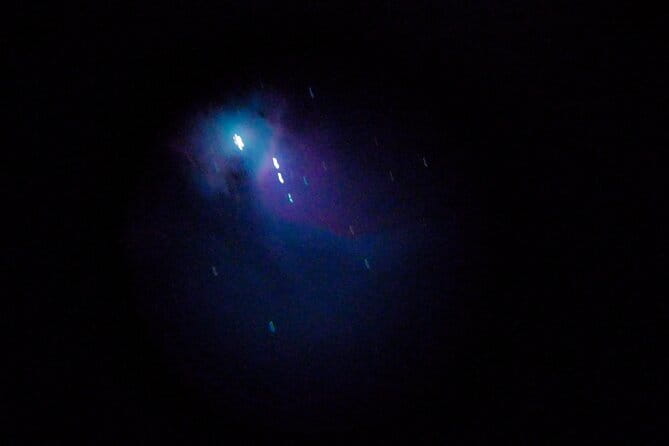
The session has also included views of star clusters, a nebula, and a supergiant star. These objects are not guaranteed on every date, but their appearance shows the range of the program. You may move from a nearby planet to a group of stars many light-years away, then hear how each object differs in size, age, and distance.
A shared telescope always requires some patience. You may need to wait while the guide adjusts the instrument or while others take their turn. That is normal for a group activity, and the 15-person limit helps, but the experience is not private. If you want unlimited time at the eyepiece, a private session would be a different type of product and is not offered here.
A 90-minute evening that depends on the sky

The activity lasts about one hour and 30 minutes. Sessions take place in the evening, within operating hours of 7:00 PM to 11:00 PM, every day during the stated operating period.
The timing is well suited to a day on Neil Island. You can spend the daylight hours at the beach or on other island activities, then meet after dark for something quieter and more focused. Since the session ends back at the starting point, you are not left at a distant site.
Do not expect every minute to be spent looking through the telescope. The walk, setup, explanations, constellation identification, questions, and telescope viewing all form part of the experience. That balance is valuable because you learn how to find objects rather than simply receiving a quick glimpse.
The sky also changes across the night. A planet or constellation may be easier to see at a particular time, and the guide chooses the evening’s targets based on what is available. This helps explain why the start time may vary within the published evening window.
The weather problem is real
Stargazing requires clear enough conditions. Haze can be just as troublesome as cloud because it scatters light and reduces contrast, making faint objects difficult or impossible to see. One session was canceled shortly before it began after the provider warned that the sky was too hazy to offer a worthwhile view.
That decision protects the quality of the activity, but it can create a planning headache. If you have a tight island schedule, a cancellation may leave you without another evening. I would book this early, especially since it is commonly reserved about nine days ahead, and keep some flexibility in your itinerary.
If poor weather cancels the experience, you can choose another date or receive a full refund. The same protection does not apply if you cancel late for your own reasons. You must cancel at least 24 hours before the start time for a full refund, and changes made within 24 hours are not accepted.
The practical lesson is simple: check the forecast, but do not rely on it too much. Tropical weather can change quickly, and a clear afternoon does not guarantee a clear night.
Is the $35.99 price fair?
At $35.99 per person, this is not the cheapest way to spend an evening on Neil Island. You are paying for a guide, a proper telescope, headlamp use, the organization of the walk, and the chance to view objects that are easy to miss on your own.
The price makes more sense if you value explanation. A free look at the sky from the beach can be beautiful, but you may not know which stars you are seeing or how to find them again. Here, the guide gives the night structure and context.
The value is also better for families and small groups. Children get an activity with a clear focus, while adults can ask questions and learn enough to keep looking upward after the session ends. Group discounts are available, which may help if several people in your party want to join.
The value is weaker if you want guaranteed views of a particular planet or a fully private experience. Neither is promised. You are buying a guided opportunity under natural conditions, not a fixed indoor show.
Who should book this activity
I would recommend it to first-time stargazers, families, couples, and anyone who wants a calm evening activity with a learning angle. You do not need an astronomy background. The guide handles the technical side, and the constellation stories make the subject approachable.
It also suits people who have already used a telescope but want to see the southern night sky from a darker island setting. The chance to view a nebula, star cluster, supergiant, or planet through a Dobsonian telescope gives the evening more substance than simple naked-eye stargazing.
You may want to skip it if your schedule is too tight to handle a weather cancellation. It is also less suitable if you dislike shared activities, waiting for your turn, or walking to a dark site. Most people can participate, service animals are allowed, and the activity is near public transportation, but the experience still takes place outdoors at night.
Small details that help you prepare
Wear shoes suitable for walking and clothing that feels comfortable outdoors after dark. The supplied details do not specify a dress code, walking distance, or seating, so avoid assuming a resort-style setup.
Bring curiosity rather than a fixed checklist. The guide may point out different objects on different nights, and the best target depends on visibility. If you are visiting with children, explain that telescope time is shared and that listening to the constellation stories is part of the activity.
Keep bright phone lights off near the viewing area. The red headlamp is provided for a reason, and protecting the group’s night vision improves the experience for everyone.
The tour accepts mobile tickets, and confirmation is provided at booking. Group discounts may be available, which is worth checking before reserving several places.
Should you book Neil Island Star Gazing?
Book it if you want an informative, low-key evening and you are willing to let the sky set the terms. The strong guiding, red light headlamps, small group limit, and Dobsonian telescope give the activity real substance for its 90 minutes.
I would not book it as a guaranteed Saturn or Jupiter appointment. Weather, haze, the time of year, and the night’s visibility all matter. But if you can keep your plans flexible, this is a sensible way to experience Neil Island after sunset and leave with a better understanding of the sky above you.
FAQ
Where does Neil Island Star Gazing start?
It starts at SeaShell Samssara, Survey No. and Plot No. 26, Lakshmanpur Beach, opposite the helipad, Neil Island, Andaman and Nicobar Islands 744104, India.
Where does the activity end?
The activity ends back at the SeaShell Samssara meeting point.
How long does the stargazing experience last?
The activity lasts approximately one hour and 30 minutes.
What time does the activity operate?
It operates from 7:00 PM to 11:00 PM, Monday through Sunday, during the stated operating period.
Is transportation included?
No. Private transportation is not included. You need to reach the meeting point yourself before walking to the viewing site.
Is the telescope and headlamp included?
Yes. The telescope and red light headlamp are included, along with all fees and taxes.
What happens if the weather is poor?
If poor weather prevents the activity from running, you will be offered another date or a full refund.
How many people can join the activity?
The maximum group size is 15 people.
Just in after dark around the world
- Doha: Night Desert Safari, Stargazing, and Camel Ride★ 5.0 · 2 reviews
- Doha : Night Desert Safari with Dune Bashing & Stargazing★ 5.0 · 4 reviews
- Doha: Night Desert Safari + Camel ride + Stargazing & Relax★ 5.0 · 4 reviews
- Day Trip to Tatacoa Desert (Horseback, Boat, Stargazing, ..)★ 4.4 · 3 reviews
- Christchurch: Lake Tekapo Stargazing & Mount Cook 2-Day Tour★ 5.0 · 6 reviews
- Cabo de Gata: Stargazing Experience★ 4.5 · 7 reviews
- Chile: Astronomical Tour in the Atacama Desert★ 4.8 · 4 reviews
- Cabo de Gata: Guided Night Walk with Stargazing★ 4.7 · 36 reviews
Stargazing Tours, night against night.

Dubai Red Dunes ATV, Camels, Stargazing & 5* BBQ Al Khayma Camp
Read our review →
Teide National Park Sunset & Stargazing with Dinner (Star Safari)
Read our review →
Sunset Camel Trek, Al Khayma Camp, Stargazing & BBQ
Read our review →
Overnight Safari, Dinner, Stargazing & Al Khayma Camp
Read our review →
Dubai Overnight Desert Safari, BBQ & Stargazing at Al Khayma Camp
Read our review →
Sunset Quad Bike, Camel w/ Opt Stargazing and BBQ
Read our review →Lists this night appears in