
Review · USA
Mauna Kea Stargazing Experience + Photos
The best part of this Big Island night tour is the quiet. Instead of joining a large crowd at the usual visitor center, you head to a remote Mauna Kea or Mauna Loa location, where fewer headlights and flashlights can make a real difference. Dylan’s star talks are lively and wide-ranging, covering mythology, black holes, planets, and modern astronomy.
I like two things right away: the stargazing guarantee, which removes much of the weather risk, and the professional photography included in the price. You also get a powerful smart telescope, warm parkas, chairs, and blankets. The main drawback is the price: at $299 per person, you are paying for a guided astronomy program and photographs, not simply access to a dark sky.
- Remote viewing sites: Locations may shift between Mauna Kea and Mauna Loa to find darker, clearer skies away from crowds.
- Celestron Origin telescope: See nebulae, galaxies, and star clusters on a screen through a smart telescope system.
- Live astronomy talk: Guides such as Dylan and James explain the sky and answer questions in a relaxed, humorous way.
- Milky Way portraits: An astro-photographer takes complimentary medium-resolution photos of your group.
- Cold-weather setup: Parkas, blankets, chairs, and sometimes hot drinks help you handle temperatures near 30 F.
- Weather protection: If clouds block the stars, you can receive a full refund under the stargazing guarantee.
A Quiet Night Above the Big Island Crowds
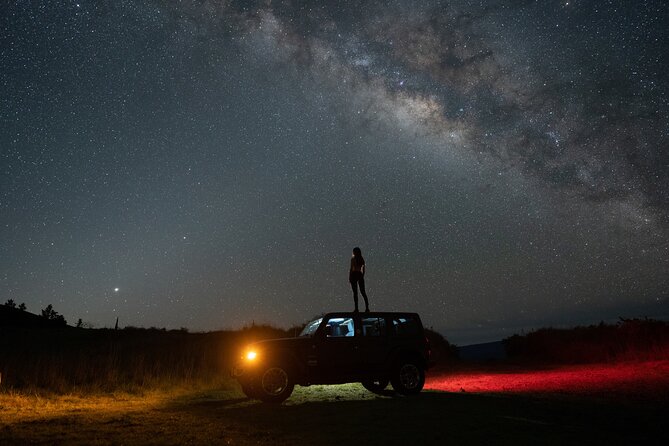
This experience is built around one simple idea: get away from artificial light. Mauna Kea is famous for astronomy because of its high, dry conditions and dark skies, but the most popular viewing areas can become crowded. Headlights, flashlights, and a steady flow of cars can chip away at the calm you came to find.
Epic Tours uses remote sites on Mauna Kea or Mauna Loa rather than placing you in the thick of the crowd at the Onizuka Visitor Center. The exact spot can change with cloud cover and visibility. That flexibility is useful, though it means you should watch your phone and email for updates before leaving.
The meeting point is the Puʻu Huluhulu Cinder Cone parking lot on the Island of Hawaii. There is no hotel pickup or drop-off, so you drive yourself to the start. The last approach can be dark, narrow, and curvy, with a single-lane mountain road in places. I would not treat this as a casual after-dinner outing. Put the location into your navigation before sunset, allow extra time, and drive slowly.
The group limit is 30 people. That is not a private tour, but it is still a more controlled setting than a busy public viewing area. The team sets up chairs and warm clothing, then points the equipment toward the clearest part of the sky.
What Happens During the 90-Minute Star Session
The core experience is listed as about 90 minutes, while the overall activity is described as roughly two hours. The difference likely allows for setup, photos, changes in viewing conditions, and a longer discussion when the group has plenty of questions.
The evening begins with a guided look at the sky. An astronomer uses a green laser pointer and explains what you are seeing. You may hear about visible constellations, planets, traditional stories, current astronomy, and larger questions about the universe. Dylan has received especially strong praise for handling everything from basic stargazing questions to relativity, string theory, UFOs, and black holes.
That range matters. A good sky talk should work for the person who cannot identify the North Star and the person who already owns a telescope. The guides aim to keep the discussion open, so you can ask questions rather than simply listen to a prepared speech.
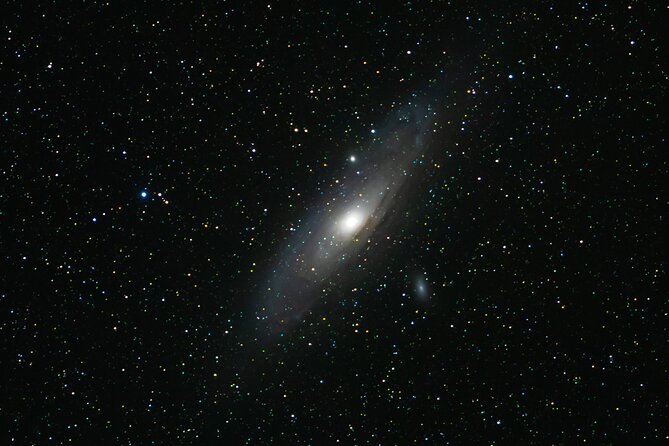
The telescope portion uses a Celestron Origin smart telescope. This is not the same as looking through a traditional eyepiece. The system uses a camera and display to collect and show views of distant objects, making faint targets easier for a group to see. You can expect views of objects such as the Andromeda Galaxy, Orion Nebula, Horsehead Nebula, and star clusters when conditions and timing allow.
One important point: the telescope view may look more like a live camera image than a classic eyepiece view. If you are expecting a large observatory telescope or a summit-level research facility, adjust your expectations. The strength here is access, explanation, and the ability for a group to see the same target together.
More Stargazing Tours around the USA:
- Small Group Big Island Twilight Volcano and Stargazing Tour
★ 5.0 · 1,619 reviews - Griffith Observatory Hike: Guided Tour through Griffith Park
★ 5.0 · 1,020 reviews - Sedona Stargazing Tours LLC
★ 4.5 · 881 reviews
Why the Dark-Sky Location Matters
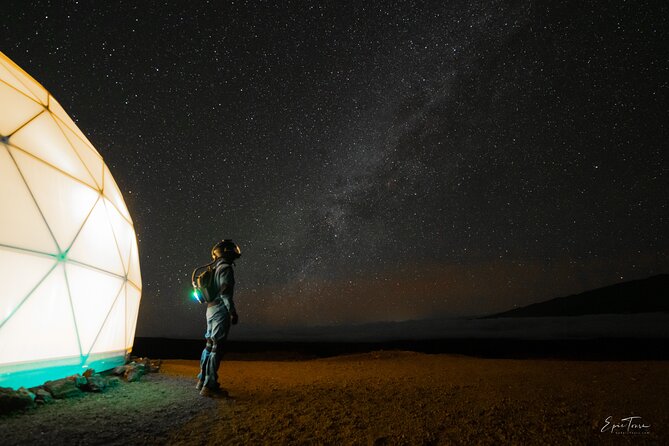
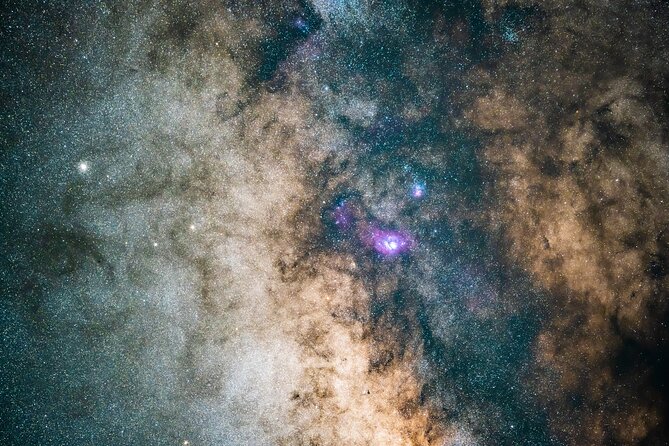
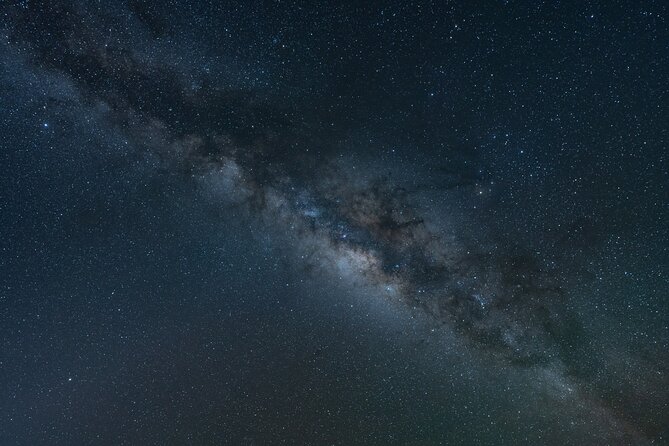
The difference between a crowded roadside pullout and a remote site is easy to underestimate until you are standing beneath the sky. Every stray light source reduces the number of faint stars you can see. At a quiet location, your eyes have time to adjust, and the Milky Way can become a broad, bright band rather than a faint smear.
The company has also shifted some outings to Mauna Loa when that offers better conditions. Communication about such changes has been praised when sent in time. You should still expect the meeting point to change occasionally, since mountain weather can move quickly.
This is not a summit tour. After sunset, safety rules and land-management restrictions prevent companies from running ordinary public stargazing sessions at the Mauna Kea summit. The experience takes place at lower remote locations, where the team can set up chairs, blankets, telescope equipment, and cameras.
The setting is intentionally simple. You sit, look up, and listen. There are no shops or indoor attractions at the viewing spot. That is part of the appeal, but it also means you need to arrive prepared for a cold, exposed evening.
The Photography Is a Major Part of the Value
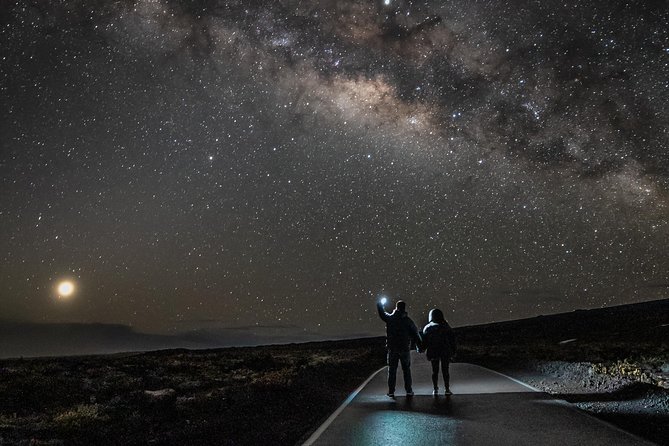
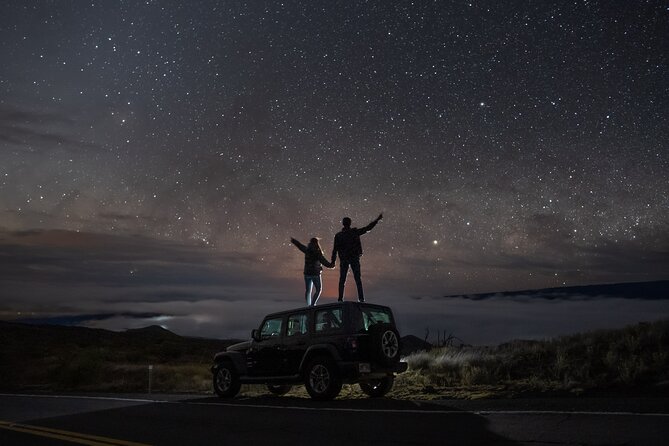
A dedicated astro-photographer takes portraits of your group with the Milky Way behind you. This adds something many standard star talks lack: a lasting image of you in the setting, not just a memory stored on your phone.
The photographer can take multiple poses, and the team has produced striking images featuring the Milky Way, Andromeda, volcanic glow, and even a shooting star in the background. Results will vary with clouds, moonlight, timing, and how well the camera catches the subject. Night photography is difficult, so do not expect every portrait to look perfect.
Medium-resolution photographs are included at no extra cost. They should work well for sharing online and keeping as a trip souvenir. Optional higher-resolution upgrades are available, but the supplied information gives different prices in different places, so confirm the current upgrade cost when booking.
I would also make sure you understand how the photos will be delivered before you leave the site. One poor experience involved a delay in receiving the images and difficulty reaching the operator. That does not appear to reflect the general experience, but it is a sensible question to ask, especially if the photographs are the main reason you are paying the premium price.
Staying Warm on Mauna Kea or Mauna Loa
The cold is not a minor detail. Temperatures can reach about 30 F, and even milder nights can feel severe when you sit still for 90 minutes or more. The company supplies parka jackets with hoods and pockets, along with blankets and chairs. Hot cocoa, coffee, and tea have also been served on some outings.
Bring more than you think you need. Wear long pants, a warm base layer, closed-toed shoes, a hat, and gloves. Sturdy shoes are helpful on dark or uneven ground. The supplied parka may not be enough for everyone, especially if you are sensitive to cold.
The reclining chairs are a welcome touch. Looking upward from a standing position becomes tiring, while a chair lets you stay comfortable during the star talk and telescope viewing. Still, this is an outdoor mountain activity. The setup improves comfort, but it does not turn the site into a heated lounge.
Same stars, another vantage point:
- Los Angeles: Hollywood Night Tour with Griffith Observatory
★ 4.2 · 531 reviews - Miami: Frost Museum of Science and Planetarium Entry Ticket
★ 4.5 · 429 reviews - Griffith Observatory Insider Tour
★ 4.5 · 306 reviews - LA: Griffith Observatory Insider Tour
★ 4.5 · 287 reviews
How the $299 Price Holds Up
At $299 per person, this is one of the more expensive evening activities on the Big Island. You are not paying only for transportation to a viewpoint. The price includes an astronomer, an astro-photographer, telescope viewing, chairs, parkas, and medium-resolution images.
That can be good value if you want all of those pieces. Hiring a separate professional photographer for Milky Way portraits could cost a substantial amount, and the guided astronomy talk gives the evening more purpose than simply parking somewhere and using a phone app.
The value is weaker if your main goal is simply to see stars. You can find dark places on the island without paying for a tour, and a smartphone app can identify many constellations. The tour earns its price through the remote setup, the equipment, the explanations, the professional photos, and the weather guarantee.
You should also account for your own driving. Since there is no hotel pickup, you handle the mountain roads and fuel. That makes the experience less convenient than a tour that collects you from your hotel, though self-driving also gives you more control over your schedule.
Weather, Moonlight, and the Free-Tour Promise
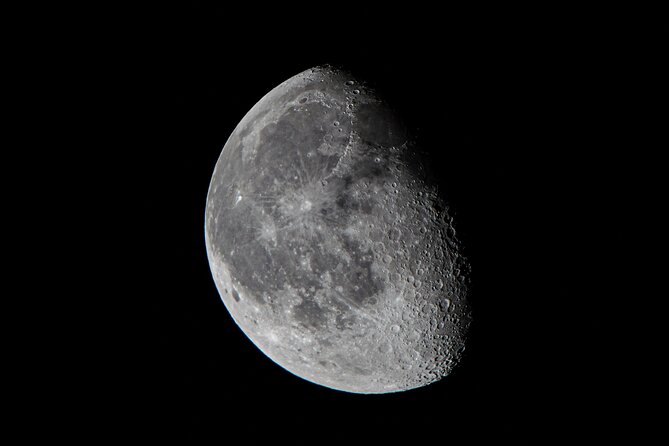
The company chooses time slots to reduce bright moonlight and improve the view of faint stars. That is a smart detail. A full or nearly full moon can wash out the Milky Way even when the sky is perfectly clear.
Mountain weather remains unpredictable. Clouds can gather quickly, and a forecast that looks fine at sea level may not match conditions higher up. The tour operates in all weather, but the stars may not be visible in all weather.
If clouds block the stargazing, the company offers a full refund under its guarantee. If poor weather causes a cancellation, you can also be offered another date or a full refund. This is one of the strongest reasons to book this particular experience instead of gambling on a self-guided drive.
The guarantee does not mean every night will be ideal. You may have a partly cloudy session, limited targets, or a shorter practical viewing period. Ask the team on arrival how much of the sky is expected to be available and what the backup plan is.
Who Will Enjoy This Experience Most
I would choose this tour for someone who wants more than a scenic viewpoint. It suits couples who want memorable photos, families with older children who can handle the cold, and anyone fascinated by astronomy but unsure how to read the night sky.
It is also a good choice if you prefer a smaller, quieter setup over a large public gathering. The guides bring enthusiasm and humor, and the format leaves room for questions. The evening can feel personal even when other groups are present.
This is not a good match for anyone seeking easy access. The drive is self-guided, the road can be dark and narrow, and the site is outdoors in cold conditions. The operator does not recommend it for people with mobility restrictions, back or heart problems, hearing problems, serious medical conditions, or certain senior travelers. Pregnant people should discuss the activity with a doctor first.
Children must be accompanied by an adult, and service animals are allowed. A moderate level of physical fitness is expected. The practical rule is simple: if cold, mountain driving, and sitting outside sound miserable, spend your money elsewhere.
Booking Advice and Cancellation Rules
The experience is often reserved well ahead of time, with an average booking window of about 31 days. That suggests you should not wait until the last night of a short Big Island visit, especially if you want a particular date.
You can cancel for a full refund up to 24 hours before the start time. Cancellations or changes inside that 24-hour window are not refunded. The company may also cancel if weather is poor or if the minimum number of bookings is not reached, in which case you are offered another date, another experience, or a full refund.
Before the day of the tour, confirm the meeting point and check for any location update. Keep your phone active. The company has sometimes moved the site to improve conditions, and clear instructions matter when you are driving toward a remote mountain location after dark.
Should You Book This Mauna Kea Stargazing Experience?
I would book it if you value expert guidance and professional night-sky photos, and if you are comfortable driving yourself into a cold, remote setting. The combination of a live astronomy presentation, smart telescope, Milky Way portraits, supplied parkas, and a weather refund makes this more than a basic roadside star stop.
I would skip it if $299 feels high for a two-hour activity, if you want hotel transportation, or if you would rather explore the sky at your own pace. The telescope is a smart camera-based system rather than a giant observatory instrument, and the free photographs are medium resolution.
For the best chance of a strong experience, pack warm clothing, choose a night with a favorable forecast, confirm the meeting location, and clarify photo delivery and upgrade costs before you go. If the sky opens up, the Big Island can give you an extraordinary view of the universe. If clouds shut it down, the guarantee makes this one of the safer astronomy bookings on the island.
FAQ
How long does the Mauna Kea stargazing experience last?
The activity lasts about two hours, with the core guided experience listed as approximately 90 minutes.
Where does the tour meet?
The listed meeting point is the Puʻu Huluhulu Cinder Cone parking lot on the Island of Hawaii.
Is hotel transportation included?
No. Hotel pickup and drop-off are not included, so you drive yourself to the meeting point and back.
Does the tour always take place on Mauna Kea?
No. The company may use a remote location on Mauna Kea or Mauna Loa, depending on conditions and viewing quality.
What telescope is used?
The astronomer uses a Celestron Origin smart telescope to show deep-sky objects such as galaxies, nebulae, and star clusters.
Are photographs included?
Yes. Medium-resolution photographs are included. Optional higher-resolution photo upgrades are also available.
What should I wear?
Wear pants and closed-toed shoes. Bring warm layers, gloves, and a hat because temperatures can reach about 30 F.
Are parkas provided?
Yes. Parka jackets are included, and blankets and chairs may also be provided at the viewing site.
What happens if clouds block the stars?
The tour offers a stargazing guarantee. If the stars are not visible because of cloud cover, you can receive a full refund.
Can I cancel my booking?
Yes. You can cancel at least 24 hours before the start time for a full refund. Cancellations made less than 24 hours before the start time are not refunded.
Just in after dark around the USA
- Seattle: Hop-on Hop-off Bus Tour and Sky View Observatory★ 4.4 · 16 reviews
- Boulder: Guided Astronomy Tour★ 4.7 · 11 reviews
- 1-Day Grand Canyon Tour from Las Vegas: Stargazing & Sunrise★ 3.6 · 3 reviews
- Private Tour of Griffith Observatory★ 4.5 · 58 reviews
- Griffith Observatory: Scott E-Bike Tours LA Private Tour★ 5.0 · 32 reviews
- Haleakala Sunset and Stargazing Audio Tour★ 4.0 · 10 reviews
- Stargazing and Milky Way Portrait in Capitol Reef National Park★ 4.5 · 13 reviews
- Stargazing Tour in Kapalua★ 5.0 · 31 reviews
Stargazing Tours, night against night.
Dubai Red Dunes ATV, Camels, Stargazing & 5* BBQ Al Khayma Camp
Read our review →
Teide National Park Sunset & Stargazing with Dinner (Star Safari)
Read our review →
Sunset Camel Trek, Al Khayma Camp, Stargazing & BBQ
Read our review →
Overnight Safari, Dinner, Stargazing & Al Khayma Camp
Read our review →
Dubai Overnight Desert Safari, BBQ & Stargazing at Al Khayma Camp
Read our review →
Sunset Quad Bike, Camel w/ Opt Stargazing and BBQ
Read our review →Lists this night appears in