
Review · GREECE
Ioannina Astronomy: Telescope Stargaze Greece’s night sky
Just outside Ioannina, the Acropolis of Kastritsa gives this astronomy evening a fine setting: very dark skies, views over Lake Pamvotis, and ancient stones beneath your feet. With an astronomer and laser pointer guiding you, the night moves from bright stars and Greek myths to galaxies so far away that their light began its journey long before human history.
I like two things in particular. First, the Unistellar eVscope can show serious deep-sky targets, including nebulae, star clusters, and distant galaxies. Second, the session connects science with stories, so you are not simply staring through a telescope and guessing what you see. Sotiris is praised for his enthusiasm and clear teaching, and the guide’s explanations are a major part of the evening.
The main drawback is simple: astronomy depends on the weather. The session can be cancelled on the same day if clouds or poor conditions make viewing impractical. It can also get cold even in summer, and there are no toilets or cafes close to the stargazing point.
Key points about the Ioannina stargazing night
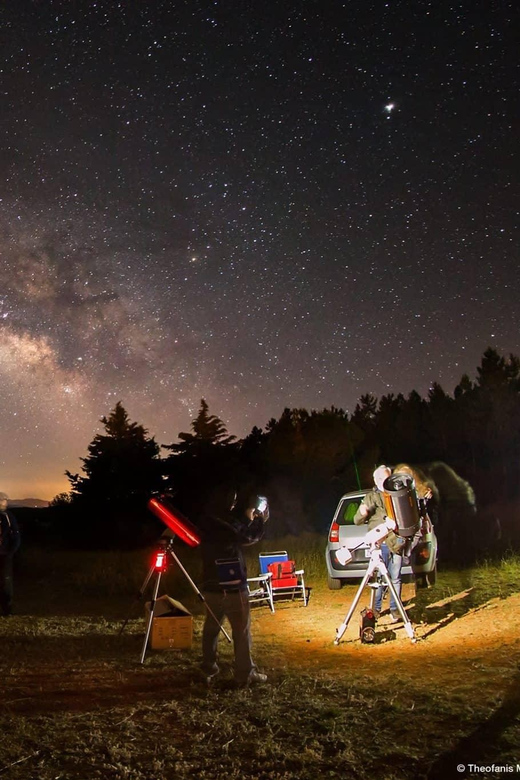
- A dark hilltop near Ioannina: The Acropolis of Kastritsa is described as the darkest nearby point for observing the sky, with open views toward the lake and city.
- Two telescope setups: You use an Unistellar eVscope, plus an 8-inch telescope when the Moon or planets are visible.
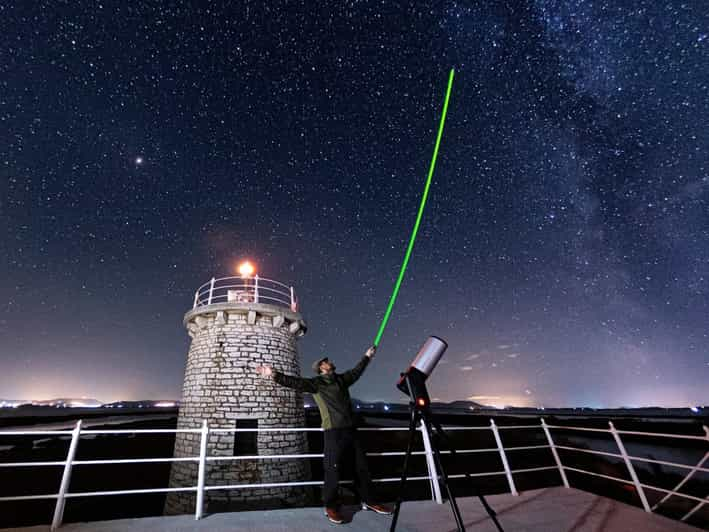
- Greek mythology under a green laser: Constellations become easier to recognize when the guide ties them to ancient stories.
- Real deep-sky targets: Expect star clusters, nebulae, and distant galaxies, including some that may be colliding.
- Images for your phone: Selected views of the cosmos can be saved directly to your mobile.
- Good for beginners and children six and older: You do not need prior astronomy knowledge, but warm clothes are essential.
Why Kastritsa is the right place to look up
The meeting point is the Acropolis of Kastritsa, an archaeological site outside Ioannina. It is free to visit and open independently, so you can arrive early and see the ruins and the broad view of Ioannina and Lake Pamvotis before the astronomy session begins.
The site matters for more than its scenery. City lights wash out faint stars, while a darker location lets you see more of the Milky Way with your own eyes. That makes the setting part of the experience, not just a place to park a telescope.
The trade-off is that this is not a town-center activity. You need to make your own way to the meeting point, and the supplied information does not include transport, dinner, nearby toilets, or a cafe. Plan accordingly before leaving Ioannina.
I would arrive prepared with water, a snack eaten beforehand, and a fully charged phone. The site is free to visit, but the astronomy activity itself costs $47 per person. That price is easier to justify if you value expert explanation and telescope access, rather than simply wanting a quick look at the Moon.
More Telescope Stargazing in the world:
- Teide by Night: Sunset & Stargazing with Telescopes Experience
★ 4.5 · 1,492 reviews - Uluru: National Park Astronomy Tour with Telescope and Photo
★ 4.4 · 357 reviews - Teide National Park: Guided Large Telescope Stargazing Tour
★ 4.9 · 319 reviews
What happens during the two-hour session
The advertised duration is about two hours, though one account describes an evening lasting three hours. Your exact timing depends on the night, the objects visible, and how long the explanations and observations take.
Start times change with the season:
- Summer: 21:30
- Spring and autumn: 20:00
- Winter: 18:30
The precise meeting time is sent by WhatsApp on the day of the activity, after 10:00. That is useful because sunset changes through the year, but it means you should keep your phone available and check messages before setting out.
The session begins with orientation to the night sky. You may look at the Moon and planets if they are visible, then move to brighter stars and the colors they show. The guide explains what stars are made of and how their color relates to their temperature and stage of life.
This is a good order for beginners. Bright objects help you get comfortable with the telescope before the group moves to less familiar targets. You are not expected to arrive knowing the difference between a nebula and a galaxy.
The green laser tour and Greek mythology
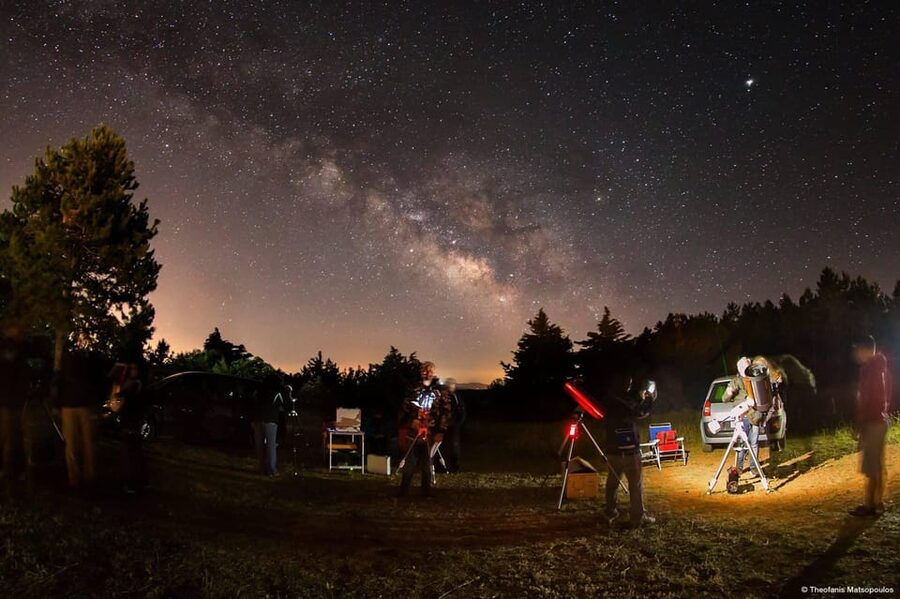
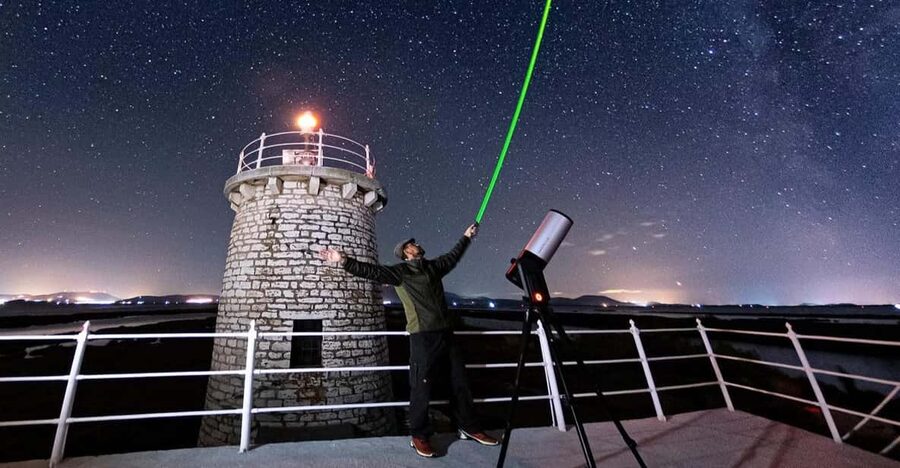
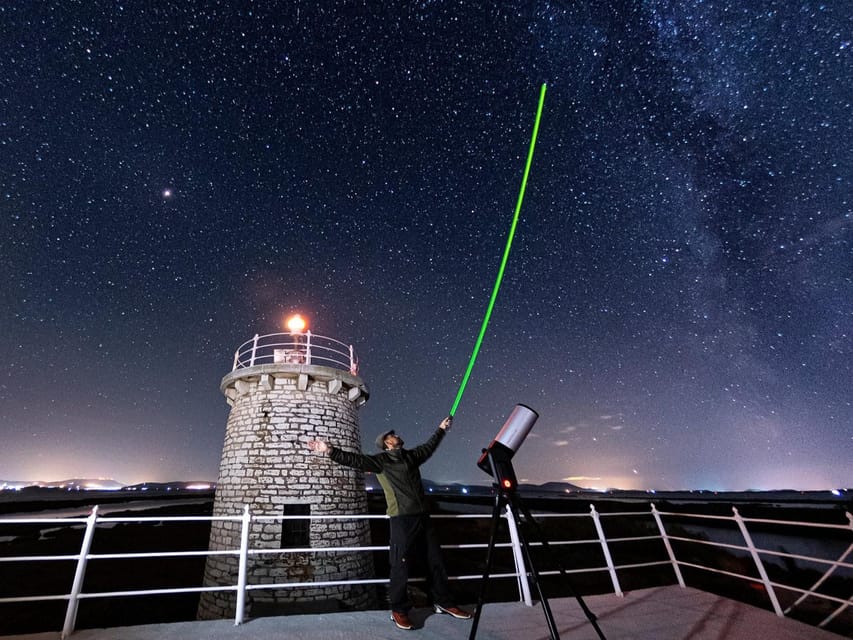
The green laser constellation tour is one of the most memorable parts of the format. Instead of pointing vaguely at a patch of stars, the guide traces shapes in the sky and connects them with Greek mythology.
That link feels especially fitting in Epirus, where ancient sites and myth are part of the setting. The stories give you a way to remember the constellations after the telescope is packed away. A pattern of stars is easy to forget. A pattern tied to a familiar myth has a better chance of staying with you.
The laser also helps when several people are looking in the same direction. You can follow the beam from the ground rather than trying to interpret a small telescope view at once. Still, laser pointing works best on a clear night, and clouds can interrupt this part of the session as much as they affect telescope viewing.
From star colors to white dwarfs
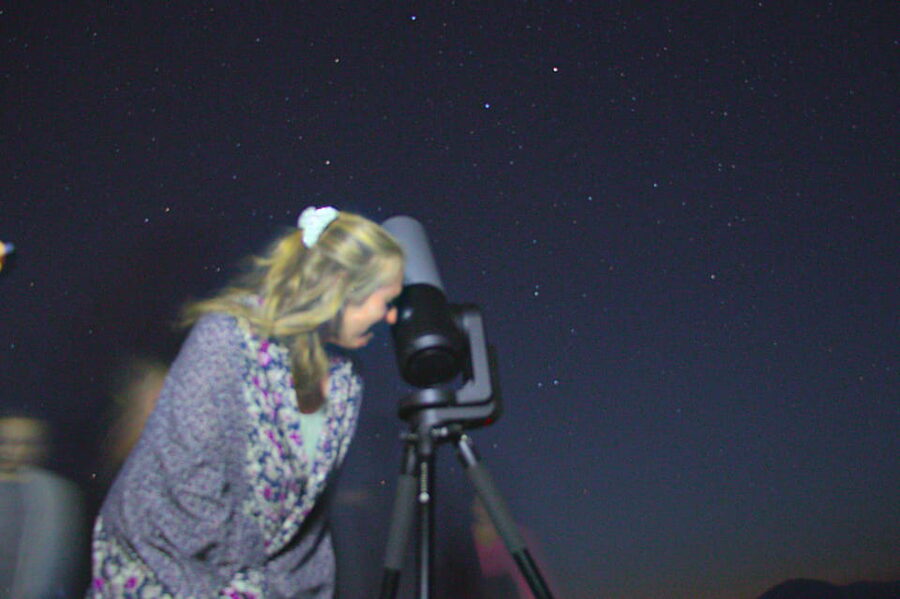
The science portion covers the life of stars in plain terms. You learn what stars contain, why they appear in different colors, and how objects such as red giants and white dwarfs fit into the story.
I like this part because it gives the telescope images some context. A red giant is not just a reddish dot. A white dwarf is not simply a pale point of light. The guide explains the stages and processes behind what you are seeing, then connects those ideas to the stories in the sky.
The session is conducted in English. The teaching style is important here, and Sotiris received especially warm praise for his enthusiasm, storytelling, and ability to explain difficult ideas clearly. One evening extended well beyond the planned two hours because the group remained absorbed in the sky and the explanations.
That does not guarantee every session will run long. It does suggest that this is not a rushed, click-and-move-on telescope stop. If you have a tight evening schedule, allow extra flexibility.
More Stargazing Tours around the world:
- Dubai Red Dunes ATV, Camels, Stargazing & 5* BBQ Al Khayma Camp
★ 5.0 · 21,620 reviews - Sharm El-Sheikh: Ultimate ATV Quad, Stargazing & BBQ Dinner
★ 4.7 · 4,084 reviews - Tenerife: Teide National Park Sunset & Stargazing Tour
★ 4.2 · 3,812 reviews - Tenerife: Sunset and Stargazing at Teide National Park
★ 4.7 · 2,826 reviews
The Milky Way and the scale of deep space
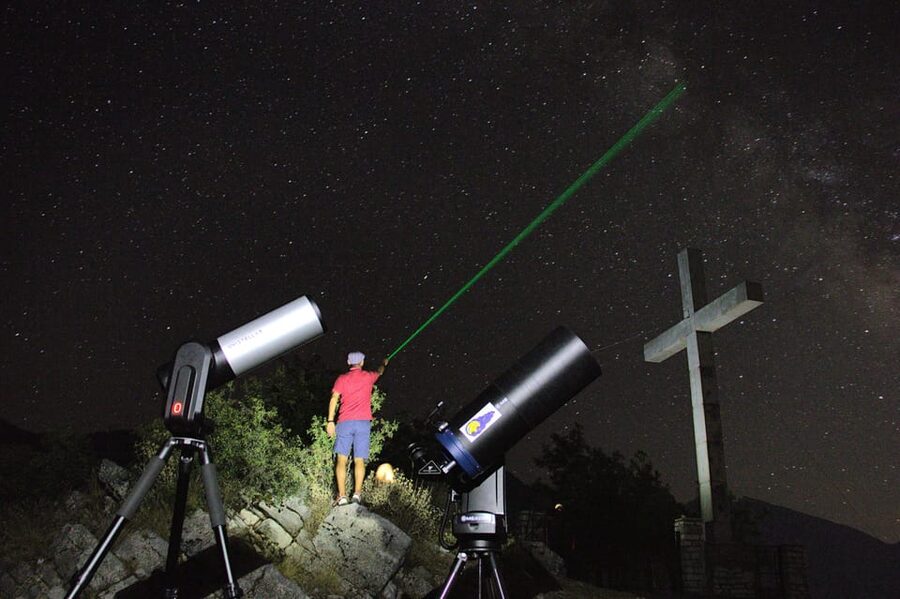
The Milky Way may be the most striking sight you see without a telescope. From a darker point near Ioannina, it can appear as a broad band rather than a faint smudge washed out by urban light.
The naked-eye view is valuable because it shows the scale of our own galaxy. A telescope can bring one object closer, but the Milky Way gives you the larger picture: countless stars spread across a single immense structure.
Then the telescopes take over. The Unistellar eVscope is used for deep-sky observation, with targets that can include star clusters, nebulae, and other galaxies. Some galaxies may even be colliding. Each one contains hundreds of billions of stars, a fact that turns a small glowing shape into something far more astonishing.
The eVscope is a strong feature at this price because it is designed to reveal faint objects that ordinary backyard viewing may not show well. You should still keep expectations sensible. Telescope images are not the same as colorful space-agency photographs. What you see depends on the object, the sky, the equipment, and the conditions that night.
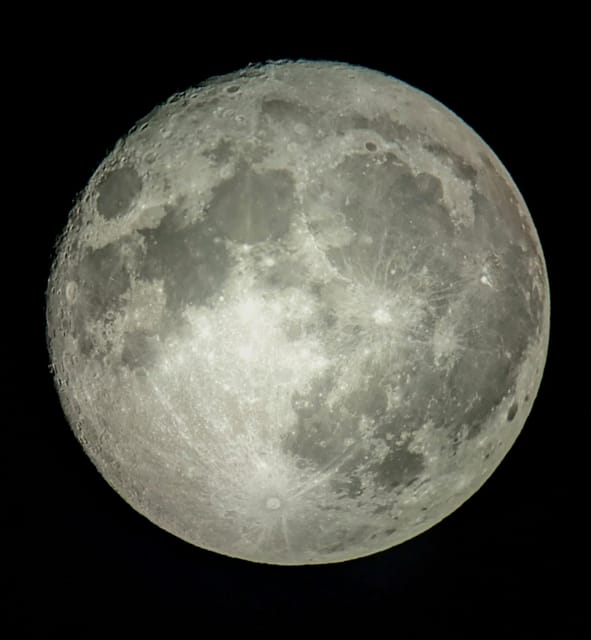
An 8-inch telescope is also available when planets or the Moon are in the sky. The Moon is likely to be the easiest object for a first-time observer to appreciate because its surface details are more immediately visible. Planets can be rewarding too, but their availability depends on the season and their position above the horizon.
Saving cosmic images to your phone
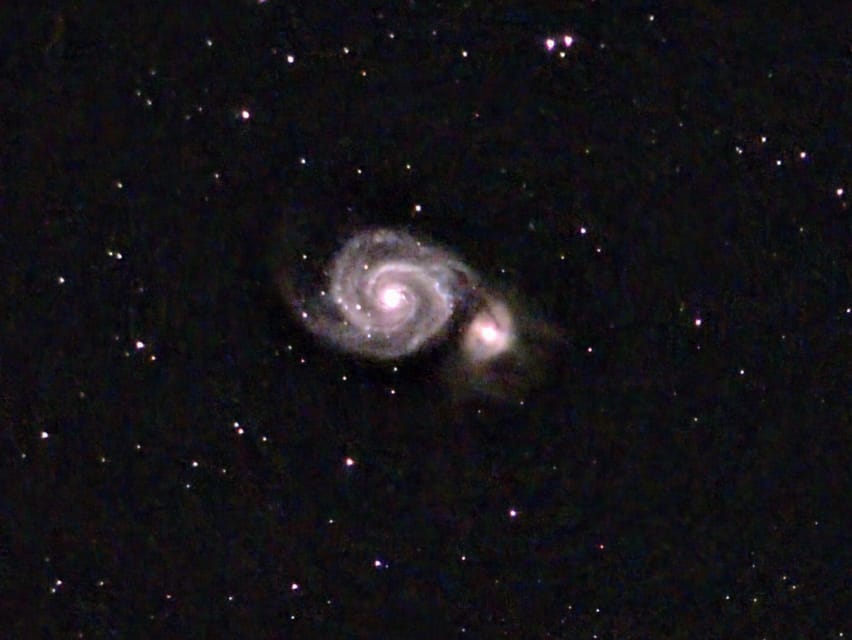
The activity includes the option to save images of the cosmos directly to your mobile phone. This adds a useful keepsake, especially if you want to remember a nebula or galaxy rather than rely only on memory.
Do not confuse this with a personal astrophotography workshop. The supplied details promise saved images, not instruction in camera settings or a long exposure class. Think of it as a simple way to take home a record of what the telescope showed you.
Bring a charged phone and enough storage if you care about collecting images. The experience remains mainly about seeing and understanding the sky, but the phone feature gives you something concrete to share later.
Comfort, clothing, and family suitability
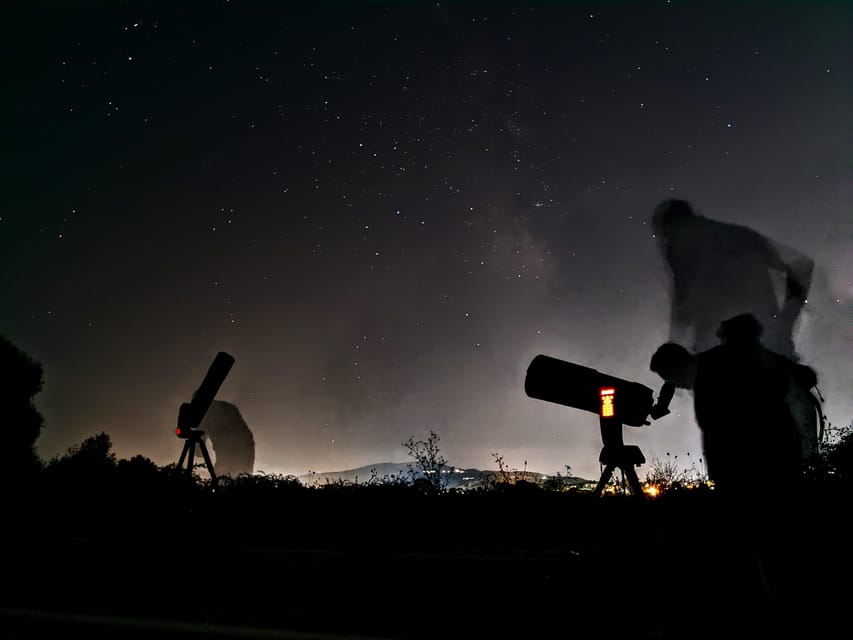
Chairs are provided, which is more important than it sounds. Astronomy involves periods of looking up, waiting for an object to appear, and listening to explanations. A seat makes the night easier on your neck and legs.
Dress for cold, not for the afternoon temperature in Ioannina. Warm clothing and warm shoes are specifically recommended, and the warning applies even in summer. The site is outdoors and may be at a higher, more exposed point than the city.
The activity is intended for beginners and children from age six. That makes it a practical family choice for children who enjoy stories, science, and staying awake after dark. You know your own child best, though. A two-hour outdoor session may feel long for a young child, especially if the weather is cold or clouds reduce the number of objects visible.
The experience is not suitable for children under six or for people with visual impairments. Those limits are worth taking seriously because the activity depends on looking through telescopes, following a laser pointer, and observing faint objects in the dark.
Is $47 a fair price?
At $47 per person, this is not the cheapest way to spend an evening outdoors. You can visit the Acropolis of Kastritsa without paying an admission fee, and you can look at the sky for free from many places.
The fee pays for the astronomer’s guidance, the organized session, access to an Unistellar eVscope, use of an 8-inch telescope when relevant, the constellation tour, seating, and the chance to save cosmic images. For someone who already owns binoculars or enjoys casual stargazing, the value may feel modest. For a beginner without equipment, the price is more reasonable.
I would also consider the quality of the explanation. The guide does more than point out bright objects. You receive a lesson in stars, stellar evolution, mythology, the Milky Way, and distant galaxies. That turns two hours of looking upward into a structured experience.
The value drops if weather forces a cancellation or if the sky is too cloudy for much viewing. The flexible cancellation policy helps: you can cancel up to 24 hours before the activity for a full refund. The session can also be called off on the same day, up to 10:00, because of poor weather.
The best season and timing for your visit
Summer starts late, at 21:30, so you need to remain comfortable outdoors after dark. The warm season does not remove the need for a jacket. Spring and autumn begin at 20:00, while winter begins at 18:30.
The earlier winter start can suit families and anyone who does not want a late night. The downside is colder air, so your clothing matters even more. Spring and autumn offer a middle ground, but the weather remains the deciding factor.
Do not treat the listed start time as fixed until you receive the WhatsApp message. The activity adjusts to sunset, and the final meeting time is confirmed on the same day. That flexibility is practical, but it requires attention on your part.
Who should book this experience
I would choose this tour if you want a guided introduction to astronomy rather than a silent look through a telescope. It suits couples, families with older children, and curious first-time observers staying around Ioannina.
It is also a good match for anyone who enjoys Greek mythology and wants more than technical facts. The green laser tour gives the evening a local cultural angle without turning the astronomy into a history lecture.
I would think twice if you need guaranteed clear skies, close facilities, or a fully indoor activity. The experience is weather-dependent, outdoors, and away from cafes and toilets. You should also skip it if you are uncomfortable in cold conditions or cannot use optical viewing equipment.
Should you book the Ioannina stargazing tour?
Book it if the idea of seeing the Milky Way, galaxies, nebulae, and star clusters with an astronomer appeals to you. The combination of dark skies, Greek mythology, serious telescope equipment, and clear storytelling gives this evening more substance than a basic star walk.
Go in with realistic expectations. Clouds may cancel the session, planets may not be visible, and telescope views will not look like polished space photographs. But on a clear night, the setting at Kastritsa and the chance to see distant galaxies can make this a memorable addition to an Ioannina visit.
FAQ
Where does the astronomy tour take place?
The meeting point is the Acropolis of Kastritsa, just outside Ioannina. It is an archaeological site with views of Ioannina and Lake Pamvotis and is described as the darkest nearby place for stargazing.
How long does the activity last?
The stated duration is two hours. The actual session may vary, and one reported evening lasted three hours.
What time does the tour start?
The listed starting times are 21:30 in summer, 20:00 in spring and autumn, and 18:30 in winter. The exact time is sent by WhatsApp on the day of the activity after 10:00.
What telescopes are included?
The activity includes an Unistellar eVscope Telescope and an 8-inch telescope if planets or the Moon are visible.
What can I see through the telescopes?
Possible targets include the Moon, planets, bright stars, star clusters, nebulae, distant galaxies, and some colliding galaxies. The objects visible depend on the night sky.
Is the tour conducted in English?
Yes. The instructor and tour language are English.
Can I save telescope images to my phone?
Yes. The activity includes the option to save images of the cosmos directly to your mobile phone.
What should I bring?
Bring warm clothing and warm shoes. Even summer nights can feel cold at the stargazing point.
Are toilets or cafes available nearby?
No. Toilets and cafes are not available in the proximity of the stargazing point, and dinner is not included.
Just in after dark around the world
- Doha: Night Desert Safari, Stargazing, and Camel Ride★ 5.0 · 2 reviews
- Doha : Night Desert Safari with Dune Bashing & Stargazing★ 5.0 · 4 reviews
- Doha: Night Desert Safari + Camel ride + Stargazing & Relax★ 5.0 · 4 reviews
- Day Trip to Tatacoa Desert (Horseback, Boat, Stargazing, ..)★ 4.4 · 3 reviews
- Christchurch: Lake Tekapo Stargazing & Mount Cook 2-Day Tour★ 5.0 · 6 reviews
- Cabo de Gata: Stargazing Experience★ 4.5 · 7 reviews
- Chile: Astronomical Tour in the Atacama Desert★ 4.8 · 4 reviews
- Cabo de Gata: Guided Night Walk with Stargazing★ 4.7 · 36 reviews
Telescope Stargazing, night against night.
Teide by Night: Sunset & Stargazing with Telescopes Experience
Read our review →
National Park Astronomy Tour with Telescope and Photo
Read our review →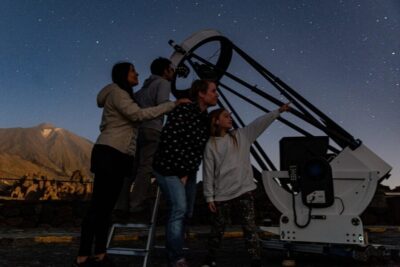
Teide National Park: Guided Large Telescope Stargazing Tour
Read our review →
Northern Lights Tour and Stargazing by Telescope
Read our review →
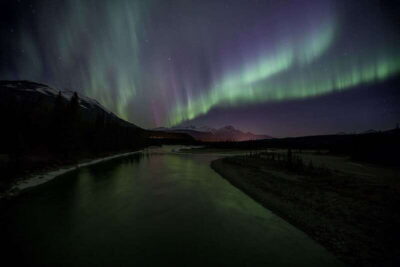
Jasper Planetarium and Telescope Combo Tour Tickets
Read our review →
Magic Stargazing & Sunset in Teide with Dinner + Telescopes
Read our review →Lists this night appears in