
Review · ITALY
Florence: Private Astronomical Tour of the Museo Galileo
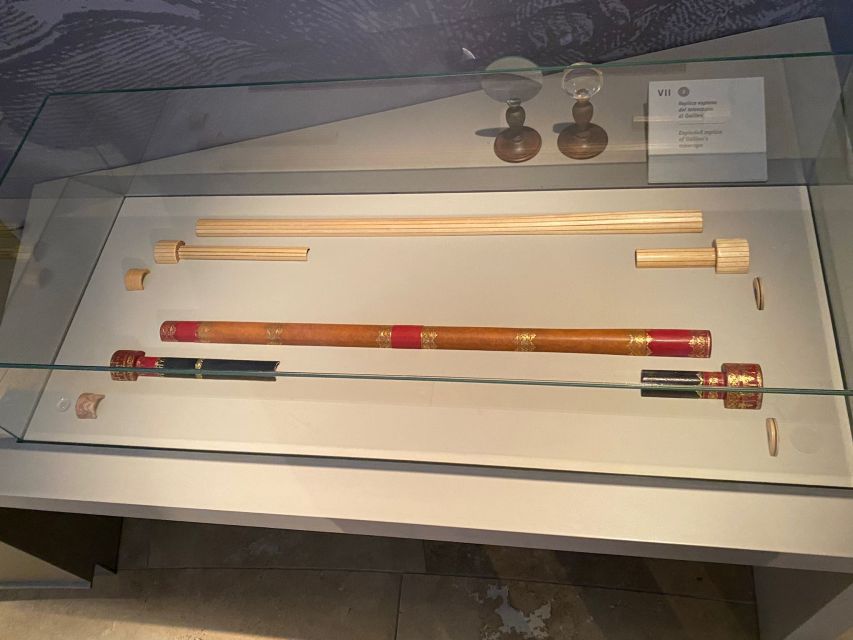
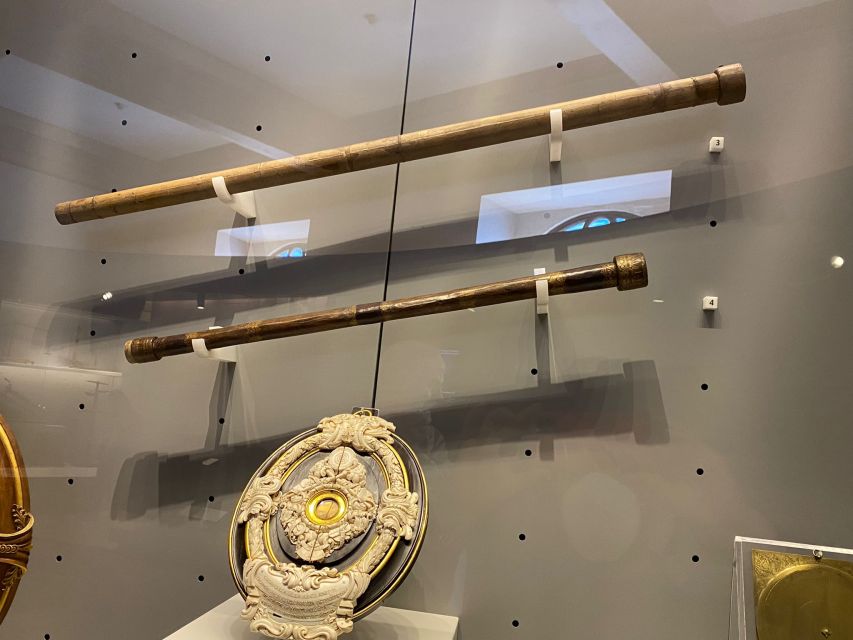
The most remarkable thing here is that you are looking at Galileo’s original telescope, not a later copy or a modern tribute. In Florence’s Museo Galileo, that small instrument connects the polished world of the Medici court with the huge shift in how people understood the sky.
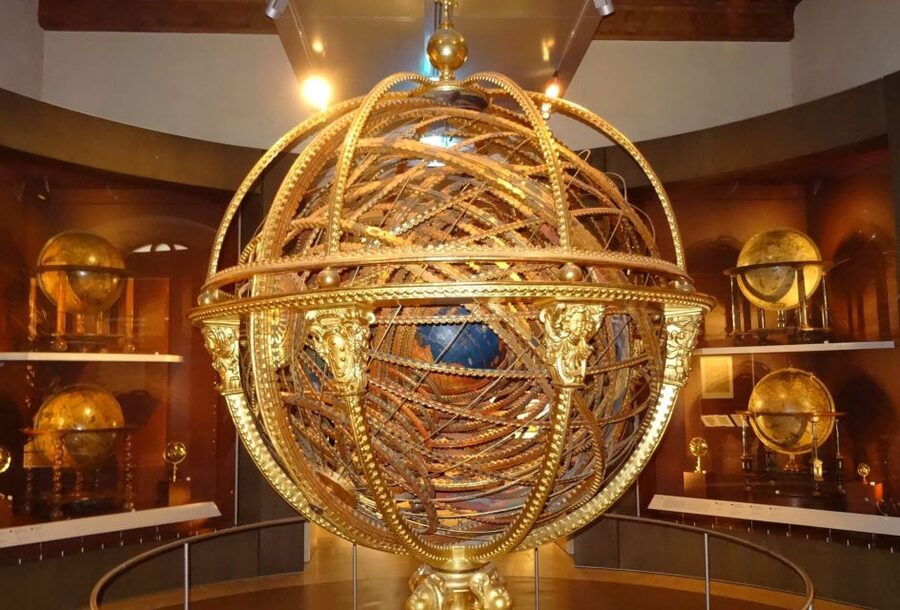
I like the tour’s private format and its clear historical thread. Your guide can explain how Cosimo I de’ Medici began the collection, how later rulers added to it, and how Galileo worked for the Florentine grand dukes. I also like the chance to see the 1593 armillary sphere by Santucci, antique clocks, astrolabes, globes, maps, and thermometers in one compact visit.
The main consideration is time. Ninety minutes is enough for a guided introduction, but not enough to study every display or watch all the museum’s scientific videos. If you love the mechanics behind the instruments, plan extra time with the museum app after the private tour.
Key points at a glance
- Galileo’s working instruments: See original telescopes connected to his astronomical studies.
- A Medici collection: Learn how Florence’s rulers built and expanded one of the world’s major scientific collections.
- Old ways of measuring the world: Explore astrolabes, celestial globes, clocks, thermometers, maps, and the 1568 nocturnal.
- Private attention: Your guide can shape the explanation around your interests and answer questions as you go.
- A short, focused visit: The 1.5-hour format works well beside Florence’s art museums, but science fans may want extra museum time.
- Easy advance planning: Fast-track entry, headsets, several language choices, and cancellation up to 24 hours ahead add practical value.
Why Galileo’s telescope matters here
Museo Galileo is not simply a room full of old scientific objects. It shows how people measured time, space, temperature, and motion before modern technology made those tasks seem easy.
Galileo’s telescope is the star of the visit. Seeing the original instrument gives you a physical link to his observations and to the arguments that followed. The object is not large or flashy. That is part of its power. A modest tube helped challenge accepted ideas about the heavens and changed the course of astronomy.
Your guide can place Galileo in the court of Cosimo II de’ Medici, where he served as mathematician and philosopher. That setting matters. Scientific work in Renaissance Florence was tied to wealthy patrons, court life, mathematics, engineering, and the practical needs of navigation and timekeeping.
I find this context especially useful because it keeps the museum from becoming a parade of names and dates. You learn not only what Galileo discovered, but also who supported the work and why instruments mattered to the ruling families of Florence.
More Private Stargazing Tours in the world:
- Private Getty Center to Griffith Observatory Guided Tour
★ 5.0 · 185 reviews - Sedona Dark Sky Sunset & Night Hike With a Private Guide
★ 5.0 · 86 reviews - Stargazing Experience at Cowan’s Private Observatory
★ 4.0 · 85 reviews
From Medici workshops to a national science collection
The collection began under Cosimo I de’ Medici in the 16th century. It continued to grow under his successors, including the scientific Academy of Assay, founded in 1657. Later, Grand Duke Leopoldo of the Lorraine family carried the work forward.
That long sequence of collecting explains the museum’s wide range. You are not seeing only Galileo-related objects. The rooms also cover physics, optics, electrostatics, astronomy, engineering, and the measurement of time and temperature.
The museum’s value comes from these connections. An astrolabe is easier to appreciate when you understand that it helped people read the sky. A celestial globe becomes more than a decorated sphere when you see it as a tool for explaining the heavens. Antique clocks show the challenge of measuring time accurately, while thermometers point to the gradual effort to turn physical sensations into reliable numbers.
A private guide can help you move through this story without getting lost in technical labels. The best use of the time is to ask questions. If you are curious about one object, say so. A private format gives you more room to pause than a large group tour.
What you see during the 90-minute visit
The route is built around the museum’s major scientific displays, with Galileo and the evolution of astronomy as the main thread. You will move through rooms filled with instruments, models, maps, and demonstrations.
Early in the visit, expect an introduction to the museum and its connection to Florence’s ruling families. This gives the objects a useful frame. You are not just looking at old tools. You are seeing the equipment that helped scholars describe the physical world.
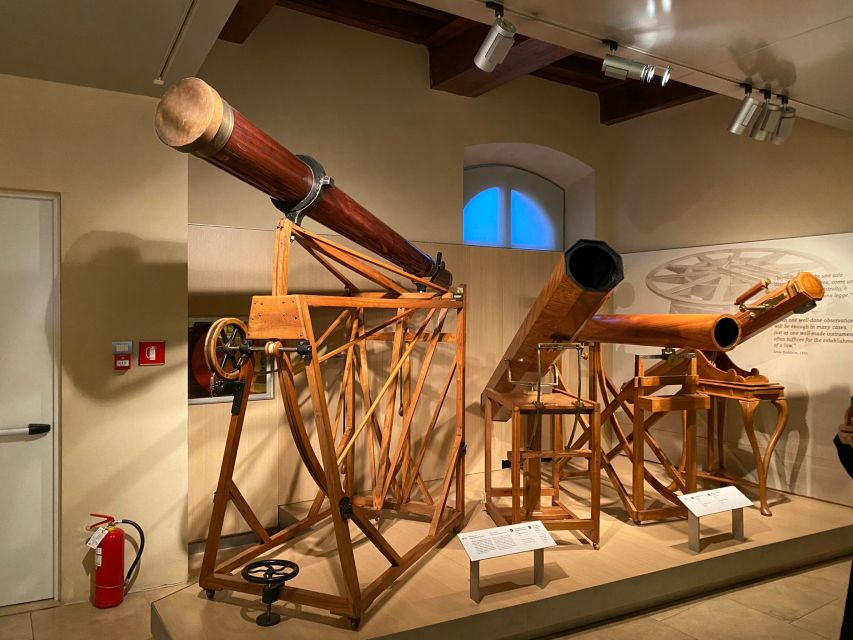
The telescope collection is the clear centerpiece. Your guide explains Galileo’s life, his discoveries, and the way his work fit into the scientific thinking of his time. The discussion can also touch on optics, since telescopes depend on the controlled use of lenses and light.
The celestial globes and astrolabes shift the focus from Galileo himself to the older systems used to understand the sky. These instruments can look decorative, but their purpose was practical. They helped people calculate positions, track movement, and represent the heavens.
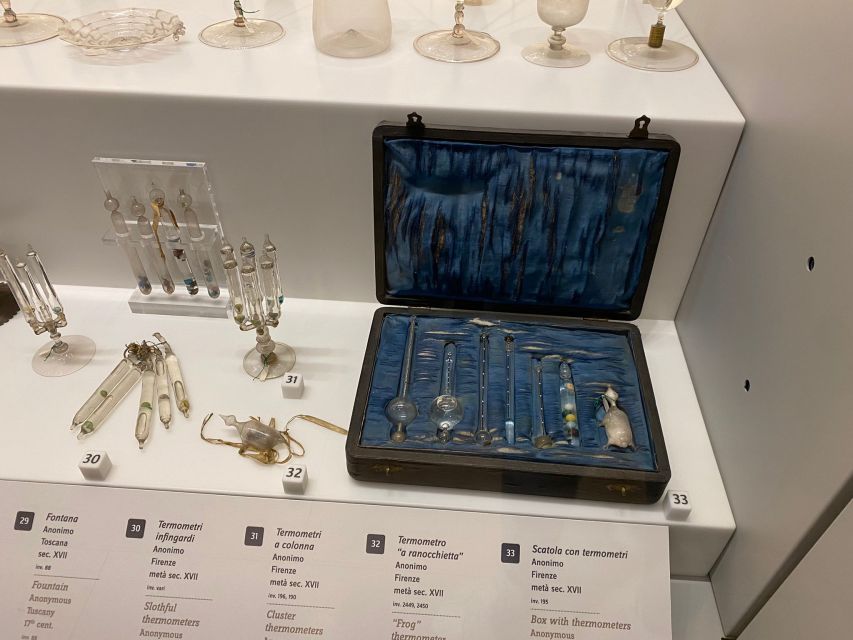
You will also see antique clocks, maps, thermometers, and the original nocturnal by Girolamo della Volpaia from 1568. The nocturnal is a particularly useful object for understanding how earlier observers used the stars to estimate time at night.
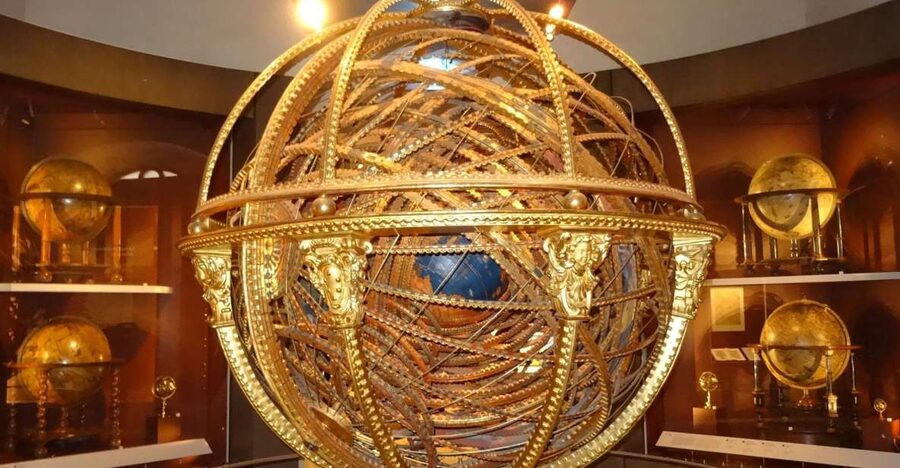
Santucci’s armillary sphere, dated 1593, is another major highlight. Its rings represent parts of the celestial system and show how astronomy was presented before modern screens and digital models. It is an object that rewards a slow look, especially when your guide explains what each ring represents.
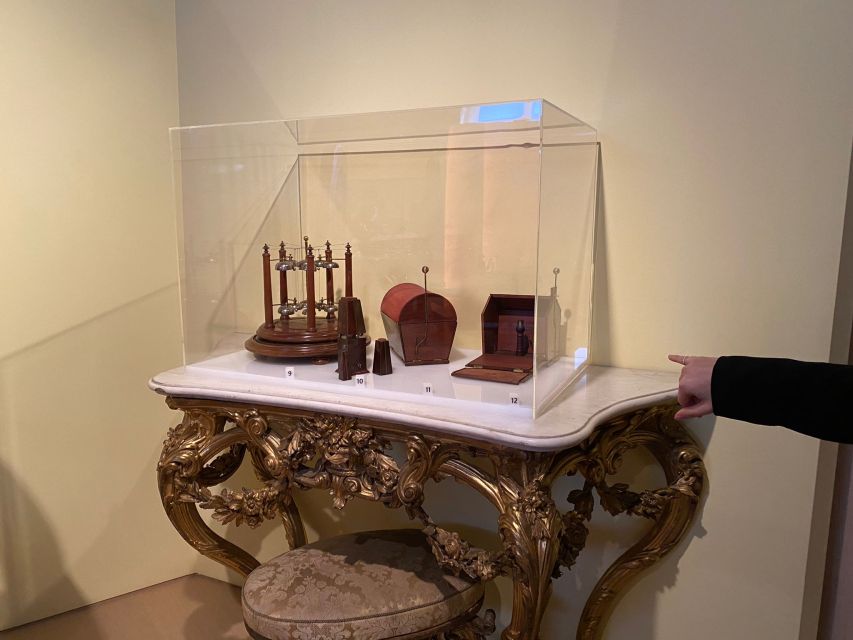
The visit also touches on electrostatics and the games of the past. These lighter displays can help children stay interested, but adults may enjoy them just as much. They show that scientific learning was not always separated from play, experiment, and curiosity.
The private guide is the tour’s real value
At $159 per person, this is not a budget museum stop. The price makes the most sense if you want a private explanation rather than a simple admission ticket.
A guide can point out the objects that are easiest to miss and explain why they matter. You can ask for more astronomy, more Galileo, more practical instrument use, or more court history. In a large group, the guide has to keep moving. In a private group, the pace can better match your interests.
Headsets are included, which should help you follow the explanation in the museum rooms. The tour is offered in English, Spanish, German, Italian, and French. No individual guide is named in the available details, so you should choose your preferred language when booking rather than expect a particular person.
The private format is most valuable for families, first-time museum visitors, and anyone who wants a guided introduction without committing to a long lecture. It is less compelling for a serious science enthusiast who wants to spend a long time testing interactive displays and watching every explanation.
One useful approach is to treat the guided portion as a framework. Let the guide explain the history and main objects, then stay longer on your own if the museum’s scientific displays catch your interest.
More Stargazing Tours around the world:
- Dubai Red Dunes ATV, Camels, Stargazing & 5* BBQ Al Khayma Camp
★ 5.0 · 21,620 reviews - Sharm El-Sheikh: Ultimate ATV Quad, Stargazing & BBQ Dinner
★ 4.7 · 4,084 reviews - Tenerife: Teide National Park Sunset & Stargazing Tour
★ 4.2 · 3,812 reviews - Tenerife: Sunset and Stargazing at Teide National Park
★ 4.7 · 2,826 reviews
Why the museum app may matter to science fans
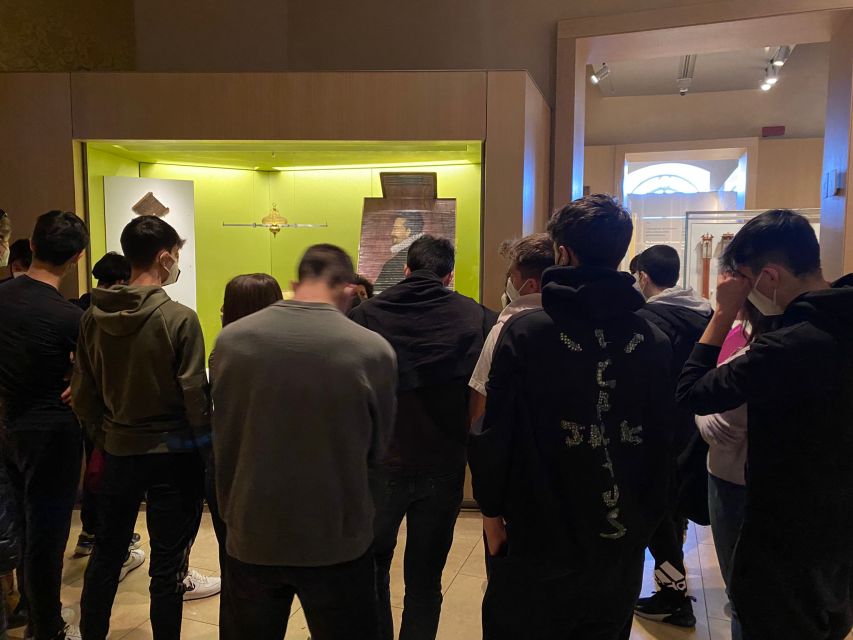
A short guided tour can explain the historical and artistic side of the collection very well. It may not give you enough time to understand exactly how each device works.
The museum app includes scientific video explanations for the main displays. That matters because many instruments are difficult to grasp from a label alone. You may understand what an astrolabe represents without understanding how someone used it. A video can fill that gap more clearly than a quick spoken explanation.
If your main interest is the genius behind the mechanisms, consider allowing about two hours beyond the guided visit, if your ticket and schedule permit. The supplied experience information does not specify a separate ticket arrangement for staying longer, so confirm the museum’s policy before assuming you can remain inside after the tour.
I would use the private tour for orientation, context, and questions. Then I would use the app and the displays for the slower technical study. That combination gives you both the human story and the working principles.
A good choice for families, with a few caveats
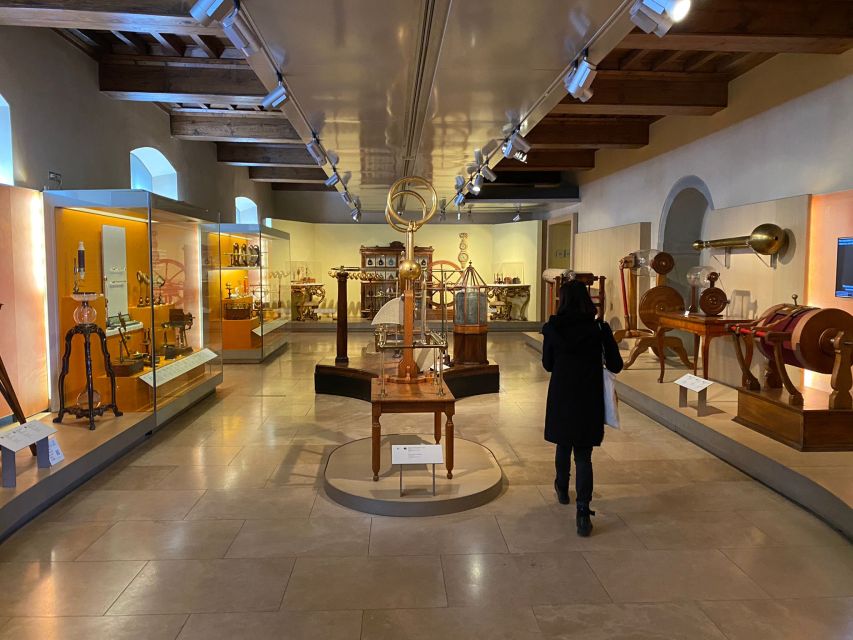
Children can enjoy this museum because it includes objects tied to space, clocks, temperature, magnets, optics, and old games. The variety helps. A child who loses interest in a celestial globe may perk up at a demonstration of electrostatics or a playful historical device.
Still, the tour lasts 90 minutes and includes historical explanation. Younger children may need breaks or extra encouragement. The guide can make the experience more engaging, but the material is not designed as a nonstop hands-on activity.
Families should also avoid rushing. Let children choose a few objects to inspect closely. Ask the guide to explain how people used them, rather than only naming them. The museum becomes more memorable when the instruments are treated as tools with a job to do.
Photography is allowed without flash, which is useful for recording favorite displays. Large bags and backpacks may need to go into the cloakroom, so travel light if you can. Comfortable shoes are sensible for standing and walking through the museum.
Timing, meeting point, and access details
Plan to arrive 15 minutes before the start. You must exchange your voucher at the ticket office, then look for the City Florence Tours office and meet the guide inside.
This meeting arrangement deserves attention. Do not arrive at the museum entrance just before the scheduled time and expect to walk straight in. The voucher exchange is part of the process, and a late arrival could cut into your short tour.
Fast-track tickets and an express security check are included. That can save useful time in Florence, where even a small delay can interfere with a museum visit or dinner reservation.
The museum is described as fully wheelchair accessible, yet the activity information also says it is not suitable for people with mobility impairments. That is conflicting guidance. If you use a wheelchair or have a mobility concern, contact the provider before booking and ask about the exact route, standing time, and any access limits.
Hotel pickup and drop-off are not included. Food and drinks are not included either, but a 90-minute museum visit does not normally require a meal break. Plan your café stop before or after, depending on your schedule.
Is $159 per person a fair price?
The answer depends on how you use the guide. For a private group that wants personal attention, historical context, and fast entry, the cost can be reasonable. You are paying for more than admission. You are paying for a structured explanation of a complicated collection in a short amount of time.
The price is harder to justify if you only want to see Galileo’s telescope and leave. The museum contains enough material to reward independent viewing, and the app may provide stronger technical explanations for some visitors.
I would consider this tour good value for someone visiting Florence for a limited time, especially if the private guide helps connect the museum to the Medici story and Galileo’s career. It is also useful if your group has mixed interests and needs a guide to keep the visit moving.
Science specialists should think carefully. The private tour may feel too quick if you want to watch videos, study mechanisms, and read every label. In that case, the best plan is to combine the tour with additional museum time, if allowed, or visit independently with the app.
The flexible booking terms also reduce some risk. You can cancel up to 24 hours before the activity for a full refund, and you can reserve now and pay later. Those terms are helpful when your Florence schedule is still shifting.
Who should book this Museo Galileo tour?
I would recommend it to you if you want the main ideas explained clearly and prefer a private guide to wandering through a technical museum alone. It suits couples, families, and small groups who enjoy history, astronomy, and the story of scientific change.
It is also a smart pick if you want to fit the museum between Florence’s better-known art collections. The 1.5-hour format leaves room for other sights, while the fast-track entry keeps the visit tidy.
I would hesitate if you want a full technical study of every instrument. The tour can introduce the collection, but it cannot replace a longer independent visit. The museum app is worth using for the scientific details that a guide may not have time to explain.
Book this experience for the guided context and original objects, not for a long interactive science workshop. If that matches your interests, the telescope, nocturnal, armillary sphere, clocks, and globes make the price easier to understand.
FAQ
How long does the Museo Galileo tour last?
The private tour lasts 1.5 hours.
What language choices are available?
The live guide is available in English, Spanish, German, Italian, and French.
Is the tour private?
Yes. This is a private group experience.
What is included in the price?
Fast-track entrance tickets, reservation fees, a professional tour guide, and headsets are included.
Can I take photographs inside the museum?
Yes, photography is allowed, but flash photography is not permitted to protect the artifacts.
Where do I meet the guide?
Arrive 15 minutes early, exchange your voucher at the ticket office, then look for the City Florence Tours office and meet the guide inside.
Just in after dark around the world
- Doha: Night Desert Safari, Stargazing, and Camel Ride★ 5.0 · 2 reviews
- Doha : Night Desert Safari with Dune Bashing & Stargazing★ 5.0 · 4 reviews
- Doha: Night Desert Safari + Camel ride + Stargazing & Relax★ 5.0 · 4 reviews
- Day Trip to Tatacoa Desert (Horseback, Boat, Stargazing, ..)★ 4.4 · 3 reviews
- Christchurch: Lake Tekapo Stargazing & Mount Cook 2-Day Tour★ 5.0 · 6 reviews
- Cabo de Gata: Stargazing Experience★ 4.5 · 7 reviews
- Chile: Astronomical Tour in the Atacama Desert★ 4.8 · 4 reviews
- Cabo de Gata: Guided Night Walk with Stargazing★ 4.7 · 36 reviews
Private Stargazing Tours, night against night.
Private Getty Center to Griffith Observatory Guided Tour
Read our review →
Sedona Dark Sky Sunset & Night Hike With a Private Guide
Read our review →
Stargazing Experience at Cowan’s Private Observatory
Read our review →Private astronomy tour with sunset toast, picnic, and astrophotography
Read our review →

Stargazing Private Tour at Roque De Los Muchachos in La Palma
Read our review →
Griffith Observatory: Scott E-Bike Tours LA Private Tour
Read our review →
Serra da Estrela: Private E-Bike Tour with Observatory
Read our review →Lists this night appears in