
Review · FRANCE
Astronomy Evening “Rando Astro Fréjus”
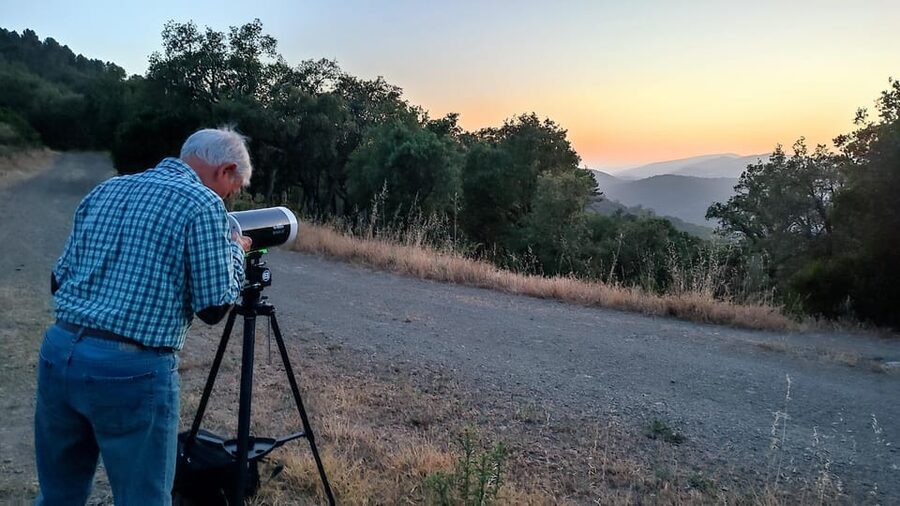
Saturn’s rings, Jupiter’s moons, and the craters of our own Moon are the main attractions here, viewed through a quality telescope during a 90-minute evening session near Fréjus. The guide also helps you pick out constellations and explains how the solar system fits together, so you are not simply staring at bright dots in the dark.
I like the small group of no more than 10 people, which should make it easier to see through the telescope and ask questions. I also like the friendly, simple teaching style described by the guide Edmond, especially for families. The main drawback is practical: you are outdoors at night, so you need warm clothes and water, and the exact starting time depends on the date you choose.
Key points at a glance
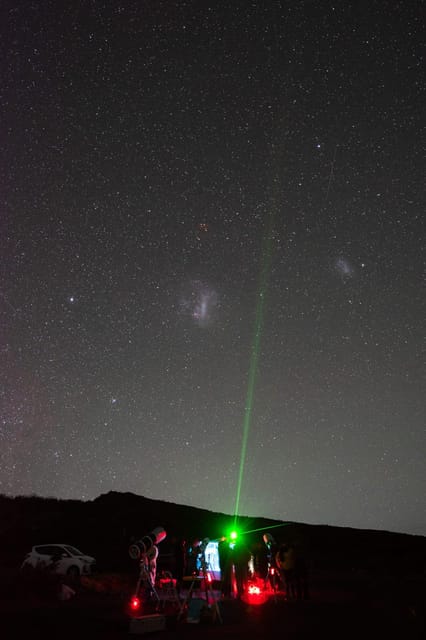
- Saturn and Jupiter take the lead: Look for Saturn’s rings and Jupiter with its moons through the telescope.
- The Moon is part of the program: Lunar craters become a clear target rather than just a pale shape in the sky.
- Constellations get explained: The session connects individual stars with familiar patterns, the zodiac, and the solar system.
- Only 10 people can join: A small party gives the activity a more personal feel.
- Edmond may be your guide: His explanations are aimed at adults and children, using simple terms without losing the fun.
- The meeting point is simple: Meet in front of La Table d’Elena near the beach, then walk about five minutes with the group.
Why this Fréjus astronomy evening is worth your time
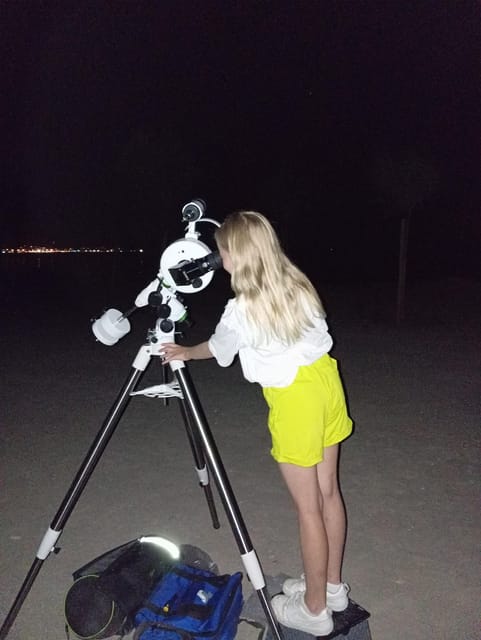
The Côte d’Azur is famous for beaches, markets, old towns, and evening meals. Astronomy gives you a different reason to stay out after sunset. Instead of looking across the water or along the town streets, you turn your attention upward and get a guided look at objects that are usually too small or distant to understand with the naked eye.
The best part is the combination of looking and learning. A telescope alone can leave you wondering what you are seeing. Here, the astronomer introduces the constellations, the solar system, and the signs of the zodiac while pointing out objects in the sky. That makes the session useful for a first-time observer, not just someone already interested in astronomy.
The experience lasts 1.5 hours. That is long enough to cover several major targets without turning the evening into a technical class. It is also short enough to fit before or after dinner, depending on the starting time available for your chosen date.
More Stargazing Tours around the world:
- Dubai Red Dunes ATV, Camels, Stargazing & 5* BBQ Al Khayma Camp
★ 5.0 · 21,620 reviews - Sharm El-Sheikh: Ultimate ATV Quad, Stargazing & BBQ Dinner
★ 4.7 · 4,084 reviews - Tenerife: Teide National Park Sunset & Stargazing Tour
★ 4.2 · 3,812 reviews
Meeting near La Table d’Elena in Fréjus
There is no shop or indoor office to find. Your meeting point is in front of the beach and the restaurant La Table d’Elena. From there, you walk for about five minutes to the observation spot.
That short walk is worth noting because you should not arrive expecting a large astronomy center with a sign, ticket desk, or exhibition hall. Look for the stated meeting location, arrive ready to join the group, and follow the guide on foot.
The activity ends back at the meeting point. No transport is provided as part of the experience, so you need to arrange your own way to the starting point and back afterward.
The setting between Cannes and Saint-Tropez gives the event a pleasant Provence connection, but the main point is the sky rather than a sightseeing route. You are not touring several towns or visiting a planetarium. This is a focused outdoor observation session.
The first five minutes: getting set up
After meeting the guide, the group walks to the observing location. The available information does not specify the exact walking surface or the distance beyond about five minutes, so sensible shoes are a good idea.
The equipment needed for astronomy is included. You do not need to bring a telescope, tripod, star chart, or other specialist gear. The guide handles the observation equipment and directs you toward the objects being discussed.
With a group capped at 10 people, you should have a better chance of taking your turn at the telescope than you would with a large crowd. Small groups also help when the guide pauses for questions. Children can ask basic questions without feeling out of place, while adults who already know a little about astronomy can ask for more detail.
The event is described as suitable for everybody and accessible for wheelchair users. The meeting point still involves a walk of about five minutes, so anyone with specific mobility needs should confirm the practical conditions before booking.
Looking at Saturn and its rings
Saturn is the headline sight for many people. Even after seeing pictures of it in books and online, viewing the planet through a telescope gives the evening a clear focal point.
The guide can explain what you are seeing rather than leaving you to guess. Saturn appears as a planet with its famous rings, and that simple view often helps astronomy feel real. You are not only hearing about a distant world. You are looking at it through the equipment in front of you.
The experience does not promise a particular level of detail or a fixed number of targets. Sky conditions and the available starting time may affect what can be observed. Still, Saturn’s rings are specifically listed among the key sights, so they are central to the planned session.
If you are bringing children, Saturn is a helpful first target. It has an immediate visual appeal and gives the guide a natural opening to explain planets, rings, distance, and the wider solar system in plain language.
Same stars, another vantage point:
- Tenerife: Sunset and Stargazing at Teide National Park
★ 4.7 · 2,826 reviews - Teide National Park Sunset & Stargazing with Dinner (Star Safari)
★ 5.0 · 2,601 reviews - Dubai: Sunset Camel Trek, Al Khayma Camp, Stargazing & BBQ
★ 4.8 · 2,588 reviews - Dubai: Overnight Safari, Dinner, Stargazing & Al Khayma Camp
★ 4.8 · 2,562 reviews
Finding Jupiter and its moons
Jupiter provides a second strong target. The session includes Jupiter with its moons, giving you a chance to see more than a single bright planet.
This is where the astronomy lesson becomes especially useful. The moons are not just points beside Jupiter. They help show that other worlds orbit a planet much as planets orbit the Sun. The guide can use that view to explain the basic structure of the solar system in a way that is easier to grasp than a diagram.
You should keep your expectations sensible. A small telescope view will not look like a space agency photograph, and the listing does not give technical details about magnification or telescope type. What you get is a guided chance to observe Jupiter and its moons with the supplied equipment.
The guide’s simple approach is a strong fit for families. One five-star comment describes the explanations as easy to understand, educational, and fun for both adults and children. That balance matters. A highly technical lecture would lose younger children, while an overly basic talk could bore adults.
Turning the telescope toward the Moon
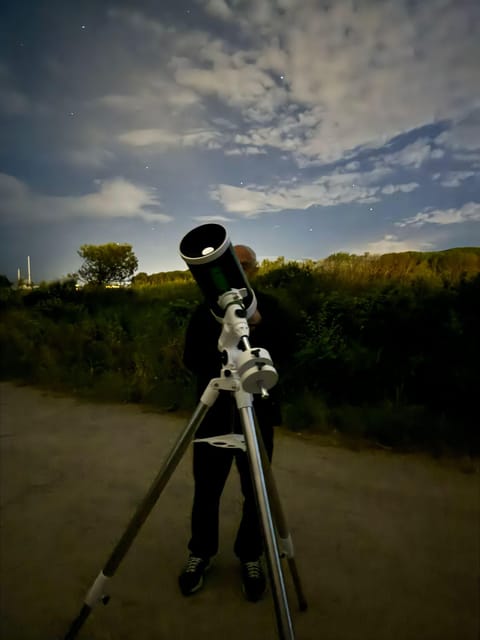
The Moon is often familiar, but a telescope changes the way you see it. Instead of a smooth bright disc, you can look for craters and the uneven surface created by impacts.
The activity specifically includes lunar craters. This gives the guide another clear way to explain how observation works. The Moon is close enough to show visible features, yet distant enough to spark questions about space, scale, and time.
Moon viewing can also help first-time participants understand what the telescope is doing. You begin with an object that is easy to recognize, then move on to planets and stars that require more explanation. The guide can connect the Moon to the larger solar system rather than treating each object as an isolated sight.
The exact order of the targets is not stated, so the session may adjust to the conditions of the night. That flexibility is useful, but it also means you should not expect a guaranteed sequence or a fixed number of observations.
Constellations, zodiac signs, and the bigger picture
The session is not only about planets. You also receive an introduction to constellations, the solar system, and the signs of the zodiac.
Constellations help you get your bearings fast. Once you recognize a pattern of stars, the night sky becomes easier to read. You may not leave able to identify everything above you, but you should have a better idea of how astronomers organize what they see.
The zodiac adds a cultural and historical layer without requiring a long lecture. In astronomy, these familiar signs relate to areas of the sky and the path followed by the Sun, Moon, and planets as seen from Earth. The guide can explain that connection in accessible terms.
The activity uses the phrase starlight among its highlights, and that is important. The telescope gets much of the attention, but a few moments simply looking up can be just as memorable. The guide’s role is to help you notice what is there and understand why it matters.
Edmond’s friendly teaching style
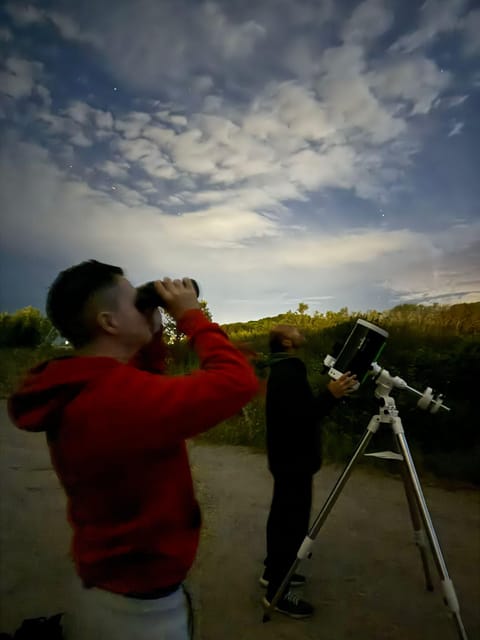
Edmond is named in the information for this activity, and the comments describe him as a strong part of the evening. He is said to show the group several interesting sights and explain them in simple terms.
That is exactly the kind of guide you want for a family astronomy session. A guide who knows the subject but explains it plainly can answer a child’s basic question, then add enough detail for an adult who wants to know more.
The tone appears to be relaxed rather than formal. One description calls the activity unusual, educational, and fun. Another highlights a pleasant evening with Edmond. Those details suggest that the session is designed as a shared discovery, not a rigid classroom presentation.
The guide speaks French, Italian, and English. You should choose the language you need when checking availability, since the quality of the explanation depends on being able to follow the guide’s instructions and discussion.
How the small group changes the evening
The group limit is 10 people. That number is large enough to create a little shared atmosphere but small enough to avoid the feel of a mass event.
For telescope viewing, group size matters. Everyone needs a chance to look through the equipment, and the guide needs room to explain what you are seeing. A smaller party should also make it easier to ask questions about a particular constellation, planet, or lunar feature.
If you are traveling alone, the format gives you a social activity without requiring you to join a large organized outing. If you are with friends or family, the astronomy session gives everyone a common focus.
The experience is also suitable for parents with children. Keep in mind that it takes place at night and outdoors. Children who are tired late in the day may find the 90-minute session challenging, while children interested in space may be completely absorbed by the telescope.
What to wear and bring
The most important preparation is simple: bring warm clothes. Even in Provence, an evening outside can feel cool, particularly when you are standing still and waiting for your turn at the telescope.
Bring water as well. A drink is not included, and the activity takes 1.5 hours. You do not need to bring astronomy equipment, since the necessary gear is supplied.
The information does not specify seating, shelter, refreshments, or restroom access. Plan for a straightforward outdoor activity and avoid assuming that comfort facilities will be available at the viewing site.
Because the route from the meeting point takes about five minutes on foot, wear shoes suitable for a short walk. The activity is wheelchair accessible, but the exact conditions of the path are not described, so it is sensible to confirm details if you need a fully step-free route.
Is $33 a fair price?
At $33 per person, this is priced as a modest guided activity rather than a full evening excursion. The fee covers the astronomer’s instruction and the necessary astronomy equipment, with a small group limit of 10.
I think the value is strongest if you are new to astronomy or want a family activity that offers more than a simple view. You are paying for access to a quality telescope, guidance on what to look for, and explanations that connect the sights into a clear lesson.
The value is less obvious if you already own good equipment and know the night sky well. In that case, you may prefer observing on your own. Still, a local guide can save you the trouble of locating targets and can point out objects you might otherwise miss.
The price does not include warm clothing or water, so factor those small preparations into your evening. There is no stated extra charge for equipment or instruction.
Who should book this activity?
I would recommend it to families, couples, solo visitors, and groups of friends who want a calm evening activity near Fréjus. It is particularly suitable if someone in your party is curious about space but has little experience with telescopes.
Children who enjoy planets, stars, or science should get a lot from the session. Adults can enjoy it too, especially because the guide covers both the practical side of looking through the telescope and the wider meaning of the objects in view.
It may not suit you if you want a long, elaborate astronomy program or a guaranteed list of every planet. The activity lasts 90 minutes, and observation depends on what can be seen during that evening. Think of it as a friendly introduction, not a professional observatory course.
The 4.5 rating from 10 reviews fits the information available: the strongest praise centers on the simple explanations, the family-friendly tone, and Edmond’s guidance. The modest number of reviews means you should treat the rating as useful but limited rather than as final proof of every part of the evening.
Booking and cancellation details
You can reserve now and pay later, which helps if your Provence schedule is still changing. You can also cancel up to 24 hours in advance for a full refund.
Starting times are not fixed in the supplied details. Check availability for the date you want, then plan your meal and transport around the confirmed time.
The activity ends at the original meeting point. Since there is no shop or dedicated office, keep the meeting instructions accessible on your phone and arrive at the location in front of La Table d’Elena.
My recommendation
Book this astronomy evening if you want a short, affordable, family-friendly look at the sky with a guide who explains things plainly. Saturn’s rings, Jupiter and its moons, and the Moon’s craters give the session several memorable targets, while the constellation and zodiac introduction adds useful context.
Skip it if you are looking for a large observatory, a long technical lecture, or guaranteed viewing conditions. For most first-time observers, though, the small group, included equipment, three-language instruction, and $33 price make this a sensible addition to a Fréjus stay.
FAQ
Where does the astronomy activity meet?
Meet in front of the beach and the restaurant La Table d’Elena in Fréjus. There is no shop or dedicated store for the activity.
How far is the walk to the observation point?
The group walks about five minutes from the meeting point to the observation location.
How long does the activity last?
The astronomy session lasts 1.5 hours.
What can I expect to see?
The planned sights include Saturn and its rings, Jupiter with its moons, the craters of the Moon, constellations, stars, and other astronomical objects.
Is astronomy equipment included?
Yes. All necessary equipment for the astronomy session is included.
What languages does the guide speak?
Instruction is available in French, Italian, and English.
Can children join?
Yes. The activity is described as suitable for everybody, including children, parents, solo participants, and friends.
Is the activity wheelchair accessible?
Yes, the activity is listed as wheelchair accessible.
Can I cancel for a refund?
You can cancel up to 24 hours in advance for a full refund. You can also reserve now and pay later.
Just in after dark around the world
- Doha: Night Desert Safari, Stargazing, and Camel Ride★ 5.0 · 2 reviews
- Doha : Night Desert Safari with Dune Bashing & Stargazing★ 5.0 · 4 reviews
- Doha: Night Desert Safari + Camel ride + Stargazing & Relax★ 5.0 · 4 reviews
- Day Trip to Tatacoa Desert (Horseback, Boat, Stargazing, ..)★ 4.4 · 3 reviews
- Christchurch: Lake Tekapo Stargazing & Mount Cook 2-Day Tour★ 5.0 · 6 reviews
- Cabo de Gata: Stargazing Experience★ 4.5 · 7 reviews
- Chile: Astronomical Tour in the Atacama Desert★ 4.8 · 4 reviews
- Cabo de Gata: Guided Night Walk with Stargazing★ 4.7 · 36 reviews
Stargazing Tours, night against night.

Dubai Red Dunes ATV, Camels, Stargazing & 5* BBQ Al Khayma Camp
Read our review →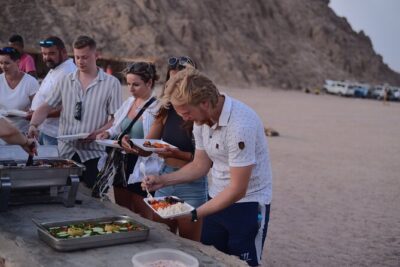
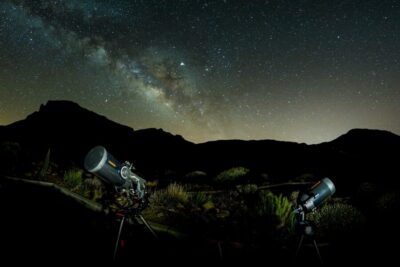
Teide National Park Sunset & Stargazing with Dinner (Star Safari)
Read our review →
Sunset Camel Trek, Al Khayma Camp, Stargazing & BBQ
Read our review →
Overnight Safari, Dinner, Stargazing & Al Khayma Camp
Read our review →
Dubai Overnight Desert Safari, BBQ & Stargazing at Al Khayma Camp
Read our review →
Sunset Quad Bike, Camel w/ Opt Stargazing and BBQ
Read our review →Lists this night appears in