
Review · SEDONA
Sedona Stargazing Tours LLC
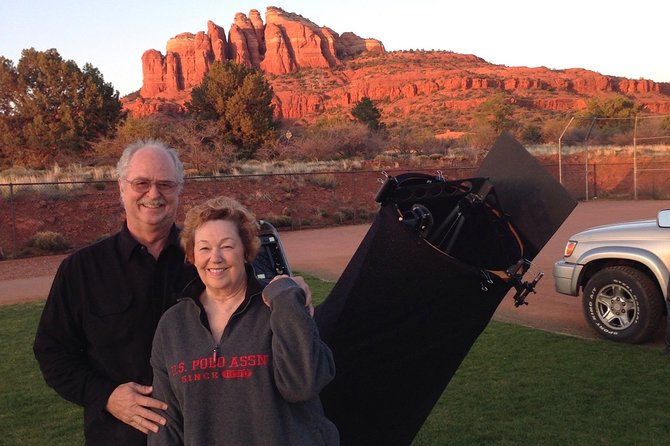
The best part of this Sedona outing is the chance to see the night sky as more than a pretty scatter of stars. At the Verde Valley School observing site, guides such as Wes, Dave, and Richard use large GPS-guided telescopes to bring planets, star clusters, nebulae, and distant galaxies into view. Saturn’s rings have been a particular highlight, and the laser-pointer talk gives you a useful map of the constellations.
I like the private format, which keeps the evening focused on your group, and I like the thoughtful setup: a comfortable chair, wide-view binoculars, and blankets or parkas when the desert cold bites. The main caution is simple: clouds and a bright moon can limit the show, and about $89 for roughly 75 minutes may feel steep if conditions are poor.
Key points to know before booking
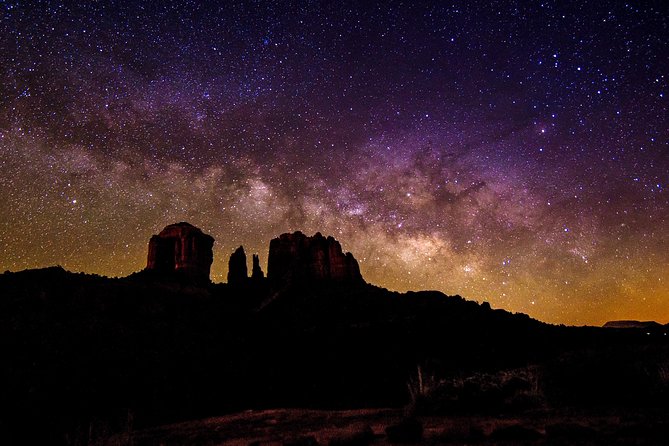
- Saturn can be the night’s star: When visible, the telescope may show its rings and even a moon with striking detail.
- The tour is private: Only your group takes part, so you can ask questions and request objects that interest you.
- The sky controls the experience: Cloud cover can lead to cancellation, while a full moon reduces the number of faint stars you can see.
- Expect a short walk to the observing area: Chairs and equipment are set up near the Verde Valley School meeting point.
- Bring serious cold-weather layers: Winter nights can be freezing, even when Sedona felt mild during the day.
- The schedule may shift: Arrival instructions can be sent earlier than the default start time to match sunset and viewing conditions.
What happens at the Verde Valley School meeting point
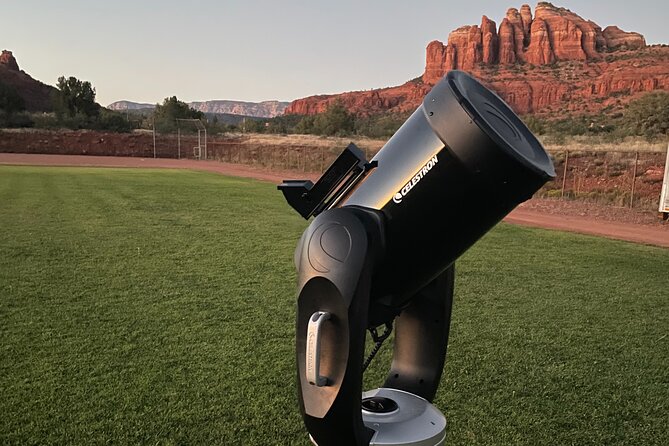
You meet at 3511 Verde Valley School Road, near Oak Creek, and the activity ends at the same point. The observing area has been described as a soccer field or nearby sitting area, with chairs waiting beside the telescopes.
This is not a bus tour with a long drive and several stops. The appeal comes from getting settled in one dark location and spending the evening looking upward. You may take a short walk from the meeting point to the chairs, so wear shoes that are comfortable for that brief walk and easy to manage in low light.
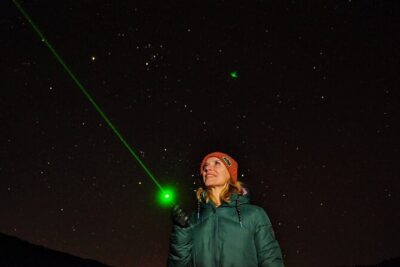
The setting matters. Sedona is famous for its red rock views by day, but after sunset the useful feature is the darker sky outside the busier parts of town. You will not simply be handed a telescope and left to guess what you are seeing. The guide first helps you get your bearings with a laser pointer, identifying constellations and explaining their positions and zodiac names.
That opening talk is valuable for beginners. A bright point in the sky can be a planet, star, or something farther away, and the guide helps sort out the difference. If you already know a little astronomy, you can use the private format to ask more detailed questions.
More Stargazing Tours around the USA:
- Small Group Big Island Twilight Volcano and Stargazing Tour
★ 5.0 · 1,619 reviews - Griffith Observatory Hike: Guided Tour through Griffith Park
★ 5.0 · 1,020 reviews - Los Angeles: Hollywood Night Tour with Griffith Observatory
★ 4.2 · 531 reviews
How the telescope session works
The main equipment is a set of powerful telescopes with GPS auto-positioning. In practical terms, the guide can direct the telescope toward selected objects without spending the whole evening manually searching for them.
You take turns at the scopes, looking at whatever is available on that night. The target list may include planets, stars, galaxies, nebulae, and star clusters. The exact sights depend on the season, the time of night, the moon, and the cloud cover. This is not a fixed show where every date produces the same view.
The guides make sure the equipment is focused and that you are looking at the correct object. That help is important. With a telescope, a small adjustment can mean the difference between a crisp planet and a fuzzy bright spot.
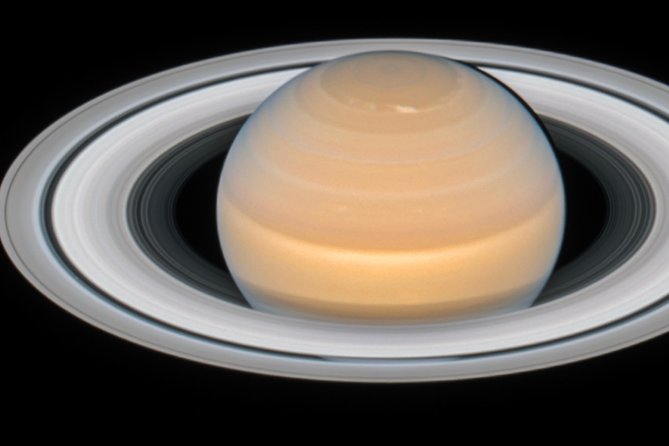
Saturn is a particularly memorable target when it is in position. Several accounts describe seeing the rings clearly, with one moon also visible. The Moon can be impressive too, especially during a brighter phase, though a full moon has a tradeoff: it offers detailed lunar viewing but washes out fainter stars.
While one person is using a telescope, the rest of your group can use the wide-view binoculars from a comfortable chair. This keeps the evening from turning into a long wait in the cold. The binoculars give you a broader view of the sky, while the telescope provides the close-up detail.
The experience is better suited to patient curiosity than to a fast checklist. You may spend time hearing the story behind a constellation, then switch to a planet, then wait for the guide to position another scope. That rhythm gives the evening a relaxed feel, but anyone expecting constant telescope action may find the pauses slow.
The guides make the difference
This experience depends heavily on the person leading it. Wes has been praised for storytelling, especially when explaining constellations and the objects in view. Dave has also been singled out for clear explanations using the laser pointer, while Richard has been described as both an engaging guide and a skilled photographer.
Mr. Sanders has been noted for his strong command of the subject and for making the telescopes fun to use. The common thread is that the guides explain what you are seeing rather than relying on the equipment to create the experience by itself.
You should feel free to ask questions. The activity is customizable, so your group can show interest in planets, constellations, or more distant objects. A child fascinated by Saturn may want a different focus from an adult interested in galaxies or the mechanics of the solar system.
One practical issue is sound. A few comments indicate that it can be difficult to hear the main explanation at times, or to know when the guide is addressing the group. If you have hearing concerns, stay close to the guide and ask for clarification when needed. The private setting helps, but the open-air setup can still make group communication uneven.
Cold nights, chairs, blankets, and practical comfort
Do not use Sedona’s daytime temperature as your guide. Once the sun goes down, you are sitting still in an open area, and winter conditions can feel very cold. Several winter accounts specifically advise bringing many warm layers.
The company has provided blankets and parkas on cold nights, which is a welcome touch. Still, I would treat those as backup rather than your entire cold-weather plan. Bring a warm coat, hat, and gloves if you are visiting in the cooler months. You will enjoy the telescope far more if you are not concentrating on your fingers and feet.
The chair is another small but important feature. Stargazing involves pauses, and a chair lets you rest while another person uses the scope or while the guide sets up the next target. This is also helpful for anyone who cannot stand for a full hour.
The experience has received strong praise for helping a visitor with a handicapped husband, though the supplied information does not spell out the exact access conditions. If mobility is a concern, contact the operator before booking and confirm the short walk, surface, seating, and telescope access for your needs.
Same stars, another vantage point:
- Miami: Frost Museum of Science and Planetarium Entry Ticket
★ 4.5 · 429 reviews - Griffith Observatory Insider Tour
★ 4.5 · 306 reviews - LA: Griffith Observatory Insider Tour
★ 4.5 · 287 reviews - Top rated two Hour Miami Night Skyline Cruise with Open Bar
★ 5.0 · 282 reviews
Moonlight and clouds can change the value
The biggest factor is not the guide or the telescope. It is the sky.
Clouds can block the telescopes and make constellation viewing difficult. The operator may cancel if conditions are too poor, even when a few stars remain visible. That can be frustrating if you have already driven to the area, but it is better than paying for a stargazing program that cannot deliver its main purpose.
The company has refunded bookings after weather cancellations, and poor-weather cancellations offer a new date or a full refund. Keep your schedule flexible if this is an important part of your Sedona plans. Booking this on your final night leaves little room to try again.
The moon requires a different kind of planning. A full or nearly full moon brightens the sky and reduces the visibility of faint stars, galaxies, and some nebulae. On the other hand, the Moon itself becomes an excellent telescope target. If you want the Milky Way and the darkest possible sky, ask about moon conditions before choosing your date.
If you want a reliable experience, consider booking earlier in your stay. That gives you a chance to move the outing if clouds appear. The company may also send revised arrival instructions based on sunset, moon phase, and viewing conditions. One scheduled 8 p.m. tour asked the group to arrive at 7:15 p.m., so check your messages rather than relying only on the original booking time.
Is $89 a fair price?
At $89 per person, this is not a casual stop for a quick look at the stars. You are paying for an astronomer-led session, specialized equipment, a private group setting, chairs, binoculars, and roughly 75 minutes at the observing site.
The price makes the most sense if you value explanation and close telescope views. Seeing Saturn’s rings clearly, learning to identify constellations, and viewing objects you could not pick out alone gives the evening more substance than simply sitting outside with a phone app.
The value is weaker if you mainly want a free view of the sky. Sedona’s darkness can be enjoyed without a paid tour, and a bright moon or clouds may reduce what the equipment can show. One person considered the hour expensive even while praising the telescopes and guides.
I would see the price as reasonable for a family or couple that wants a guided astronomy lesson and a chance to use serious equipment. It is less attractive for a large group focused only on photographs or casual sightseeing. The private setup may also make the cost easier to justify if you want the guide’s attention for your own questions.
Who will enjoy this most
Families with space-loving children should consider it. Kids can see an actual planet through a telescope, use binoculars, and ask questions rather than just hearing a lecture. The chairs and blankets help, though young children still need to manage a dark, cold outdoor setting.
Couples can make it a quiet evening activity after the red rocks disappear. It has a different feel from a restaurant or sunset lookout, and the chance to see Saturn or a distant galaxy gives the night a clear focal point.
This also suits solo visitors and friends who already enjoy astronomy. The tour is not limited to a scripted beginner presentation. You can ask for explanations of the solar system, constellations, or the objects currently visible.
It may not suit you if you dislike sitting outdoors at night, have no flexibility for weather changes, or expect every visit to show the same list of planets. The activity is controlled by nature, and even a skilled guide cannot put a cloudy sky or a faint galaxy into view.
Booking and cancellation details to keep in mind
Confirmation arrives when you book, followed by an email with departure details and the address information. Check those messages carefully because the arrival time may be adjusted from the original listing.
You can cancel for a full refund up to 24 hours before the start time. Changes or cancellations inside that window are not refunded. If the company cancels because of weather or because the minimum number of participants is not met, you can choose another date or receive a full refund.
The supplied information describes this as a private activity for your group. That is useful if you want personal attention, though the operator may still coordinate arrival timing around other scheduled groups or changing conditions.
Should you book Sedona Stargazing Tours?
Book it if you want more than a pretty night sky. The strongest reasons are the powerful GPS-guided telescopes, the chance to see Saturn’s rings, the laser-pointer constellation lesson, and guides such as Wes, Dave, Richard, and Mr. Sanders who bring real enthusiasm to the explanations.
Go in with sensible expectations. Bring warm layers, read the updated arrival message, and check the moon phase if faint stars matter to you. If clouds threaten, accept that a cancellation and refund are preferable to a poor telescope session.
For families, couples, and curious first-time stargazers, I think this is a worthwhile Sedona add-on when the sky is clear and dark. If you are highly weather-sensitive or mainly want a free sky view, save the $89 and stargaze on your own.
FAQ
Where does the stargazing tour meet?
The meeting point is 3511 Verde Valley School Road, Sedona, Arizona 86351. The activity ends back at the same meeting point.
How long does the experience last?
The stated duration is approximately 1 hour and 15 minutes. Some experiences may run longer depending on the evening and the viewing conditions.
Is this a private tour?
Yes. Only your group participates in the private activity.
What can I see through the telescopes?
Depending on the conditions and what is visible that night, you may see planets, stars, galaxies, nebulae, and star clusters. Saturn’s rings and a moon have been visible on some evenings.
Are binoculars and chairs provided?
Yes. You can use wide-view binoculars and rest in a comfortable chair between turns at the telescopes.
Should I bring warm clothing?
Yes. Nighttime temperatures can be very cold, especially in winter. Blankets and parkas may be provided, but warm layers are strongly recommended.
Can the tour be canceled because of weather?
Yes. The experience requires good weather. If poor conditions lead to cancellation, you will be offered another date or a full refund.
What is the cancellation policy?
You can cancel at least 24 hours before the start time for a full refund. Cancellations or changes made less than 24 hours before the start time are not refunded.
Just in after dark around the USA
- Seattle: Hop-on Hop-off Bus Tour and Sky View Observatory★ 4.4 · 16 reviews
- Boulder: Guided Astronomy Tour★ 4.7 · 11 reviews
- 1-Day Grand Canyon Tour from Las Vegas: Stargazing & Sunrise★ 3.6 · 3 reviews
- Griffith Observatory: Scott E-Bike Tours LA Private Tour★ 5.0 · 32 reviews
- Private Tour of Griffith Observatory★ 4.5 · 58 reviews
- Stargazing and Milky Way Portrait in Capitol Reef National Park★ 4.5 · 13 reviews
- Haleakala Sunset and Stargazing Audio Tour★ 4.0 · 10 reviews
- Stargazing Tour in Kapalua★ 5.0 · 31 reviews
Stargazing Tours, night against night.

Dubai Red Dunes ATV, Camels, Stargazing & 5* BBQ Al Khayma Camp
Read our review →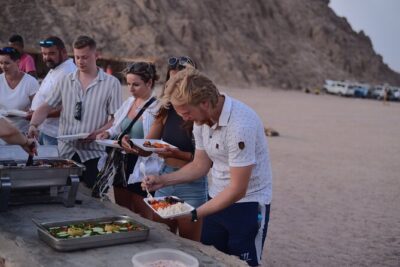
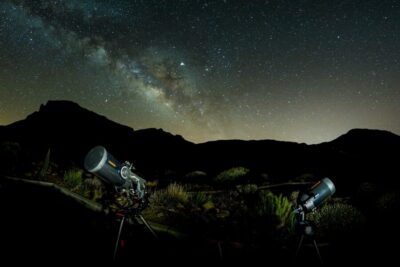
Teide National Park Sunset & Stargazing with Dinner (Star Safari)
Read our review →
Sunset Camel Trek, Al Khayma Camp, Stargazing & BBQ
Read our review →
Overnight Safari, Dinner, Stargazing & Al Khayma Camp
Read our review →
Dubai Overnight Desert Safari, BBQ & Stargazing at Al Khayma Camp
Read our review →
Sunset Quad Bike, Camel w/ Opt Stargazing and BBQ
Read our review →Lists this night appears in