
Review · MOAB
Professional Stargazing in Moab
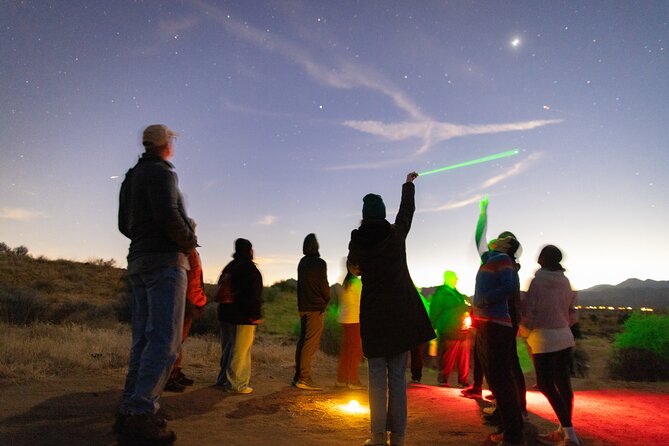
Moab’s desert sky is the main attraction here. As twilight fades, you’ll move from a walk-through solar system model to a comfortable viewing area with powerful telescopes and laser-guided constellations. The setting is quiet, dark, and far removed from city lights.
I especially like the personal zero-gravity loungers, which let you look upward without craning your neck, and the small comforts of blankets and hot chocolate, coffee, or tea. Astronomer Devon has earned praise for making the science lively and easy to follow. The main concern is transportation: you must plan carefully, since regular transportation is not included and ride-share service may be unreliable near the viewing site.
Key things to know before you book
- The program begins with a solar system walk: You get a simple visual introduction before the stars appear.
- You recline in your own Yogibo lounger: Each person has a pod-style seat, blanket, and astro-binoculars.
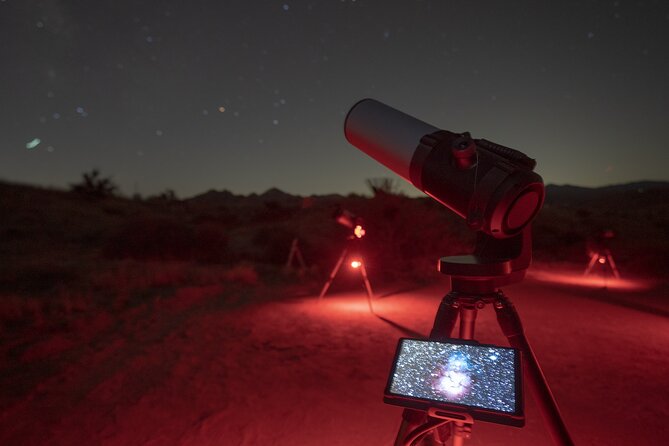
- Powerful telescopes show more than bright stars: The program includes galaxies, nebulae, and star clusters.
- Astronomers guide the whole two-hour session: Laser pointers help connect constellations and individual stars.
- The group can reach 18 people: That is small enough for a guided program, though it is not a private outing.
- You need to arrange your own way there: No transportation is included, and there is no restroom at the site.
Why Moab’s night sky makes this worthwhile
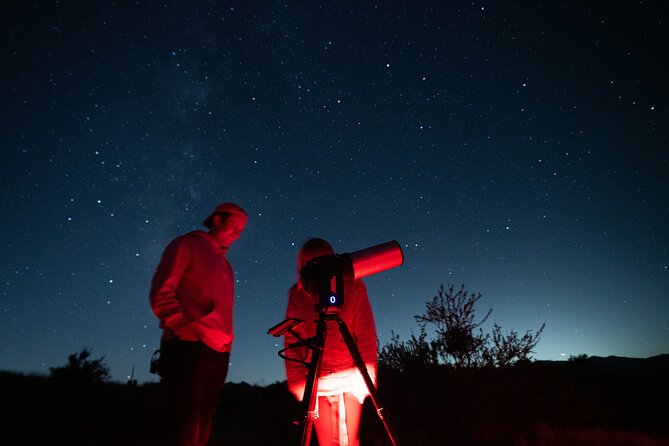
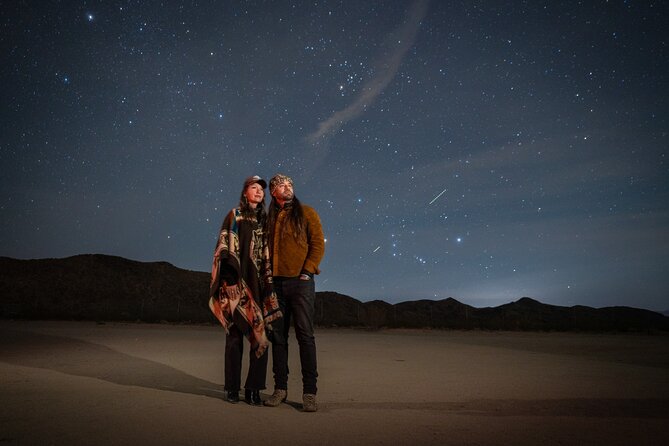
Moab is famous for red rock by day, but the night sky gives you a different reason to leave town. This experience takes place under internationally certified dark skies, a useful distinction for anyone who has tried to see stars near a city and found only a few bright points.
Dark skies matter because faint objects are easily washed out by artificial light. The Milky Way, distant star clusters, and cloudy nebulae become much easier to see when nearby lights are kept low. A telescope can magnify an object, but it cannot fully remove the glow of a town. The dark setting does much of the work before the equipment even begins.
The timing also helps. The evening starts as astronomical twilight begins to settle, giving you a gradual change from daylight to a fully dark sky. You are not simply dropped into a field and told to look up. The program uses the changing light to introduce the solar system first, then moves toward constellations and distant objects.
I like that balance. You get both an introduction for beginners and equipment that can keep experienced sky-watchers interested.
More Stargazing Tours around the USA:
- Small Group Big Island Twilight Volcano and Stargazing Tour
★ 5.0 · 1,619 reviews - Griffith Observatory Hike: Guided Tour through Griffith Park
★ 5.0 · 1,020 reviews - Sedona Stargazing Tours LLC
★ 4.5 · 881 reviews
The solar system walk gives the evening a clear start
The first activity is a short walk through a scale model of the solar system. This is a smart way to begin because it gives size and distance some physical meaning before you begin looking at the real sky.
A model cannot reproduce the enormous distances between planets, of course, but it can help you place Earth among its neighbors. You will hear about the nearby planets while daylight is fading, then carry that basic map with you into the rest of the program.
This portion should suit families and first-time astronomy visitors especially well. You do not need to arrive knowing star names or planetary facts. The opening lesson gives you a starting point, while the later telescope work adds detail for people who already enjoy astronomy.
The walk is short, but it does mean you should be comfortable being on your feet at the beginning. The physical requirements state that you should not book if you are unable to stand for about 30 minutes, and a moderate fitness level is recommended.
Reclining loungers change the way you watch the sky
After the introduction, each person gets a zero-gravity pod, also described as a Yogibo lounger. These seats conform to your body and are designed to reduce pressure points. That detail matters more than it may sound.
Stargazing usually involves lying back on the ground, sitting in an awkward folding chair, or repeatedly bending your neck. None of those options is ideal for a two-hour program. A personal lounger lets you look upward for longer with less strain, while a blanket helps with the desert night chill.
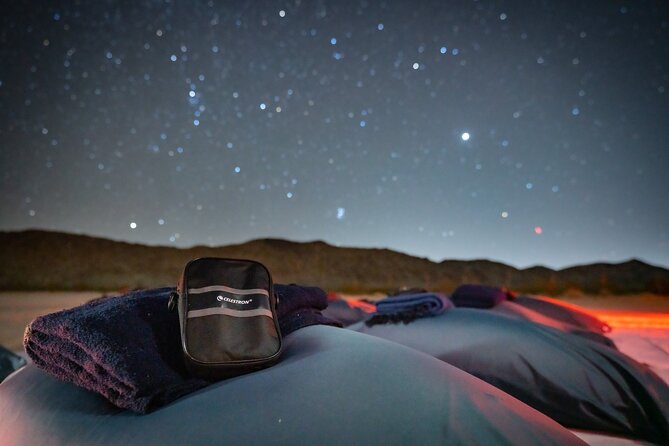
You also receive a pair of astro-binoculars. Binoculars are not a substitute for the main telescopes, but they give you something useful to do between guided views. They can help you scan broad areas of sky and compare what you see through the binoculars with what the guide points out.
The loungers are individual, not shared couches. That gives you a defined viewing space and avoids the cramped feel of a crowded bench. With a maximum group size of 18, the setup should remain reasonably orderly, though you are still joining a group program rather than booking a private astronomer.
Telescopes, laser pointers, and the search for distant objects
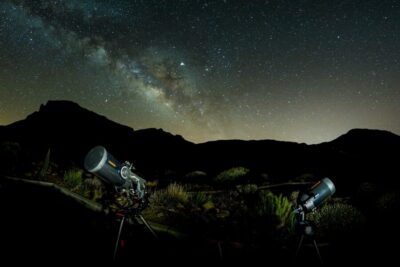
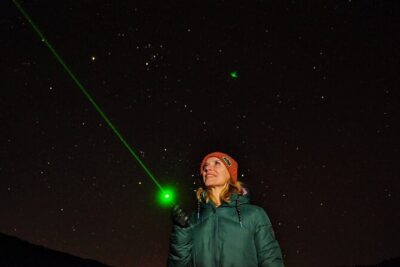
The main two-hour presentation uses state-of-the-art telescopes and laser pointers. The laser helps the guide trace shapes across the sky, which is far easier than trying to follow a verbal description such as look slightly left of that bright star.
You will be shown constellations and objects in the night sky, then receive close views through the telescopes. The listed targets include galaxies, nebulae, and clusters. These are the kinds of objects that can be difficult to appreciate with the naked eye, especially if you are new to astronomy.
The telescope views are likely to be the strongest reason to choose this experience over simply finding a dark roadside pullout. A free-sky app can identify constellations, but it cannot give you a guided look through a large telescope or explain what you are seeing in real time.
The guide also adds the human part of the experience. Devon is specifically praised for combining constellation stories with astronomy and for making the session entertaining. That suggests a program built around explanation, not just equipment. If you want a silent photography session or a technical observing workshop, this may not be the perfect fit. If you want someone to point, explain, and keep the evening moving, it makes more sense.
Same stars, another vantage point:
- Los Angeles: Hollywood Night Tour with Griffith Observatory
★ 4.2 · 531 reviews - Miami: Frost Museum of Science and Planetarium Entry Ticket
★ 4.5 · 429 reviews - Griffith Observatory Insider Tour
★ 4.5 · 306 reviews - LA: Griffith Observatory Insider Tour
★ 4.5 · 287 reviews
What the guide adds to the night
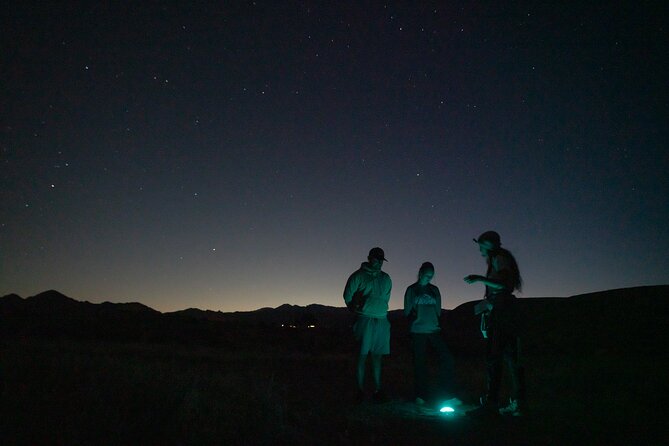
A good astronomy guide does more than name stars. The guide connects patterns in the sky, stories behind constellations, and the scale of objects that are otherwise just tiny points of light.
Devon has been singled out for her ability to explain the constellations and show distant galaxies through digital telescopes. You should not assume she will personally lead every departure, but her praise gives you a useful picture of the guide-led style to expect: conversational, story-based, and focused on helping you understand what you are seeing.
This approach is helpful if you are visiting with family or friends who have different levels of interest. One person can enjoy the stories, another can ask astronomy questions, and a child can use the binoculars while waiting for a telescope view. The program has enough structure to keep the evening from becoming aimless.
You should also keep your expectations sensible. A telescope does not make every object look like a colorful space photograph. The value comes from seeing real celestial objects under dark skies and learning how to find them. The experience is about observation and scale, not a planetarium-style show with guaranteed bright images.
Hot drinks and blankets are small details that matter
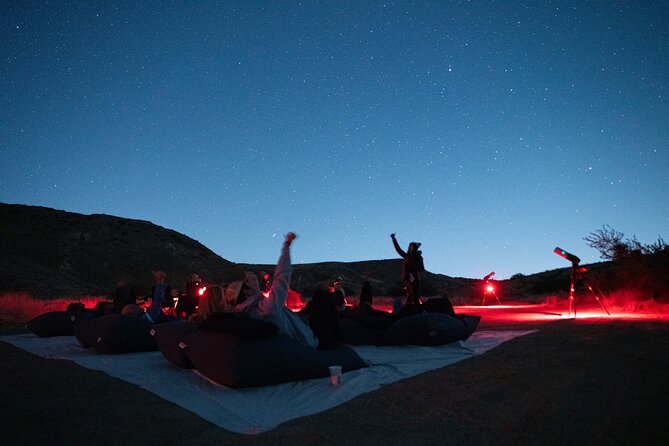
Hot chocolate, coffee, and tea are provided at a hot beverage station. This is a modest feature, but it improves an outdoor evening. Desert temperatures can change quickly after sunset, and having a warm drink gives you a break from the cold without ending the session.
Blankets are included as well. I would still dress for an outdoor night rather than relying only on the provided blanket. The supplied details do not specify the exact temperature, wind conditions, or clothing recommendations, so layers are the sensible choice.
There is no restroom at the observation site. Use facilities before you arrive and plan accordingly. This is especially important for families, anyone with medical needs, and anyone who expects to spend the full two hours away from town.
The transportation warning is important
Transportation is not included. You need to reach the meeting point near La Sal, Utah, and return to that same point when the activity ends.
Do not assume you can simply request a ride-share when the program is about to begin. One booking problem involved a person arriving in Moab without a car who could not find a ride to the site. Attempts to contact the operator close to the start time were not answered promptly, and the person missed the experience.
There is also some confusing information about shuttle availability. The direct transport details say transportation is not provided, while a later response indicated that a shuttle service may exist in some circumstances. I would contact Stargazing Moab before booking if you do not have a car, and get the answer in writing. Do not count on a last-minute ride-share.
This is the biggest practical weakness in the experience. The astronomy may be excellent, but the viewing site is not useful to you if you cannot reach it.
Is $200 a fair price?
At $200 per person, this is not a casual stop-in activity. For two hours, the price covers an astronomer, telescope access, binoculars, a personal lounger, blankets, and hot drinks. You are also paying for access to a carefully selected dark-sky setting and a planned presentation.
The value depends on what you want from your Moab evening. If your goal is simply to see the stars, you may prefer to find a dark public area and look up for free. If you want help identifying constellations and a chance to view galaxies, nebulae, and clusters through serious equipment, the guided format gives you something a self-guided outing cannot.
The maximum group size is 18, which keeps the cost below many private astronomy sessions. It is not an intimate one-on-one lesson, but it is also not a huge bus tour. The personal recliners and individual binoculars add practical value.
I would consider it worthwhile for someone who already enjoys astronomy or who wants one memorable evening activity in Moab. I would hesitate if you are unsure about spending $200 on a sky-focused program, especially if you have limited time and have never tried stargazing before.
Who will enjoy this most
This experience fits you best if you:
- Want an organized introduction to astronomy
- Enjoy quiet outdoor activities after a day of sightseeing
- Prefer reclining comfortably rather than sitting on the ground
- Are interested in galaxies, nebulae, and star clusters
- Are visiting with family or friends who want different levels of information
- Have reliable transportation to the meeting point
It may not suit you if you cannot stand for about 30 minutes, need regular restroom access, or want a fully narrated drive from Moab. It is also not designed as a private photography session, and the supplied details do not promise any particular celestial object on a given night.
The activity requires good weather. If poor weather forces a cancellation, you can receive a different date or a full refund. A minimum number of participants is also required, with a similar choice of another date, another experience, or a refund if that minimum is not reached.
For cancellation, you can receive a full refund if you cancel at least 24 hours before the start time. Changes or cancellations inside that window are not accepted for a refund.
Should you book Professional Stargazing in Moab?
Book it if the night sky is one of the reasons you came to southern Utah. The mix of certified dark skies, comfortable loungers, binoculars, hot drinks, and telescope views gives you more structure and comfort than a do-it-yourself outing. The strongest part is the guide-led explanation, with Devon representing the lively, story-focused style the program can offer.
Before paying, solve transportation first. Confirm exactly how you will reach the La Sal meeting point, and ask the operator about any possible shuttle service rather than assuming one exists. Also prepare for a restroom-free outdoor setting and bring warm layers.
If you can handle those logistics and the $200 price fits your plans, this is a strong choice for a focused, two-hour Moab evening. If you are mainly looking for a free view of the stars, skip the paid program and make your own arrangements.
FAQ
Where does the stargazing experience take place?
The meeting point is at 8HFF+7V in La Sal, Utah. The activity ends back at the meeting point.
How long does the experience last?
The program lasts approximately two hours.
What happens at the beginning?
The evening starts with a short walk through a scale model of the solar system as astronomical twilight begins.
What equipment is provided?
You receive access to telescopes, astro-binoculars, a personal Yogibo or zero-gravity lounger, and blankets.
Are hot drinks included?
Yes. A hot beverage station provides hot chocolate, coffee, and tea.
Is transportation included?
No. Transportation is not included in the stated experience details. If you need a shuttle, contact Stargazing Moab before booking to confirm whether one is available.
Is there a restroom at the site?
No. A restroom is not provided at the observation site.
How large can the group be?
The activity has a maximum of 18 participants.
Is the experience suitable for someone who cannot stand for 30 minutes?
No. It is not recommended for people who are physically unable to stand for 30 minutes. A moderate level of physical fitness is also advised.
What happens if bad weather cancels the activity?
You can choose a different date or receive a full refund if poor weather causes the cancellation.
Just in after dark around the USA
- Seattle: Hop-on Hop-off Bus Tour and Sky View Observatory★ 4.4 · 16 reviews
- Boulder: Guided Astronomy Tour★ 4.7 · 11 reviews
- 1-Day Grand Canyon Tour from Las Vegas: Stargazing & Sunrise★ 3.6 · 3 reviews
- Griffith Observatory: Scott E-Bike Tours LA Private Tour★ 5.0 · 32 reviews
- Private Tour of Griffith Observatory★ 4.5 · 58 reviews
- Stargazing and Milky Way Portrait in Capitol Reef National Park★ 4.5 · 13 reviews
- Haleakala Sunset and Stargazing Audio Tour★ 4.0 · 10 reviews
- Stargazing Tour in Kapalua★ 5.0 · 31 reviews
Stargazing Tours, night against night.

Dubai Red Dunes ATV, Camels, Stargazing & 5* BBQ Al Khayma Camp
Read our review →
Teide National Park Sunset & Stargazing with Dinner (Star Safari)
Read our review →
Sunset Camel Trek, Al Khayma Camp, Stargazing & BBQ
Read our review →
Overnight Safari, Dinner, Stargazing & Al Khayma Camp
Read our review →
Dubai Overnight Desert Safari, BBQ & Stargazing at Al Khayma Camp
Read our review →
Sunset Quad Bike, Camel w/ Opt Stargazing and BBQ
Read our review →Lists this night appears in