
Review · AQABA
Stargazing Adventure in Jordan
Wadi Rum’s dark desert sky is the real star of this 90-minute evening outing. You begin with a clear, seated astronomy presentation, then head outside for constellation stories and practical sky-finding with a green laser. I like that the astronomers explain both the science and the old myths, rather than simply pointing at bright stars.
I also like the GPS-guided telescopes, which let you look at targets far beyond what your eyes can see, and the included pickup from most nearby camps. The main caution is expectation: one part of the experience is a basic laser tour, and the telescope views can vary with weather, sky conditions, and crowd size.
Key points to know before you book
- A 20-minute indoor introduction gives you a useful foundation before the outdoor viewing begins.
- Two 35-minute sessions cover naked-eye constellations and telescope targets, with groups switching halfway through.
- Professional astronomers explain directions, star movement, zodiac figures, and myths from several cultures.
- Large GPS-enabled telescopes may show planets, moons, galaxies, and nebulae.
- Camp transfers are included from most camps in the Disi Area, so you do not need to drive across the desert at night.
- The $30 price is strong value if you enjoy astronomy and want a guided evening rather than simply looking up from camp.
Why Wadi Rum works so well after dark
Wadi Rum is known for its red-rock desert by day, but its darkness gives this outing a different purpose. Away from major city lights, the sky can reveal far more stars than you are likely to see from Aqaba or a typical urban hotel.
That does not mean every night produces perfect viewing. Clouds, haze, moonlight, and atmospheric conditions can affect what appears through the telescopes. The quality of the session also depends on how many people are present and how long each person gets at the eyepiece.
Still, the setting gives the astronomy a proper sense of place. You are not standing under a dome in a city science center. You are looking upward from a desert observatory, with the surrounding darkness helping your eyes adjust.
The tour is priced at $30 per person. I consider that a fair rate because it includes the talk, both outdoor sessions, telescope access, a group photograph, and transport from most local camps. You are paying for an organized evening with equipment and astronomy staff, not just a ride to a viewpoint.
More Stargazing Tours around the world:
- Dubai Red Dunes ATV, Camels, Stargazing & 5* BBQ Al Khayma Camp
★ 5.0 · 21,620 reviews - Sharm El-Sheikh: Ultimate ATV Quad, Stargazing & BBQ Dinner
★ 4.7 · 4,084 reviews - Tenerife: Teide National Park Sunset & Stargazing Tour
★ 4.2 · 3,812 reviews
The evening begins after dinner and camp pickup
In winter, pickup starts around 7:45 PM from local camps in the Disi Area. The timing is planned for after dinner, which is practical. You do not need to rush away from your camp meal or arrange a separate desert transfer.
Summer departure times change, so you should check the current pickup time when booking. The service is offered from most camps, but not every possible camp is necessarily covered. Confirm your camp rather than assuming the transfer applies automatically.
This transfer is one of the most useful parts of the package. Desert roads are not the place to improvise a night drive, especially if you do not know the area. A local pickup also keeps the evening simple: finish dinner, wait at your camp, and let the operator handle the trip to the observatory.
The experience has listed operating hours from 5:00 PM to 11:30 PM, Monday through Sunday, for the stated operating period ending June 18, 2026. The actual astronomy program lasts about 1 hour and 30 minutes.
A 20-minute presentation makes the sky easier to read
The first formal part of the program takes place in a seated hall, with a large screen and a presentation by a professional astronomer. It lasts about 20 minutes.
This is an important step, especially if you do not already know the main constellations. Looking at a black sky filled with stars can be beautiful but confusing. The presentation gives you some basic context before you go outside, so the outdoor guide can point out patterns and explain movement without starting from nothing.
The talk covers the wider cosmos and prepares you for the two practical sessions. It is described as easy to follow while still containing plenty of information. That balance matters here. A long technical lecture would be a poor match for a short evening outing, but a few vague facts would not add much to your stay in Wadi Rum.
The indoor setting also gives you a comfortable start if the night is cold. You have a chance to settle in before standing outside for the main program.
Follow the green laser through the constellations
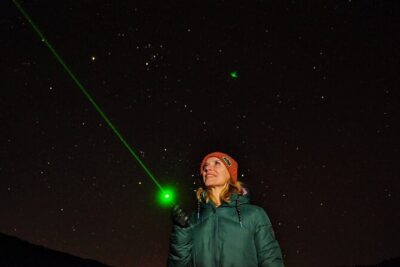
After the presentation, the group is split into two equal sections. One section begins with naked-eye stargazing, guided by a professional astronomer using a powerful green laser and a candle-lit track.
This session lasts about 35 minutes. The laser helps you follow the guide’s line across the sky, which is far easier than trying to understand a spoken direction in the dark. You learn how stars can help with finding directions, then hear about the daily and annual movement of the stars.
The guide points out visible constellations and zodiac figures. You also hear the myths connected to them from several cultures. This gives the session a human side. The stars are not only distant objects, they are also the figures that different societies used to explain time, direction, seasons, and stories.
I especially like the practical angle. You are not simply shown a few bright stars and sent back inside. The guide explains how to locate directions through the star system and how the sky changes. If you pay attention, you should leave with a better sense of how to find familiar patterns on your own.
Keep your expectations reasonable, though. The laser session is an introduction, not a full astronomy course. If you already know the constellations well, you may find this portion simple. For most first-time stargazers, that simplicity is useful.
Same stars, another vantage point:
- Tenerife: Sunset and Stargazing at Teide National Park
★ 4.7 · 2,826 reviews - Teide National Park Sunset & Stargazing with Dinner (Star Safari)
★ 5.0 · 2,601 reviews - Dubai: Sunset Camel Trek, Al Khayma Camp, Stargazing & BBQ
★ 4.8 · 2,588 reviews - Dubai: Overnight Safari, Dinner, Stargazing & Al Khayma Camp
★ 4.8 · 2,562 reviews
Use the GPS telescopes for galaxies and planets
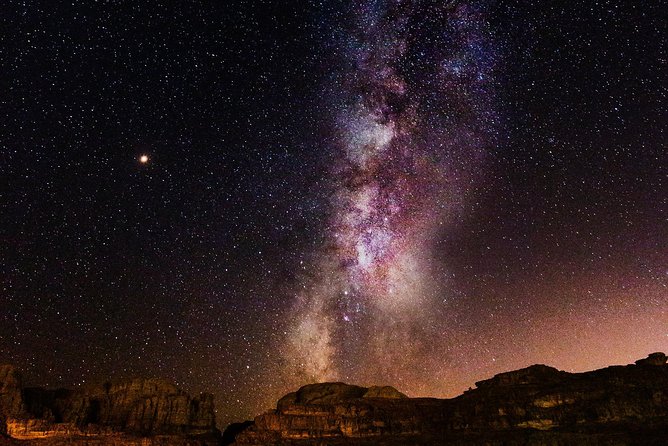
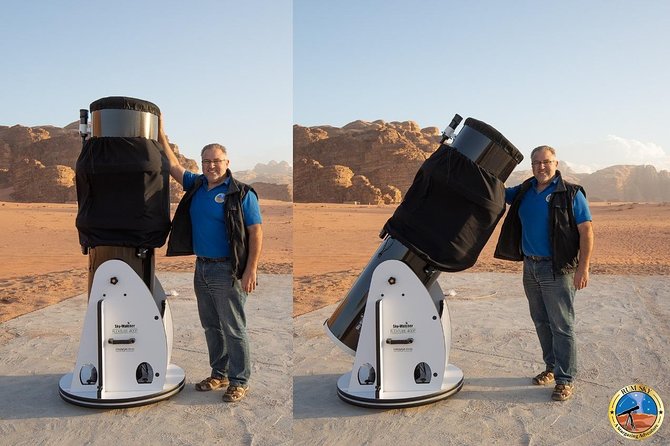
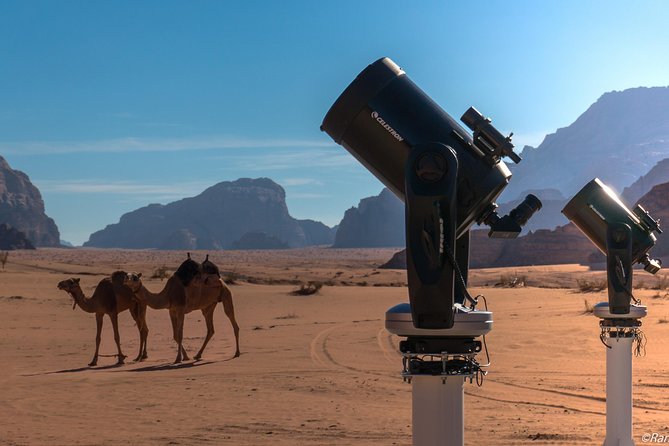
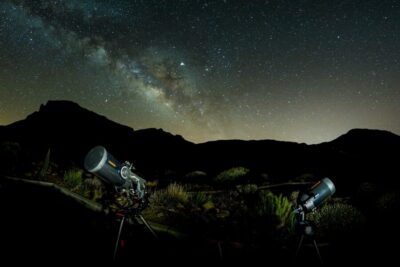
The other half of the group starts at the large telescopes. These instruments are computerized and GPS-enabled, allowing the astronomer to aim at selected targets in the night sky.
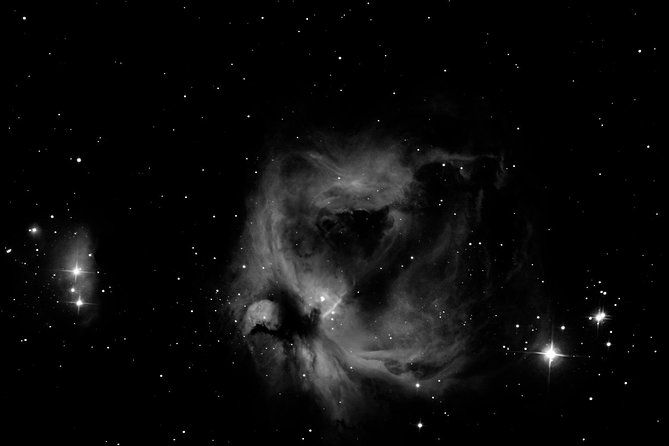
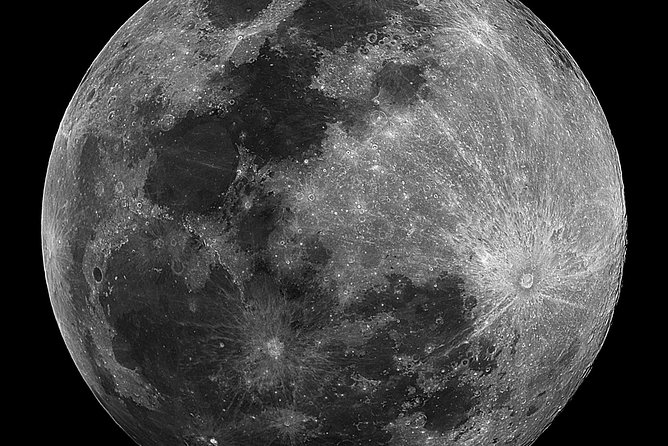
Possible targets include galaxies, nebulae, planets, and moons. The exact objects available can change with the date, season, time of night, and conditions. The equipment gives the program a reach that naked-eye stargazing cannot match, but the view is still dependent on what the sky is doing that night.
This is the part that can make the $30 fee worthwhile for a keen beginner. You do not have to learn how to align a telescope, identify a target, or judge where to point it. The astronomer handles the equipment and guides you through what you are seeing.
If you use a telescope at home, you may also find the session useful for practical advice. One participant received help from the local astrophotographer and advice about a personal telescope. That kind of informal exchange can add value if you already have an interest in astronomy.
At the same time, do not expect every view to look like a space-agency photograph. Telescope images viewed from the ground can be small, dim, or less dramatic than photographs processed for publication. A poor night can make the telescope portion feel underwhelming, even when the equipment is sound.
That is the chief uncertainty in this experience. Some visitors have found the telescope views too limited, while the presentation and staff care remained a strong point. You should book this as a guided look at real night-sky objects, not as a guaranteed sequence of spectacular close-ups.
The two groups switch after 35 minutes
After the first 35-minute session, the groups change places. Those who began with the laser-guided sky tour move to the telescopes, while the first telescope group goes outside for the constellation program.
This arrangement means everyone receives both parts of the evening. It also prevents the entire group from crowding around a single telescope or trying to follow one guide’s laser at once.
The total program works out to about 20 minutes indoors, 35 minutes in the first station, and 35 minutes in the second. That is a well-shaped 90-minute schedule. You get enough time to settle into each activity without turning the night into a long lecture.
The possible drawback is group size. The activity can accept up to 120 people, although the groups are divided equally for the two sessions. A large booking means more people sharing the telescope time, and you may need patience while others take their turn.
If personal telescope time matters most to you, ask about the expected group size before booking. The published maximum is large enough that the experience may feel less personal on a busy night.
A time-exposure group photo finishes the night
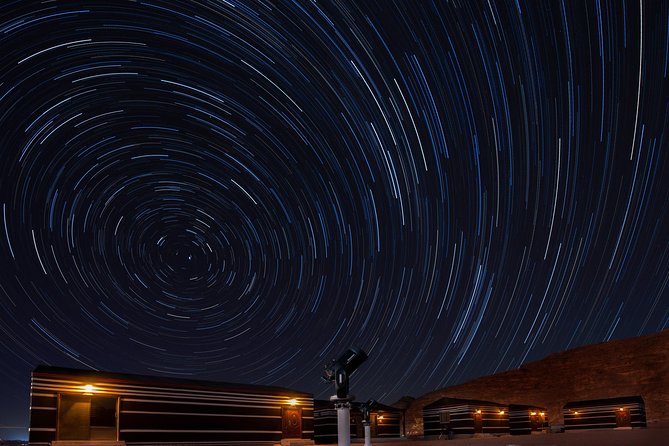
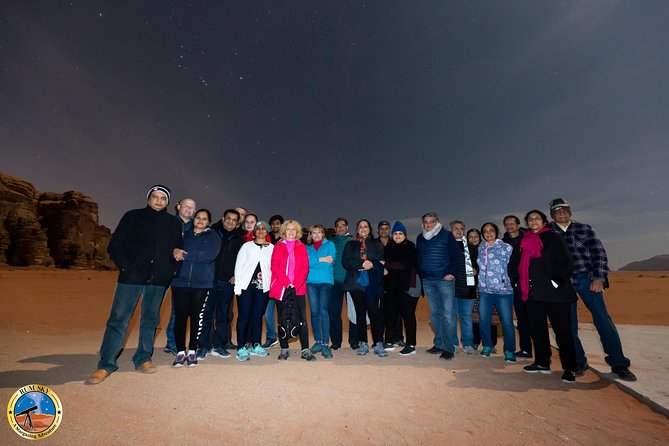
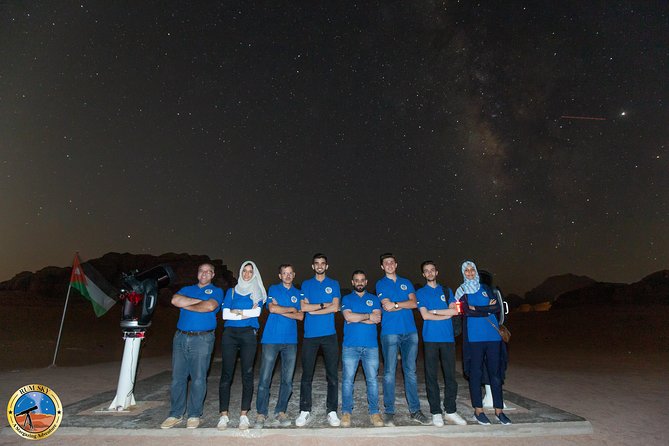
At the end, the team takes a group photograph using a time-exposure technique designed to include sky objects. This is a pleasant final touch because ordinary phone cameras often struggle with a dark desert scene.
The photograph gives you a keepsake that connects the group to the setting. It also reflects the nature of the evening: part astronomy lesson, part desert outing, and part shared camp activity.
Do not treat the photograph as a private astrophotography session. It is a group picture, and the main purpose is to capture everyone beneath the night sky. Still, the time-exposure method makes it more distinctive than a standard flash photo.
Water and soft drinks are available at a reasonable cost, but bottled water is not included. Bring your own water if you prefer not to buy refreshments on site.
How the value compares with a simple camp stargazing night
Many Wadi Rum camps offer a chance to sit outside and look at the stars. That can be a fine experience, especially when the sky is clear. This outing adds structure and equipment that you will not get from simply reclining outside your tent.
You receive an astronomy presentation, a guided explanation of constellations, access to large computerized telescopes, and a photograph. The transfer also saves you from arranging transport after dark.
The value is strongest for three kinds of people. First, beginners get a clear introduction without needing prior astronomy knowledge. Second, families and mixed-age groups have several ways to take part, from stories and zodiac figures to planets and galaxies. Third, amateur telescope owners may enjoy asking practical questions of the astronomy staff.
The value is weaker if you already know the main constellations and expect a remote, silent viewing site far from every camp. One visitor expected the observatory to be much farther from the Wadi Rum camps to avoid light pollution and found the laser and telescope portions too basic.
That criticism is worth taking seriously. Low light pollution makes the region a good choice, but the observatory is not presented as an isolated wilderness site far beyond all camp lights. Your experience may depend on where you are picked up and the conditions on the night.
Who will enjoy this most
I would choose this outing if you want a guided introduction to the sky and prefer an organized evening to figuring everything out alone. The indoor talk makes it friendly for beginners, while the telescope station gives the program enough substance for people with a stronger interest in space.
It also suits you if you are staying in a local Disi Area camp and want a simple after-dinner activity. Included transfers remove one of the more awkward parts of desert travel.
Families can take part because most people can participate, and service animals are allowed. The activity is not described as requiring specialist fitness or astronomy experience.
I would be more cautious if you want uninterrupted silence, a very small group, or guaranteed views of bright planets and dramatic nebulae. A maximum of 120 participants is permitted, and the weather policy makes clear that sky conditions can cancel the program.
Practical booking advice for a better night
Book ahead if your Wadi Rum stay is fixed. The experience is booked, on average, 34 days in advance, which suggests that popular dates can fill before arrival.
Check the pickup details for your specific camp, especially if you are visiting in summer when the start time changes. Plan to have dinner before pickup, as the winter collection time is around 7:45 PM and the program is designed to follow the evening meal.
Wear clothing suitable for a desert night. The supplied information does not promise warm clothing or seating outdoors, so a light layer is a sensible precaution. Bring water or budget for a drink, since refreshments are not included.
The experience requires good weather. If the operator cancels because of poor conditions, you are offered another date or a full refund. You can also cancel for a full refund up to 24 hours before the start time. Changes or cancellations inside 24 hours are not refunded.
Should you book the Wadi Rum stargazing experience?
Book it if you want a practical, guided introduction to astronomy with transport and telescope access included. The professional presentation, constellation stories, GPS equipment, and two-part format make it more useful than a simple camp-side look at the stars.
Go in with realistic expectations. The laser tour is fairly basic, telescope views are not guaranteed to be dramatic, and a large group could limit your time at the eyepiece. For $30, I think the package is good value for curious beginners, families, and anyone who wants a well-organized desert evening.
If your priority is a remote observatory, a tiny group, or serious astrophotography, you may find it less satisfying. If you want to understand what you are seeing and avoid night driving in Wadi Rum, this is a sensible addition to your camp stay.
FAQ
Where does the stargazing experience take place?
The experience takes place at a desert observatory in the Wadi Rum area, with pickup offered from most local camps in the Disi Area.
How long does the activity last?
The activity lasts approximately 1 hour and 30 minutes.
What time is pickup?
Winter pickup starts around 7:45 PM. Summer times change, so check the current time with the operator.
Is pickup included?
Yes. Free transportation is provided from most local camps. You should confirm that your particular camp is covered.
What happens during the indoor presentation?
A professional astronomer gives a 20-minute astronomy presentation on a large screen in a seated hall.
Do I get to use a telescope?
You can view night-sky targets through large computerized telescopes with GPS systems. Possible targets include galaxies, nebulae, planets, and moons.
Will I learn about constellations?
Yes. A professional astronomer uses a green laser to explain directions, star movement, constellations, zodiac figures, and myths from different cultures.
Is bottled water included?
No. Bottled water is not included, but water and soft drinks are available for a reasonable cost.
What happens if the weather is poor?
The experience requires good weather. If it is canceled because of poor conditions, you can choose another date or receive a full refund.
Can I cancel for a refund?
You can cancel at least 24 hours before the start time for a full refund. Cancellations and changes made less than 24 hours before the experience are not refunded.
Just in after dark around the world
- Doha: Night Desert Safari, Stargazing, and Camel Ride★ 5.0 · 2 reviews
- Doha : Night Desert Safari with Dune Bashing & Stargazing★ 5.0 · 4 reviews
- Doha: Night Desert Safari + Camel ride + Stargazing & Relax★ 5.0 · 4 reviews
- Day Trip to Tatacoa Desert (Horseback, Boat, Stargazing, ..)★ 4.4 · 3 reviews
- Christchurch: Lake Tekapo Stargazing & Mount Cook 2-Day Tour★ 5.0 · 6 reviews
- Cabo de Gata: Stargazing Experience★ 4.5 · 7 reviews
- Chile: Astronomical Tour in the Atacama Desert★ 4.8 · 4 reviews
- Cabo de Gata: Guided Night Walk with Stargazing★ 4.7 · 36 reviews
Stargazing Tours, night against night.

Dubai Red Dunes ATV, Camels, Stargazing & 5* BBQ Al Khayma Camp
Read our review →
Teide National Park Sunset & Stargazing with Dinner (Star Safari)
Read our review →
Sunset Camel Trek, Al Khayma Camp, Stargazing & BBQ
Read our review →
Overnight Safari, Dinner, Stargazing & Al Khayma Camp
Read our review →
Dubai Overnight Desert Safari, BBQ & Stargazing at Al Khayma Camp
Read our review →
Sunset Quad Bike, Camel w/ Opt Stargazing and BBQ
Read our review →Lists this night appears in