
Review · AUSTRALIA
Uluru: National Park Astronomy Tour with Telescope and Photo
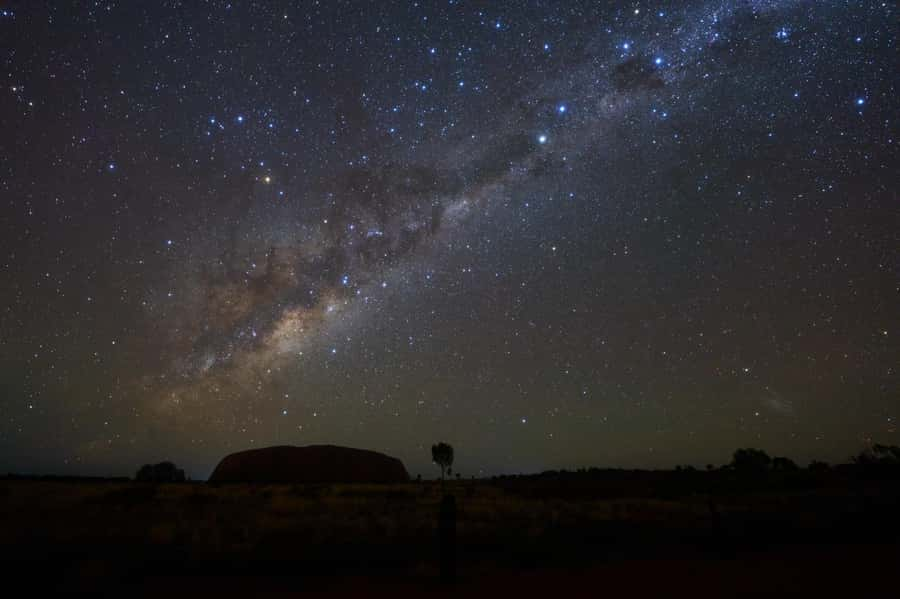
Uluru is impressive by day, but after dark the real show moves overhead. This 150-minute astronomy tour takes you away from resort lights to a quiet national park site, where the Milky Way, planets, constellations, and distant star clouds become the main event. The southern sky is the star here.
I like the mix of plain-language astronomy and Indigenous sky stories, presented by guides such as Lucy, Neil, Zack, and Olina. I also like the practical extras: blankets, folding stools, help with phone settings, telescope viewing, and a professional portrait with Uluru behind you. The main drawback is group size. On busy nights, queues for the telescopes and the long-exposure photo can take time, and a bright moon can wash out many stars.
Key points at a glance
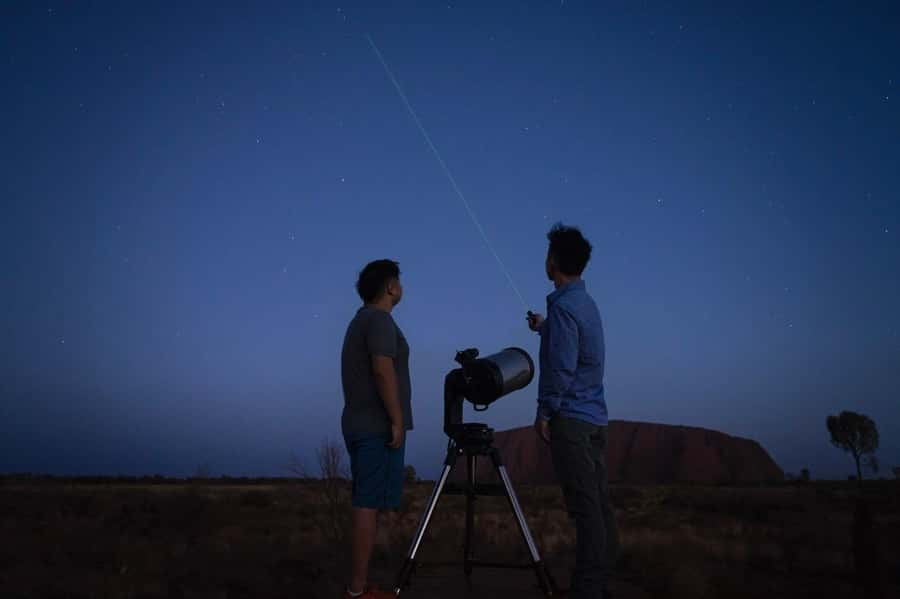
- A dark site beyond the resort: The bus takes you into the national park, away from much of the artificial light around the accommodation area.
- Telescopes reveal more than your eyes: Depending on the night, you might see planets, nebulae, star clusters, Saturn’s rings, or other distant objects.
- Australian and Indigenous astronomy together: Guides explain southern constellations, current science, and the ways Aboriginal people have used the sky.
- A useful keepsake is included: You receive a digital professional photograph with Uluru and the night sky behind you.
- Cold weather needs respect: Blankets are supplied, but warm layers and closed-toe shoes are still essential, especially from autumn through winter.
- A good $91 evening option: Pickup, return transport, guiding, telescope use, and the photograph are included.
Leaving the resort for a darker Uluru sky
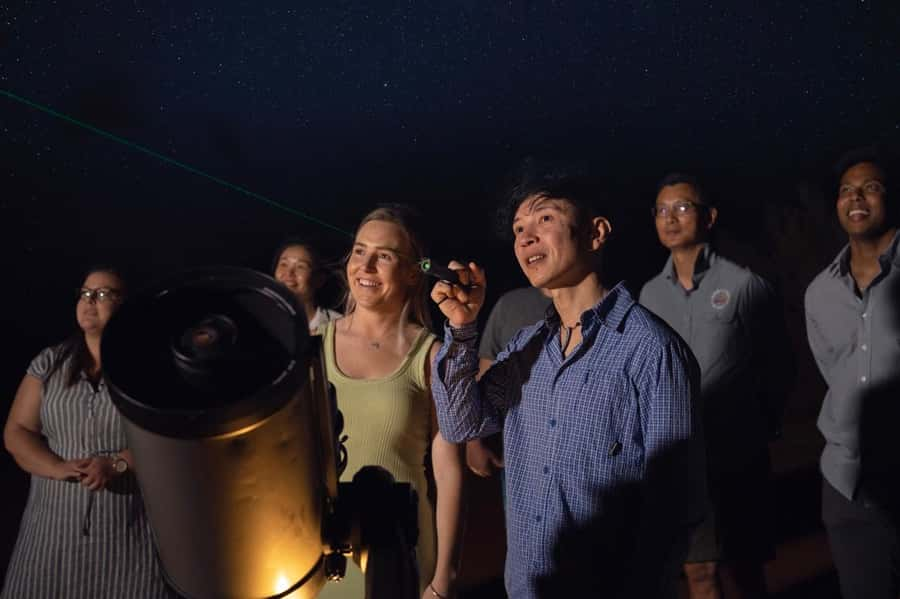
Pickup is included from your accommodation, and you should look for the bus marked Atrip. The provider sends the confirmed pickup time by email on the day, so check your messages before heading out.
The drive to the viewing area is part of what makes this worthwhile. You are not simply standing outside the resort looking up. The tour heads into Uluru and Kata Tjuta National Park, to a spot with less light pollution and a broad, open view of the sky. One account put the drive at roughly 20 minutes from the resort, though the exact timing depends on pickup arrangements.
Once you arrive, the crew sets out folding stools and blankets. The setup is simple, not luxurious, but it matters. A night in the desert can feel mild at first and then turn sharply cold, particularly in May through September. Bring a warm jacket, several layers, and a reusable water bottle. In summer, the air may stay warm well into the evening, so do not automatically pack a heavy winter coat.
Walking from the bus to the viewing area can be dark. Wear closed-toe shoes and take care with your footing. One useful improvement would be more lighting along this short walk, but the low light at the viewing spot is exactly what helps you see the stars.
More Telescope Stargazing in Australia:
- Teide by Night: Sunset & Stargazing with Telescopes Experience
★ 4.5 · 1,492 reviews - Teide National Park: Guided Large Telescope Stargazing Tour
★ 4.9 · 319 reviews - Levi: Northern Lights Tour and Stargazing by Telescope
★ 4.6 · 183 reviews
The first look: Uluru beneath a southern sky
Give your eyes a few minutes to adjust. At first, you may notice only the brightest stars. Then the sky begins to fill in. Away from resort lights, the Milky Way can appear as a pale band stretching above Uluru, while the rock itself becomes a dark, unmistakable shape in the distance.
The guides use laser pointers to identify stars and constellations. This helps far more than simply hearing a list of names. You can follow the line of the laser, connect the stars, and then find the pattern again after the guide moves on.
The strongest part of the talk is its balance. You get accessible explanations about stars, planets, galaxies, and the southern sky, along with Indigenous stories and practical uses of the heavens. The Indigenous astronomy is not treated as a decorative extra. It gives you another way to understand the sky, linked to navigation, seasonal knowledge, daily life, and storytelling.
The guides have different styles. Neil is known for clear explanations and easy conversation. Lucy has been praised for making the session friendly and engaging, while Zack is especially good at helping with photographs and telescope views. Staff change, of course, but the tour is built around guides who can answer questions rather than recite a fixed speech.
You do not need to know anything about astronomy before you arrive. Beginners can follow the main talk, and people with more experience can ask about individual stars, planets, or the science behind what they are seeing. Some technical detail can go over your head, but you can simply enjoy the sky and ask questions at your own pace.
Telescopes, planets, and the wait between views
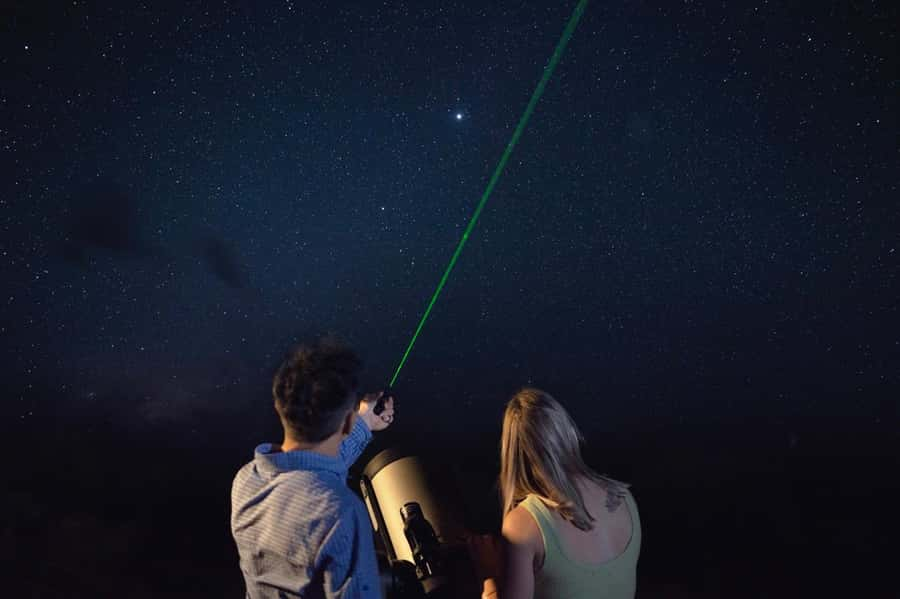
The telescopes are the tour’s most hands-on feature. Naked-eye stargazing gives you the scale and beauty of the sky, but the equipment brings particular objects closer. Depending on the season, weather, moon phase, and equipment setup, you might look at planets, nebulae, clusters, or the Moon.
Saturn’s rings have been a highlight on suitable nights. Other possible sights mentioned during the experience include the Seven Sisters star group, Alpha Centauri, Pluto, and various nebulae. Do not treat any single object as guaranteed. Astronomy depends on what is above the horizon, the time of night, cloud cover, and how bright the Moon is.
The guides also use binoculars, which can be helpful when several people are waiting for the main telescope. That said, group size affects how relaxed this part feels. When two full buses arrive and only three telescopes are operating, you may wait your turn. One reported photo queue reached 45 to 60 minutes, and a long wait for telescope access has also occurred.
This is the clearest weakness of the tour. A second telescope or smaller groups would reduce the waiting. You should expect a shared activity rather than a private observatory session. If you are happy to listen to the talk, sit under the stars, and take your turn, the wait is manageable. If you want constant access to equipment, busy departures may frustrate you.
The moon changes what you can see
The quality of the sky is not controlled by the tour company. Clouds can interrupt the view, and moonlight can brighten the whole scene. A full or first-quarter Moon can be beautiful through a telescope, but it reduces the number of faint stars you can see with the naked eye.
A new Moon is generally better for seeing the Milky Way and faint star fields. The tour runs on a schedule, so you may not be able to choose the ideal lunar phase. Check the moon phase when planning your Uluru stay if dark-sky viewing is your top goal.
Even on a less-than-perfect night, the tour can still work well. You may see the Moon in detail, bright planets, or objects through the telescope that are not obvious overhead. One evening can also differ from the next as the sky shifts with the seasons. The key is to treat the experience as a guided look at whatever the night offers, not as a promise of a fixed list of celestial sights.
More National Park Stargazing in Australia:
- Tenerife: Teide National Park Sunset & Stargazing Tour
★ 4.2 · 3,812 reviews - Tenerife: Sunset and Stargazing at Teide National Park
★ 4.7 · 2,826 reviews - Teide National Park Sunset & Stargazing with Dinner (Star Safari)
★ 5.0 · 2,601 reviews - Teide National Park: Sunset & Stargazing Safari with Dinner
★ 4.6 · 2,115 reviews
Learning to photograph the night sky
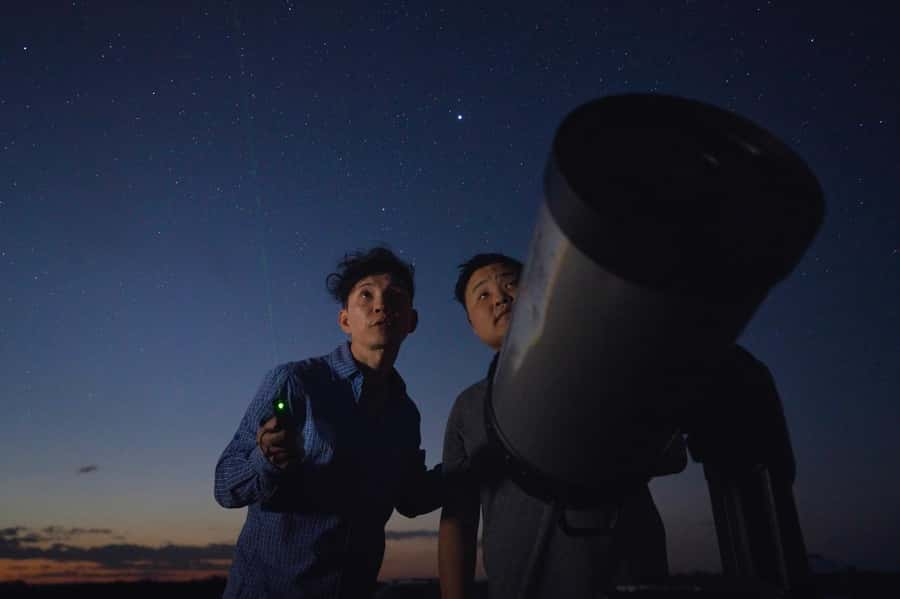
The included photograph is more than a quick snapshot. The photographer uses a long exposure to capture you with Uluru and the star-filled sky behind you, then provides the image as a digital download.
This is a particularly good extra at Uluru because ordinary phone cameras often struggle in very dark conditions. The professional image gives you a clear record of the setting, and it avoids the usual problem of taking home a black photo with a few blurred faces.
There is usually one photograph per person, so decide in advance who you want included. Families and couples should also be ready when their group is called. The camera needs time for the exposure, and several people taking a long time to arrange themselves can create a slow line.
You may bring your own camera and tripod if you enjoy night photography. The guides can help with phone settings, and some have helped visitors adjust their cameras for better results. Bring a tripod if you have one, since holding a phone by hand will not produce the same effect in low light.
Do not expect the tour to become a full photography workshop. The focus is astronomy and shared viewing, with photography as a useful side benefit. Still, the chance to make your own image while receiving a professional portrait gives the evening more value than a basic star talk.
How the 150 minutes are likely to feel
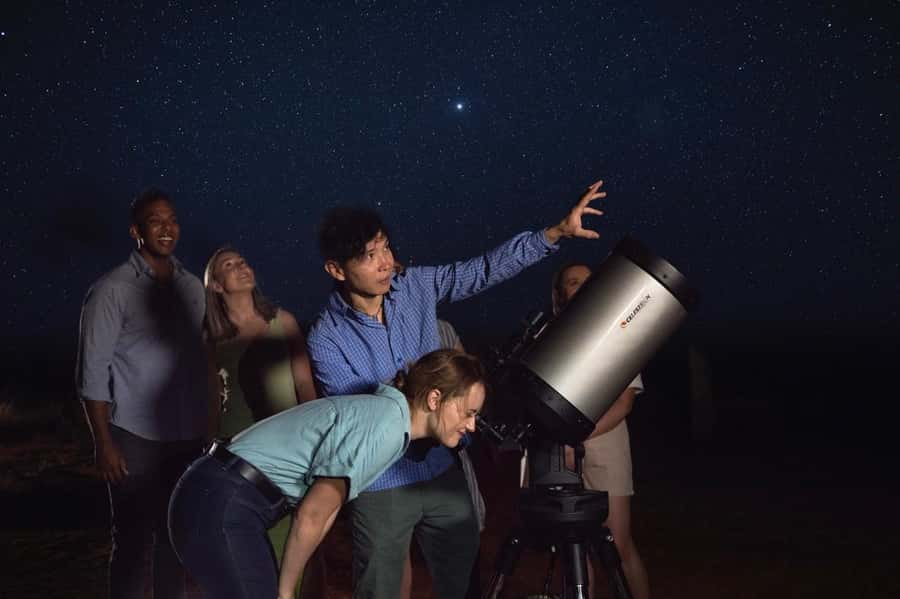
The advertised duration is 150 minutes, including transport. The exact balance changes with pickup timing, group size, sky conditions, and how long the photo line takes.
A typical evening has several parts:
- Pickup at your accommodation in the Atrip bus.
- A short drive to a darker viewing point in the national park.
- A guided introduction to the night sky using lasers and storytelling.
- Time on stools or blankets to watch the stars and ask questions.
- Telescope and binocular viewing of selected objects.
- Help with phone or camera photography.
- The professional portrait with Uluru and the sky behind you.
- Return transport to your accommodation.
The pace is generally varied enough to hold attention. You are not listening to a lecture for two and a half hours. The sky talk, telescope stations, quiet viewing, and photo session break up the night.
Still, the final stretch may feel longer if the group is large. People waiting for a telescope or photograph can lose momentum, especially after standing or sitting in the cold. If you prefer a brisk itinerary, choose a departure with a smaller group if that option is available.
Is $91 good value?
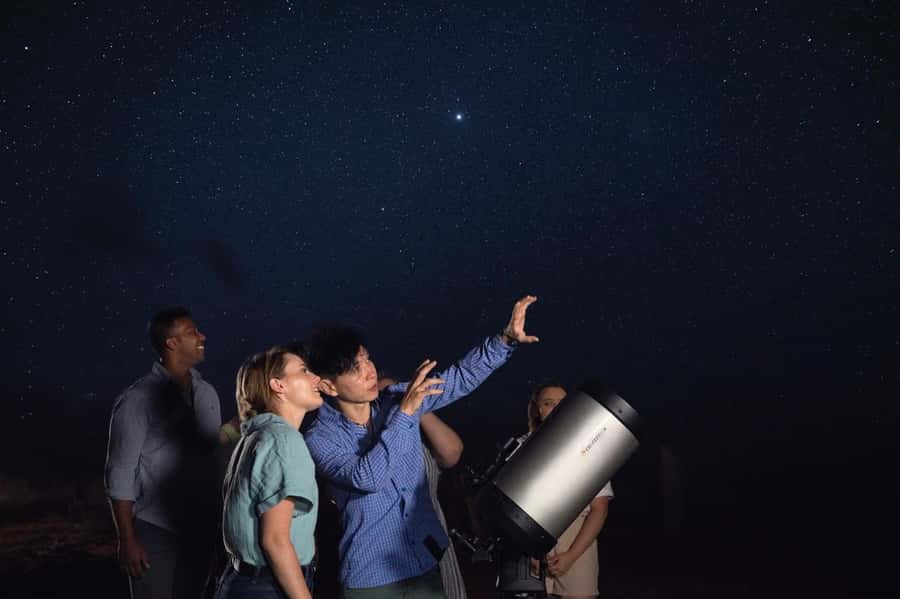
At $91 per person, the tour is not the cheapest way to look at the sky. You could step outside your accommodation and see stars for free. The difference is that this outing takes you farther from artificial light, provides transport into the national park, supplies the equipment, adds a trained guide, and includes a professional digital photograph.
The telescope access is important to the value. If you only wanted a short talk, the price might feel high. If you use the telescopes, listen closely to the astronomy and Indigenous stories, and make use of the photo, the package is more convincing.
You also avoid arranging a late-night drive yourself. Pickup and return are included, and you do not need to bring your own national park pass for this tour. Reserve now and pay later is available, and cancellation is free up to 24 hours before the activity, which helps if your Uluru plans are still shifting.
For families, couples, and first-time visitors to the Australian outback, I consider the cost fair. Serious amateur astronomers may prefer a smaller specialist session if one is available, since the shared telescope time is the limiting factor here.
Who should book this night out?
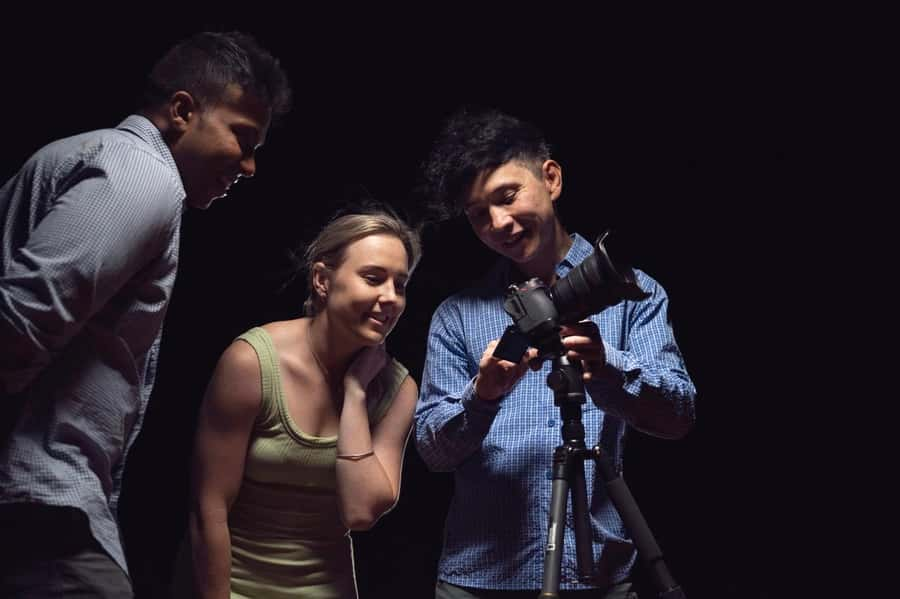
I would choose this tour if you want an easy introduction to astronomy and do not have your own vehicle or equipment. It suits beginners particularly well, since the guides explain what you are seeing and use lasers to make the constellations easier to follow.
It also works well for families with older children and teenagers. The mix of stories, planets, equipment, and photography gives young people several ways to stay interested. A 10-year-old has enjoyed the experience, and teenagers have found it one of the most memorable activities of an Australian trip.
Photography fans should bring a tripod and camera, but keep expectations sensible. You will have a chance to take your own pictures, not a private session with a photographer.
I would hesitate if you dislike waiting, crowded group activities, or sitting outside in changing temperatures. You should also think twice if your only goal is a perfectly dark Milky Way view, since the Moon and clouds may interfere. In that case, check the lunar phase and weather before booking, but remember that neither can be guaranteed.
My verdict on Uluru Astro Tours
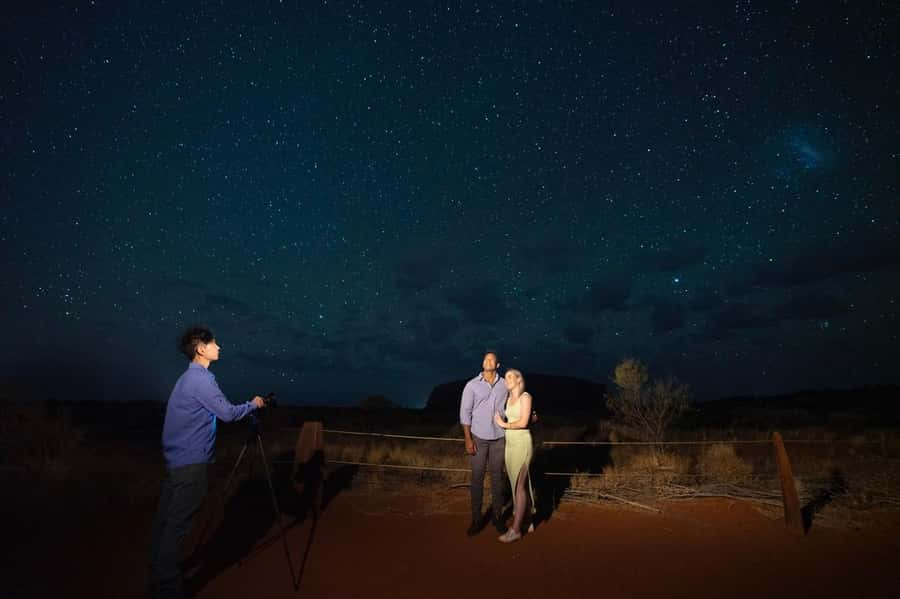
I would book this for a first visit to Uluru, especially if your schedule includes a clear, moonless evening. The strongest parts are the dark national park setting, the guides’ mix of science and Indigenous astronomy, and the chance to see planets or deep-sky objects through proper equipment.
The included photograph is a smart touch, and the blankets, stools, transport, and phone-camera help show that the evening is designed for ordinary visitors, not only astronomy experts. The tradeoff is shared access. Large groups can mean telescope queues and a slow photo line.
Pack more warmth than you think you need, check the pickup email, and arrive ready to look up for a while. If you can accept a group format and variable sky conditions, this is a memorable and fairly priced way to experience Uluru after sunset.
FAQ
How long does the Uluru astronomy tour last?
The tour lasts 150 minutes, including the evening outing and transport arrangements.
What is included in the $91 price?
The price includes the tour, guide, pickup and drop-off, use of telescopes, and one digital professional photograph.
Where does the tour take place?
The activity takes place in Uluru and Kata Tjuta National Park, at a stargazing location away from much of the light pollution around the resort.
Do I need to bring a national park pass?
No. You do not need to bring your own national park pass for this tour.
What should I wear and bring?
Bring warm clothing, closed-toe shoes, and a reusable water bottle. Blankets are available, but extra layers are still important because temperatures can fall sharply after dark.
Is the tour available in languages other than English?
The live guide options are English and Chinese.
Can I bring my own camera and tripod?
Yes. You can bring your own camera and tripod for night-sky photography. The guides may also help you adjust your phone settings for better pictures, and a professional digital photo is included.
Just in after dark around Australia
- Brisbane: Glow Worms, Sunset, Star Gazing & BBQ★ 4.4 · 26 reviews
- Perth: Pinnacles Stargazing, Sandboarding & Beach Kangaroos★ 5.0 · 3 reviews
- Kalbarri Skywalk Sundowner and Stargazing Tour★ 5.0 · 6 reviews
- Kalbarri Stargazing Tour★ 5.0 · 2 reviews
- Kalbarri Skywalk: Sundowner and Stargazing Tour★ 4.9 · 9 reviews
- Kalbarri Stargazing Tour★ 5.0 · 7 reviews
- Small-Group River Murray Dark Sky and Sunset Tour with Dinner★ 5.0 · 70 reviews
- Pinnacle Desert Sunset and Night-time Stargazing Tour from Perth★ 4.5 · 120 reviews
Telescope Stargazing, night against night.
Teide by Night: Sunset & Stargazing with Telescopes Experience
Read our review →
Teide National Park: Guided Large Telescope Stargazing Tour
Read our review →
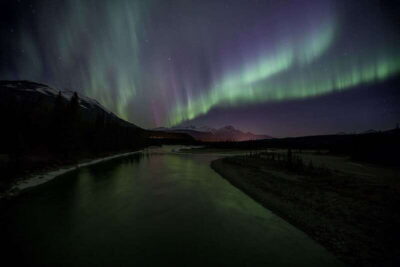
Northern Lights Tour and Stargazing by Telescope
Read our review →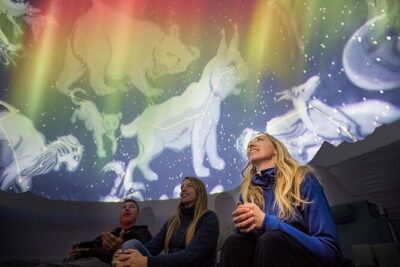
Jasper Planetarium and Telescope Combo Tour Tickets
Read our review →
Magic Stargazing & Sunset in Teide with Dinner + Telescopes
Read our review →
Akaroa: Stargazing Tour with 2 Telescopes & Souvenir Photos
Read our review →Lists this night appears in