
Review · AUSTRALIA
Stargazing with an Astronomer in the Blue Mountains
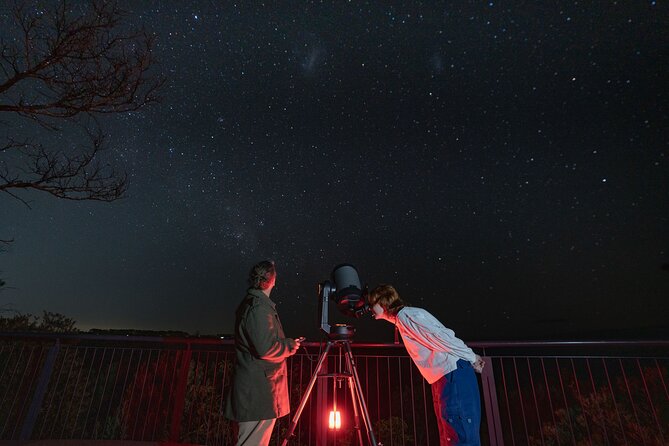
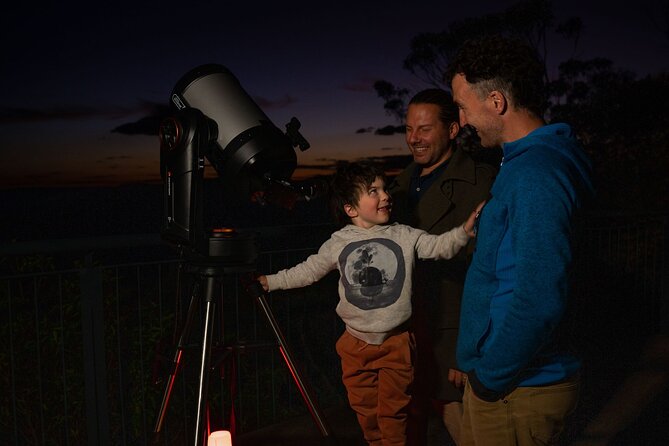
The best part of this Blue Mountains night tour is the chance to see the Southern Hemisphere sky with an astrophysicist beside you. You learn the constellations with your own eyes before turning to a professional telescope for closer views of objects such as the Moon, planets, star clusters, and the Orion Nebula.
I like the mix of clear teaching and real observing, rather than a talk that keeps you looking at slides. I also like the small comforts: hot chocolate, warm blankets in some sessions, and a maximum of 20 people. The main catch is the weather. Wind, cloud, or rain can change the plan, and the published bad-weather terms need careful reading before you book.
Key points at a glance
- The Southern Cross is a star of the show: You may watch Crux appear as daylight fades, a special moment for anyone new to southern skies.
- A real telescope, not just a talk: The equipment may reveal lunar craters, planets, double stars, nebulae, galaxies, and other deep-space targets.
- Your guide is an astrophysicist: Astronomy is explained in plain language, with time for questions and constellation stories.
- The weather call comes at 1 pm: If you have not received an email by then, the outdoor tour is confirmed.
- The session lasts about 90 minutes: It is long enough to cover the sky without turning into a late-night marathon.
- You get a warm drink when conditions allow: Hot chocolate is a small detail, but it matters on a cold Blue Mountains evening.
Why the Southern Hemisphere sky feels different
If you come from North America or Europe, the Southern Cross may be the main reason to book this outing. The constellation, also called Crux, is a familiar southern symbol but not a sight most northern visitors can see from home. Watching its stars emerge from sunset into twilight gives the evening a natural sense of progress.
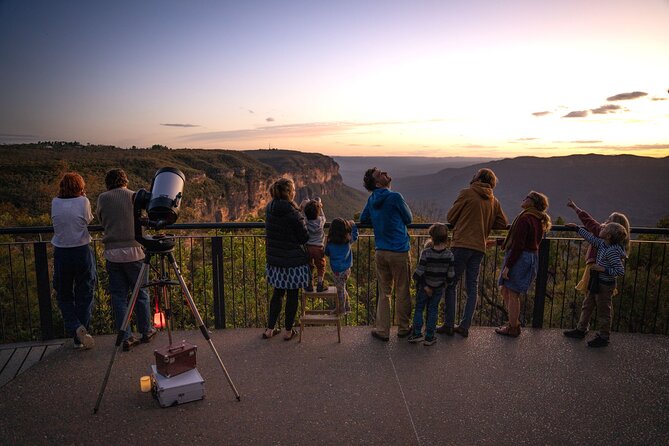
You do not simply arrive and stare through a telescope. The session begins with naked-eye sky watching, so you learn how to pick out patterns before the equipment enters the picture. That approach helps you keep using the sky after the tour ends, instead of remembering only a few impressive telescope images.
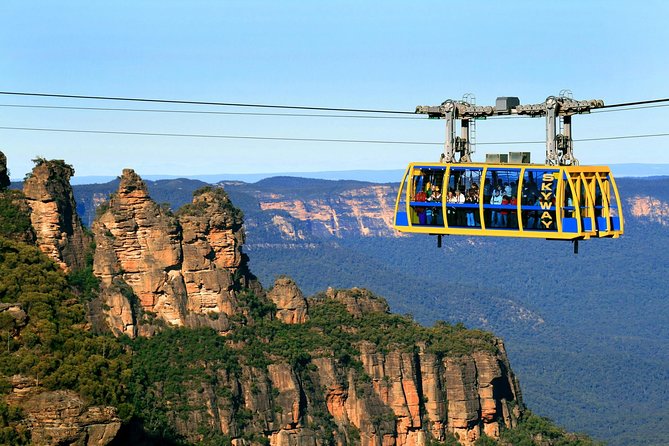
The Greater Blue Mountains is a World Heritage-listed setting, and its night sky gives the tour a strong sense of place. The focus is astronomy, not a scenic lookout talk, but the open surroundings and distance from city lights help make the stars the main event.
More Stargazing Tours around Australia:
- Pinnacles Desert: Sunset BBQ & Stargazing Tour +Sandboarding
★ 4.8 · 1,555 reviews - Pinnacles Desert Sunset Dinner and Stargazing Tour
★ 5.0 · 1,034 reviews - From Perth: Pinnacles Sunset and Stargazing Tour with Dinner
★ 4.7 · 803 reviews
A 90-minute route through the night sky
The meeting point is on the Wentworth Falls Lookout Track in New South Wales, and the activity finishes back there. The precise observing position can change. Wind affected one session so the group viewed from a park rather than the lookout, a useful reminder that the advertised meeting area does not guarantee one exact patch of ground.
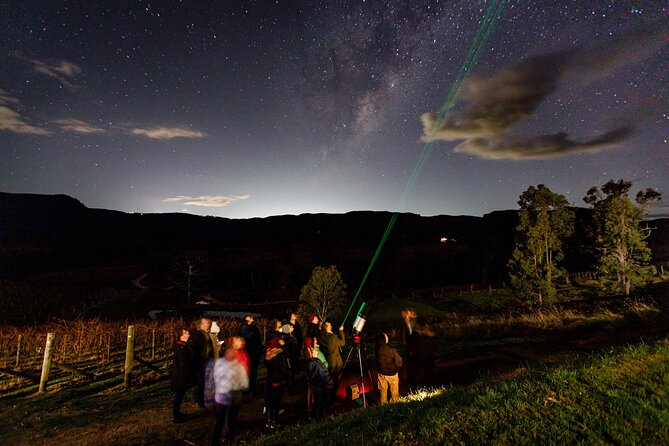
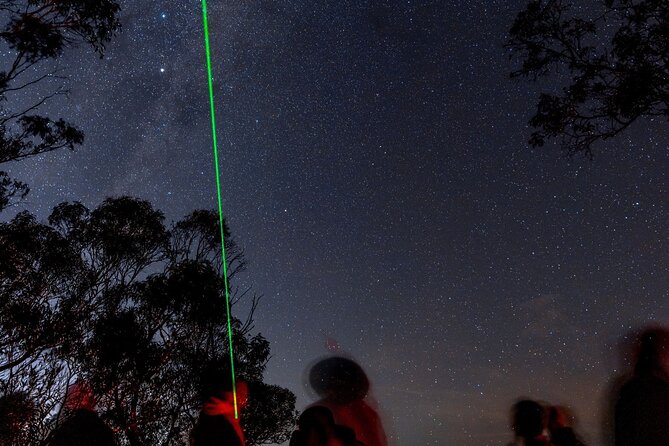
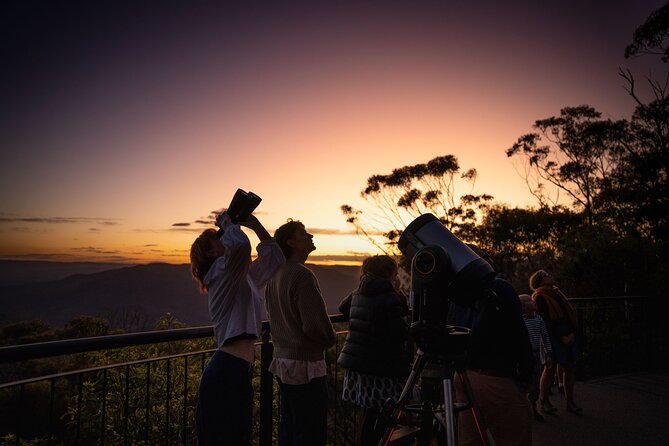
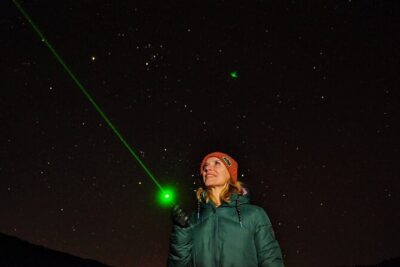
At the start, your astronomer sets the scene and points out what is visible without equipment. Laser-guided constellation storytelling helps you connect individual stars into recognizable shapes. This part is especially useful if you normally look up, see a mass of stars, and have no idea where to begin.
As the sky darkens, the Southern Cross may come into clearer view. The change from sunset to twilight to full darkness is part of the pleasure, since you watch the stars arrive rather than stepping into an already-black night.
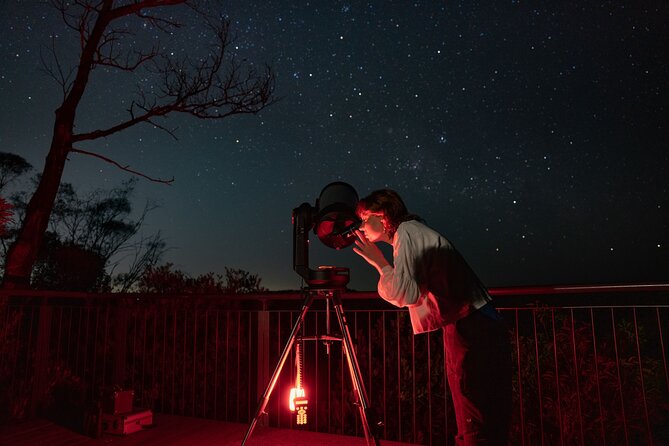
The telescope portion follows, supported by astronomy binoculars. Depending on the season, time, and conditions, possible targets include the Moon, Mars, Venus, Saturn and its rings, Jupiter and its moons, the Orion Nebula, star clusters, double and triple stars, galaxies, and parts of the Milky Way.
That list is a menu of possible sights, not a promise for one night. The Moon can be a spectacular target when visible, while planets depend on their position in the sky. Nebulae and galaxies may appear differently from night to night, and clouds can remove any of them from the program.
There is also time for questions. That matters because astronomy often raises practical puzzles: why stars seem to move, how planets differ from stars, or how an object so far away can be seen at all. The guide-led format lets you ask about what you are seeing instead of trying to decode a telescope on your own.
The telescope is useful because the sky changes
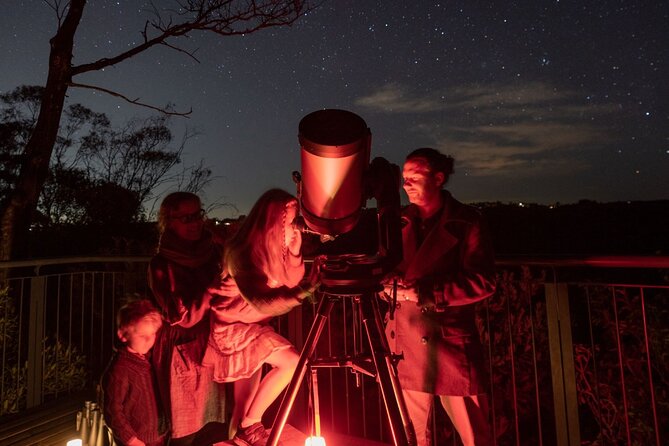
A professional-grade telescope gives this experience more purpose than simple stargazing from a hill. The naked eye lets you understand the broad pattern. The telescope then brings selected objects closer, showing details such as lunar craters or Saturn’s rings when the night provides the right target.
You should keep your expectations sensible. Telescope viewing is not the same as seeing a glossy space photograph. The value comes from seeing a real celestial object in the sky above you, with an astronomer explaining what is in the eyepiece and why it matters.
The equipment also makes the evening suitable for people with different levels of interest. Someone who already follows astronomy can ask more technical questions, while a first-time observer can start with the Southern Cross and basic constellation recognition.
The guides bring energy as well as facts. Nathan has led sessions described as lively and clear, while Tom and Alka have hosted evenings with plenty of interaction and time for questions. The guide on your date may differ, but the format is built around direct explanation rather than a recorded presentation.
Hot chocolate, blankets, and the practical side of cold air
Blue Mountains nights can feel cold, especially when you are standing still and looking upward. Complimentary hot chocolate is provided when weather allows, and warm blankets have been available on some sessions. Drinks may be warm or cold depending on conditions.
These details are not the reason to book, but they improve the experience. A warm drink gives you a short break from the cold and makes the evening more comfortable for children and adults who are less used to night-time outdoor activities.
Wear clothing suited to an outdoor evening, even if the day was mild. The supplied information does not specify a dress code, so the sensible choice is to prepare for cooler conditions and some wind. The wind report from one session is worth taking seriously, since it can affect both comfort and the viewing location.
The tour is wheelchair and stroller accessible, and service animals are allowed. Most people can take part, with public transport nearby. The details of the actual surface, seating, and telescope position are not specified, so anyone needing particular access arrangements should confirm those points before booking.
Same stars, another vantage point:
- Pinnacles Sunset Stargazing Dinner Experience Small Group Tour
★ 4.5 · 396 reviews - Uluru: National Park Astronomy Tour with Telescope and Photo
★ 4.4 · 357 reviews - Perth: Pinnacles Desert Sunset & Stargazing with Dinner
★ 4.3 · 215 reviews - Pinnacle Desert Sunset and Night-time Stargazing Tour from Perth
★ 4.5 · 120 reviews
What the weather policy means for your plans
Weather is the biggest factor in deciding if this outing suits your schedule. The provider sends an update at 1 pm on the day. If you have not received an email by that time, the stargazing session is considered confirmed.
Bad weather does not always mean the evening is lost. You may be offered a transferable gift voucher or credit, valid for three years, so you can reschedule. The other option is a 90-minute indoor Planetarium Astronomy tour, held inside a dome with a powerful projector and cinema-style presentation.
The indoor alternative requires a minimum of eight people to run. It is a useful backup, but it is not the same as standing beneath the actual Southern Hemisphere sky. If the outdoor view is your main reason for booking, ask how the current weather decision will be handled before you commit.
The supplied terms contain two points you should read carefully. The bad-weather information says no refund is offered and presents the voucher or indoor planetarium option. The wider cancellation policy says that if the provider cancels because of poor weather, you may be offered another date or a full refund. Since those statements differ, confirm the exact option that applies to your booking.
Is $60.97 a fair price?
At $60.97 per person, this is not simply a short walk outside to look at stars. The price includes about 90 minutes with an astrophysicist, use of a professional telescope and astronomy binoculars, laser-guided constellation explanations, a question period, and a drink when conditions allow.
I see the value in the human guidance. You could look at the night sky for free, but finding constellations and identifying planets takes patience. A good guide helps you make sense of the sky quickly, then shows you how to continue on your own.
The cost also reflects the equipment and the limited group size. With a maximum of 20 people, the session should feel more focused than a large coach-group event, although telescope viewing naturally takes turns. If you want uninterrupted time at the eyepiece, any group astronomy activity may feel slower than a private session.
The average booking lead time is 24 days. That suggests you should not leave this until the last night of a short Blue Mountains stay, particularly if you need a certain date. Booking ahead also gives you more room to reschedule if the weather does not cooperate.
Who will enjoy this most
This is a strong choice for first-time stargazers, families, couples, and visitors from northern latitudes who want to see the Southern Cross. The explanations are designed to be interactive, and the 90-minute length keeps the program manageable for people who do not usually spend an evening outdoors.
It also suits adults who want more than a pretty view. The astrophysicist-led format gives you a chance to ask questions about planets, galaxies, star clusters, and the Milky Way. You do not need prior astronomy knowledge to take part.
Children may enjoy the telescope, laser pointer, and hot chocolate, though the supplied information does not give a minimum age or a child-specific program. If you are booking for young children, remember that darkness, cold, waiting for telescope turns, and changing weather are all part of the outing.
This is less suitable if you need a guaranteed outdoor sighting or have only one free evening. It is also not the right pick if you want a private, silent night under the stars. The attraction here is shared learning with a guide and a small group.
Planning the evening at Wentworth Falls
The activity begins and ends at the Wentworth Falls Lookout Track, so you do not need to arrange a separate return transfer through the tour. Public transport is nearby, but the supplied details do not explain the best route or the final walking distance from a stop.
Check your confirmation within 48 hours of booking, since it is subject to availability. Keep an eye on your email on the day, especially at 1 pm, when the weather decision is communicated.
The mobile ticket is convenient, but it does not remove the need to plan for the outdoor setting. Allow time to reach the meeting point, and do not assume that a clear afternoon guarantees a clear night. Wind is also important, since it can move the session from the lookout area to a nearby park.
The tour is offered in English and French. If language is important to your booking, confirm which language will be available on your chosen date rather than assuming both will be used in every session.
My call: book it if the sky matters to you
I would book this tour if you want help reading the southern sky, especially if the Southern Cross is new to you. The combination of an astrophysicist, telescope viewing, constellation stories, questions, and hot chocolate gives the evening real substance for the price.
I would pause if your plans cannot absorb a weather change. The outdoor session depends on conditions, and the backup choices may not match the experience you originally wanted. Read the weather and cancellation terms closely, then keep a flexible date if possible.
For most people with an evening to spare in the Blue Mountains, this is a worthwhile astronomy outing rather than a quick photo stop. Go for the Southern Cross, the chance to see a planet or nebula through a proper telescope, and the pleasure of learning what you are looking at.
FAQ
Where does the stargazing tour start?
It starts at Wentworth Falls Lookout Track in New South Wales, Australia.
Where does the tour finish?
The activity ends back at the meeting point.
How long does the stargazing experience last?
The tour lasts about 90 minutes.
What might I see through the telescope?
Depending on the date and conditions, you might see the Moon, Mars, Venus, Saturn and its rings, Jupiter and its moons, the Orion Nebula, star clusters, double and triple stars, galaxies, and the Milky Way.
Is the tour available in languages other than English?
English and French languages are available.
What happens if the weather is bad?
At 1 pm on the day, you may be offered a transferable gift voucher or credit to reschedule, or an alternative 90-minute indoor Planetarium Astronomy tour. The indoor option requires at least eight people to operate.
Is a refund available if the provider cancels because of weather?
The supplied cancellation terms say that if the experience is canceled because of poor weather, you will be offered another date or a full refund. The bad-weather information also says no refund will be offered and lists the voucher or indoor tour options, so confirm the exact terms for your booking.
Is the experience wheelchair and stroller accessible?
Yes, the experience is listed as wheelchair and stroller accessible. Service animals are also allowed.
How many people can join the tour?
The maximum group size is 20 people.
Just in after dark around Australia
- Brisbane: Glow Worms, Sunset, Star Gazing & BBQ★ 4.4 · 26 reviews
- Perth: Pinnacles Stargazing, Sandboarding & Beach Kangaroos★ 5.0 · 3 reviews
- Kalbarri Stargazing Tour★ 5.0 · 2 reviews
- Kalbarri Skywalk: Sundowner and Stargazing Tour★ 4.9 · 9 reviews
- Kalbarri Stargazing Tour★ 5.0 · 7 reviews
- Kalbarri Skywalk Sundowner and Stargazing Tour★ 5.0 · 6 reviews
- Small-Group River Murray Dark Sky and Sunset Tour with Dinner★ 5.0 · 70 reviews
- Pinnacle Desert Sunset and Night-time Stargazing Tour from Perth★ 4.5 · 120 reviews
Stargazing Tours, night against night.

Dubai Red Dunes ATV, Camels, Stargazing & 5* BBQ Al Khayma Camp
Read our review →
Teide National Park Sunset & Stargazing with Dinner (Star Safari)
Read our review →
Sunset Camel Trek, Al Khayma Camp, Stargazing & BBQ
Read our review →
Overnight Safari, Dinner, Stargazing & Al Khayma Camp
Read our review →
Dubai Overnight Desert Safari, BBQ & Stargazing at Al Khayma Camp
Read our review →
Sunset Quad Bike, Camel w/ Opt Stargazing and BBQ
Read our review →Lists this night appears in